
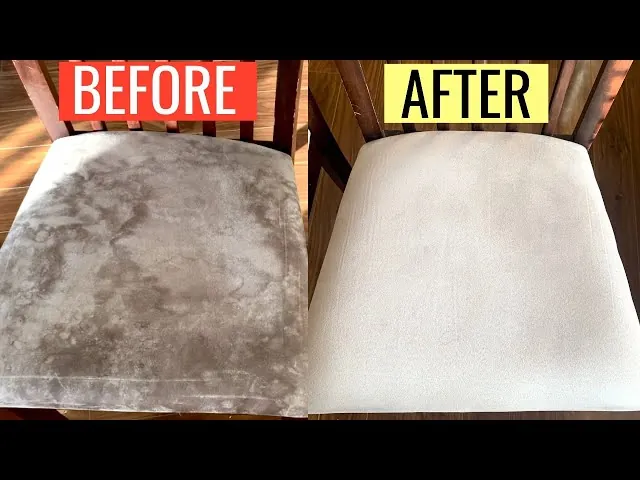
Keeping white fabric chairs clean takes about 45 minutes per chair, is inexpensive relative to the alternative, and sits at a medium difficulty level. The core method behind how to clean white fabric chairs is spot treatment followed by gentle foam cleaning and slow drying. You’ll need the care tag on your chair before you start. It tells you which cleaners are safe. Without that tag, you’re guessing with water or solvents, and one wrong choice can leave a permanent ring on light upholstery.
Supplies for cleaning white fabric chairs
| Item | How much | Why it’s needed | A substitute |
|---|---|---|---|
| Upholstery cleaner | 8–16 oz bottle | Lifts stains from white fibers | Mild dish soap, 1 tsp per cup |
| White microfiber cloths | 3 or 4 cloths | Blots dirt without adding dye | White cotton towels |
| Soft bristle brush | 1 small brush | Loosens dry soil gently | Clean soft toothbrush |
| Spray bottle | 1 empty bottle | Mixes and applies solution evenly | none — don’t swap this |
| Distilled water | 2 cups | Prevents mineral spots on fabric | none — don’t swap this |
| Vacuum brush attachment | 1 attachment | Removes loose dust before wetting | Lint roller for flat seats |
Check the chair’s care tag first. If it says “W”, use water-based cleaners; if it says “S”, use solvent-based ones only. Using the wrong type leaves a visible watermark on white fabric that won’t wash out.
Before you start cleaning white fabric chairs
- Turn off nearby fans or air vents so the cleaning solution doesn’t dry too fast and leave rings.
- Vacuum the entire chair using the brush attachment, spending about 2 minutes per seat to pull out dry dust.
- Move the chair away from direct sunlight, because heat bakes moisture into stains before you can blot them.
- Cover any exposed wood or metal legs with plastic wrap so dripping liquid doesn’t damage the finish.
- Test your cleaner on a hidden spot, like the back bottom edge, and wait 10 minutes to check for color changes.
The step people skip most often is the vacuum. Wetting dusty fabric turns surface dirt into mud, pushing it deeper into white threads where it dries as a gray shadow. If the care tag reads “X”, vacuum only. Water or solvent will ruin that fabric. Leave “X” tagged pieces to a certified upholstery professional.
Steps to clean white fabric chairs
-
Read the care tag sewn under the cushion or along the bottom seam. Look for W, S, SW, or X. This single letter decides your entire cleaning path, so don’t guess if the tag is missing.
-
Attach the soft brush tool to your vacuum hose. Run it over the whole chair slowly for 2 minutes per cushion. Stop when no more dust flies up and the fabric feels smooth to the touch.
-
Mix 1 teaspoon of mild dish soap into 1 cup of distilled water in your spray bottle. Shake it for 10 seconds until bubbles form. Use distilled water here, since tap water leaves mineral marks on white cloth.
-
Spray the mixture onto a white microfiber cloth until it’s damp but not dripping. Never spray directly onto the chair. Direct spraying pushes liquid past the top layer and causes deep water rings.
-
Press the damp cloth onto the stain and hold it there for 30 seconds. Don’t rub yet. Letting the solution sit loosens the dirt. You’ll know it’s working when the stain starts spreading onto the cloth.
-
Dab the area from the outside edge toward the center using a clean part of the cloth. Work inward for about 1 minute. Switch to a fresh cloth section when the current one shows dirt.
-
Rinse your second white cloth in plain distilled water and wring it out completely. Wipe the cleaned spot once to remove leftover soap. Soap residue left behind attracts new dirt within days.
-
Press a dry white towel firmly against the damp spot for 20 seconds to absorb moisture. Repeat with a dry section of the towel until pressing leaves no wet mark on the paper or cloth.
-
Point a standard room fan at the chair from 3 feet away. Let it run for 4 to 6 hours. The fabric is fully dry when you press your hand down and feel zero coolness or dampness.
-
Brush the dried fabric lightly with a dry, soft bristle brush for 30 seconds. This lifts the crushed fibers back up. The chair is done when the texture matches the surrounding untouched areas.
If the stain covers less than an inch, stick to the dabbing method in step 6. If it’s larger than your palm, work in 3-inch sections so the edges don’t dry before you reach them. Rushing a large spill leaves overlapping water lines that show clearly on white material.
Signs your white fabric chairs are clean
A truly clean white chair looks uniform under bright light. Hold a flashlight or your phone light parallel to the seat surface. Clean fabric reflects light evenly, while leftover stains or soap residue cast tiny shadows or look dull compared to the rest of the seat.
Press your palm flat against the cushion after it dries. It should feel exactly like an uncleaned part of the chair. Any stiffness means soap is still trapped in the fibers. That stiffness acts like glue for future dust, turning the spot gray again within a week.
Run your fingers lightly over the weave. The texture should be soft and raised. If the fibers feel matted down or slightly sticky, the rinse step didn’t pull all the cleaner out. You’ll need to wipe it again with a cloth dampened only in distilled water.
Check the chair the next morning in natural daylight. Some stains fade while wet but return as a yellow or brown outline once fully dry. If you see a faint ring, the original stain wasn’t fully lifted. Apply the cleaning steps one more time, but reduce the soap to half a teaspoon per cup of water to avoid building up more residue.
When the chair passes these checks—smooth texture, even color, no stiffness, and no rings in daylight—the job is finished.
Fixing problems while cleaning white fabric chairs
| What happened | Why | What to do |
|---|---|---|
| Brown ring appeared after drying | Soap residue attracted dirt | Wipe with plain distilled water |
| Fabric feels stiff and crunchy | Too much cleaner was applied | Dampen cloth, blot repeatedly |
| Stain spread and got bigger | Rubbing pushed it outward | Blot from edges inward only |
| Color faded on white fabric | Bleach or harsh chemical used | Stop immediately, rinse thoroughly |
| Chair smells sour after drying | Padding underneath stayed wet | Aim fan closer, dry longer |
| Water soaked through instantly | Too much liquid sprayed on cloth | Wring cloth until just barely damp |
The EPA Safer Choice label helps you pick cleaning products that won’t leave harsh chemical residues in porous fabrics. Choosing a product with this label reduces the chance of stiff fibers or lingering odors after your chair dries.
How often to clean white fabric chairs
Vacuum your white fabric chairs as often as needed depending on use to stop dust from settling deep into the weave, following your owner’s manual for guidance. Spot clean spills the exact minute they happen, because white fibers show liquids instantly and let them sink fast. A full surface clean with a damp cloth and mild soap needs doing as often as needed depending on use under normal indoor conditions, following your owner’s manual for guidance.
Two things change this schedule. The first is how much the chair gets used. A dining chair sat in three times daily collects skin oils and food dust faster than a reading chair in a quiet corner. For heavy daily use, cut the full cleaning interval down to every 4 to 6 weeks.
The second factor is your home’s air quality. Houses near busy roads, homes with shedding pets, or rooms without good ventilation push more fine particles into light upholstery. If you notice the white fabric looking dull or slightly gray before your usual cleaning date, move the schedule up. Check the seat under bright light weekly. When the center cushion looks darker than the edges, it’s time to clean.
Frequently asked questions
Can I use bleach on white fabric chairs?
No, bleach weakens the fibers and often leaves a yellow tint on white upholstery. Even diluted bleach breaks down the threads over time. Stick to mild dish soap or a cleaner made specifically for fabric furniture. If a stain won’t lift with gentle soap, a professional upholstery service has stronger, fiber-safe solvents that won’t ruin the material.
Why does my white chair turn yellow?
White fabric yellows from body oils, direct sunlight, or leftover soap residue that oxidizes over time. Sitting in the same spot daily transfers natural skin oils into the weave, which darken as they age. Sunlight speeds up this process. To prevent it, rotate cushions if possible and always rinse out soap completely with a water-dampened cloth after cleaning.
How long does it take a fabric chair to dry?
A damp-cleaned fabric chair takes 4 to 6 hours to dry completely with a fan running 3 feet away. Thick cushions or high-humidity rooms can push that time to 8 hours. Don’t sit on the chair until the fabric feels dry to the touch and has returned to room temperature. Pressing your weight into damp padding forces moisture deeper and risks mold growth inside the foam.
Is it safe to use a steam cleaner?
It’s only safe if the care tag shows “W” or “SW”. Steam introduces intense heat and moisture that can shrink certain synthetic blends or melt glued backing layers. Keep the steamer moving constantly and never hold it in one spot for more than 3 seconds. If your tag says “S” or “X”, steam will permanently damage the fabric’s texture and shape.
What happens if I get the padding wet?
Wet padding traps moisture where air can’t reach it, creating the perfect environment for mold and bad odors. The foam inside holds water much longer than the top fabric layer. Always wring your cleaning cloth until it’s just barely damp before pressing it on the chair. If liquid soaks through, point a fan directly at the spot and leave it running overnight.
Does baking soda remove stains from white fabric?
Baking soda absorbs fresh liquid spills and neutralizes odors, but it doesn’t lift set-in colored stains on its own. Sprinkle it on a wet spill, wait 15 minutes, then vacuum it up. For actual discoloration, you still need a mild soap solution. Baking soda works best as a first response to a spill before it dries into the white fibers.
Do I need distilled water instead of tap water?
Yes, distilled water prevents mineral deposits that leave tiny brown or gray dots on white fabric. Tap water contains calcium and magnesium that stay behind when the moisture evaporates. On dark furniture, you might never notice them. On white chairs, those minerals show up clearly as a dull, spotty film. A gallon jug from the grocery store lasts through several cleanings.
Can I put the cushion covers in the washing machine?
Only if the care tag explicitly allows it and the cover zips off easily. Machine washing shrinks many upholstery fabrics just enough that they won’t fit back over the foam. If you do wash them, use cold water and hang them to dry instead of using a hot dryer. Measure the cover before washing so you know if it shrinks.
Conclusion
Leaving dirt on white fabric makes the next cleaning harder, because ground-in dust requires more scrubbing that wears down the weave. Keeping your supplies ready and acting quickly on spills saves the chair’s texture and keeps the bright color intact. Check the care tag, use barely damp cloths, and let the fan do the heavy lifting at the end.