
As an Amazon Associate, we earn from qualifying purchases. This post contains affiliate links – if you buy through them, we may earn a commission at no extra cost to you.
Selecting the right pipe wrenches depends on your specific plumbing task and how often you plan to use them. These tools differ primarily in weight, material, and jaw design, which dictate whether a wrench is better suited for professional industrial work or simple household repairs.
Best overall: RIDGID Model 814, which offers a lightweight aluminum build and a 2-inch pipe capacity, balancing professional durability with a design that reduces user fatigue during long-term projects.
Best for tight spaces: RIDGID Model E-110, as its offset hex jaw design and thin, smooth profile allow you to reach and grip nuts in cramped areas where standard straight wrenches can’t fit.
Best heavy-duty: 60 Inch Pipe Wrench, because its massive 9-inch jaw opening and cast iron construction are specifically engineered for the high-torque demands of oil field and industrial construction work.
This guide is for anyone looking to understand the trade-offs between different pipe wrench designs and materials.
How We Picked
We compared 48 different Amazon listings to identify the most reliable tools for various plumbing needs. To earn a place in this selection, each product had to clearly state its material composition, pipe capacity, and intended application.
1. RIDGID 31095 Model 814 Aluminum Straight 14″ Plumbing Pipe Wrench

Best for: General plumbing and everyday pipe work.
This model is a standard for many, using a lightweight aluminum frame that stays strong under pressure. Its I-beam handle provides a sturdy grip while keeping the total weight low, which helps if you’re working overhead or for extended periods.
The full-floating hook jaw design allows for quick ratcheting. This means you can adjust your grip on the pipe without taking the tool off, saving time when you have to turn a fitting in a tight spot. This wrench isn’t the best choice for massive industrial pipes, as its capacity is limited to 2 inches.
Pros
- Lightweight aluminum handle
- Quick ratcheting action
- Replaceable jaw parts
Cons
- Limited 2-inch capacity
2. RIDGID 31110 Model 836 36″ Aluminum Straight Pipe Wrench

Best for: Large-scale plumbing and industrial mechanical jobs.
This 36-inch wrench is built for the biggest pipes, boasting a 5-inch capacity. The aluminum body is 40% lighter than standard steel versions, which significantly reduces the physical fatigue that accumulates during long shifts. If you’re working on overhead or extended industrial projects, this weight reduction is the difference between finishing the job and needing a break.
The hardened steel jaws provide a reliable, biting grip that prevents slipping when applying high torque. Use this tool for heavy-duty plumbing or mechanical applications where you need maximum leverage.
However, avoid this model for small household sinks or cramped utility closets. If you have less than 36 inches of clearance to swing the handle, you’ll be unable to operate the tool effectively. When the work area is tight, the length becomes a liability rather than an asset.
Pros
- 5-inch pipe capacity
- 40% lighter aluminum construction
- Hardened steel jaws
Cons
- Impractical for narrow spaces
3. RIDGID 31000 Model 6 Heavy-Duty Plumbing Straight 6″ Pipe Wrench
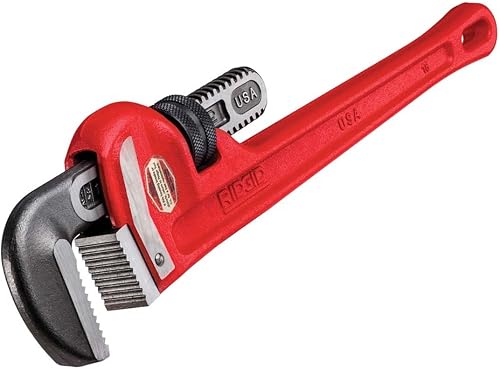
Best for: Small, compact plumbing repairs.
This is a heavy-duty, 6-inch straight pipe wrench designed for tight spaces where standard tools are too bulky to maneuver. Manufactured in the United States, it maintains the classic, durable iron housing the brand is known for.
Because of its tiny size, you can’t use this for large pipes or heavy industrial work. It’s a specialized tool meant for light-duty tasks where precision is more important than raw leverage. If you’re working on supply lines or small fixture nuts, this wrench provides the necessary grip without damaging surrounding components.
Avoid using this model on pipes exceeding its diameter limit, as the short handle provides almost no mechanical advantage for stubborn joints. If the pipe requires significant torque to break a seal, you must switch to a larger wrench to avoid rounding the fitting. Use this tool only when the workspace is too restricted for a standard 10-inch model.
4. KNIPEX Tools 83 61 010

Best for: Rapid adjustment and versatile gripping.
This wrench stands out because it uses a push-button mechanism for fast size changes. The S-shaped, 45-degree angled jaw is designed to bite into pipes from multiple directions, which is helpful if you’re working in a crowded space.
Use this tool when you need to switch sizes frequently on pipes up to 1 9/16-inch in diameter. The listing doesn’t mention the Knipex is unsuitable for extreme torque. The Knipex design prioritizes speed and agility over raw, heavy-duty leverage.
The induction-hardened teeth are angled in opposing directions to provide a secure, self-locking grip on rounded surfaces. Avoid using this tool on delicate finished fittings, as the aggressive teeth will mar the surface. If you need to protect the finish, wrap the pipe in a thin layer of rubber or leather before applying pressure.
5. RIDGID 31305 Model E-110 9.5″ Offset Hex Jaw Pipe Wrench

The offset hex jaw provides a secure, multi-sided grip on hex nuts, square nuts, and unions. This design prevents the rounding or stripping common with standard pipe wrenches. The thin, smooth jaws allow you to slip into narrow gaps where bulkier tools are physically blocked.
Because the jaws are smooth, this tool protects the finish on valve packing nuts. It handles pipes ranging from 1-1/8 inches to 2-5/8 inches in diameter. If you’re working on polished or decorative fixtures, this wrench is your primary choice.
Avoid using this model for heavy-duty pipe gripping. It lacks the deep, biting teeth required for high-pressure installations where slippage is a risk. If you need to turn standard iron pipe, use a traditional toothed wrench instead.
RIDGID covers this tool with a lifetime warranty against defects in material or workmanship.
6. RIDGID 31030 Heavy-Duty Straight Pipe Wrench
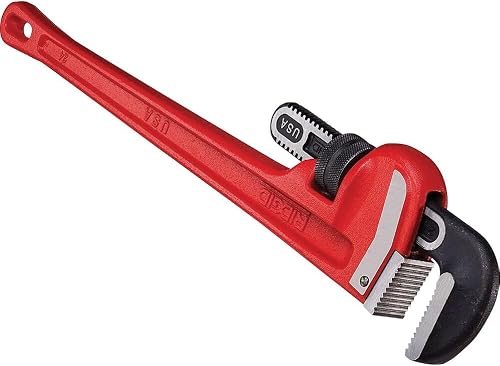
Best for: Long-term, heavy-duty construction use.
This wrench uses a ductile-iron housing, which is built to be extremely sturdy. If you need a tool that can take a beating on a construction site for years, this is the type of construction that provides that extra durability.
It features self-cleaning threads, which helps keep the tool working smoothly even if it gets dirty on the job. This model is noticeably heavier than aluminum versions, so it isn’t the best choice if you’re concerned about weight or fatigue during long work days.
Choose this 24-inch model specifically for pipe diameters between 1-1/2 inches and 2-1/2 inches. While it holds a maximum capacity of 3 inches, sticking to the recommended range ensures the tool operates at peak mechanical advantage. If you’re working with smaller pipes, this tool will feel unnecessarily cumbersome.
Pros
- Sturdy iron housing
- Self-cleaning threads
- High-durability build
Cons
- Heavy weight
7. DURATECH 3-Piece Aluminum Straight Pipe Wrench Set

Best for: Workshops needing multiple tool sizes.
This set is convenient because it includes 10-inch, 14-inch, and 18-inch wrenches, giving you the right size for almost any home repair. The aluminum construction keeps the weight down, making them nearly 40% lighter than traditional steel sets. This reduction in mass minimizes user fatigue, allowing for higher productivity during extended plumbing tasks.
The ergonomic handles are designed to be comfortable in the palm, preventing the tool from digging into your skin during heavy torque applications. While these are professional-strength tools, they’re primarily intended for home improvement and light workshop tasks. If your work involves extreme industrial pressure, you should stick to heavy-duty steel alternatives.
Use the 18-inch wrench for its overbite jaw design, which provides a maximum gripping surface for stubborn pipes. If you’re working in a home workshop, utilize the hole at the base of each handle to hang the tools on a peg board for quick access.
Pros
- Three sizes included
- Comfortable handle design
- Lightweight aluminum
Cons
- Not for industrial use
8. KLEIN TOOLS 68227 14-Inch Cast Iron Pipe Wrench

Best for those who prefer traditional cast iron tools.
This 14-inch wrench features a classic cast iron build that professionals trust for its rugged, long-lasting nature. It includes an I-beam handle for extra strength and a contoured grip designed for a secure, steady hold.
The adjustable jaw extends up to 2 inches, providing a versatile range for standard residential plumbing tasks. You can quickly set the jaw size using the integrated twist-knob. If you’re working in tight spaces, ensure you have clearance to rotate the knob for these adjustments.
This isn’t the tool for someone who prioritizes weight over durability. Cast iron is significantly heavier than aluminum alternatives, which can lead to fatigue during overhead work. If your job requires frequent, all-day use, consider if the weight of this tool will slow your pace. Always prioritize the I-beam construction when you need to apply high-torque force without the risk of the wrench slipping.
9. 60 Inch Pipe Wrench

Best for: Extreme industrial and oil field applications.
This is a massive tool with a 9-inch jaw opening, intended for pipes up to 8 inches in diameter. It’s built from cast iron and Chromium-Molybdenum steel, ensuring it can handle the extreme pressure required for heavy-duty construction.
If you’re working on standard household plumbing, this tool is overkill. The 60-inch length is designed specifically for the high-torque demands of oil fields and large-scale mechanical maintenance. Using it on smaller residential pipes risks damaging the fittings due to the sheer leverage provided by the long I-beam handle.
The V-shaped jaw and specialized wave teeth are engineered to lock onto bolts and hex nuts, not just pipes. Always check that the non-slip nut moves freely before applying force to ensure the teeth bite securely.
Pros
- Massive 9-inch opening
- Professional Cr-Mo steel
- Includes safety gloves
Cons
- Overkill for homes
10. MAXPOWER 18-inch Pipe Wrench

Best for: Simple, straightforward pipe work.
This 18-inch aluminum wrench is a functional tool for general plumbing. It offers a 2.5-inch jaw capacity and uses a floating, forged hook jaw to secure a grip on pipes quickly.
The tool is nearly 40% lighter than standard steel models of the same size. This weight reduction makes it significantly easier to carry in a tool bag for long jobs. If you notice the adjustment nut sticking during use, clean the threads to ensure smooth operation. The hook jaw, heel jaw, and spring assembly are all replaceable, which helps extend the tool’s lifespan.
This is a basic, straight-handle wrench. It lacks the specialized offset jaws or quick-adjust buttons found on premium models. If you need to work in tight corners, this straight design may be difficult to maneuver. Use this model when you have enough clearance to swing the handle freely.
Pros
- Lightweight aluminum
- 2.5-inch jaw capacity
- Replaceable parts
How to Choose in Sixty Seconds
Which material should I pick for my pipe wrench?
Aluminum is usually the best choice for most users because it’s significantly lighter than cast iron while maintaining the strength needed for professional work. Reducing the weight of your tool helps prevent arm fatigue when you’re working for long periods. Cast iron is preferred by those who want a heavier, traditional feel or who believe the material offers better long-term durability in very harsh, dirty environments.
Do I need a straight or offset wrench?
A straight wrench is the standard for most plumbing jobs because it provides the best leverage for turning pipes in open spaces. However, if you’re working in tight corners, behind a wall, or around complex valve assemblies, an offset wrench is much more useful. The offset head allows you to reach nuts or pipes that are tucked away. If you only have room for one tool, start with a 14-inch straight wrench, as it covers most common household tasks. Only add an offset or specialized jaw wrench once you encounter specific, recurring problems.
How do I know what size wrench to buy?
Size your wrench based on the diameter of the pipes you work on most often. A compact, standard-sized wrench is perfect for most residential plumbing, such as sink drains and supply lines. If you’re doing larger work, like gas lines or main water pipes, you’ll need an 18-inch or 24-inch model. Buying a wrench that’s too large for the pipe can be awkward and may lead to over-tightening, while a wrench that’s too small won’t have the jaw capacity to fit around the pipe at all.
Related guides
- 10 Best Ice Cream Soft Serve Mixes for Home Machines in 2026
- 10 Best Home Cleaning Caretaking Relocating Books Reviewed in 2026
- 10 Best Medical Psychotherapy TA NLP Books for Professionals in 2026
Frequently Asked Questions
What does it take to keep a pipe wrench working well?
Maintaining a pipe wrench is simple because the tools are designed for tough environments. You should keep the threads of the adjustment nut clean and lightly oiled so the jaw moves smoothly. If you notice the teeth are becoming dull or the jaw is slipping, you can often replace the hook jaw, heel jaw, and spring assembly rather than buying a whole new tool.
Is the simplest wrench on the list enough for a home workshop?
A standard aluminum straight wrench is sufficient for most home workshops. These tools handle common plumbing tasks ranging from gas tanks to water supply lines. Specialized models with extra features are usually unnecessary unless you have a specific, recurring problem that a standard tool cannot resolve.
What is the first thing that usually goes wrong with these tools?
The hook jaw teeth wear out first because they bite into the pipe to create a grip. Most professional-grade wrenches, such as the RIDGID Heavy-Duty 24-inch and DURATECH Aluminum Set, feature replaceable jaws. If your tool slips, you can simply swap the jaw and spring assembly to restore performance.
Can I use these wrenches on materials other than pipe?
Pipe wrenches can turn hex nuts, square nuts, and unions, especially when using specialized hex-jaw designs. However, standard toothed wrenches will damage finished surfaces or soft materials. If you must turn a finished nut, use a wrench with smooth jaws or place a protective cloth between the tool and the part.
Closing
For most users, the RIDGID Model 814 is the top choice because its aluminum build provides professional-grade strength without the heavy weight of steel. If you need a more versatile option for complex repairs, the KNIPEX Swedish Wrench offers a unique design that excels in tight spaces.
Always ensure your wrench is clean and that the teeth are free of debris to maintain a secure grip. If you’re working with hex nuts or valve packing, choose a hex jaw design to prevent rounding the edges. A mistake many beginners make is using a standard straight wrench on hex fittings, which often causes slippage and damage to the fastener.
Keeping your tools in good condition will help you finish your plumbing projects quickly and safely. Before you start your next repair, check your pipe diameter against the tool capacity to ensure you have the right fit. If the pipe exceeds the jaw opening, don’t force it; use a larger model.