
Refinishing bamboo furniture takes about 8 to 12 hours of total labor time, usually spread over a weekend to allow for drying. The process is inexpensive in terms of materials, depending on whether you already own basic tools like sandpaper and brushes. It’s a project that needs care, as bamboo is a natural fiber that splits if you use too much moisture or heat. Before you start, you must have a well-ventilated workspace, as the old varnish and new finishes often release strong fumes.
Materials for bamboo chair restoration
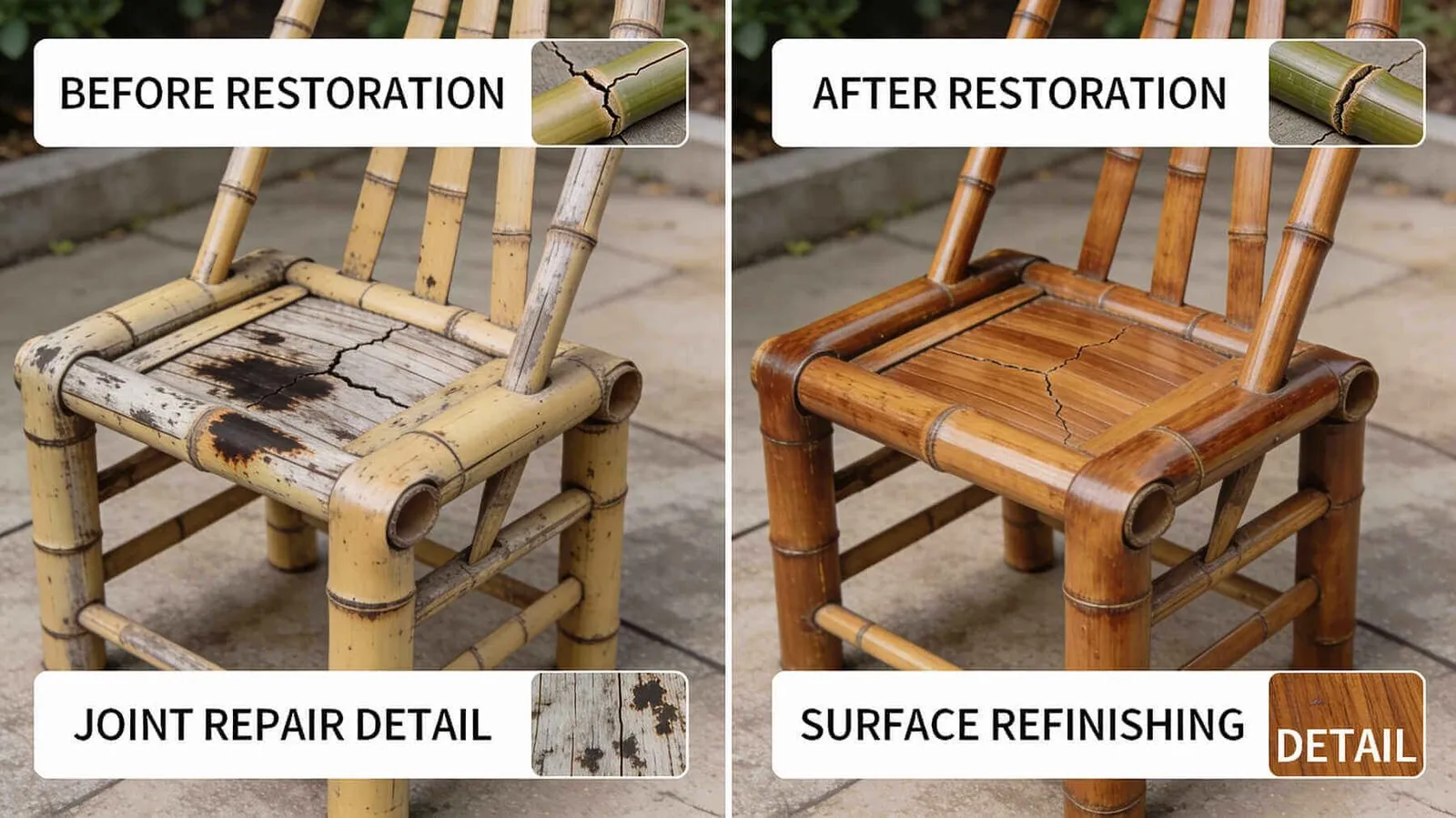
You need to gather these items before you begin your work. Bamboo is delicate, so avoid using heavy power sanders that might damage the surface fibers.
Hand sanding with medium-grit paper keeps the outer skin intact. Power tools burn through that hard silica layer in seconds. Once it’s gone, the soft inner pith absorbs moisture and rots.
Always test your wood cleaner on a hidden joint first. Some commercial formulas contain ammonia that darkens aged bamboo permanently. If the spot turns gray or black after ten minutes, switch to mild dish soap.
| Item | How much | Why it’s needed | A substitute |
|---|---|---|---|
| Medium-grit sandpaper | 2 sheets | Remove old finish | Fine-grit sanding sponge |
| Wood cleaner | 1 bottle | Remove dirt and oil | Mild dish soap |
| Wood stain | 1 pint | Change the color | None — don’t swap |
| Polyurethane sealer | 1 quart | Protect the bamboo | Tung oil |
| Soft brushes | 2 brushes | Apply stain and sealer | Foam applicators |
| Clean rags | 4 cloths | Wipe away excess | Old cotton t-shirts |
Stain must be formulated for wood surfaces. They stay tacky for weeks and attract dust.
Choose high-quality synthetic-bristle brushes when applying water-based polyurethane. Nylon bristles leave streak marks across the curved bamboo segments. Natural bristles hold more sealer and release it evenly along the grain.
Preparing to refinish bamboo chairs
Move the chairs to a garage or outdoor area with good airflow to avoid breathing in dust or chemical fumes.
Wipe the entire surface with a damp cloth and mild soap to remove surface grime, then let it air dry for at least 2 hours. If the bamboo feels tacky or retains a soapy film, wipe it again with a clean, water-dampened rag. Skipping this step forces sanding dust into the grain, which creates a muddy finish.
Cover your floor with a drop cloth to catch sanding dust and drips, as spills can be difficult to clean from carpets. Use a heavy-duty canvas cloth rather than plastic, as plastic becomes slippery when coated in fine sanding debris.
Remove any seat cushions or fabric parts, as these will trap moisture and potentially cause the bamboo to mold if they stay attached. If the bamboo has deep cracks or rot, it’s likely not safe for seating and should be replaced. Test for structural integrity by applying firm pressure to joints; if you hear a sharp clicking sound, the internal fibers have failed.
Steps to restore your bamboo chairs
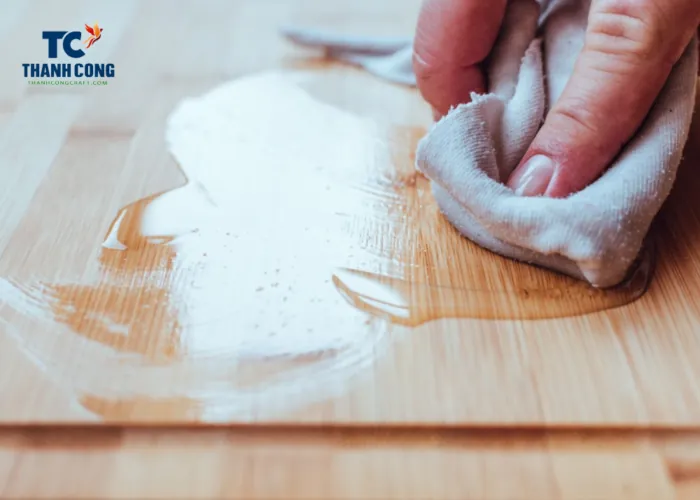
- Lightly sand the entire chair frame using medium-grit sandpaper to remove the old, flaking finish. Work in the direction of the bamboo grain to avoid scratching the surface. You know you have done enough when the surface feels matte and uniform to the touch.
- Wipe away all sanding dust using a dry, clean cloth. Any remaining dust will prevent the new finish from sticking to the bamboo. If you skip this, the sealer will look cloudy or feel gritty after it dries.
- Apply a thin, even coat of wood stain using a soft brush or a foam applicator. Start at the top of the chair and work your way down to prevent drips from landing on finished areas. Let the stain sit for 5 to 10 minutes.
- Wipe off the excess stain with a clean, lint-free rag after the 10-minute wait. Check that the color is even across all sections of the bamboo. If you want a darker shade, wait 2 hours and apply a second coat of stain.
- Allow the stain to cure completely for at least 6 hours in a dry, room-temperature environment. You know it’s ready for the sealer when the surface is no longer tacky or sticky to the touch.
- Apply a thin layer of polyurethane sealer to the chair using a clean brush. Keep the layer thin to avoid pooling or bubbles in the crevices of the bamboo. Follow the product safety guidelines from the EPA regarding the use of chemical sealers in enclosed spaces.
- Let the first coat of sealer dry for 4 hours, then lightly buff it with fine-grit sandpaper. This step removes tiny bubbles and creates a smooth base for the final protective layer. Wipe away the fine dust with a tack cloth.
- Apply a second and final coat of sealer to the entire frame. This layer provides the necessary protection against daily use and light moisture. Let the chair dry for 24 hours before you sit on it or attach any cushions.
Signs of a successful finish
The finish is successful when the surface feels smooth, uniform, and hard to the touch. A high-quality job shows a consistent sheen across all nodes and stalks of the bamboo. If you see white streaks or patches, the sealer was applied too thickly or the surface wasn’t fully dry before application.
If the surface feels sticky after 24 hours, the humidity in your room is likely too high for the sealer to cure. Move the chair to a drier, warmer area for another 12 hours. If the finish looks dull or uneven, lightly sand the area with 320-grit paper and apply a thin third coat of sealer to restore the shine.
Never force the drying process with a hair dryer. The concentrated heat causes natural bamboo fibers to warp or split unexpectedly. If you can press a fingernail into the surface and leave a mark, the finish hasn’t yet hardened. Wait an additional day before testing again. If the indentation remains permanent, the sealer has failed to bond, and you must strip the surface entirely before attempting a fresh application.
Troubleshooting common refinishing issues
| What happened | Why | What to do |
|---|---|---|
| Sticky surface | High humidity | Move to dry area |
| Bubbles in sealer | Over-brushing | Sand and recoat |
| Uneven stain color | Uneven sanding | Sand and re-stain |
| White hazy spots | Trapped moisture | Let dry longer |
| Flaking finish | Poor surface prep | Sand down completely |
If your finish remains tacky after 48 hours, check the ambient humidity. If it exceeds 60%, the solvent can’t evaporate, and moving the piece to a climate-controlled room is the only fix.
Bubbles often stem from aggressive brush strokes that whip air into the finish. To avoid this, use a natural bristle brush and apply the sealer in long, singular passes. If you see bubbles, wait for the surface to cure fully before sanding with 220-grit paper.
White haze indicates moisture trapped beneath the topcoat. If you see this, don’t apply more sealer. Instead, wait for a dry day and lightly buff the area with fine steel wool. If the haze persists, the finish has failed and requires a complete strip.
Frequency of maintenance for bamboo
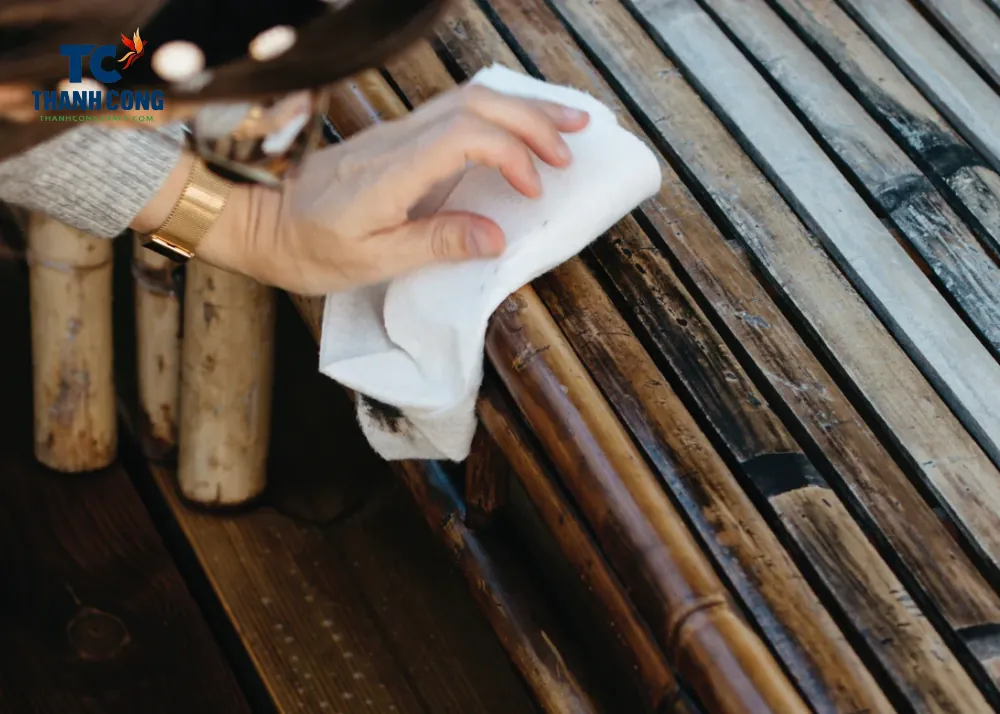
You should inspect your bamboo chairs every 6 months to ensure the sealer remains intact. The interval for refinishing depends on two main things: the amount of direct sunlight the chair receives and the humidity of your home.
If the chair sits on a covered porch, the sun will break down the sealer faster than it would indoors, requiring a fresh coat every 2 years. If the chair stays in a dry, climate-controlled room, you can often go 5 years or more between full refinishing projects.
Check for small cracks or peeling spots during your regular cleaning. If you find them, sand and touch up those specific areas immediately to prevent moisture from entering the core of the bamboo.
A simple test is to drip a few drops of water onto the surface. If the water beads up, the sealer is still effective. If the wood darkens or absorbs the liquid, you must refinish the entire piece to prevent structural rot.
Frequently asked questions
Can I paint bamboo chairs instead of staining them?
Yes, you can paint bamboo, but you must use a high-quality primer first to ensure the paint adheres to the smooth surface. Use a spray primer and paint for the best coverage, especially in the tight joints where bamboo stalks meet. A thin, even coat is better than one thick coat, which can hide the natural texture of the bamboo and eventually crack as the material expands.
Is it safe to use bamboo chairs outdoors?
Bamboo is generally not suitable for long-term outdoor use unless it’s a specific species treated for weather resistance. Most indoor bamboo furniture will rot, warp, or crack if exposed to rain and high humidity for extended periods. If you must use them outdoors, keep them in a fully covered area and apply a marine-grade sealer to provide the best possible protection against the elements.
How do I know if my bamboo is rotting?
You can identify rot by pressing firmly on the bamboo stalks; if they feel soft, spongy, or show dark, sunken areas, the integrity of the material is compromised. Rot often starts at the bottom of the legs where they touch the floor. If you find these signs, the chair is no longer safe for seating and shouldn’t be repaired, as the internal structure is likely degraded.
How long does the stain take to dry?
The stain typically takes 6 hours to dry, but this depends on the temperature and humidity of your workspace. If the air is damp, you should wait up to 12 hours to ensure the stain is fully set before applying the sealer. A good test is to touch a hidden area with a clean paper towel; if no color comes off, the stain is ready for the next step.
What happens if I skip the sanding step?
If you skip sanding, the new finish will likely peel or flake off within a few months because it can’t bond to the old, slick varnish. Bamboo has a natural, smooth outer layer that resists liquids, making a mechanical bond from sanding essential. Without this step, your hard work won’t last, and you’ll have to strip the entire piece and start over from the beginning.
Does the type of sealer matter?
Yes, the type of sealer matters because some products are formulated for indoor use while others offer UV protection for sunlight exposure. For most chairs, a water-based polyurethane is the easiest to work with and dries clear without yellowing. Always check the label on the sealer to ensure it’s compatible with the stain you used; mixing oil-based and water-based products often results in a finish that never dries properly.
Conclusion
Refinishing your furniture is a rewarding way to extend the life of your pieces, provided you take the time to prepare the surface properly. By following these steps and keeping an eye on the condition of the bamboo, you can keep your chairs looking new for many years.