
Sagging fabric from sun damage is the main reason a sling chair needs new material. It’s safe to keep sitting in it until the seam starts splitting or the frame bends under you. You can determine if the material needs replacing by pulling the old fabric at the rail—if it stretches more than an inch and doesn’t snap back, it’s done. That one check takes five seconds and tells you everything you need to know before buying anything.
Troubleshooting and fixing your sling chairs
The signs your chair shows tell you exactly what part failed and what you have to do next. Read the symptom, match it to the cause, then follow the first step before ordering materials.
| What you notice | What it usually means | What to do first |
|---|---|---|
| Fabric sags when you sit down | UV rays broke the fibers | Measure the panel width |
| Edges are fraying at the rail | The spline wore through | Pull the old spline out |
| Chair leans to one side | One side stretched more | Compare both side lengths |
| Plastic rail cracked in half | Cold weather made it brittle | Buy replacement rails |
| Faded color but tight fabric | Only surface dye is gone | Leave the fabric alone |
| Stiff fabric that won’t fold | Vinyl coating dried out completely | Plan for full replacement |
| Rust spots on the frame | Moisture got under the hem | Sand and paint the metal |
Sun damage wears out the fabric first
Ultraviolet light breaks down the PVC coating on outdoor sling mesh, leaving the polyester threads underneath exposed and weak. Once those threads lose their strength, the panel stretches permanently every time someone sits down. You can’t tighten it again because the fibers themselves are broken, not just loose.
Check this by pinching the fabric near the center of the seat and pulling it toward you. If it gives more than an inch without strong resistance, the material is finished. Do this check on a dry day above 60°F; cold vinyl feels stiffer than it really is and hides the damage.
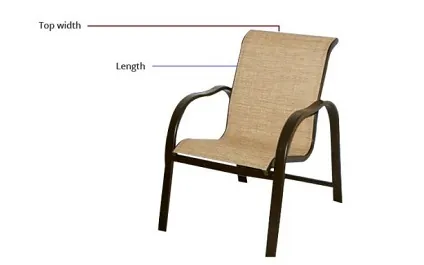
If the fabric fails that test, order a replacement panel cut to your exact frame dimensions. Measure from the inside edge of one rail channel to the inside edge of the other; this is your finished width. For the length, measure top to bottom the same way. Don’t buy a “universal” size hoping it fits—sling rails need a precise width to hold the spline without slipping out.
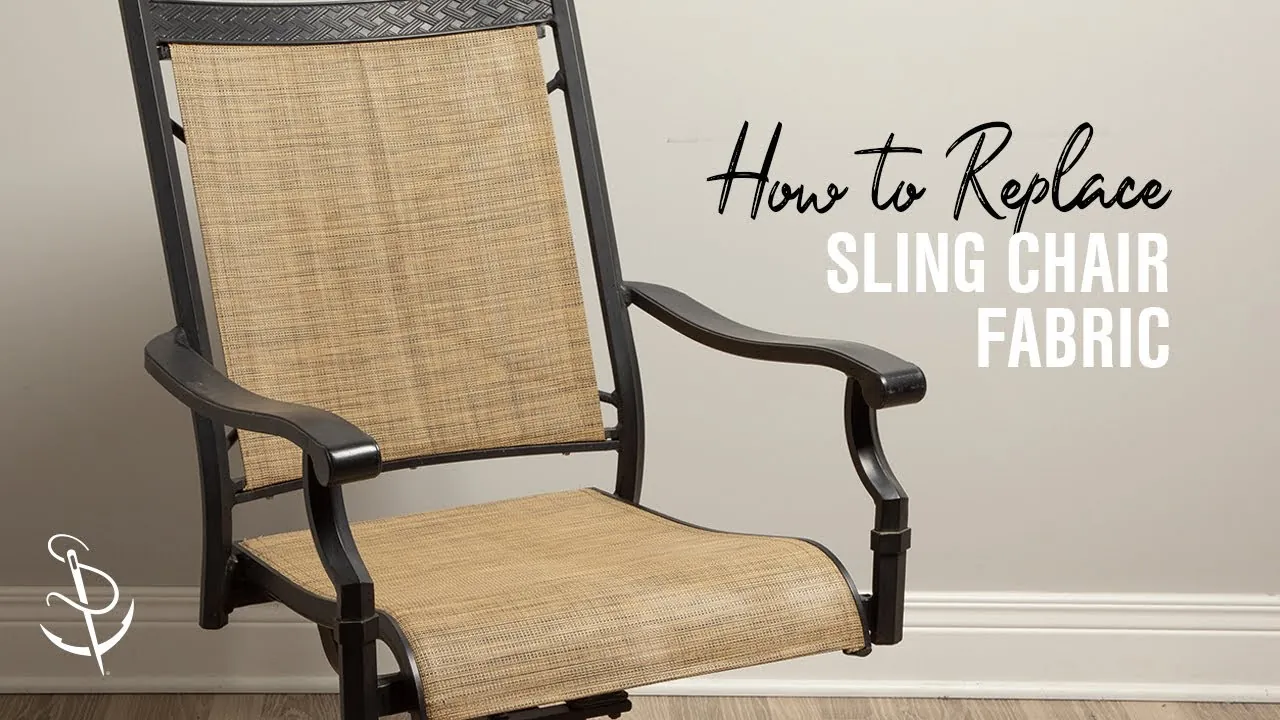
Slide the old spline out of the rail channel using a flathead screwdriver. Pull the old fabric free, clean the channel with a damp cloth, then feed the new panel’s sewn-in rod into the slot. Start at the top corners and work down both sides evenly so the tension stays balanced.
You’ll know it worked when the new panel sits flat with no wrinkles and doesn’t dip more than half an inch when you press the center with your palm. Phifer, the company that makes the most common outdoor mesh, publishes sling fabric specifications showing the weight and weave options meant for different load levels. Pick the heavier weave if your chair supports over 250 pounds.
Cracked plastic rails let the fabric slip
The plastic rods or rails holding the fabric edges inside the aluminum frame turn brittle after a few seasons outside. When they crack, the fabric pulls free from the channel, making the whole seat sag even if the mesh itself is fine. This isn’t a fabric problem—it’s a hardware failure.
Look closely at the edges where the fabric enters the frame. Run your finger along the rail channel. If you feel sharp plastic splinters or see gaps where the rod has snapped into pieces, the rails are your real issue. A fabric-only replacement won’t fix this because the new mesh will slip right out of the broken track.
To fix it, remove the old rail pieces entirely. Use needle-nose pliers to pull out any small shards stuck in the channel. Order replacement spline rods that match your frame’s channel width—measure the gap with a ruler to get the diameter right. Most channels take a 5/16-inch or 3/8-inch rod, but you must check yours instead of guessing.
Thread the new plastic rod through the fabric’s sewn sleeve, then press the whole assembly back into the aluminum track. Tap it gently with a rubber mallet if it resists. Never use a metal hammer here because you’ll dent the frame and ruin the channel shape.
The repair holds when you can tug hard on the fabric edge without the rod lifting out of the groove. If it still pops up, your replacement rod is too thin for that specific channel.
This differs from sun damage because the fabric might still feel tight and look new. The failure happens only at the attachment point, not across the seat surface.
Bent frames change the whole fit
Aluminum frames bend when a chair tips over in high wind or carries more weight than its joints were built for. Even a quarter-inch warp in the side rails changes the distance the fabric has to span, making a perfectly good replacement panel look loose or impossible to install.
Stand behind the chair and sight down the top edge of both armrests like you’re aiming a rifle. They should run parallel. If one curves inward or outward compared to the other, the frame is bent. You can also lay a straight board across the seat opening—if it rocks instead of sitting flat on all four contact points, the geometry is off.
If the gap between rails varies by less than a quarter inch from top to bottom, you can sometimes compensate by ordering a custom-cut panel that matches the wider measurement. If the difference is larger, the frame needs straightening first. Trying to force fabric onto a badly warped frame tears the stitching within days.
Grip the bent rail with both hands and apply slow, steady pressure in the opposite direction of the curve. Don’t jerk it. Aluminum work-hardens, meaning it gets stiffer each time you bend it, and sudden force snaps it instead of reshaping it.
You’ll know the frame is straight enough when a new panel slides into both channels without bunching on one side. But here’s the trade-off: straightened aluminum never returns to its original strength. A chair you’ve bent back will flex sooner under heavy loads than one that was never damaged.
When to call someone else
Stop working and hand the chair to a professional if you find these signs during your checks:
- The aluminum frame has a visible crack, because welding cast or extruded aluminum requires a TIG welder and training most people don’t have.
- The chair is part of a set still under warranty, since cutting out the factory fabric voids coverage from makers like Tropitone or Telescope Casual.
- The spline channel is crushed flat, which means the frame itself needs metalwork rather than a simple fabric swap.
- You feel sharp metal burrs deep inside the rail that you can’t reach with pliers, as they’ll slice the new fabric from the inside out within a week.
- The chair uses a spring-loaded tension system instead of static rails, because releasing those springs incorrectly can cause injury.
A local patio furniture repair shop or an upholstery business that handles outdoor marine canvas can handle these jobs safely. Don’t try to weld aluminum with a standard hardware-store torch or force springs back into place without the proper jig. Your body weight tests every joint on that chair, so a bad repair becomes a safety problem fast.
Related guides
- How to Tighten Dining Room Chairs: A Step-by-Step Fix
- Best Weather Resistant Patio Chairs for Lasting Comfort and Style in 2026
- 10 Best Patio Chairs for Outdoor Lounging: Expert Picks and Verdict in 2026
Frequently asked questions
How long does replacement sling fabric last?
PVC-coated polyester mesh left outdoors year-round in direct sunlight eventually degrades. If your chair sits under a covered patio or you bring it inside during winter, the material lasts longer. The lifespan moves based on UV exposure, not calendar time. Check the manufacturer’s UV rating on the fabric roll label for your specific climate.
Can I use indoor upholstery fabric instead?
No, because indoor fabric lacks the PVC coating needed to resist mildew and UV breakdown. It’ll stretch, stain, and rot within a single wet season. Outdoor sling mesh is woven specifically to drain water and handle constant tension. Always buy material labeled for sling chair or outdoor marine use.
Why does my new sling wrinkle in the middle?
Wrinkles mean the panel was cut too wide for your frame’s rail-to-rail distance. Even an extra half inch creates slack that shows up as a crease when you sit down. Measure the inside gap at three points—top, middle, and bottom—and order the panel to the narrowest of those three numbers.
Is it safe to sit on a sagging chair?
It’s fine temporarily, but not once the fabric dips more than two inches below the frame’s bottom rail. At that point, your weight pushes directly against the metal crossbars instead of being supported by the mesh. That stress cracks the frame joints over time. Replace the panel before the frame takes permanent damage.
How much does it cost to recover one chair?
Replacement fabric panels cut to standard dining-chair dimensions are inexpensive compared to buying new furniture, as are new spline rods if yours are cracked. Custom sizes for oversized loungers cost more. Check the price list from the mesh supplier you choose, since costs shift with fabric weight and pattern complexity.
Does the fabric weight matter?
Yes, because heavier mesh handles more weight without stretching. Look for the ounce-per-yard rating printed on the product spec sheet before ordering. Using lightweight fabric on a lounger guarantees early sagging.
What happens if I install the panel upside down?
The hemmed edges won’t align with the rail channels correctly, and the fabric’s texture will face the wrong way. Most sling mesh has a smoother side meant to face up for comfort. Flip the panel before sliding the spline in—you can’t reverse it once the rod is seated in the track without removing everything again.
How long does the whole job take?
About 30 to 45 minutes per chair once you have the correct replacement panel and new spline rods in hand. Removing the old fabric takes roughly ten minutes, cleaning the channels another five, and feeding the new panel in fills the rest. This assumes a standard dining chair with straight rails, not a curved lounger frame.
Conclusion
Replacing the mesh on a patio chair is straightforward once you read the actual failure instead of assuming the whole chair is ruined. Match the symptom to the right fix, measure twice before ordering, and stop if the frame itself is compromised. Your chairs will hold up for another full set of seasons without needing a complete replacement set.