
How to make loose covers for chairs takes most people one weekend, costs roughly the price of the fabric plus basic sewing supplies, and sits at medium difficulty — you need a sewing machine before anything else. You can do this yourself if your chair has a straight back and a flat seat, but skip it if the frame has curves, buttons or deep tufting you can’t smooth away.
What you need
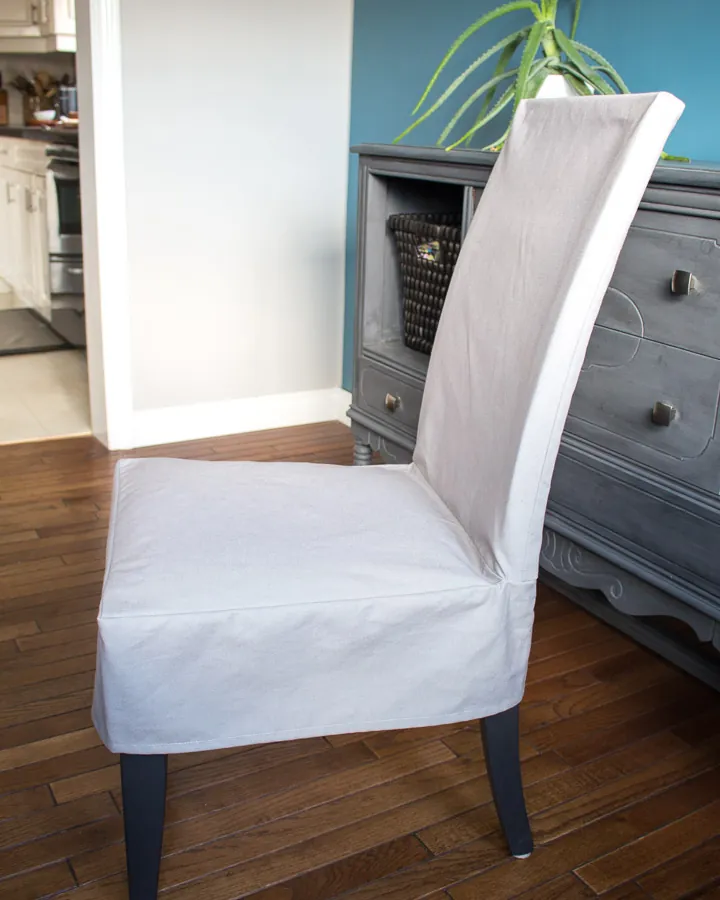
| Item | How much | Why it’s needed | A substitute |
|---|---|---|---|
| Upholstery-weight fabric | Enough to cover seat, back and arms plus seam allowance | Holds shape and wears well | none — don’t swap this |
| Matching thread | One spool | Sews seams without showing | none — don’t swap this |
| Measuring tape | One | Measures every chair part | none — don’t swap this |
| Dressmaker’s chalk | One stick | Marks fabric before cutting | none — don’t swap this |
| Fabric scissors | One pair | Cuts cleanly through thick cloth | none — don’t swap this |
| Straight pins | One box | Holds fabric layers together | Sewing clips |
| Sewing machine | One | Stitches strong seams quickly | Hand sewing, much slower |
Buy fabric with a tight weave such as cotton duck or canvas. Lightweight cloth sags, tears fast and needs replacing sooner. If you’re unsure how much fabric to buy, measure the chair first and ask the shop to work it out for you — most fabric stores will do this at no charge.
Calculate your total yardage by adding six inches of seam allowance to every panel length. If your fabric has a repeating pattern, increase your purchase by twenty percent to ensure the design aligns across the seat and back. Failing to account for this repeat often results in a mismatched, unprofessional finish that ruins the entire project.
Use a heavy-duty needle, size 100/16, for your machine. Standard needles snap or skip stitches when forced through thick upholstery layers. If your machine struggles to pierce the fabric, switch to a walking foot attachment to prevent the layers from shifting during the feed process. This simple adjustment saves hours of frustration and prevents crooked, uneven seams.
Before you start
Remove loose cushions and set them aside. Vacuum the chair thoroughly so dust and debris don’t get trapped under the new cover. Move the chair to a clear space with bright, overhead light. Wash and dry your fabric before cutting, because untreated cloth shrinks significantly after the first wash and will pull your seams out of shape. Iron the material flat so your measurements stay true.
The preparation most people skip is checking the frame for hidden staples, tacks, or rough wood edges that can snag or tear the fabric as you fit the cover. Run your bare hand over every surface; if you feel a snag, sand it down or cover it with heavy-duty tape.
If your chair has a damaged frame, broken springs, or loose joints, fix those first. A cover won’t hide a wobble, and the tension of a tight fit can cause a weak frame to collapse entirely.
If you aren’t confident with your sewing machine, ask someone who is to show you how to thread it and sew a straight seam on scraps before you cut your main fabric. If the seam ripples, increase your stitch length to avoid puckering the weave.
How to make loose covers for chairs
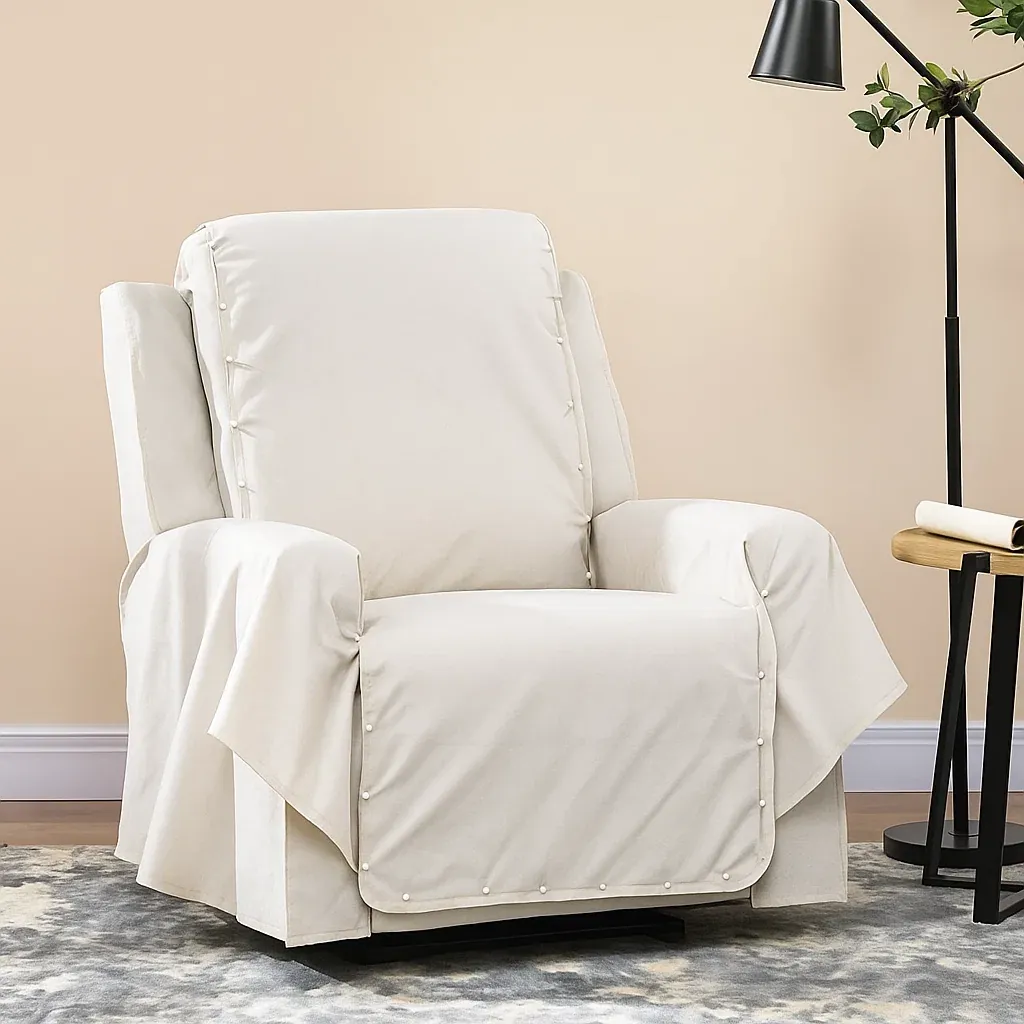
Measure the seat width, depth and height from floor to seat frame, then measure the back height and width, and the arm height and width. Write every number down and add one inch to each side for seam allowance. Cut the fabric pieces for the seat, back and arms separately, marking each piece with chalk so you know which side faces up.
Pin the seat piece to the chair with the wrong side of the fabric facing out, pulling it smooth across the seat and down the front edge. Pin the back piece so it overlaps the seat piece at the back corner by about one inch. Check that the fabric lies flat without puckers before you sew anything.
Sew the seat and back pieces together along the pinned seam, using a straight stitch and a half-inch seam allowance. Remove the pins as you go so you don’t sew over them. Try the partly sewn cover on the chair to check the fit before cutting away extra fabric.
Cut the arm pieces to match the arm height and width, plus seam allowance on all sides. Pin each arm piece in place and sew it to the seat and back sections. The arms should meet the seat corner without gaps or bunching.
Turn the cover right side out and slip it over the chair. Smooth the fabric over the seat, back and arms, and check that the seams sit at the corners where they belong. If the cover pulls or gaps, take it off, unpick the problem seam, and resew it with the fabric pulled tighter.
Hem the bottom edge of the cover by folding up half an inch, then folding again to hide the raw edge. Sew around the whole hem so the cover finishes neatly and the edge doesn’t fray. Leave the hem loose enough that you can pull the cover on and off without straining the stitches.
Attach hook-and-loop tape or fabric ties at the back corners if the cover slips when someone sits down. Sew them securely so they hold through regular use. Test the cover by sitting in the chair and standing up a few times — it should stay in place without riding up.
Wash the finished cover according to the fabric care label before putting it back on the chair. This removes any chalk marks and pre-shrinks the cloth so the fit stays the same after future washes. Refit the cover and replace the cushions.
How to know it worked
The cover slips on and off without force, and the seams sit at the chair corners without stretching. The fabric lies smooth across the seat and back with no baggy pockets or tight pulls. When you sit down and stand up, the cover stays in place and doesn’t ride up over the seat edge.
Test the fit by running your palm firmly across the center of the seat. If the fabric ripples more than an inch, the tension is too loose. A properly fitted cover should feel like a second skin, resisting movement when you shift your weight.
Signs it needs another round include gaps at the arm corners, fabric bunching under the seat, or seams that gape when someone sits in the chair. If the cover catches on the frame or pulls at a seam every time you sit, take it off and resew that section with the fabric pulled tighter before you use the chair again. Ignoring these small gaps leads to permanent fabric fatigue and eventual tearing at the stress points.
If something goes wrong
| What happened | Why | What to do |
|---|---|---|
| Cover is too tight | Seam allowance too small | Unpick and resew with wider seam |
| Cover sags | Fabric too lightweight | Use heavier upholstery fabric |
| Seams split | Thread or stitch too weak | Resew with stronger thread |
| Cover slips | Nothing holding it | Add ties or hook-and-loop tape |
| Hem frays | Raw edge not folded | Re-hem with double fold |
If the cover still doesn’t fit after two attempts, the chair frame may be too curved for a simple loose cover. Stop and take the chair to an upholsterer rather than forcing fabric over a shape it won’t cover neatly.
When measuring, allow for at least two inches of ease on every side. If you skip this, the fabric will pull at the seams and fail within weeks. You can tell if your allowance is sufficient by pulling the fabric taut; if the thread shows through the seam, you have no room for error.
If you’re working with patterned fabric, align the center motif with the chair’s backrest before pinning. A shift of even half an inch will look like a mistake once the cover is tensioned. If the pattern is off-center, unpin and reset the fabric entirely. Never try to stretch the fabric into alignment, as it will only distort the design and cause uneven sagging later.
How often to do this
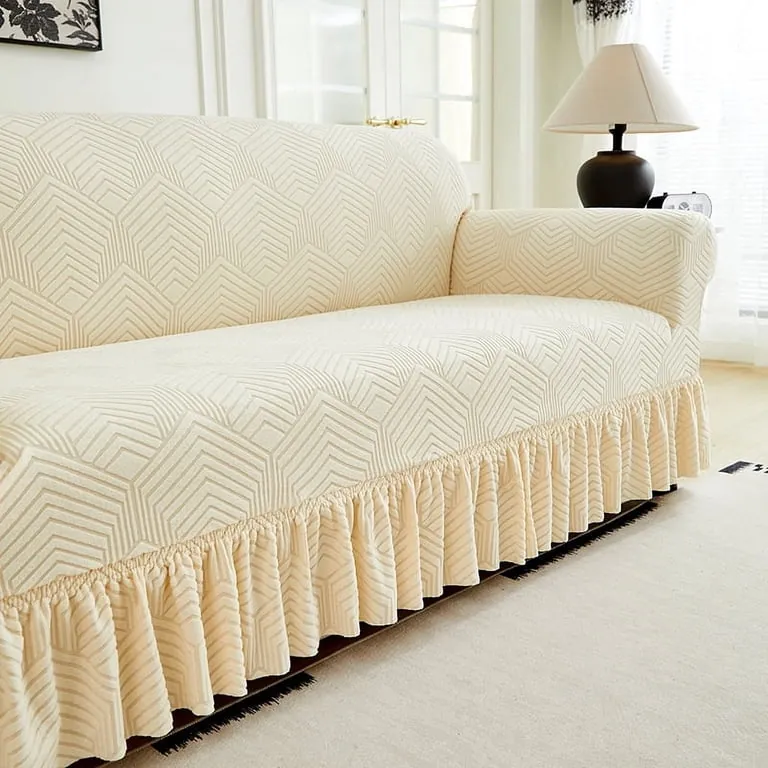
Wash the cover every three to six months, assuming normal home use and no pets or children on the chair. Wash it sooner if it looks stained or smells stale, because ground-in dirt wears the fabric faster than regular washing does.
The two things that change the interval most are how often the chair is used and whether pets or children sit on it. Daily use with pets can mean monthly washing, while a spare-room chair used once a year might only need washing once a year.
If you see visible pet hair or crumbs in the weave, wash it immediately. Lingering debris acts like sandpaper against fibers, permanently thinning the material over time.
Check the fabric care label on your cover for the exact wash temperature and drying method. That label is the only figure that applies to your specific cloth. If the tag is missing, default to cold water and air drying to prevent shrinkage.
Related guides
- How to Tighten Dining Room Chairs: A Step-by-Step Fix
- 10 Best Outdoor Faucet Covers for Winter: Our Top Picks in 2026
- 10 Best Performance Engine Valve Cover Bolts for a Perfect Seal in 2026
Frequently asked questions
Can i make a loose cover without a sewing machine?
You can, but hand sewing takes much longer and the seams aren’t as strong. A sewing machine gives a straight, even seam that holds up to sitting and washing. Hand-sewn covers work for light use, but expect to resew seams sooner.
How long does it take to make loose covers for chairs?
Most people need one weekend, assuming a standard dining chair and basic sewing skills. A first attempt can take longer, while someone with practice might finish a simple chair in a day.
Is it safe to wash a loose chair cover in the washing machine?
Yes, if the fabric is machine washable and you follow the care label temperature. Some upholstery fabrics shrink or bleed colour in hot water, so check the label before the first wash.
What happens if i use regular cotton instead of upholstery fabric?
Regular cotton wears thin, sags and tears much faster under the strain of sitting. Upholstery-weight cloth is woven tighter and lasts years where lightweight cloth may need replacing in months.
Does it matter if my chair has curved arms?
Yes — curved arms are hard to cover neatly with flat fabric pieces, and the cover will bag or gap at the curves. Straight-backed chairs with flat arms give the best results for a first attempt.
How much fabric do i need for one chair?
Buy enough fabric to cover the seat, back and arms plus seam allowance for every side, and ask the shop to calculate the exact amount from your chair measurements. Fabric width varies, so there’s no single figure that fits every chair.
Conclusion
The best loose cover starts with a chair that has straight lines and fabric that can take daily use. Measure twice, cut once, and wash the finished cover before you put it back on the chair so the fit stays true.