
Disclosure: we are an Amazon Associate and are compensated for qualifying purchases made through some of the links in this article. Your price is exactly the same.
Choosing the right engine valve cover bolts is essential for maintaining a perfect seal and preventing oil leaks. A quality kit provides even clamping force, while precision threads ensure you do not strip your cylinder head during installation. Always select kits that match your specific engine block to avoid mismatched thread pitches or insufficient length.
1. ARP 4007508 Valve Cover Bolt Kit

Best for: Clean engine builds requiring a precise, polished finish.
This kit features a 14-piece hex head design that offers a professional, polished look for those who want their engine bay to stand out.
If you’re looking for a reliable, brand-name fastener set, this kit provides a straightforward upgrade. It isn’t suitable for those working on non-specified engine blocks, as the dimensions are engineered for specific tolerances.
| Feature | Trade-off |
|---|---|
| Polished hex head | Requires careful handling to maintain finish |
| 14-piece set | Fixed count, no spares included |
| Vehicle specific | Not universal for all valve covers |
2. ARP Chevy Duramax 6.6L LB7 12pt Valve Cover Bolt Kit
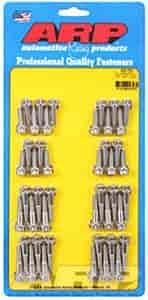
Best for: Heavy-duty applications on Duramax 6.6L engines.
These 12-point bolts are designed for high-stress environments where security and durability are the top priorities.
This kit is ideal for professional-grade rebuilds or high-performance setups where you can’t afford a loose seal. It isn’t the right choice for casual maintenance or smaller, non-Duramax engines due to the specialized nature of the kit.
What goes smoothly:
- High-strength 12-point head design.
- Robust construction for heavy-duty use.
- Reliable performance under pressure.
What you have to accept:
- Heavier package weight compared to stock.
- Specific to the 6.6L LB7 Duramax engine.
3. ARP 1007503 Cast Aluminum Valve Cover Bolt Kit

Best for: Cast aluminum valve covers needing a secure seal.
This kit uses a wide base nut design to distribute pressure evenly across the valve cover surface. While the black oxide finish provides excellent corrosion resistance, it lacks the shiny aesthetic of chrome or polished alternatives.
This set is specifically tuned to ensure your cast aluminum covers sit flush and stay sealed according to the manufacturer’s torque specifications.
Who it fits Engineers or enthusiasts running cast aluminum covers who prioritize load distribution. It suits those who want a long-lasting, corrosion-resistant finish for their engine.
Who should pass Owners of stamped steel valve covers who need a different mounting profile. Anyone looking for a high-gloss, decorative finish will find this matte black option too understated.
4. Michigan Motorsports LS Valve Cover Bolts with Grommet Seals
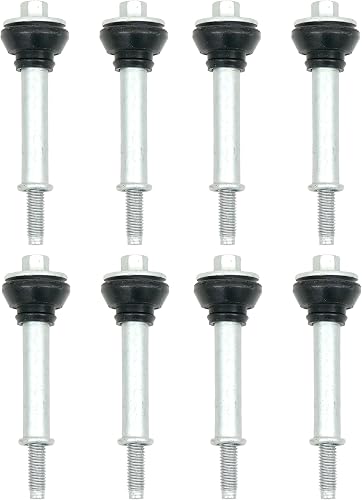
Best for: LS-series engine owners needing a complete, direct-fit solution.
These bolts come with pre-installed rubber grommet seals, which simplifies the process of preventing oil seepage. Because these are built as an OEM-style replacement, they’re optimized for stock-to-moderate builds rather than extreme racing modifications.
You get a complete set of 8 bolts that fit a wide range of LS engines from 1999 to 2013. If you’re looking for a custom aesthetic or a non-standard bolt head, you might find the factory-style look too basic for your taste.
| Feature | Trade-off |
|---|---|
| Pre-installed grommets | Rubber can wear over long cycles |
| LS engine specific | Limited to specific GM engine families |
| OEM-style steel | Lacks decorative finish options |
5. ARP 2007603 Valve Cover Stud & Bolt

Best for: Users who prefer the convenience and security of studs.
The stud and nut combination allows for easier alignment of the valve cover during installation.
This is a great choice for frequent valve cover removal, such as in racing environments where you need to check valvetrain components often. It isn’t for those who want a one-step, bolt-in installation, as the stud-first process is a different workflow than standard fasteners.
What goes smoothly:
- Stud design protects head threads.
- Hex nuts included for secure fastening.
- Black oxide finish resists corrosion.
What you have to accept:
- Two-step installation process (stud then nut).
- Vehicle specific fitment requirements.
6. ARP Cast Aluminum Hex Valve Cover Bolt Kit

Best for: Replacing lost or damaged hardware on cast aluminum setups.
This kit provides a simple hex head design specifically for cast aluminum covers, focusing on function and ease of use.
If you need a reliable, no-nonsense replacement that fits the 100-7507 model profile, this is a solid choice. It isn’t for the builder who needs extra documentation or a wide range of application data, as the information provided is quite limited.
Who it fits Those who already have a specific cast aluminum cover setup and just need the correct hardware. It fits builders who prefer a standard hex head for easy wrench access.
Who should pass Builders who need detailed compatibility lists or extra features like washers or grommets. Anyone who is unsure about their exact model number should look elsewhere for more comprehensive fitment data.
7. YALOK Chrome Valve Cover Bolt Kit

Best for: Restoring the look of classic Small Block Chevy engines.
The chrome finish on these bolts offers a bright, decorative look for car shows or engine bay aesthetics.
These are compatible with a wide range of classic engines like the 283, 305, and 350. They aren’t recommended for high-pressure or extreme-vibration racing applications where specialized high-tensile steel fasteners are required.
What goes smoothly:
- Decorative chrome finish.
- Compatible with common classic engines.
- Easy to install by hand.
What you have to accept:
- Chrome finish requires maintenance.
- Not built for extreme high-performance stress.
8. Beck/Arnley 016-1074 Valve Cover Bolt Set

Best for: Drivers wanting to maintain factory specifications exactly.
This set is designed to match the OE form, fit, and function, ensuring that your engine operates exactly as the manufacturer intended. The bolts are calibrated to factory specified yield point.
This is the safest bet for a daily driver that needs a reliable, “set it and forget it” repair. It isn’t for the custom builder who wants to upgrade to higher-strength materials or different head styles.
| Feature | Trade-off |
|---|---|
| OE-matched specs | No performance upgrades |
| Factory yield point | Requires precise torque tools |
| Application specific | Not for custom engine swaps |
9. Ford Engine Fastener Kit

Best for: Ford modular engine owners needing a direct replacement.
This kit covers a wide range of Ford, Lincoln, and Mercury vehicles, making it a versatile choice for Ford modular engines. The steel is coated for corrosion resistance.
It’s a great option for DIY repairs on common Ford models like the F-150 and Mustang. It isn’t for non-Ford engines, and attempting to force these into a different engine block will likely result in damaged threads.
What goes smoothly:
- Covers many popular Ford engines.
- Precision threads reduce breakage risk.
- Corrosion-resistant coating included.
What you have to accept:
- Limited to Ford modular engine families.
- Requires verification of part numbers.
10. ECSiNG Car Engine Valve Cover Bolts 90015-5A2-A00 900155A2A00 Compatible

Best for: Honda and Acura owners looking for a simple, direct-fit replacement.
These bolts are made of durable steel to ensure they hold the valve cover securely against the cylinder head. The kit is very specific to certain Honda and Acura models, which makes it easy to choose if you have a compatible vehicle.
This is a straightforward replacement part intended to get your engine back to stock condition. It isn’t for those looking to customize their engine or upgrade to exotic materials, as it’s strictly an OEM-style replacement.
Who it fits Owners of Honda Accord, CR-V, or Acura ILX/TLX models who need a reliable fix for broken or missing bolts. It suits those who want a quick, “no-modification” installation.
Who should pass Anyone with a non-Honda engine or a modified valve cover setup. Those who want a high-performance or decorative upgrade won’t find those features here.
The Decision Filter
Most people miss this: valve cover bolts are often engine-specific, not bolt-size specific. Start by checking your engine’s specific thread pitch and length requirements in your service manual. If your engine is stock, stick to OEM-style replacements to ensure the gasket seats perfectly. If you have an aftermarket valve cover, check the bolt-hole diameter, as some covers require wider base nuts or specific washers. Choosing the wrong thread pitch can destroy your cylinder head threads in seconds. Narrow your list down by selecting only the kits that list your specific engine model or part number.
The Quick Checklist
- Is this kit compatible with your engine’s specific year and displacement?
- Does your valve cover require a specific head type, like hex or 12-point?
- Do you need pre-installed grommets, or are you reusing your current seals?
- Does your current setup require studs for easier alignment or standard bolts?
- Are you looking for a high-gloss finish or a matte, corrosion-resistant coating?
- Have you checked your service manual for the correct torque specifications?
Three Regrets Worth Avoiding
Regret #1: Buying a kit without checking the thread pitch. Many builders guess based on the head style, only to find the threads don’t match their block. Always cross-reference your engine’s part number with the kit’s compatibility list before you buy.
Regret #2: Ignoring the torque specifications. Factory bolts are calibrated to a specific yield point, and using too much force can snap the head off. Use a torque wrench and follow the manual’s tightening sequence to ensure a leak-free seal.
Regret #3: Reusing old, crushed grommets. Even if your new bolts are perfect, old rubber seals may fail to maintain a proper seal. Always check the Society of Automotive Engineers standards for proper fastener application if you’re unsure about your specific build’s requirements.
If You Want This, Look for That
| If you want… | Look for | Avoid |
|---|---|---|
| Show-car shine | Chrome or polished finish | Matte black oxide |
| Racing durability | 12-point high-tensile steel | Decorative chrome |
| Easy alignment | Stud and nut kits | Standard bolts |
| Daily driver reliability | OEM-style replacements | Custom-length studs |
When two kits look identical, choose the one that explicitly lists your engine’s part number to ensure a perfect fit. If you’re still unsure, verify the bolt count against your current cover, as even small variations can cause oil leaks. Check your engine manual once more before you turn the first bolt.
Related guides
- 9 Best Emission PCV Valve Breather Grommets for a Perfect Seal in 2026
- 7 Best Performance Oil Pump Primers and Drives for Engines in 2026
- 9 Best Performance Rocker Arm Nuts and Bolts for Valvetrain in 2026
Frequently Asked Questions
Do I need to replace my valve cover gasket when I replace the bolts?
Yes, it’s highly recommended to replace the gasket whenever you remove the valve cover. The old gasket may have hardened or taken a “set” to the old bolt pressure, and reusing it often leads to leaks. New bolts provide fresh, even clamping force that works best with a fresh, pliable gasket.
Can I mix and match old and new bolts?
You should never mix old and new bolts on a valve cover. Different bolts can have slightly different tension levels or thread conditions, which creates uneven pressure across the gasket surface. Always install a complete set of matching fasteners to ensure consistent sealing across the entire cover.
How tight should I tighten these bolts?
You must follow the torque specifications provided in your vehicle’s factory service manual. Valve cover bolts are typically tightened to a very low torque setting, and over-tightening is a common cause of snapped bolts or cracked valve covers. Always use a calibrated torque wrench and follow the specific tightening pattern for your engine.
Do I need thread locker for these bolts?
Most valve cover bolt kits don’t require thread locker because they’re designed to be tightened to a specific torque that holds them in place. Using thread locker can make future removal difficult and may interfere with the bolt’s ability to reach the correct torque value. Only use thread locker if your specific engine manual or the kit instructions explicitly require it.
What causes oil to leak even after I replace the bolts?
If you still have leaks after installing new bolts, the issue is likely a worn-out gasket, a warped valve cover, or incorrect tightening sequence. Ensure the mating surfaces on the cylinder head and valve cover are clean and flat before installing the new gasket and bolts. Always use the manufacturer’s recommended tightening pattern to pull the cover down evenly.
Final Thoughts
Taking the time to install these fasteners correctly will keep your engine bay clean and leak-free for years. Once you’ve tightened them to the proper torque, take your car for a short test drive to ensure everything stays dry. You’ll definitely appreciate the peace of mind on your next long trip.