
You can make a six-inch mini beach chair from scrap wood and fabric in about an hour. This project requires only a hand saw to cut two side frames, a seat slat, and a back slat. Once assembled, you attach a canvas strip to allow the back to recline, creating a perfect display for a doll or desk.
What this takes
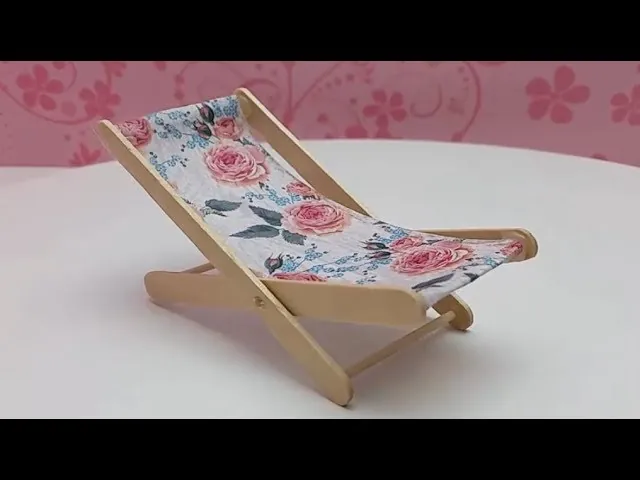
This build takes about one hour from first cut to finished chair. It costs very little because every part can come from scrap wood, a spare strip of fabric, and a few nails or screws.
The difficulty sits between easy and medium: the cuts are straight, but the pieces are small, so they need care. Most builders fail by rushing the initial measurements. If your cuts deviate by even an eighth of an inch, the frame will wobble, forcing you to sand down structural joints to compensate.
You must have a flat work surface where nothing will roll off. If you’re working on a garage floor, lay down a sheet of plywood first. A level surface ensures your chair sits square. If the frame rocks on a flat table, stop and trim the longest leg immediately.
What you need for mini beach chairs
| Item | How much | Why it’s needed | A substitute |
|---|---|---|---|
| Basswood or pine scrap | Two pieces, about 12 inches long | Forms the side frames and slats | none — don’t swap this |
| Canvas or heavy cotton | One strip, 2 by 8 inches | Makes the reclining back and seat | none — don’t swap this |
| Small hand saw | One | Cuts the wood to length | none — don’t swap this |
| Sanding block | One | Smooths edges so splinters don’t catch | fine sandpaper |
| Ruler and pencil | One set | Marks the cuts before you saw | none — don’t swap this |
| Small nails or screws | Six to eight | Holds the slats to the frames | wood glue |
| Hammer or screwdriver | One | Drives the fasteners | none — don’t swap this |
| Scissors | One | Cuts the fabric strip | none — don’t swap this |
Before you build mini beach chairs
Set the wood on a flat table and clear everything else away. Sweep the surface so no grit gets under the pieces while you cut. Mark every measurement with a pencil before you saw, because a wrong mark wastes the whole scrap.
Sand each piece right after cutting so rough edges don’t snag the fabric or your fingers. The preparation people skip most is checking that the two side frames match exactly. If one is longer, the chair leans.
Lay both frames flat together to compare them. Any gap wider than a credit card means you need to sand the longer one down. Do this now, before you drill holes for the dowels.
Drilling into mismatched frames forces the joints out of square. That stress cracks soft woods like pine within a few trips to the beach. A single misplaced dowel hole ruins the board entirely.
If you don’t have a saw or can’t make straight cuts safely, ask someone with woodworking experience to cut the pieces for you before you start the rest.
Build mini beach chairs step by step
-
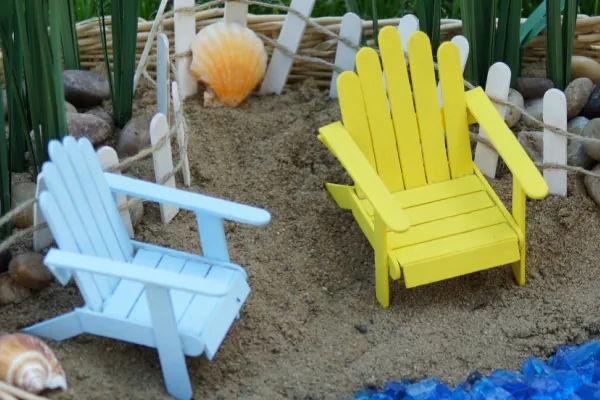
Cut two side frames from the wood, each about 4 inches tall and 2 inches wide at the base. Check that both pieces match before you put the saw down.
-
Mark a line one inch up from the bottom of each side frame. This line is where the seat slat will sit, so both frames need the same mark.
-
Cut one seat slat about 1.5 inches long and 0.5 inches wide. Hold it between the side frames at the marked line so the chair has a place to sit.
-
Drive one small nail or screw through each side frame into the end of the seat slat. The slat shouldn’t wiggle when you press it with your thumb.
-
Cut one back slat about 2 inches long and 0.5 inches wide. Place it behind the seat slat so it leans back at a gentle angle.
-
Fasten the back slat to the top of each side frame with one nail or screw per side. The back should stand without falling forward.
-
Cut the fabric strip to 2 inches wide and 8 inches long. Fold the short ends over about a quarter inch so the edges don’t fray.
-
Staple or nail one end of the fabric to the back slat, then stretch it over the seat slat and fasten the other end underneath. The fabric should hold the back at the angle you set.
-
Sand every edge one last time. Run your finger along each piece to catch any rough spot you missed.
-
Set the chair on a flat surface and press gently on the back. If it rocks, sand the bottom of the side frames until it sits level.
How to tell mini beach chairs worked
The chair stands on its own without tipping, and the back stays at the angle you set when you press it lightly. The fabric holds tight between the back and the seat, with no sag in the middle. Every edge feels smooth to the touch, with no splinters catching on your finger. If the chair leans to one side, one side frame is longer than the other — sand the longer one down until both match.
If the back flops forward, the fabric strip is too loose; take it off, pull it tighter, and refasten it. If a slat wiggles, the fastener missed the wood; add another nail or screw through the same spot. Never test stability by standing the chair on a high surface where a fall could break it.
If something goes wrong with mini beach chairs
| What happened | Why | What to do |
|---|---|---|
| Chair leans | Frames don’t match | Sand longer frame |
| Back flops | Fabric too loose | Retighten fabric |
| Slat wiggles | Fastener missed wood | Add another nail |
| Wood splinters | Edge not sanded | Sand smooth again |
| Fabric frays | Ends not folded | Fold and refasten |
If your chair leans, check the legs on a flat surface like a kitchen table before sanding. If one leg is off the ground by more than an eighth of an inch, remove material from the opposite side to avoid instability.
When fabric flops, don’t just pull it tighter. If the material has stretched beyond the frame’s capacity, you must fold an extra half-inch hem. This adds structural rigidity that simple tightening lacks.
For wiggling slats, avoid using standard wood screws. They often split the thin, dry wood used in mini furniture. Instead, use a headless finishing nail and a drop of wood glue. If the wood is already splintering, stop sanding immediately. Apply a thin coat of clear epoxy to seal the fibers, then sand once the resin hardens. This prevents the wood from crumbling under pressure.
How often to rebuild mini beach chairs
You only build this chair once, unless it breaks or you want another one. Check it every few monthsYou only build this if it sits outdoors, since sun and chair once damp loosen fabric and rust nails. Move it indoors when it rains, and the, unless it breaks or you want another one chair lasts much longer than if it stays. Check it every few outside all year.
The two things months if it sits that change how long it holds up are outdoors. Sun and damp where you keep it loosen fabric and rust and how often someone picks it up. A chair on a nails. Move it desk indoors can stay indoors when it rains. Together for years. One left on a The chair lasts much longer than if it stays porch may need a new fabric strip after just outside all year.
A single season.
The two things thatIf a nail works loose, tap it change how long it back in or replace it rather than rebuilding holds up are where the whole chair. Inspect joints you keep it and how often someone picks by wiggling legs it up.
A side to side; chair on a desk any indoors can stay together play means glue has for years. One failed even left on a porch if nails seem tight may need a new. Re-gl fabricue immediately before wood strip after a season fibers.
If a nail works loose, tear out, which forces tap it back in or replace it rather a complete rebuild instead of a than rebuilding the whole simple repair. Chair. People often tear off good fabric to reach a single bad joint underneath. That turns a ten-minute fix into an afternoon of cutting and stapling.
Check the spots where dowels cross. Friction there wears wood down faster than weather does. Sand those joints smooth once a year and rub on a little paste wax.
Related guides
- How to Tighten Dining Room Chairs: A Step-by-Step Fix
- 10 Best Bike Tires for Beach Riding: Our Top Picks for Sand in 2026
- 10 Best Mini Tank Water Heaters for Instant Point-of-Use Heat in 2026
Frequently asked questions
Can I make mini beach chairs without power tools?
Yes. A small hand saw, a sanding block, and a hammer are enough for every cut and fastener in this build. You don’t need a drill or a powered sander for pieces this small.
How long does it take to make mini beach chairs?
About one hour, assuming you already have the wood and fabric cut to rough size. If you need to sand every edge by hand, allow another twenty minutes.
Is it safe for children to help with mini beach chairs?
Children can sand and mark the wood with supervision, but an adult should do all sawing and hammering. Small nails and splinters are real hazards for unsupervised hands.
What happens if the wood splits when I nail it?
The nail is too close to the edge or the wood is too dry. Pull the nail out, move it a quarter inch inward, and try again, or use wood glue instead.
Does it matter what kind of wood I use?
Yes. Basswood and pine cut cleanly and resist splitting, while hardwoods are harder to saw by hand and treated lumber isn’t suitable for handling. Choose unfinished scrap you can sand smooth.
How do I make the chair recline more?
Angle the back slat farther back before you fasten it, and shorten the fabric strip so it pulls the back into that steeper position. Test the angle before the final nail.
Conclusion
A single scrap of wood and a strip of fabric become a working mini beach chair in about an hour, with nothing more than a hand saw and a few nails. The build rewards careful measuring more than expensive tools, and the finished piece is small enough for a shelf, a dollhouse, or a desk. If a joint loosens later, a single nail or a dab of glue puts it right without starting over.