
You can restore your outdoor furniture using a mixture of mild dish soap and warm water, the most effective way to clean white plastic chairs without damaging the finish. This process takes about 30 minutes for four chairs. Always check the manufacturer’s manual or underside label to ensure the plastic isn’t sensitive to chemicals before you begin.
Supplies for cleaning plastic furniture
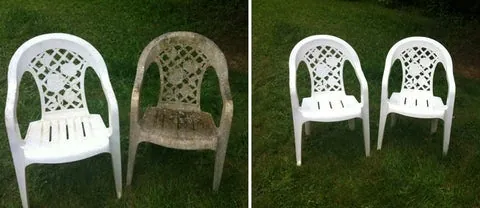
You must gather the right tools to clean your chairs efficiently. If you use the wrong materials, you might scratch the plastic or leave a residue that attracts more dirt later.
| Item | How much | Why it’s needed | A substitute |
|---|---|---|---|
| Dish soap | 2 tablespoons | Breaks down surface grease | none — don’t swap this |
| Warm water | 2 gallons | Helps dissolve grease | Cold water — works fine |
| Scrub brush | 1 unit | Removes stubborn grime | Soft cloth — for light dust |
| Microfiber towel | 2 units | Dries the plastic surfaces | Cotton rag — leaves lint |
| White vinegar | 1 cup | Removes mineral deposits | none — don’t swap this |
| Garden hose | 1 unit | Rinses away soap suds | Bucket of water — slower |
Avoid abrasive scouring pads or steel wool at all costs. These tools create microscopic grooves in the plastic finish. Dirt settles into these tiny channels, making your furniture look permanently gray and dingy within weeks.
Don’t use bleach on colored plastic, as it will cause irreversible fading.
Test your cleaning solution on a small, hidden spot under the seat first. If the plastic loses its sheen, dilute the mixture with more water. If the surface remains smooth, proceed with the full cleaning.
Preparation before you start
Move your chairs onto a flat, grassy area or a concrete patio where water can drain away easily without pooling near your home’s foundation. If you work on a wooden deck, the runoff can cause localized staining or wood rot, so place a tarp down if you have no other options.
Clear away all cushions, decorative pillows, or fabric covers. These must be washed separately according to the textile care guidelines. Check the tag for a “W” code, which indicates the fabric is safe for water-based cleaning, while an “S” code means you must use a solvent-based cleaner instead.
Sweep off any loose leaves, spider webs, or dry dirt with a dry broom to prevent creating a muddy mess during the wet scrubbing phase. If you skip this, you’ll simply grind grit into the plastic surface, leaving permanent scratches.
If the plastic shows deep cracks or structural brittleness, stop immediately. These chairs may collapse under weight. If the material feels chalky or leaves a white residue on your hand when rubbed, the plastic has reached its end of life due to UV degradation and should be discarded.
Steps for cleaning white plastic chairs
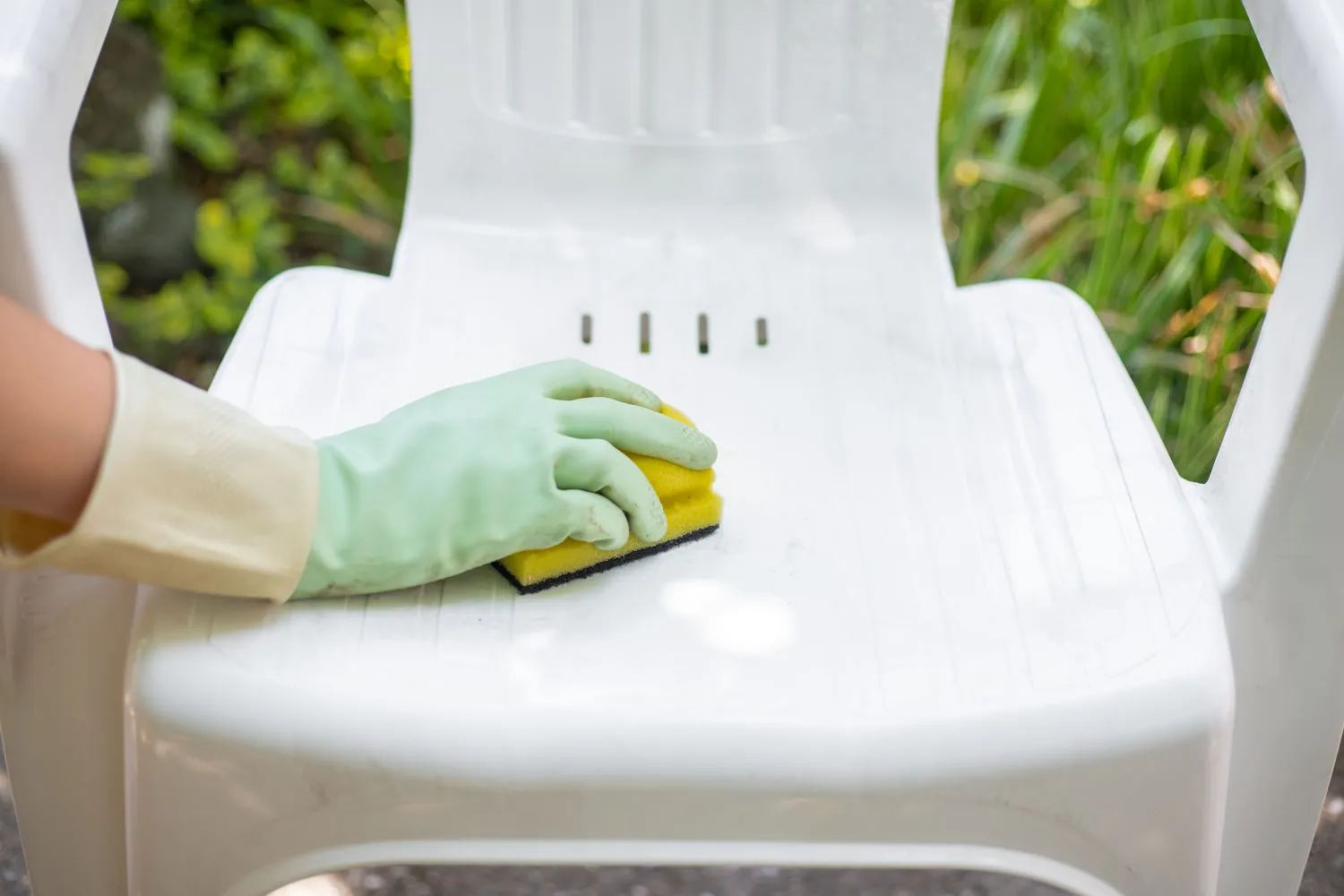
- Fill your bucket with 2 gallons of warm water and stir in 2 tablespoons of mild dish soap until you see bubbles.
- Dip your scrub brush into the soapy water and apply it to the chair, starting from the top and working your way down to the legs.
- Scrub in small, circular motions to lift dirt from the textured grain of the plastic, focusing on the crevices where debris hides.
- If you encounter dark spots or mildew, apply a paste of baking soda and water directly to the area and let it sit for 10 minutes.
- Rinse the entire chair thoroughly using a garden hose on a gentle spray setting, ensuring you remove every trace of soap residue.
- Wipe the plastic dry with a clean microfiber towel to prevent water spots from forming as the surface air-dries in the sun.
- Check the underside of the frame to ensure no dirt remains, as missed spots here often lead to premature staining and discoloration.
- Repeat the process for each chair, moving to a clean section of the lawn if the ground becomes too saturated with runoff water.
Signs of a deep clean
A successful cleaning leaves the plastic with a uniform, matte, or satin finish that feels smooth to the touch. If you see streaks, it means soap residue remains on the surface, and you should rinse the chair again with clean water.
If the plastic still looks yellowed or dull after drying, this indicates the material has oxidized from long-term sun exposure. In this case, a second round of cleaning won’t change the color, as the plastic itself has degraded. If the color remains yellowed despite this test, the structural integrity of the polymer is likely compromised.
A clean chair should be free of all dark spots in the textured patterns. If you see black or green specks remaining in the grooves, use a toothbrush to target those specific areas before the final rinse.
Ensure you don’t use harsh metal scrapers, as these will gouge the plastic and provide more places for dirt to collect in the future. A single deep gouge creates a permanent trap for moisture, which will inevitably lead to recurring mold growth every season.
How to manage stubborn stains
| What happened | Why | What to do |
|---|---|---|
| Mildew spots | Moisture trapped in grain | Use vinegar and water |
| Yellow stains | UV light damage | Accept as material age |
| Scuff marks | Friction from hard objects | Use a magic sponge |
| Sticky residue | Sap or spilled food | Scrub with warm soap |
| Dull finish | Old wax or dirt | Wipe with white vinegar |
Treat mildew spots immediately by mixing one part distilled white vinegar with three parts water. If the surface remains damp after cleaning, point a fan at the area for two hours to prevent the spores from returning.
Avoid the common mistake of using bleach on yellow stains. Bleach won’t reverse UV damage and often ruins the structural integrity of the material, leaving you with a brittle, crumbling finish. If the yellowing is uniform, it’s simply the natural aging process of the plastic.
When using a magic sponge for scuff marks, apply only light pressure. Scrubbing too hard removes the protective topcoat and leaves a permanent dull patch. If the scuff doesn’t lift after three gentle swipes, stop immediately. Applying more force will only damage the underlying grain, turning a minor surface blemish into a deep, irreparable gouge that requires professional refinishing.
Frequency of maintenance
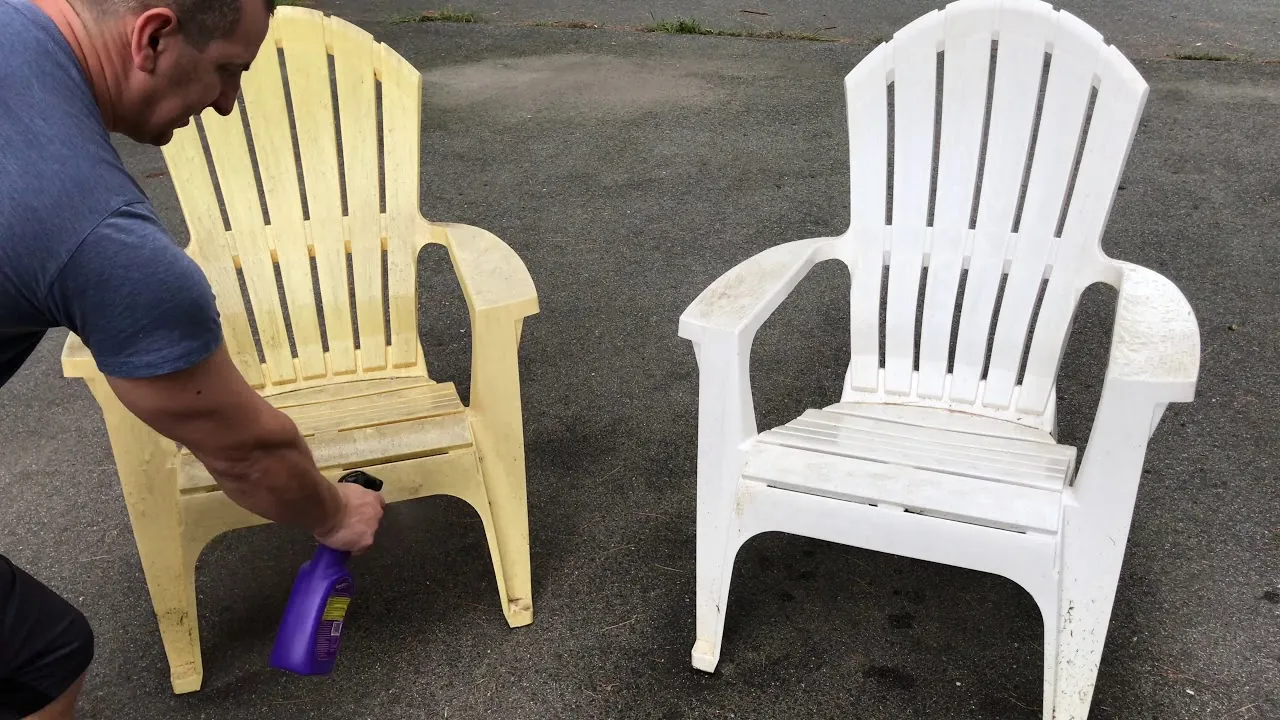
You should clean your chairs every 3 months to prevent permanent staining from environmental pollutants. The two factors that change this interval are your local climate and how often the furniture sits in direct sunlight. If you live in a humid area with high rainfall, you may need to scrub them every 6 weeks to stop mold growth.
Conversely, if you store the chairs in a garage or shed during the winter, you can limit cleaning to once at the start of the season. Always inspect the plastic for hairline cracks before you start a cleaning session, as these marks grow larger when the plastic is exposed to heavy scrubbing or sudden temperature changes. If the chairs stay outside year-round, apply a thin coat of automotive wax once a year to protect the surface.
Related guides
Frequently Asked Questions
Can I use bleach to clean white plastic chairs?
Avoid using bleach because it can weaken the structural integrity of the plastic. While it may seem like a quick fix for stains, the chemical reaction often makes the material brittle and prone to cracking under weight. Stick to mild dish soap or a vinegar solution to keep the plastic strong and safe for regular seating.
Is it safe to use a pressure washer on my chairs?
Use a pressure washer only if you keep the setting on low, as high-pressure water can strip the outer finish of the plastic. If you choose this method, hold the nozzle at least 12 inches away from the surface to prevent gouging the material. Most plastic chairs aren’t designed to withstand high-pressure streams, so hand scrubbing is always the safer choice.
How do I remove black dots from the plastic?
Remove black dots by applying a mixture of white vinegar and water, letting it sit for 5 minutes before scrubbing. These spots are usually mildew that grows in the small pores of the plastic when it stays wet for too long. If the dots remain after scrubbing, you can use a soft-bristled toothbrush to reach deep into the textured patterns without damaging the surface.
Why do my chairs look yellow after I clean them?
The yellow color occurs because of chemical changes in the plastic caused by long-term exposure to ultraviolet light from the sun. This is a permanent change to the material’s molecular structure and can’t be washed away with soap or household cleaners. While you can improve the brightness by removing surface dirt, the underlying yellow tone is a sign of material aging.
Does it matter if I leave the chairs wet?
Leaving the chairs wet for long periods encourages the growth of mold and mildew, which will eventually stain the white plastic permanently. Always wipe the chairs down with a dry towel after you finish rinsing them to ensure no water sits in the crevices. Proper drying is the most important step to keep your furniture looking bright and clean for many seasons.
How long will the chairs last if I keep them clean?
Most plastic chairs have a limited functional lifespan when you clean them regularly and store them out of direct sunlight during the off-season. The longevity depends heavily on the quality of the plastic resin and how much direct UV exposure the furniture receives throughout the year. If the plastic begins to feel chalky or develops deep cracks, it’s time to replace the chairs for safety.
Conclusion
Taking care of your white plastic chairs ensures they remain a comfortable and clean part of your outdoor space. By sticking to gentle cleaners and drying the surfaces after each wash, you prevent the damage that typically leads to permanent discoloration and brittleness. Regularly checking the frames for cracks will keep your seating safe for everyone to use.