
Dirty wood chairs need cleaning because grime, body oils, and food spills break down the finish and wear the wood over time. The safest way to clean them is to dust first, wipe with a mild wood-safe cleaner, rinse with a barely damp cloth, dry thoroughly, and then condition the surface so the wood doesn’t dry out.
Key Takeaways
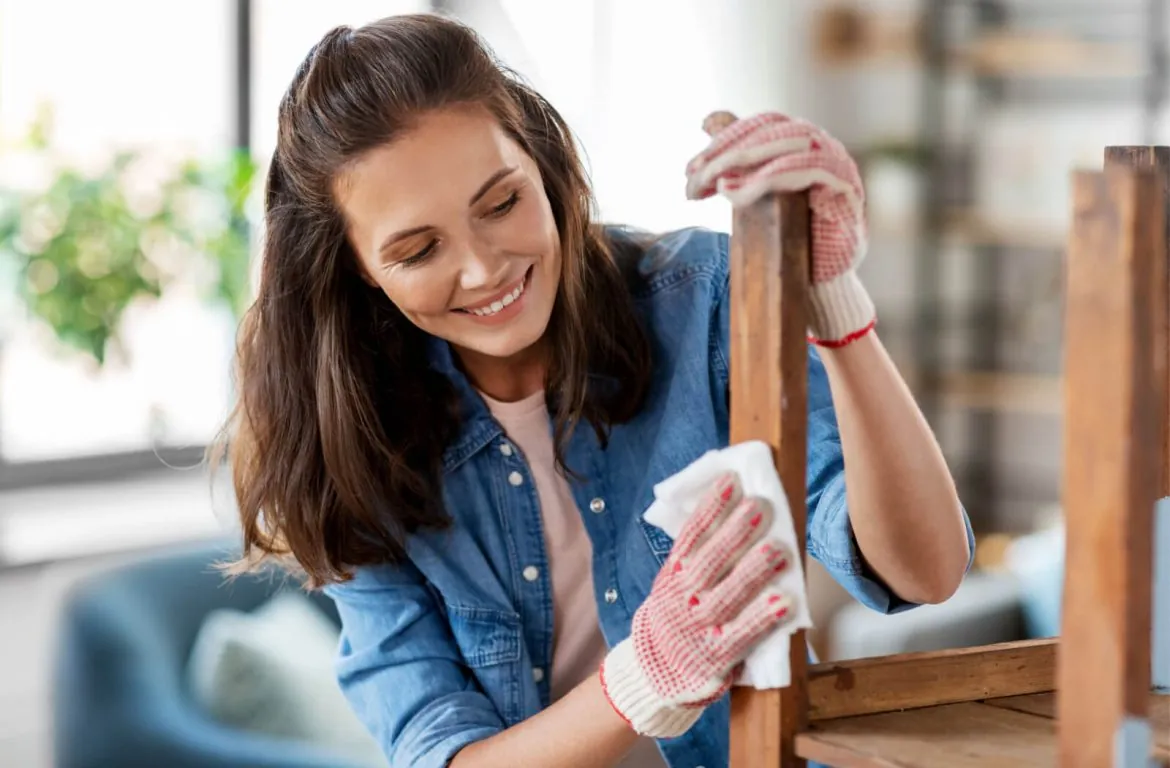
- Dust chairs weekly with a dry microfiber cloth to stop grit from scratching the finish.
- Test any cleaner on a hidden spot, such as the underside of a seat, before you use it on the whole chair.
- Use a barely damp cloth, not a wet one; excess water causes wood to swell and finish to lift.
- Dry the chair immediately with a clean towel and let it air out before anyone sits on it.
- Condition finished wood every few months with furniture oil or polish made for wood finishes.
- Don’t use vinegar, ammonia, bleach, or abrasive scrubbers on finished wood surfaces.
Know Your Wood and Finish
Wood chairs fall into two broad categories: finished and unfinished. Finished chairs have a protective layer such as polyurethane, lacquer, varnish, shellac, or paint. Unfinished chairs are bare wood with no sealant, which means they absorb liquid quickly and stain easily.
You can usually tell the difference by touch and appearance. Finished wood feels smooth and may have a slight sheen. Unfinished wood feels porous and looks matte. If you’re unsure, rub a hidden area with a cotton swab dampened with water. If the wood darkens or the swab picks up color, the finish may be thin or missing.
Pro Tip: Check the underside of the seat or the back of a leg for a manufacturer’s label. It often names the finish and lists safe cleaning products.
Supplies You Will Need
Gather these items before you start so you don’t have to leave a wet chair unattended.
- Soft microfiber cloths (at least two)
- A vacuum with a brush attachment or a soft-bristle dusting brush
- Mild dish soap
- White vinegar (only for unfinished wood or very dirty finished wood, diluted)
- Olive oil or lemon oil (for conditioning finished wood, optional)
- A small bucket or bowl
- Cotton swabs
- A clean towel for drying
Avoid paper towels on finished surfaces; they can leave lint and micro-scratches. Avoid steel wool and abrasive sponges entirely.
Test Before You Clean
Always test your cleaning solution on an inconspicuous spot. Good test areas include the bottom of a seat, the back of a rear leg, or the inside of an armrest. Apply a small amount with a cotton swab, wait five minutes, and check for discoloration, softening of the finish, or whitening. If anything looks wrong, stop and use plain water or a cleaner made specifically for that finish.
How to Clean Finished Wood Chairs
Finished wood chairs include most dining chairs, kitchen chairs, and office chairs with a lacquer, varnish, or polyurethane coating. These surfaces can handle light moisture but not soaking.
- Remove loose dust with a dry microfiber cloth or vacuum brush attachment. Pay attention to crevices, spindle turns, and the underside of the seat.
- Mix a few drops of mild dish soap into a cup of warm water.
- Dip a microfiber cloth into the solution and wring it out until it’s barely damp. It shouldn’t drip.
- Wipe the chair in the direction of the wood grain. Work on one section at a time.
- For sticky spots, hold the damp cloth on the spot for a few seconds to loosen the grime, then wipe gently. Don’t scrub hard.
- Rinse the cloth in clean water, wring it out thoroughly, and wipe away any soap residue.
- Dry immediately with a clean towel. Let the chair air dry completely before use.
Warning: Never let water pool on wood. Standing moisture can cause white rings, swelling, or finish failure.
How to Clean Unfinished Wood Chairs
Unfinished wood absorbs liquid fast, so use minimal moisture. Bare wood chairs are common in rustic dining sets, some benches, and unfinished pine furniture.
- Dust thoroughly with a dry cloth or vacuum brush.
- Mix one part white vinegar with one part water in a small bowl.
- Dampen a corner of a microfiber cloth with the solution. It should feel almost dry.
- Wipe quickly along the grain. Don’t let the liquid sit.
- Dry immediately with a towel and allow the chair to air out in a well-ventilated area.
- If the wood looks dry after cleaning, rub in a small amount of mineral oil or a food-safe wood conditioner.
Unfinished wood can also be cleaned with a dry method only: a soft brush or a vacuum with a brush attachment removes dust without introducing moisture.
Cleaning Upholstered Seats on Wood Chairs
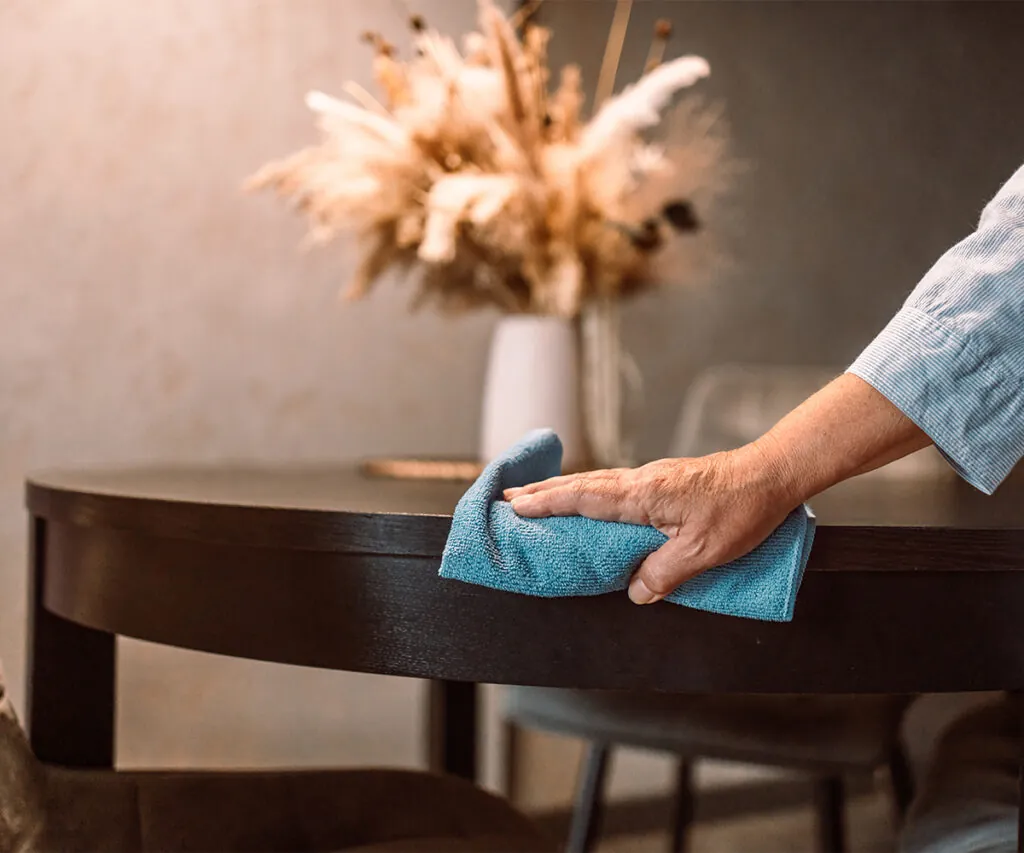
Many wood chairs have fabric, leather, or vinyl seats. Clean the wood frame first, then address the seat material separately.
For fabric seats, vacuum with an upholstery attachment. Spot-clean with a small amount of upholstery cleaner or mild soap on a damp cloth, blotting rather than rubbing. Let the fabric dry completely before sitting.
For leather seats, use a leather cleaner made for furniture, followed by a leather conditioner. Avoid saddle soap unless the manufacturer recommends it, as it can darken some leathers.
For vinyl seats, wipe with mild soap and water, then dry. Vinyl can crack if exposed to harsh solvents.
Removing Common Stains and Spots
Different stains need different approaches. The table below matches common problems with safe treatments.
| Stain Type | Recommended Treatment | What to Avoid |
|---|---|---|
| Food grease | Mild dish soap and warm water; wipe with grain | Degreasers, oven cleaner |
| Ink | Rubbing alcohol on a cotton swab, tested first | Nail polish remover, acetone |
| Water ring | Mild soap and water, then furniture polish | Vinegar on finished wood |
| Wine or juice | Blot immediately, then mild soap solution | Bleach, hydrogen peroxide |
| Crayon or marker | Mild soap and water; melamine sponge only if finish allows | Abrasive scrubbers |
| Mold or mildew | Mild soap and water; dry thoroughly and improve ventilation | Full-strength bleach |
For white heat rings on finished wood, some people place a clean white cloth over the spot and run a warm (not hot) iron over it for a few seconds. Test this on a hidden area first, because heat can damage some finishes.
Cleaning Schedule by Chair Type
Regular care prevents buildup and extends the life of the finish. Use this table as a starting point, adjusting for how often the chairs are used.
| Chair Type | Dusting | Deep Cleaning | Conditioning or Polishing |
|---|---|---|---|
| Dining chairs (daily use) | Weekly | Monthly | Every 2–3 months |
| Kitchen chairs | Weekly | Monthly | Every 2–3 months |
| Occasional chairs | Every 2 weeks | Every 2–3 months | Twice per year |
| Outdoor wood chairs | Weekly | Every 1–2 months | Every spring and fall |
| Unfinished wood chairs | Weekly | As needed, minimal moisture | Every 3–4 months |
Outdoor chairs need more attention because sun and rain break down finishes faster. Bring cushions inside when not in use, and consider covering outdoor furniture during harsh weather.
What Not to Use on Wood Chairs
Some household cleaners sound like good ideas but can damage wood finishes or dry out the wood.
- Vinegar on finished wood: the acid can dull or etch some finishes over time.
- Ammonia-based glass cleaners: these can strip wax and dull lacquer.
- Bleach: it can discolor wood and weaken fibers.
- Abrasive powders or scouring pads: they leave permanent scratches.
- Furniture sprays with silicone: silicone can build up and make future refinishing difficult.
- Straight olive oil used as a cleaner: it can turn rancid and attract dust.
If a product doesn’t say it’s safe for finished wood, assume it’s not.
Conditioning and Protecting After Cleaning
Once the chair is clean and completely dry, conditioning helps keep the finish supple. For finished wood, apply a small amount of furniture polish or lemon oil to a soft cloth and rub it in lightly. Buff with a clean dry cloth. Don’t over-apply; buildup attracts dust.
For chairs with a wax finish, reapply paste wax occasionally according to the product directions. For painted wood, a coat of furniture-safe wax can protect the paint from scuffs.
Keep chairs out of direct sunlight when possible. UV rays fade wood and finishes. Also keep them away from heat vents and radiators, which dry out wood and can cause cracking.
Troubleshooting Common Problems
| Problem | Likely Cause | Fix |
|---|---|---|
| Sticky finish after cleaning | Soap residue left behind | Wipe with a clean, barely damp cloth; dry immediately |
| White haze or cloudiness | Moisture trapped in finish | Let dry fully; apply furniture polish; if it remains, the finish may need professional repair |
| Dull or faded appearance | Sun exposure or dried-out finish | Clean, then condition with appropriate wood polish |
| Loose joints after cleaning | Wood swelled from moisture | Let dry completely; tighten joints if possible, or contact a furniture repair person |
| Lingering odor | Spill soaked into wood or upholstery | Clean the area, dry thoroughly, and improve air circulation |
If a finish is peeling, cracked, or badly stained, cleaning alone won’t fix it. A furniture refinisher can sand and refinish the chair.
Related guides
Frequently Asked Questions
Can I use vinegar to clean my wood chairs?
Only on unfinished wood or very dirty finished wood, and always diluted with water. Vinegar’s acid can dull or etch some finished surfaces over time, so test a hidden spot first.
How often should I clean wood chairs?
Dust weekly and deep clean monthly for chairs in daily use. Occasional chairs can be dusted every two weeks and deep cleaned every two to three months.
What is the best cleaner for finished wood?
Mild dish soap mixed with warm water, applied with a barely damp microfiber cloth, is safe for most finished wood. Products labeled for finished wood furniture are also appropriate.
Can I clean wood chairs with water?
Yes, but use minimal water. The cloth should be barely damp, not wet. Dry the chair immediately with a towel and let it air dry before use.
How do I remove a water ring from a wood table chair?
Wipe with mild soap and water, dry thoroughly, then apply furniture polish. Some people use a warm iron over a clean cloth on the spot, but test a hidden area first because heat can damage certain finishes.
Should I oil my wood chairs after cleaning?
Oil or conditioner is appropriate for finished wood that looks dry, and for unfinished wood that needs moisture. Don’t use cooking oil, which can go rancid; use furniture oil, lemon oil, or mineral oil instead.
Conclusion
Dirty wood chairs come back to life with gentle, regular care: dust first, clean with the right product for the finish, dry immediately, and condition occasionally. Start by checking the underside of one chair for a manufacturer’s label or care instructions, then test your chosen cleaner on a hidden spot before you clean the whole piece.