
To shift a 2-stroke dirt bike, coordinate your left hand on the clutch, your right hand on the throttle, and your left foot on the gear lever. You roll off the throttle, pull the clutch lever in, click the shift lever up or down, release the clutch smoothly, and roll throttle back on. Two-stroke engines have narrow powerbands, so shifting keeps the motor spinning fast enough to produce real drive.
How the dirt bike shifts gears
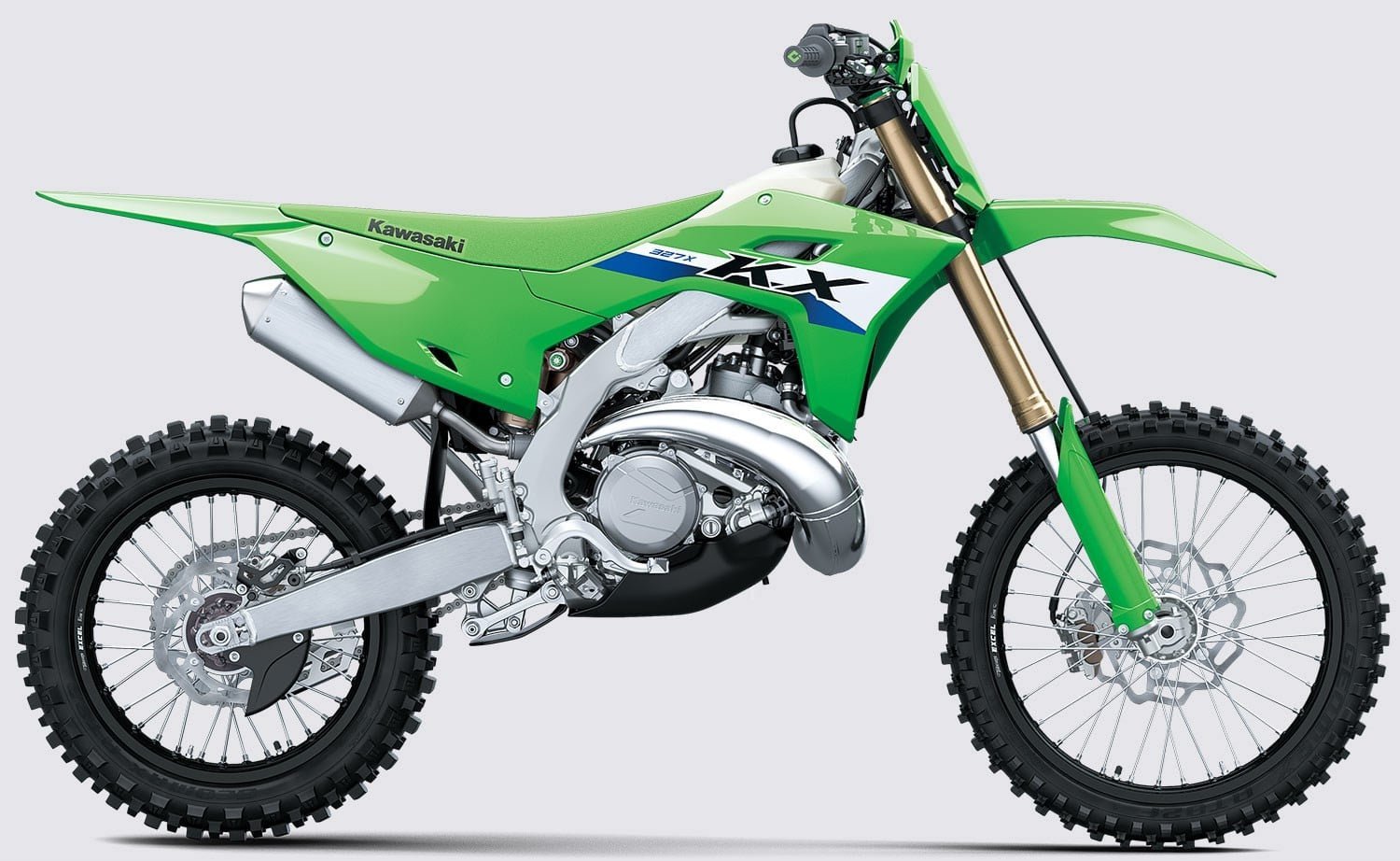
| Part or input | What it does | What you notice when it goes wrong |
|---|---|---|
| Clutch lever | Disconnects engine power from transmission | Bike stalls or creeps forward while stopped |
| Shift pedal | Selects next higher or lower gear | False neutral or loud metal grinding noise |
| Throttle twist grip | Controls air and fuel delivery | Engine bogs down or revs excessively high |
| Power valve | Changes exhaust port timing automatically | Motor feels flat and weak before shifting |
| Drive chain | Transfers gearbox rotation to rear wheel | Snapping sounds or jerky power during shifts |
What happens, step by step
- Pull the clutch lever fully to the grip. Your left fingers pull the lever smooth and fast in about half a second to disconnect crankshaft drive from the transmission shafts.
- Close the throttle completely. Roll your right wrist forward over a quarter of a second so engine speed drops slightly and removes tension from the gearbox gear dogs.
- Lift the shift lever firmly with your left boot. Slide your toe underneath the peg and lift upward in one firm, continuous stroke to select the next gear up, taking about half a second.
- Ease the clutch out smoothly. Release the lever over roughly one second until you feel the friction zone bite, which prevents the rear tire from breaking traction suddenly.
- Roll the throttle open. Turn your right wrist back smoothly as the clutch locks up completely, keeping the motor inside its pipe’s RPM range where two-strokes build real thrust.
- Set up for a downshift before corners. Close throttle, pull the clutch, press firmly down on the shift lever once, and blip the throttle slightly before releasing the clutch within one second.
Why this matters when something goes wrong
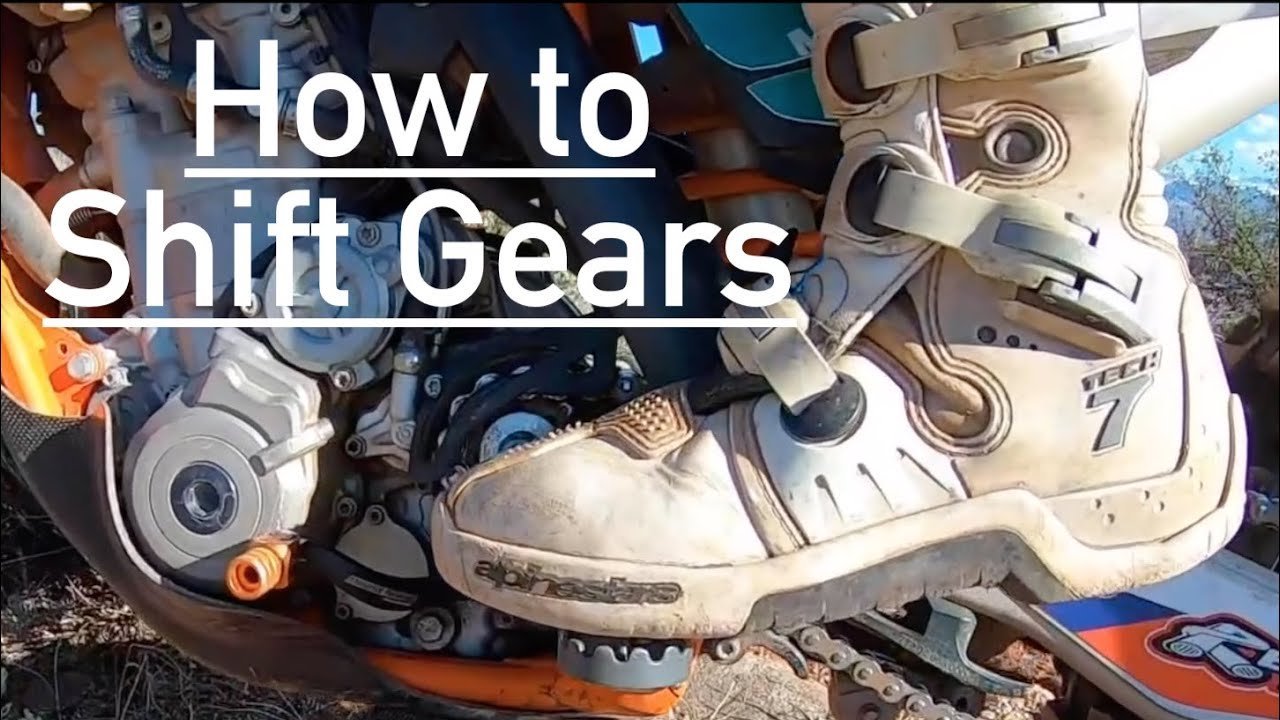
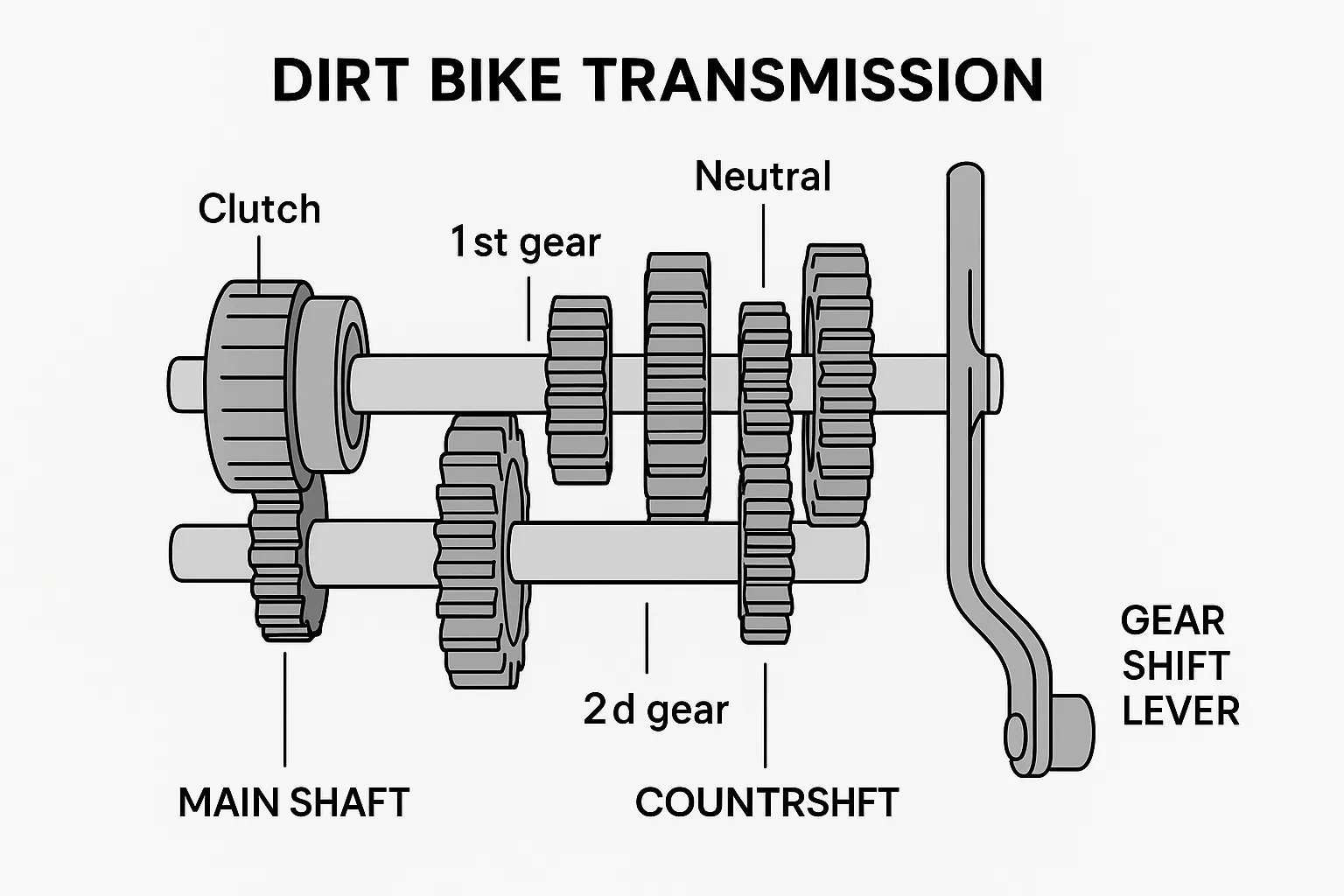
Missed shifts happen because two-stroke gearboxes use dog clutches instead of automotive synchronizers. The dogs need a brief drop in torque to slide cleanly into the next gear slot. When a rider tries to force the foot lever up without rolling off the throttle, the drive dogs bind together under engine load. Forcing the lever under full power rounds off the metal engagement dogs, costing hundreds of dollars in split-case transmission repairs. If the gearbox drops into a false neutral between gears, roll off the throttle completely before re-engaging; if you tap the shifter while revving hard, you risk shearing gear teeth instantly.
A two-stroke makes most of its torque in a tight window called the powerband, unlike a wide-torque four-stroke. This step-by-step technique isn’t for riders on automatic electric dirt bikes or mini-bikes with centrifugal clutches. Upshifting too early drops the engine below this RPM window, making the engine bog and hesitate. For safe operation across all off-highway conditions, riders should review the MSF dirt bike riding tips before tackling rough trails. Missing downshifts before steep hills will starve the motor of power, forcing an immediate stop.
What you can change, and what you cannot
What you control
- Shift lever height on the splined shaft to fit your boot thickness.
- Clutch cable free play at the perch adjuster wheel.
- RPM point where you decide to change gears.
- Throttle closing speed during the shift motion.
- Foot pressure applied to the shift pedal tip.
Fixed by design
- Gear ratios inside the transmission cases.
- Shift pattern order: one down, four or five up.
- Powerband shape determined by cylinder porting and expansion chamber dimensions.
Splitting engine cases to replace bent shift forks requires specialized case splitters and mechanical training; bring your bike to a certified motorcycle technician if internal gears slip out under load.
Getting more out of it
Two-stroke power relies heavily on proper cadence and precise adjustments. Setting your clutch lever free play to 2 to 3 millimeters at the perch prevents the clutch plates from dragging between shifts. Keeping the engine singing in its upper RPM range avoids unburnt two-stroke oil fouling your spark plug. The trade-off for short-shifting early to save fuel is sluggish acceleration and dirty exhaust ports. Practice positive foot pressure rather than quick stabs; lazy toe movement leaves the bike between gears. Shift lever position varies by boot model and brand, so check the clearance against your riding footwear before heading out.
Frequently asked questions
Can you shift a 2 stroke dirt bike without the clutch?
Yes, you can upshift without the clutch by cutting the throttle for a split second while applying upward pressure to the lever. The temporary break in torque allows the gearbox dogs to slide into place safely, though using the clutch remains safer for transmission longevity on aggressive downshifts.
Why does my 2 stroke bog down after I shift?
You shifted into the next gear too early. Two-stroke engines produce weak low-end torque, requiring high engine speed to reach their powerband. Holding your previous gear longer before shifting keeps the engine spinning fast enough to pull the taller gear cleanly without sputtering or losing speed.
How long does a dirt bike clutch pack last?
Between 20 and 100 riding hours, depending heavily on rider technique. Slipping the clutch frequently in tight woods wears the friction plates out near 20 hours, while open track riding extends life. You must check plate thickness with calipers against your machine’s service manual limit.
Is it safe to downshift multiple gears at once?
No, downshifting multiple gears at once can lock the rear wheel. Downshifting multiple gears at once can cause the rear wheel to lock or hop due to excessive engine braking and sudden over-revving. Shift down one gear at a time as your trail speed decreases.
What happens if I hit neutral instead of second gear?
The engine revs freely without driving the rear wheel forward. This false neutral happens when you don’t pull the shift lever up firmly past the neutral detent. Roll off the throttle immediately, pull the clutch in, and lift the lever firmly into second gear.
Does shift lever height matter for beginners?
Yes, an incorrectly positioned lever causes missed shifts and ruined gears. If the tip sits too high, your ankle can’t flex enough to complete the upward stroke. Adjust the pinch bolt on the splined shaft so your boot toe rests naturally just underneath the rubber shifter tip.
Final Thoughts
Finding that perfect rhythm takes time, so don’t get discouraged if you stall a few times while practicing. Spend some quality hours on a flat, open field to build your confidence. Once you’re comfortable, you’ll find that smooth transitions make every ride feel much more exciting and controlled.
Related guides