
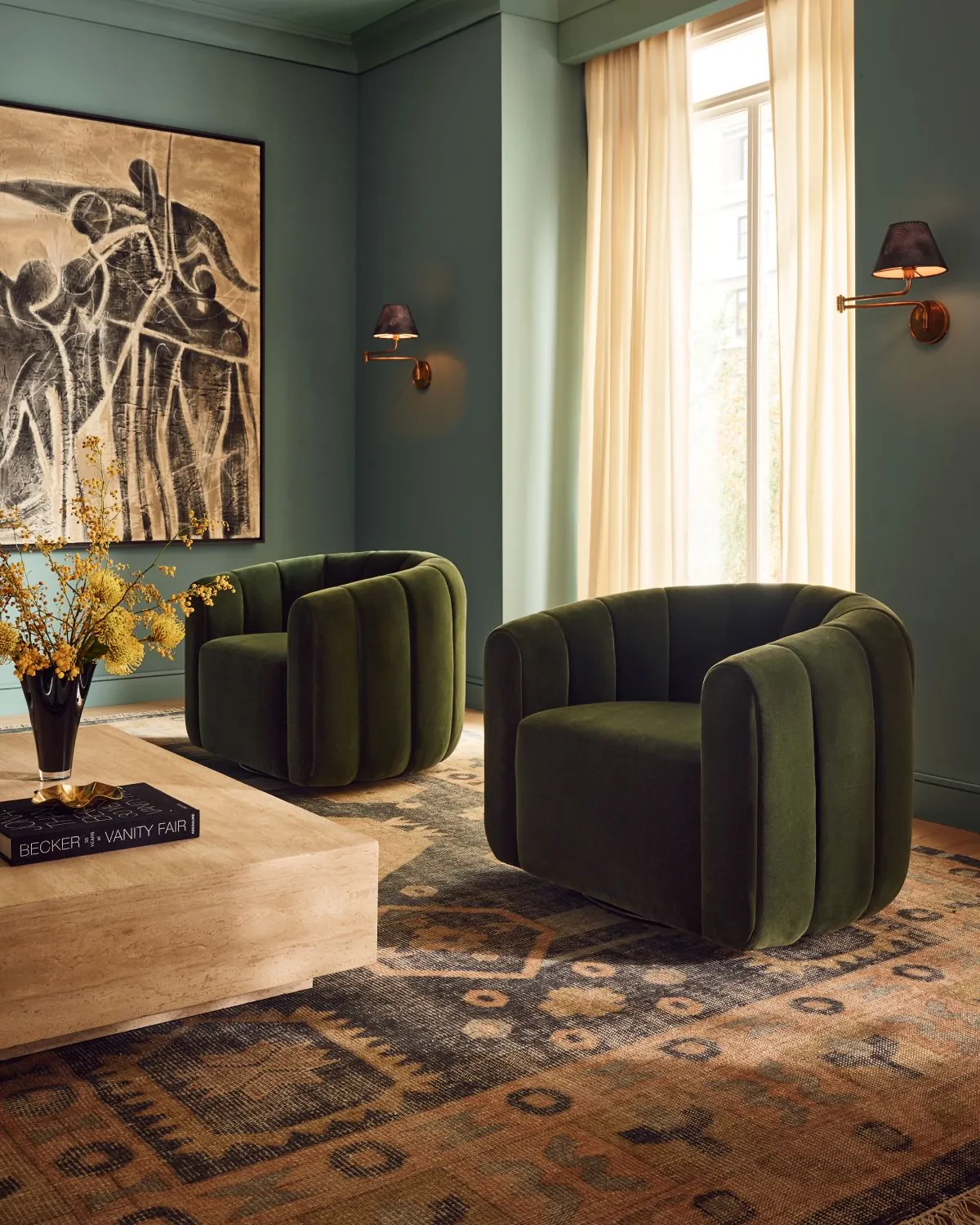
Swivel chairs turn a corner into a conversation spot, a reading nook into a place you can pivot toward the window, or a desk into a seat that spins to face a bookshelf. How to decorate with swivel chairs works because the chair itself moves with the room instead of anchoring it in one fixed direction. This guide covers picking the style, placing it for balance, pairing it with a table or rug, and keeping it looking right as seasons change.
How swivel chairs help you decorate

A swivel chair is a seat mounted on a base that rotates, so you can turn without dragging the furniture across the floor. People use them in living rooms, bedrooms, home offices, and entryways where a fixed armchair would block a path or face the wrong way.
The one misconception is that a swivel chair must look like an office chair; many swivel designs read as lounge chairs, dining chairs, or accent seats. The base carries the weight and lets the seat turn, so the frame and upholstery can match any room style you already have.
If your space is under 100 square feet, prioritize a swivel base with a low profile. This prevents the chair from feeling like a visual roadblock. If you’re choosing between a swivel and a fixed base, test the rotation. A high-quality mechanism should spin 360 degrees silently with a single push. If it grinds or requires two hands to turn, the internal bearings are likely failing.
Choose and place your swivel chair
- Measure the space before you shop. Leave at least 30 inches of clear floor around the chair so it can spin without hitting a wall or another piece of furniture, and allow 36 to 48 inches between the chair and a sofa or coffee table for walking room.
- Pick a base that fits the floor. A four-star metal base works on hardwood or rugs, while a pedestal base suits a corner where you want fewer legs showing; casters belong on carpet or a chair mat, not on bare hardwood.
- Choose upholstery for the room’s use. A performance fabric or leather handles a family room, while velvet or linen suits a quiet bedroom corner where the chair sees lighter traffic.
- Set the chair at an angle to the room’s main seating, not straight-on, so the swivel becomes part of how people move through the space rather than a piece that fights the layout.
- Anchor it with a rug under the front legs and base, or place all four legs on the rug if the chair is small enough; a rug keeps the chair from looking like it’s floating in the middle of the floor.
- Add a side table within arm’s reach of the seat in its most-used facing direction, and a floor lamp behind or beside it so the chair stays useful after dark.
The judgement call is scale: a chair that looks right in the showroom can overwhelm a small corner or disappear in a large room, so compare the seat height and width to your sofa before you buy. If the chair will sit on hardwood and spin daily, choose a base with glides or add felt pads; otherwise the base will scratch the floor over time.
Swivel chair sizes and placements at a glance
| Situation | What to use | How long | What to watch for | | Small bedroom corner | Slipper swivel chair, no arms | One chair, 30-inch clearance | Door swing and drawer openings | | Living room next to sofa | Armless or low-arm swivel, 30-36 inches wide | Rug under base and front legs | Legroom between chair and coffee table | | Home office desk | Swivel with casters, seat height 16-21 inches | Desk at 29-30 inches, chair tucked in | Casters rolling away on smooth floors | | Entryway or hallway | Narrow swivel chair, under 28 inches deep | Wall space behind for spin room | Blocking the door when turned | | Dining table accent | Swivel dining chair, seat 17-19 inches high | Table 28-30 inches high | Elbow room at the table |
The details that make it look right
Experienced decorators start with the base, not the fabric. A chrome or brass base reads modern, while a wood base or upholstered pedestal feels traditional, so match the base material to at least one other metal or wood tone in the room. They also place the chair where the view changes when it turns — toward a window, a piece of art, or a fireplace — so the swivel feels intentional instead of random.
Partway through, check sightlines from the chair in each direction it faces. If the back of the chair blocks a hallway or the view to a doorway, move it a few inches or turn it to a different angle. Leave the wall behind the chair alone if it’s a strong color or texture; a swivel chair against a plain wall can look abandoned, while one against a patterned wallpaper or a gallery wall looks like it belongs.
Fix what goes wrong

| What you notice | What it usually means | What to do first | | Chair scrapes the floor when it spins | Base glides are missing or worn | Stick felt pads under each foot or replace the glides | | Chair looks lost in the room | It’s too small or has no anchor | Add a rug beneath it and a side table beside it | | Fabric fades on one side | Sun hits the same spot daily | Rotate the chair quarterly or move it out of direct light | | Base wobbles | Loose mount or uneven floor | Tighten the base hardware or shim the legs | | Chair blocks traffic when turned | Too little clearance around it | Move it six to twelve inches away from the walkway |
Rules that apply
A common mistake is using those same office measurements for a drafting table or standing desk converter. Standard office guidelines assume your feet rest flat on the floor with knees at ninety degrees. Taller work surfaces require a different seat height and usually a foot ring.
For a child’s room, the Consumer Product Safety Commission oversees furniture stability and tip-over prevention. Look for chairs that meet its stability guidance. Choose a model with a wide five-point base rather than four legs to lower that risk.
Any step that involves disassembling the base, reupholstering, or modifying the chair’s frame needs someone with upholstery or furniture-repair training. Don’t take the mechanism apart yourself. Gas lift cylinders hold compressed pressure even when the chair is empty, and a collapsed base can cause injury.
Keep it looking good
Vacuum fabric chairs with the upholstery attachment, and wipe leather or vinyl with a damp cloth as often as use requires, following the owner’s manual for guidance. Rotate the chair periodically so sunlight and wear spread evenly across the seat and arms.
If the chair starts to squeak or the base feels loose, tighten the mounting hardware immediately. A loose bolt left unchecked for even a month can strip the internal threading, turning a simple five-minute fix into a permanent structural failure.
If the upholstery stains or tears, call an upholsterer rather than trying to patch it yourself. Home kits rarely match the tension or grain of the original fabric, creating a visible seam that draws more attention than the damage.
There’s no universal schedule for reupholstering. Watch for thinning fabric, sagging cushions, or a wobbly base, and act when those signs appear instead of on a fixed calendar.
When a swivel chair is the wrong choice
If the room is very small andIf the room is very every inch of floor small and every inch of floor matters, matters, a fixed chair a fixed chair or stool takes up less or stool takes up space because it doesn’t need clearance to less space. It spin. Swivel bases doesn’t need clearance to often extend three inches beyond the seat spin.
A sw edge, catching on rugivel base typically adds two inches to the footprint on every side. That extra width blocks tight walkways.
If you need a chair that stays perfectly still, a swivel corners or baseboards in can roll or turn tight layouts.
If you need a when you don’t chair that stays perfectly still, want it to. This happens at a desk a swivel can roll or turn when where you write by you don’t want it. Handwriting hand.
It also happens at a dining table where requires forearm stability that rotating people push in together mechanisms undermine, and dining. The seat drift chairs must tuck flushs as someone leans forward to eat.
In against tables without pivoting outward during those cases, choose meals.
In those cases, choose a fixed armchair a fixed armchair, dining chair,, a dining chair, or a bench. Or bench instead. Add movement with a Add movement with a floor lamp or small side table rather than floor lamp or a small side table instead relying on seating mobility. Fixed.
People often buy swivels for legs also prevent gradual floor kitchen islands without checking damage from repeated rotation on the counter overhang. If the stone extends hardwood surfaces where swivel cast less than ten inchesers leave circular wear patterns over, your knees hit time. The cabinetry below.
You end up sitting sideways to eat. A backless fixed stool slides straight under that shallow lip.
Frequently asked questions
How much space does a swivel chair need?
Leave at least 30 inches of clear floor around the chair so it can spin without hitting anything, and allow 36 to 48 inches between the chair and nearby furniture for walking.
Can I put a swivel chair on hardwood?
Yes, but use a base with glides or add felt pads to each foot, or the base will scratch the floor every time the chair turns.
How long does a swivel chair base last?
There’s no fixed lifespan; check the mounting hardware and glides every six to twelve months, and tighten or replace them when they wear out.
Is a swivel chair safe for a child’s room?
Choose a stable model that meets Consumer Product Safety Commission furniture-stability guidance, and avoid casters that let a small child roll the chair into danger.
What happens if I put it in direct sun?
One side of the fabric will fade faster than the rest, so rotate the chair every season or move it out of direct light.
Conclusion
A swivel chair earns its place when it moves with the room instead of fighting it. Pick the right base and scale, give it enough floor to turn, and let the spin point toward something worth looking at.