
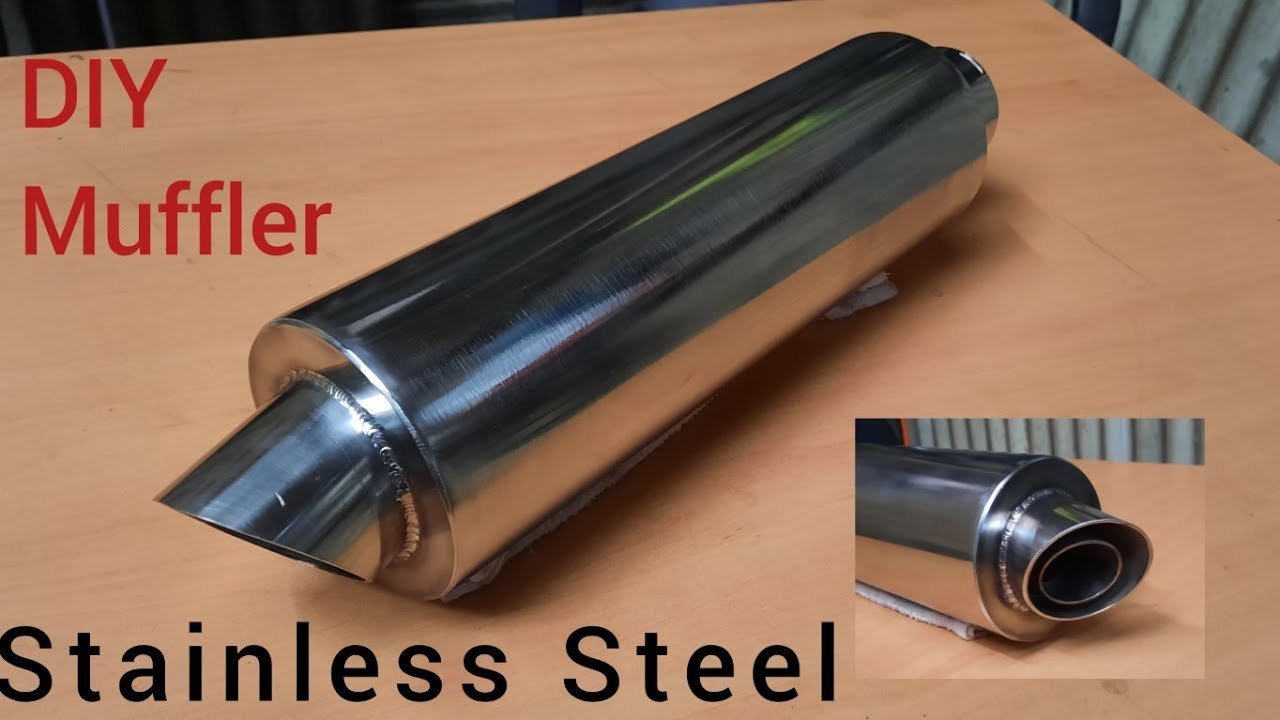
To make a dirt bike silencer, you must cut a perforated steel core, wrap it in dense fiberglass matting, and seal it inside an aluminum canister. The entire job takes 2 to 3 hours, costs roughly a third of an aftermarket exhaust, and rates as a medium-difficulty metalworking project that needs care around sharp edges. You must have the correct diameter core pipe to match your exhaust header before cutting any metal.
What you need
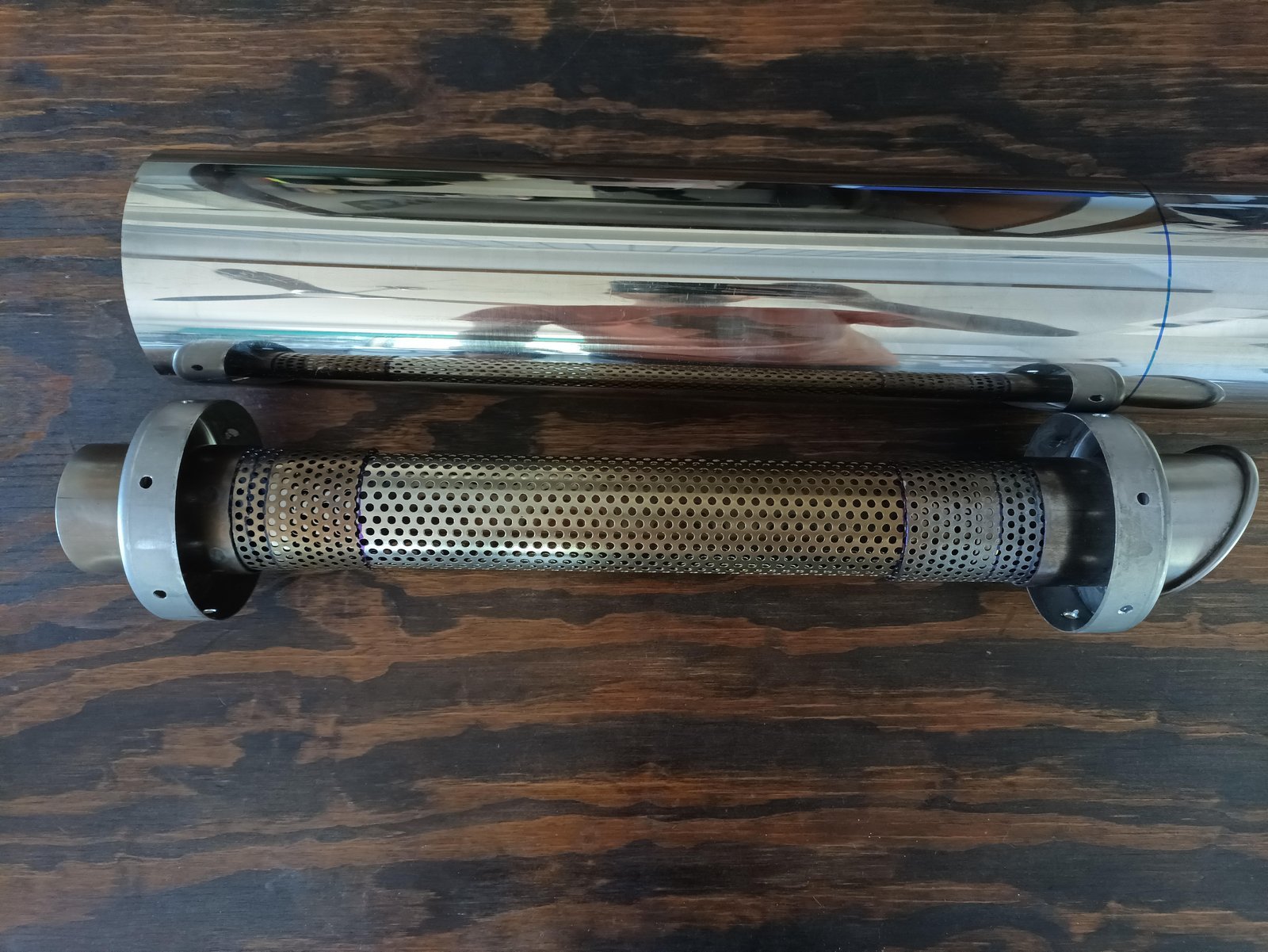
| Item | How much | Why it’s needed | A substitute |
|---|---|---|---|
| Aluminum tube | 1 piece, 12 to 14 inches | Acts as the outer body canister | Steel tube, though it adds weight |
| Perforated steel pipe | 1 piece, 14 to 16 inches | Channels gas while letting sound escape | none — don’t swap this |
| Fiberglass exhaust packing | 1 standard pack, 250 grams | Absorbs high-frequency sound waves inside body | Rockwool insulation sheets |
| Aluminum end caps | 2 caps, sized to canister | Seals the tube ends securely | Sheet metal turned on lathe |
| High-temp RTV silicone | 1 tube, rated 500°F minimum | Prevents dirty exhaust gas blow-by leaks | none — don’t swap this |
| Blind pop rivets | 8 to 12 pieces, 3/16-inch | Fastens end caps tightly to canister | Stainless steel button head bolts |
| Masking tape | 1 small roll | Holds fiberglass tight during internal assembly | High-temp painter paper tape |
Before you start
- Switch off the motorcycle engine and wait at least 45 minutes until the exhaust pipe cools completely to room temperature.
- Disconnect the spark plug cap and set the bike firmly onto a center stand on flat ground.
- Put on heavy leather work gloves and wrap-around safety glasses before handling fiberglass or sharp-cut metal edges.
- Clear a flat metal workbench and wipe away grease so stray filings don’t cling to your work area.
- Skipping the safety mask during packing handling causes real skin and lung irritation from microscopic glass fibers.
- This project isn’t for public road motorcycles; consult a certified mechanic if your local highway laws require DOT-stamped exhaust systems.
Step by step
- Measure your bike’s exhaust header pipe outer diameter with a caliper to ensure you choose a matching inner diameter core.
- Cut the perforated steel pipe 2 inches longer than the aluminum outer canister using an angle grinder with a metal cut-off wheel.
- Deburr both cut ends of the perforated steel pipe using a round metal hand file until all sharp, jagged edges vanish.
- Wrap the fiberglass packing tightly around the perforated pipe until its total thickness matches the inner diameter of your canister.
- Secure the fiberglass wrap every 3 inches with single strips of thin masking tape to keep it firmly compressed for insertion.
- Slide the wrapped core smoothly into the aluminum canister, taking care not to bunch up the fiberglass packing against the walls.
- Apply a solid 1/4-inch bead of high-temperature RTV silicone around the inside lip of both aluminum end caps.
- Press the inlet end cap onto the canister front and align the core pipe through its center collar until flush.
- Drill 4 evenly spaced 3/16-inch holes through the outer canister and the cap flange using a sharp high-speed steel bit.
- Set 3/16-inch blind rivets into all 4 drilled holes using a manual hand riveter until each pin snaps cleanly off.
How to know it worked
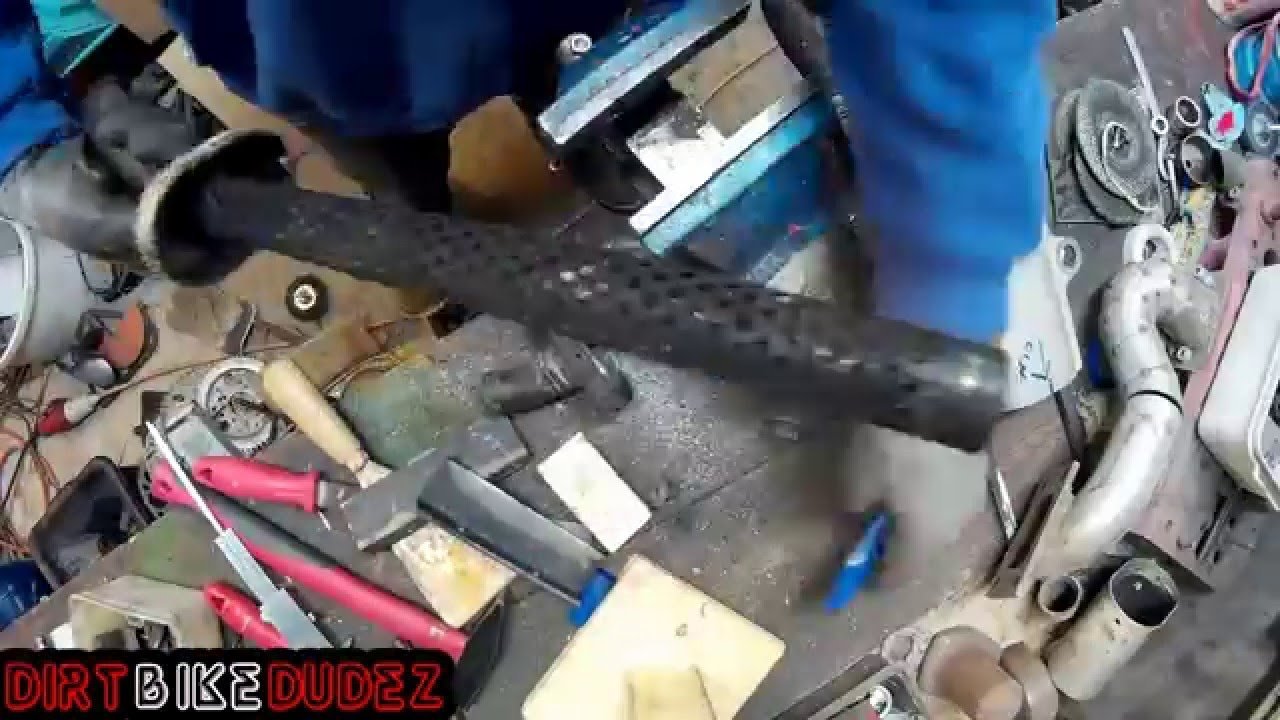
Check the mechanical joints before starting the bike. If you push hard against the end caps and notice any wiggle, drill out the rivets and reinstall them; if the caps stay rigid, the physical build is solid. Start the dirt bike and keep it idling in a ventilated space. Listen for a deep, muffled thud instead of a sharp, ear-splitting crack. Place your gloved hand 2 inches away from the rivet seams without touching the metal. You should feel zero air escaping from the side joints. A sound meter held at a 45-degree angle, 20 inches from the tailpipe according to the US Forest Service spark arrester and sound standards, confirms if your home-built setup keeps trail-legal sound output below 96 decibels.
If something goes wrong
| What happened | Why | What to do |
|---|---|---|
| Black soot on rivets | Silicone seal failed under heat pressure | Drill rivets, reseal with high-temp RTV |
| Sharp ringing exhaust sound | Packing wrapped too loose inside body | Repack tightly with fresh fiberglass mat |
| Engine bogs at throttle | Perforated core diameter is too small | Replace core with larger diameter tube |
| Aluminum tube cracked | Rivet holes drilled too close together | Cut damaged end and re-drill holes |
| Packing blows out tip | Perforations wider than packing fiber mesh | Add fine stainless steel mesh wrap |
| Core rattles inside | Core tube cut slightly too short | Trim canister to match core length |
How often to do this
A dirt bike silencer requires fresh internal fiberglass packing every 30 to 50 engine hours to maintain backpressure and low sound levels. Two main factors change this maintenance window: your engine type and jetting mix. A two-stroke engine dumps raw unburnt oil straight into the canister, soaking the inner fibers within 25 to 30 operating hours. Four-stroke dirt bikes run much hotter, which slowly burns the glass fibers away to hollow ash after roughly 50 hours of trail riding. If the canister feels scorching hot near the center or sounds louder across low RPM, replace the packing material immediately.
Frequently asked questions
Can steel wool be used instead of fiberglass exhaust packing?
No. Steel wool breaks down very quickly under exhaust heat, rusts from combustion moisture, and can blow glowing hot metal embers straight out the back of your exhaust pipe on dry trails.
What happens if you pack a silencer too tight?
The bike gets noticeably louder. Overly compressed packing leaves no tiny air pockets to trap high-frequency sound waves, causing the pressure pulses to bounce off the dense mass and ring loudly through the outer aluminum shell.
Why is exhaust packing blown out so fast?
Oil saturation or missing mesh wraps cause rapid failure. If your carburetor runs excessively rich, wet fuel soaks the packing, while a perforated core with holes larger than 1/8-inch lets pressure pulses tear dry packing apart.
Does a home silencer hurt engine power?
Not if your core matches your header pipe. An internal core equal to your head pipe preserves factory exhaust flow, though choosing a narrower core creates power-robbing backpressure that overheats your cylinder head quickly.
Is it safe to ride without a silencer?
No. Riding without a functional silencer creates severe fire hazards in dry brush areas without an approved spark arrester., damages your hearing permanently within minutes, and creates severe fire hazards in dry brush areas without an approved spark arrester.
How long does high-temp silicone need to cure?
About 24 hours. Most high-temperature RTV silicone formulations set to the touch in 1 hour, but you must let the chemical bond cure fully at room temperature for a full day before engine heat breaks it.
Final Thoughts
Once your assembly is secure, take your bike for a short test ride to let the packing settle under heat. You’ll likely notice a deeper, smoother sound immediately. If the tone doesn’t seem right, don’t worry; you can always adjust the density of the fiberglass later to get it just perfect.
Related guides