
To fix a leaky bike tire, find the hole in the inner tube, clean the rubber around it, and apply a vulcanizing patch. The single most common cause is a sharp object—like a thorn, wire, or small shard of glass—pushing straight through the tire tread into the tube.
Identify why your bike tire leaks
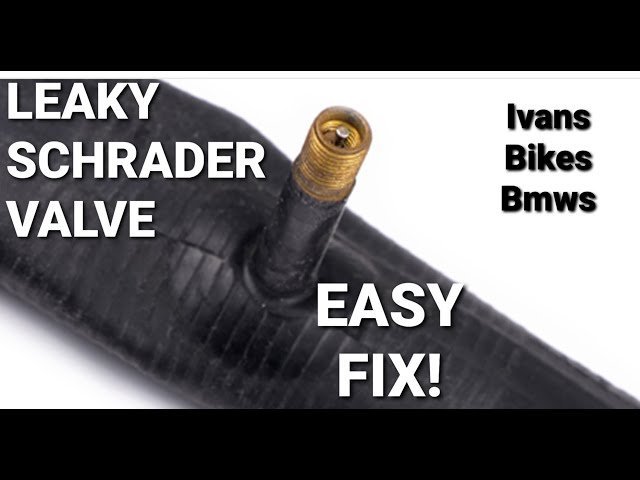
Bicycle tubes lose air from three distinct problems: sharp punctures, rim pinch flats, or a faulty air valve. Sharp objects on the road pierce the rubber casing directly. Pinch flats, often called snakebites, happen when you hit a curb or pothole with low tire pressure; the rim punches two small slits into the tube rubber.
A slow leak over several days usually points to a loose valve core or aged, brittle rubber rather than road debris. Environmental wear also degrades tires. If your rim tape shifts, exposed spoke heads inside the wheel channel will puncture the inner side of your tube repeatedly.
Apply a vulcanizing tube patch
This fix is for small pinholes caused by thorns or wire. Take the tube out, pump it with air until it expands slightly, and listen for hissing. If you can’t hear the leak, submerge the tube in a bowl of water to spot the air bubbles. Dry the spot completely.
Scuff an area twice the size of your patch using sandpaper, apply a thin film of vulcanizing fluid, and wait about two minutes until the glue looks completely matte. Press the patch firmly onto the spot for 60 seconds. You’ll know it worked if the tube holds full shape overnight outside the wheel. If the cut is longer than half an inch, don’t patch it—replace the tube entirely.
Install a fresh inner tube
This fix is for blowouts, valve tear-outs, or large slices. You swap the damaged tube for an exact replacement matching your wheel diameter and tire width. Check the side of your tire casing for these dimensions, like 700x28c or 29×2.2.
Before inserting the fresh tube, sweep a cloth slowly along the inside of the tire casing to find and remove the embedded wire or thorn. Skipping this sweep is a mistake people actually make, and it costs them a brand-new tube within ten feet of riding. Push the new valve straight through the rim hole, tuck the tube inside the tire, and seat the tire bead by hand. It worked if the tire inflates to its rated pressure without bulging.
Tighten or replace the valve core
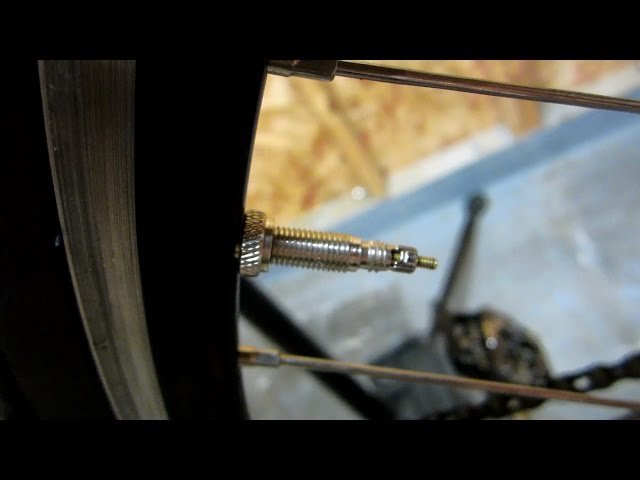
This fix is for tires that leak air without any hole in the rubber body. It applies specifically to Schrader valves (car-style) and removable Presta valve cores. Mix a drop of dish soap with water and wipe it over the open valve tip. If a soap bubble grows over the valve opening, the core is either loose or clogged with dirt.
Insert a small valve-core tool into the slot and twist clockwise until snug. Don’t overtighten, or the delicate brass threads will strip. If bubbles continue after tightening, screw in a replacement core. You’ll know it worked if the soap film remains flat and unchanged.
What not to do
- Don’t use metal screwdrivers as tire levers to pry the bead off the rim; they easily gouge soft aluminum rims and pinch fresh holes into your tube.
- Don’t apply sticky tape or duct tape over a puncture; air pressure forces right through non-vulcanizing adhesives within seconds.
- Don’t pump the tire above the maximum rating stamped on the sidewall; high pressure can blow the tire completely off the rim bead.
- Don’t ride on a flat tire even for a few yards; the weight of your bike crushes the rim against the ground and ruins the wheel wheel structure.
How to stop it happening again
Proper tire maintenance prevents sudden air loss before you ride. If your commute includes gravel or city streets with heavy debris, install a puncture-resistant tire belt.
| If you’re doing this | Do this instead | Why |
|---|---|---|
| Guessing air pressure by squeezing the tire | Use a floor pump with an accurate pressure gauge | Low pressure causes the tube to pinch against the rim on bumps |
| Leaving thorns stuck in the tire tread | Inspect tire tread after every ride and pick out glass shards | Sharp debris works deeper into the rubber with each wheel rotation |
| Riding on bare, cracked tire rubber | Replace the outer tire when tread patterns wear smooth | Thin tread rubber offers no barrier against small road wires |
| Reusing loose, worn rim tape | Replace rim tape if it slides away from the spoke holes | Sharp spoke ends slice the inner circumference of the tube |
Frequently asked questions
Can you fix a bike tire without removing the wheel?
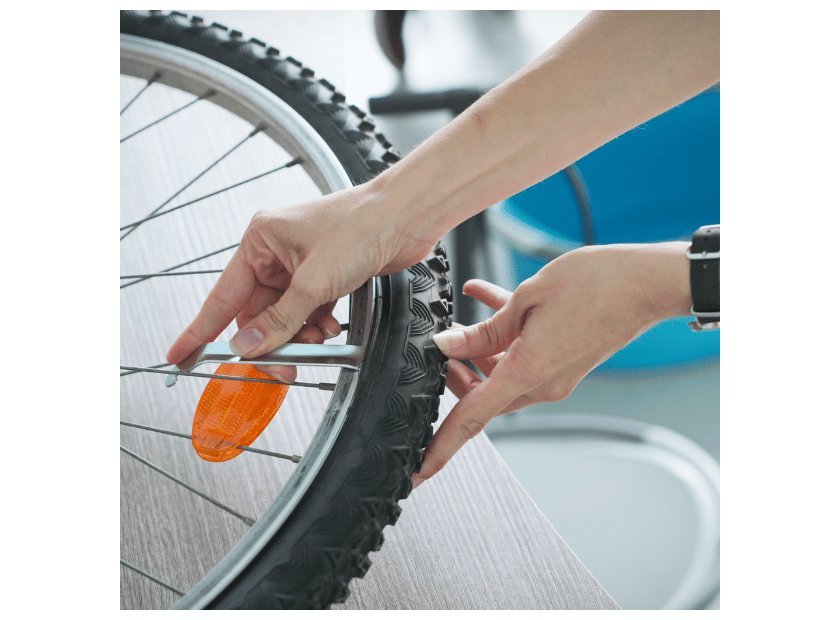
Yes, if you locate the puncture visually and pull just that section of tube out past the tire bead. You can scuff, glue, and patch the exposed loop of rubber while the rest stays mounted. However, clearing embedded glass inside the tire is much harder this way.
How long does a bicycle tube patch last?
A vulcanizing patch lasts the remaining life of the tube when applied properly. Chemical vulcanization creates a permanent chemical bond between the patch and the tube rubber. Glueless peel-and-stick patches, however, dry out and fail after several months.
Is it safe to ride on a patched tube?
Yes, patched tubes handle full riding pressure and high speeds without risk of sudden failure. If the patch held air during installation, it won’t blow out unexpectedly. This repair isn’t for high-speed downhill racing, where riders should install a completely fresh tube instead.
Why does my bike tire lose air when there’s no puncture?
A leaking valve core or rubber porosity causes pressure loss without a puncture. All butyl rubber tubes naturally lose about one to two pounds of pressure per week through microscopic pores. Presta valves also leak slowly if the top brass nut isn’t hand-tightened completely after pumping.
What happens if you ride on a flat bike tire?
Riding on a flat tire bends the metal wheel rim, slices the tube into shreds, and destroys the tire’s internal bead wire. A ruined wheel costs far more to replace than a cheap patch kit. Stop immediately and walk the bike instead of rolling on a flat.
Final Thoughts
Before you head back out, double-check that your tire pressure is firm and the bead is seated evenly against the rim. It’s a good idea to keep a spare tube in your bag, too. You’ll be much better prepared for the road ahead, and you won’t have to worry about getting stranded again.