
You’ll clean fabric dining room chairs by vacuuming first, then spot-treating stains with a mild upholstery cleaner, and finally wiping the whole surface with a damp cloth. The whole job takes about 30 to 45 minutes for a set of four when you use a spray foam or liquid cleaner made for fabric. Addressing everyday spills and light dirt buildup is the most effective way to maintain your furniture. If your chairs have deep mold or old pet urine, this method won’t be enough.
What you need to clean fabric dining chairs

You don’t need a lot of gear, but grabbing everything before you start saves time. Put these items on the table next to the chair you’re working on so you aren’t walking back and forth across the room.
- A vacuum with an upholstery brush attachment.
- A commercial fabric upholstery cleaner in a spray bottle.
- Two or three clean white microfiber cloths.
- A small bowl of warm water.
- Mild dish soap, just a few drops.
- A soft-bristle brush, like an old toothbrush.
- A dry towel to lay under the chair legs.
Don’t swap the white cloths for colored ones. Dye from a blue or red rag can bleed onto light fabric when it gets wet and leave a stain worse than the one you started with.
You can replace the commercial spray with a mix of one teaspoon of clear dish soap in two cups of warm water if you prefer. Skip vinegar unless the care tag allows it. Check the manufacturer’s care label for exact cleaning codes before buying any product.
Steps to clean fabric dining chairs
-
Vacuum every side of the chair using the upholstery brush for 2 minutes per seat. Run it over the top, the sides, and down into the creases where crumbs hide. This pulls out dry dust so it doesn’t turn into mud when you add liquid later.
-
Find the cleaning code tag tucked under the seat cushion or along the bottom edge. You’ll see W (water-based cleaner), S (solvent only), WS (either is fine), or X (vacuum only). Match your cleaning spray to that letter. If the tag says S, don’t use water at all.
-
Spray your cleaner onto a white microfiber cloth instead of directly onto the chair. Use about two sprays per cloth. Applying it to the fabric directly pushes too much moisture into the padding underneath, which takes days to dry.
-
Blot any visible stains by pressing the damp cloth down and lifting it straight up. Don’t rub in circles. Rubbing frays the fibers and spreads the spill outward. Keep blotting until the mark lifts.
Careful: If the stain doesn’t fade after five blots, stop. Pushing harder damages the weave.
-
Mix one drop of dish soap into your small bowl of warm water. Dip the soft-bristle brush in, shake off the excess, and gently work it over the whole seat in straight lines. This lifts the dull film left by daily use.
-
Take a second clean cloth, dampen it with plain water, and wipe the seat to remove the soap. Rinse the cloth twice during this step. Leftover soap attracts new dirt faster than bare fabric does.
Tip: Wring the cloth until it’s barely damp. A soaking wet rag leaves water rings on certain weaves.
-
Press a dry towel firmly against the seat to pull out leftover moisture. Hold it there for ten seconds, move it, and repeat across the whole surface.
-
Leave the chair in a room with open windows or a fan running for 2 to 4 hours. Don’t sit on it until the fabric feels completely cool and dry to the touch.
If your chairs are antique or covered in silk, skip the brush step entirely. Delicate threads tear easily, so take those to a professional upholstery cleaner who handles fragile textiles.
How effort changes by fabric type

The time and method shift depending on what your chairs are covered in. A thick weave holds more dirt than a tight one, and some materials react badly to water. Here’s what to expect for each common type.
| Fabric type | Time per chair | What changes | Watch for |
|---|---|---|---|
| Polyester blend | 10 minutes | Takes water-based cleaners well | Over-wetting the foam pad |
| Cotton canvas | 15 minutes | Needs more soap to lift grease | Water marks if dried unevenly |
| Velvet | 20 minutes | Brush only in the direction of the nap | Crushing the pile flat |
| Linen | 15 minutes | Wrinkles easily when damp | Shrinking if water is too hot |
| Microfiber | 10 minutes | Repels liquids naturally at first | Stiff texture if soap isn’t rinsed |
Always start with the gentlest approach on a hidden corner, like the back bottom edge. If the color stays true after ten minutes, move to the main seat. It’s safer to go slow and add more cleaner than to soak the fabric on the first try. According to the American Cleaning Institute, checking the manufacturer’s instructions prevents damage to specific fiber blends.
Signs your fabric chairs are actually clean
A properly cleaned chair looks even in color from edge to edge. The fabric shouldn’t feel stiff or sticky once it dries. Run your hand across the seat; it should feel soft, not rough or crunchy.
A poor result shows up as dark rings around the edges where you stopped wiping. You might also see a chalky white residue left behind by soap that wasn’t rinsed out. That stiffness happens because dried detergent coats the individual threads and glues them together.
To prevent this, always use less soap than you think you need. One drop in a bowl is plenty for a single chair. Rinsing with a plain damp cloth matters just as much as the washing step. And never rush the drying process with a hair dryer on high heat. Fast, hot air bakes the soap right into the weave.
If the fabric still feels scratchy after drying, go over it lightly with a dry, soft-bristle brush. That fluffs the fibers back up without adding more moisture.
Care tags and drying times
Most upholstered chairs sold in the US carry a voluntary cleaning code recommended by furniture industry standards. The letters W, S, WS, and X tell you exactly which chemicals are safe. Ignoring them can damage the fabric and may void some manufacturers’ warranties.
After you finish, throw away any dirty water and wash your microfiber cloths without fabric softener. Softener coats the fibers and stops them from absorbing spills next time. Put the chairs back in their normal spots only when they’re fully dry.
For a household eating three meals a day, plan to do this light cleaning every 3 to 4 months. Spills need immediate attention, but the full wipe-down keeps odors from setting in. If your chairs sit in direct sunlight, check the color on the back first.
When a stain involves blood, heavy grease, or dye from clothing, home methods often fail. Those situations require a certified upholstery technician with solvent extraction tools.
Other ways to handle dirty chairs
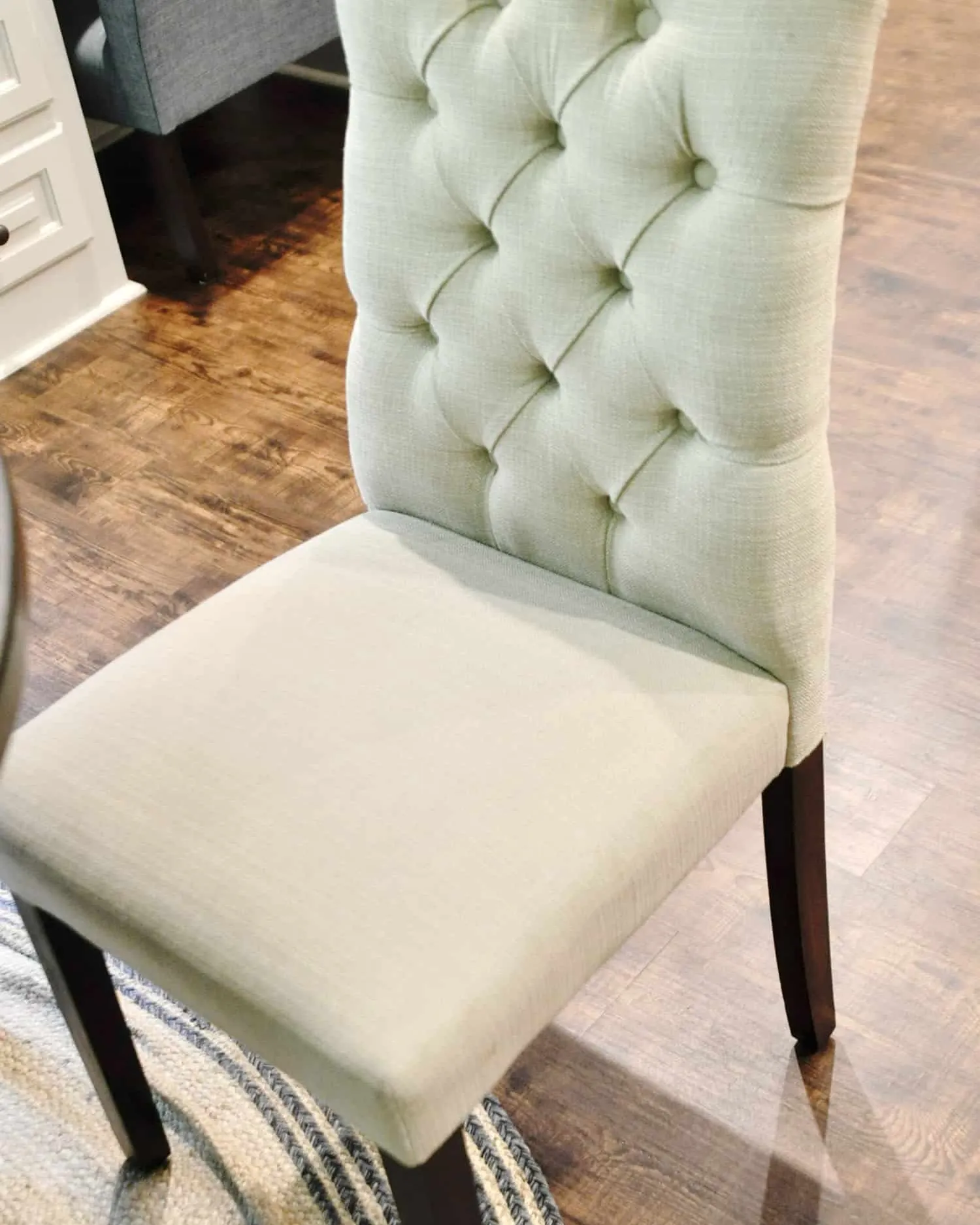
Renting a portable extractor
A carpet cleaner with an upholstery hose sprays water and vacuums it back up instantly. This cuts drying time to about one hour. Renting one from hardware stores is inexpensive compared to professional services. The trade-off is weight; dragging the machine inside takes effort.
Using a dry foam kit
Dry foam cleaners expand on contact and dissolve dirt without soaking the padding. You brush it in, wait 15 minutes, and vacuum the powder away. It’s ideal for S-code fabrics that can’t get wet. The downside is that it struggles with sticky food spills.
Hiring a professional service
A local upholstery cleaner brings truck-mounted suction and specialized solvents. They finish a set of six chairs in under an hour. You pay for labor and expertise rather than doing it yourself. Book this route once a year for maintenance while handling weekly crumbs yourself.
Related guides
- How to Tighten Dining Room Chairs: A Step-by-Step Fix
- Top 10 Large Rugs for Open Plan Living Rooms in 2026
- 10 Best Interior Upholstery Fabric Design Books for Projects in 2026
Frequently asked questions
Can I use baking soda on fabric dining chairs?
Yes, baking soda lifts fresh odors from dry fabric. Sprinkle a thin layer over the seat, leave it for 15 to 20 minutes, then vacuum it up with the brush attachment. Don’t mix it into a paste with water unless the care tag allows W-cleaning. Wet baking soda leaves a white crust that’s hard to rinse out of textured weaves.
Why does my chair smell sour after cleaning?
A sour smell means the padding underneath stayed wet too long. Foam cushions hold moisture much longer than the surface fabric. If the room was humid or you used too much water, mildew starts growing inside within 24 hours. Next time, wring your cloth tighter and run a fan directly on the chair for at least 4 hours.
How long does it take for fabric chairs to dry?
Expect 2 to 4 hours in a room with good airflow and average humidity around 50%. Thick cotton canvas or velvet might need 6 hours. You’ll know it’s ready when the fabric feels the same temperature as the surrounding wood frame. Cold, damp spots mean the foam is still holding water.
Is it safe to steam clean dining chairs?
It’s safe only if the care tag says W or WS. Steam reaches temperatures that can shrink linen and damage some synthetic blends. Hold the nozzle two inches above the fabric instead of pressing it down. If your tag says S or X, skip steam entirely and use a dry solvent or just vacuum.
What happens if I use bleach on a stain?
Bleach strips the dye from colored fabric almost immediately. Even on white chairs, it weakens the threads and causes them to tear under normal sitting pressure. Stick to oxygen-based stain removers designed for upholstery. Test any new chemical on the underside of the chair skirt before touching the seat.
How often should I vacuum dining chairs?
Vacuum them once a week if your family eats at the table daily. Crumbs pushed into the seams grind against the threads every time someone sits down, wearing holes faster. A quick pass with the brush attachment takes under a minute per chair and prevents that friction damage.
Will dish soap ruin the fabric color?
Clear, mild dish soap won’t strip dye if you dilute it properly. Use no more than one drop per two cups of water. Colored soaps or heavy degreasers contain additives that leave permanent shadows on light fabric. Always blot with a white cloth afterward to check if any dye transferred from the chair.
Conclusion
Keeping your seats fresh comes down to catching spills early and using less liquid than you think you need. Grab your vacuum and a white cloth, check the tag under the seat, and work slowly. Your chairs will look sharp through dinner tonight and stay that way for months.