
Wash the surface with warm water, a few drops of dish soap, and a soft-bristle brush. Rinse it off completely with a garden hose when you’re done. That’s how to clean polywood adirondack chairs without scratching or dulling the finish. The whole job takes about 15 minutes per chair for light dirt, or up to 30 if you’re lifting mildew stains. This method suits anyone who keeps these recycled plastic seats outdoors year-round.
What you need to clean Polywood chairs
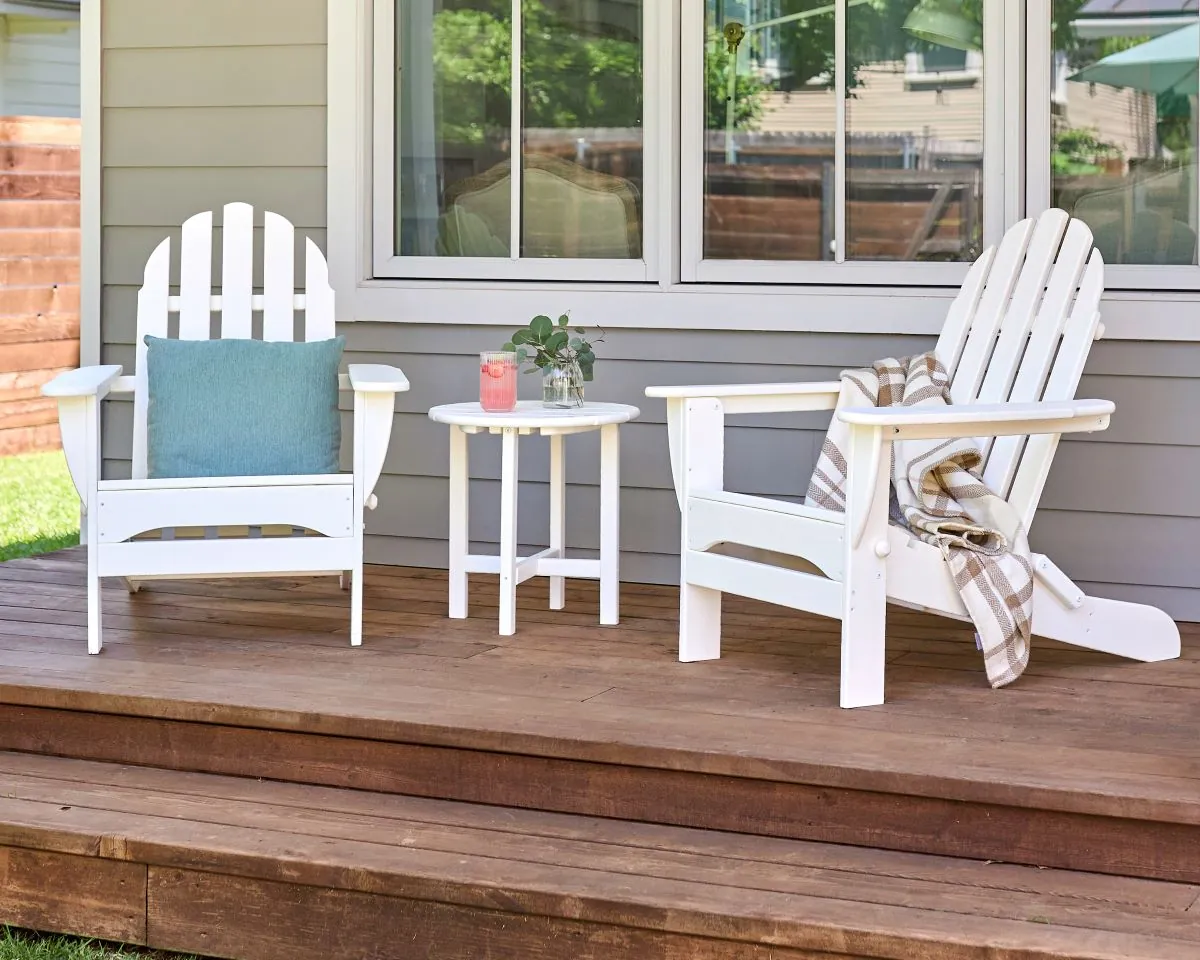
Gather everything before you start so you aren’t walking back inside with wet hands. You don’t need specialty products from a hardware store. Regular household items do the job just fine on this high-density polyethylene lumber.
- Bucket: A standard 2-gallon size holds enough solution for two chairs at once.
- Dish soap: Use plain liquid soap like Dawn; skip anything with added bleach or heavy degreasers.
- Soft-bristle brush: A nylon scrub brush works well, but keep the bristles flexible so they don’t scratch.
- Garden hose: Set the nozzle to a flat fan spray instead of a pinpoint jet stream.
- Microfiber cloths: Two or three dry towels speed up drying and prevent water spots in hard water areas.
- White vinegar: Keep a cup handy if you see white mineral buildup or light mildew.
- Magic Eraser (melamine foam): Bring one only for stubborn bird droppings or tree sap that soap won’t lift.
You can swap dish soap for a dedicated HDPE cleaner, but you can’t use acetone or paint thinner because those solvents will permanently cloud the plastic surface. If your chairs sit near saltwater, rinse them more often and check Polywood’s official care guide for their specific coastal maintenance advice.
Steps to wash Polywood Adirondack chairs
Follow these steps in order. Doing them out of sequence traps dirt under the soap suds, which means you’ll end up rubbing grit into the surface.
-
Move the chair to a shaded spot or wait until the sun is off it. Washing hot plastic in direct sunlight makes the soap dry too fast, leaving streaks you’ll have to scrub again.
-
Brush off loose leaves, pollen, and dry dirt with a dry soft-bristle brush. Spend about 60 seconds sweeping the armrests, seat slats, and the gaps between them.
-
Fill your 2-gallon bucket with warm tap water and add 2 tablespoons of liquid dish soap. Swirl it around by hand until the water gets sudsy. Don’t add extra soap thinking it’ll work faster; too much suds just makes rinsing take twice as long.
-
Dip the soft-bristle brush into the soapy water and scrub the chair top to bottom. Start at the top of the backrest and pull the brush down toward the seat. Work the bristles gently into the grooves where the wood-grain texture sits. Allow about 10 minutes for a full chair.
Careful: Pressing down hard with a stiff brush leaves permanent shiny scratches on the matte finish. Let the soap do the lifting, not your shoulder.
-
Spray the entire chair down with the garden hose on a wide fan setting. Rinse from the top down for 2 to 3 minutes until the water runs completely clear and no bubbles are left in the crevices.
-
Check for leftover stains. If a spot remains, mix 1 part white vinegar with 2 parts water in a spray bottle. Spray the stain, let it sit for 5 minutes, then scrub lightly and rinse again.
-
Wipe the chair dry with a microfiber cloth. This step matters if your tap water has high mineral content. Air-drying hard water leaves white rings that look like damage but are just calcium deposits.
Tip: Fold the cloth into quarters so you get eight clean sides before grabbing another one.
- Leave the chair in the shade for 30 minutes to air out the deep screw holes before putting cushions back on. Putting damp pads on wet plastic traps moisture and invites mold underneath.
If a stain doesn’t move after the vinegar soak, stop scrubbing. Deep chemical burns or melted plastic require professional repair, and sanding it yourself voids the manufacturer’s warranty.
How cleaning changes by mess type

The effort shifts depending on what landed on the plastic. Light dust needs almost nothing, while tree sap demands patience and a lighter touch.
| Type of mess | Time per chair | What changes | What to watch for |
|---|---|---|---|
| Dust and pollen | 10 minutes | Skip the vinegar; just use soapy water and rinse. | Pollen turns yellow if you leave it baking in the sun all summer. |
| Bird droppings | 15 minutes | Soak the spot with a wet cloth for 3 minutes before brushing. | Scrubbing dry droppings drags grit across the surface and scratches it. |
| Mildew spots | 20 minutes | Add 1/2 cup of white vinegar to your soapy bucket. | Black spots hiding deep in the wood-grain grooves might need a second soak. |
| Tree sap | 25 minutes | Use a melamine foam pad lightly dampened with rubbing alcohol. | Rubbing too hard with alcohol strips the color layer right off the plastic. |
| Sunscreen grease | 15 minutes | Add an extra tablespoon of dish soap to cut the oils. | Grease smears outward if you use a circular motion instead of straight strokes. |
Start with the mildest approach first. If soap and water handle it, you don’t need vinegar. If vinegar handles it, you don’t need alcohol. Adding stronger chemicals than the mess requires risks dulling the finish for no reason.
How to know your chairs are clean
A properly washed chair looks exactly like it did the day it came out of the box. The color should be even across every slat, and the faux wood grain shouldn’t hold any dark lines of trapped dirt. Run your hand over the armrest; it should feel smooth and slightly textured, never sticky or gritty.
A poor result shows up as white streaks running down the backrest. That happens when soap dries before you rinse it off, or when you wash the chair while the sun is beating directly on it. It also shows up as cloudy patches where someone used a harsh abrasive pad.
This material doesn’t absorb water, but it does hold onto oils and minerals on the surface. That’s why greasy fingerprints stay visible until you actually break the oil down with soap. Rinsing with plain water just moves the grease around.
To avoid streaks, wash in the shade and rinse immediately after scrubbing each section. To prevent scratches, throw away any wire brushes or scouring pads you find in your cleaning caddy. Stick strictly to nylon bristles and soft cloths.
If you aren’t sure whether a spot is dirt or a permanent scratch, rub a drop of cooking oil on it. Dirt absorbs it and darkens; a scratch stays shiny.
Rules and upkeep for Polywood furniture
Polywood builds its furniture from high-density polyethylene, which is a recycled plastic that doesn’t rot, splinter, or need sealing like real wood. Because it isn’t porous, you don’t need to apply waterproofing treatments or stains. The US Environmental Protection Agency regulates how HDPE plastics are recycled and processed, but once it’s sitting in your yard, it’s just outdoor furniture.
After washing, empty your bucket on the grass rather than near a storm drain if you used a lot of soap. Put your brushes away dry so the bristles don’t bend out of shape. If you took the screws out to clean behind them, tighten them back firmly but don’t force them, since stripping the plastic threads ruins the joint.
For chairs sitting outside all year, a basic wash every 3 months keeps them looking new. If they sit under a tree dropping sap, or near the ocean catching salt spray, you’ll need to do it every 4 to 6 weeks. Salt buildup eventually causes a chalky white film that takes much longer to remove if you ignore it.
Avoid pressure washing them, as a machine over 1,500 PSI cuts into the plastic surface.
Other ways to handle it
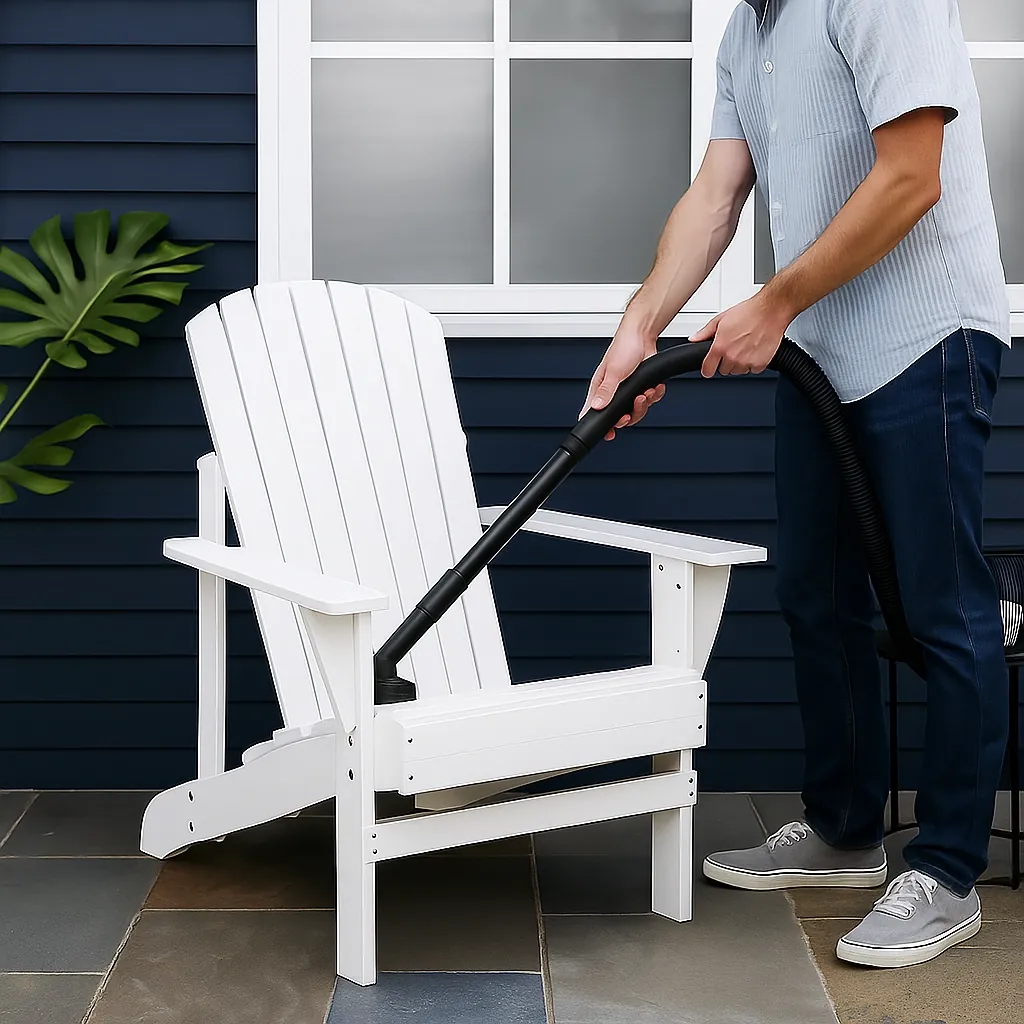
Using a low-pressure washer
Swap the garden hose for an electric pressure washer set below 1,500 PSI. Hold the wand at least 12 inches away from the plastic surface. This cuts the rinsing time in half, but holding it too close or angling it wrong peels the color layer off. It’s faster, yet riskier if you rush.
Hiring a patio cleaning service
Hiring a local exterior cleaning crew to wash your whole deck setup is a good idea. You trade your own time and effort for cash, but you won’t risk scratching expensive chairs if you’ve never handled a pressure wand before.
Spot cleaning only
Keep a spray bottle filled with water and a single drop of dish soap next to your patio door. Wipe spills immediately with a paper towel instead of waiting for a full wash day. This saves hours over a season, though you’ll still need a deep scrub twice a year to lift embedded pollen.
Related guides
- How to Tighten Dining Room Chairs: A Step-by-Step Fix
- Best Weather Resistant Patio Chairs for Lasting Comfort and Style in 2026
- 10 Best Patio Chairs for Outdoor Lounging: Expert Picks and Verdict in 2026
Frequently asked questions
Can I use bleach on Polywood chairs?
No, you shouldn’t use full-strength chlorine bleach. Polywood advises against harsh chemicals because they can fade the color built into the plastic. If you have severe mildew, a highly diluted mix of 1 part bleach to 10 parts water can be used sparingly, but you must rinse it off within 2 minutes. White vinegar is safer and works just as well for typical backyard mold.
How long does it take to wash one chair?
It takes about 15 minutes per chair for normal dust and pollen. If you’re dealing with dried bird droppings or tree sap, expect to spend closer to 25 or 30 minutes soaking and scrubbing those specific spots. That time assumes you’re using a 2-gallon bucket, a soft brush, and a standard garden hose.
Why are my Polywood chairs turning white?
White patches usually come from one of two things: hard water minerals drying on the surface, or UV damage from years of direct sun. Mineral spots wipe away easily with a 50/50 mix of white vinegar and water. True sun fading can’t be washed away because the pigment itself has degraded, though Polywood colors run all the way through the board.
Is it safe to use a Magic Eraser on Polywood?
Yes, but only for stubborn spots like tree sap or dried paint. Melamine foam acts like ultra-fine sandpaper. If you rub it over the whole chair, you’ll sand down the matte finish and leave shiny, uneven patches. Wet the eraser first, rub the stain gently, and wash the area with soapy water immediately afterward.
What happens if I pressure wash Polywood?
If you use a gas pressure washer above 1,500 PSI or hold the nozzle closer than 12 inches, the water stream will carve grooves into the plastic. It destroys the faux wood-grain texture permanently. An electric washer on a wide fan tip is fine, but a zero-degree nozzle will ruin the chair in seconds.
How often should I clean outdoor plastic chairs?
Wash them every 3 months if they sit uncovered year-round. If they’re stored under a roof or covered during winter, twice a year is plenty. Chairs near the ocean or under pine trees need attention every 4 to 6 weeks to stop salt or sap from building up into a thick crust.
Do Polywood chairs need to be sealed or painted?
No, they don’t. The color is mixed into the HDPE material during manufacturing, so it never chips, peels, or needs a fresh coat. Applying wood sealant or exterior paint won’t stick to the non-porous plastic anyway. It’ll just peel off in sheets the first time the temperature changes.
Conclusion
Keeping these chairs in good shape comes down to gentle tools and regular timing. Skip the harsh chemicals, stay out of the midday sun while you scrub, and the plastic will hold its color for as long as you own them.