
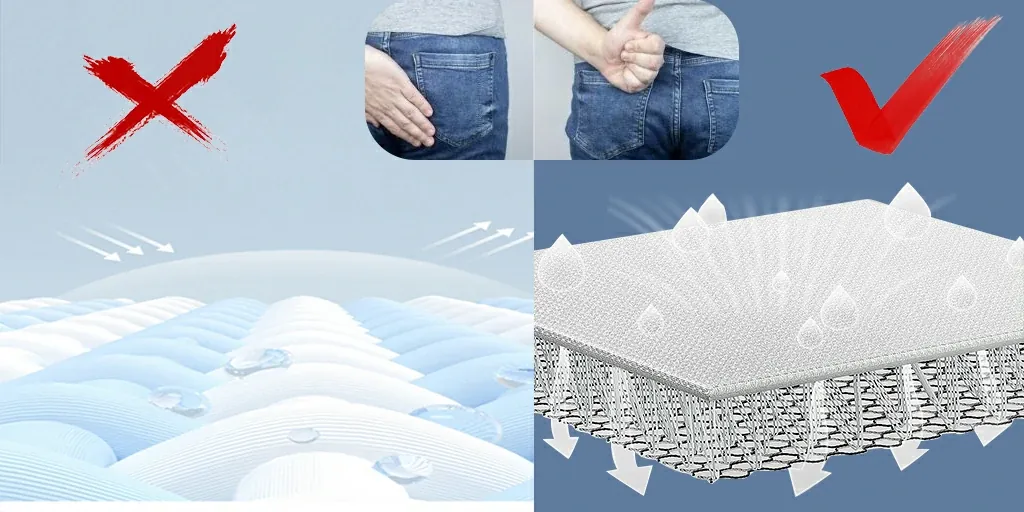
The best way to stop bum sweat on chairs is to block heat and moisture where your body meets the seat, using breathable fabrics, absorbent liners, and chair materials that let air move instead of trapping it. Sweat happens because your skin can’t breathe against vinyl, leather, or synthetic upholstery, and body heat builds up faster than it can evaporate. Fixing the problem means changing what you sit on, what you wear, and how you manage moisture through the day.
Key Takeaways

- Switch to mesh, perforated, or fabric chairs instead of vinyl, leather, or faux leather so air can circulate under you.
- Wear moisture-wicking underwear and loose cotton or bamboo trousers rather than tight synthetic fabrics that trap heat.
- Place a washable cotton towel, bamboo seat liner, or absorbent pad on the chair before you sit down.
- Stand up or shift position every 30 to 60 minutes to break up continuous skin contact and let the seat cool.
- Keep a spare pair of trousers or underwear at work or in your bag for quick changes after long sits.
Why Your Chair Makes You Sweat
Sitting creates a sealed pocket between your skin and the seat. When the chair surface is non-breathable, sweat has nowhere to go, so it pools against your skin and soaks into your clothes. Vinyl, leather, and polyurethane upholstery are the worst offenders because they don’t absorb moisture or allow airflow. Fabric and mesh seats perform better, but even they can feel damp if you sit still for hours in warm temperatures.
Body heat adds to the problem. Your buttocks and thighs generate steady warmth, and without a gap for air to move, that heat turns into perspiration. The longer you remain motionless, the worse it gets.
Common triggers
- Vinyl, leather, or faux-leather office and dining chairs
- Tight trousers made of polyester, nylon, or denim
- Synthetic underwear that doesn’t wick moisture
- Sitting in one position for more than an hour
- Warm rooms with poor airflow or no fan
What to Look for in Chairs to Stop Bum Sweat
The chair itself makes the biggest difference. Mesh office chairs let air pass through the seat and back, which keeps your skin cooler than solid upholstery. Perforated leather or fabric seats with small holes also improve airflow, though they aren’t as effective as open mesh. If you’re buying a new chair, look for a seat described as breathable, ventilated, or mesh-backed.
Chair materials ranked for sweat control
| Material | Breathability | Moisture handling | Best for |
|---|---|---|---|
| Mesh | Excellent | Lets air and vapor pass through | All-day office work |
| Fabric (cotton blend) | Good | Absorbs some moisture, dries slowly | Home offices, dining |
| Perforated leather | Moderate | Holes help, but surface still traps heat | Executive chairs |
| Vinyl / faux leather | Poor | Traps heat and sweat completely | Avoid if you sweat easily |
| Solid leather | Poor | Doesn’t breathe; warms up quickly | Not recommended |
If you can’t replace your chair, a seat cushion with a mesh top or a ventilated gel insert can add an air layer between you and the upholstery.
Pro Tip: Look for chairs with a waterfall seat edge, which reduces pressure on the back of your thighs and improves circulation under you.
Add an Absorbent Barrier
A thin layer between your body and the chair catches sweat before it reaches the upholstery. A cotton towel folded over the seat is the cheapest option, and it can be swapped out during the day. Bamboo seat liners are more absorbent than cotton and feel cooler against the skin. Some people use disposable absorbent pads designed for chairs, though these create waste and cost more over time.
Absorbent liner options
| Liner type | Absorbency | Reusable | Comfort |
|---|---|---|---|
| Cotton towel | Moderate | Yes | Soft, may bunch |
| Bamboo seat liner | High | Yes | Cool, smooth |
| Microfiber pad | Moderate | Yes | Grips well, dries fast |
| Disposable chair pad | High | No | Convenient, less eco-friendly |
Place the liner directly on the seat and smooth out wrinkles so it doesn’t shift when you move. Wash cotton or bamboo liners regularly to prevent odor and bacteria buildup.
Warning: Don’t use plastic-backed pads or garbage bags as liners. They block airflow completely and will make you sweat more.
Dress for Airflow
What you wear matters almost as much as what you sit on. Tight synthetic trousers press your skin against the chair and trap sweat against your body. Loose cotton, linen, or bamboo trousers allow air to circulate and pull moisture away from your skin. Moisture-wicking underwear made from merino wool or synthetic performance fabric moves sweat to the outer layer where it can evaporate.
Avoid denim if you’re prone to bum sweat; thick denim holds moisture and takes a long time to dry. Light-colored clothing doesn’t stop sweat, but it makes damp patches less visible if they happen.
Fabrics to choose and avoid
| Choose | Avoid |
|---|---|
| Cotton trousers | Polyester leggings |
| Linen pants | Nylon tights |
| Bamboo underwear | Tight denim jeans |
| Moisture-wicking boxers or briefs | Silk or satin underwear |
If you wear a uniform or dress code that requires synthetic fabrics, keep a spare pair of breathable trousers at work so you can change midday.
Move More During the Day
Staying still for long periods lets heat and moisture build up in one spot. Standing up, stretching, or shifting your weight every 30 to 60 minutes gives the seat a chance to cool and lets air reach your skin. Even a two-minute walk to the water cooler breaks the cycle of continuous contact.
If you work at a desk, consider a sit-stand desk or a timer that reminds you to stand. When you do sit, adjust your position slightly every few minutes instead of locking into one posture.
Quick movement ideas
- Set a phone timer for 45 minutes of sitting, then stand for two minutes.
- Roll your hips side to side while seated to shift pressure points.
- Take phone calls standing up when possible.
- Walk to a farther restroom or break room to add steps.
Manage Moisture Before You Sit
Antiperspirant isn’t just for underarms. Some people apply a thin layer of clinical-strength antiperspirant to clean, dry skin between the buttocks and on the upper thighs before getting dressed. This can reduce sweat production for several hours. Use a product labeled for sensitive skin, and test it on a small area first to check for irritation.
Body powders such as cornstarch or talc-free powder can absorb surface moisture, but they clump if you sweat heavily and may stain light-colored clothing. Apply sparingly and only to dry skin.
If you know you’ll be sitting for a long meeting or flight, change into fresh, dry underwear right before you leave. Starting with dry skin delays the point at which dampness becomes noticeable.
Car Seats and Long Drives
Car seats are often vinyl or leather, which makes them hot and sweaty in warm weather. A breathable seat cover made of mesh or mesh-backed fabric can transform a car seat. Some covers include a cooling gel layer or a built-in fan that plugs into the car’s 12-volt outlet.
During long drives, stop every hour or two to get out and walk around. This cools the seat and your body at the same time. If your car has ventilated seats, use the lowest fan setting that keeps you comfortable.
Car seat solutions
- Mesh seat cover for driver and passenger seats
- Cooling gel seat cushion
- Sunshade to keep the interior cooler before you enter
- Breathable cotton seat protector
Office Chairs and Work Settings
Office workers sit longer than almost anyone, so the office chair is often the main source of bum sweat. If your employer provides the chair, ask whether you can bring a seat cushion or replace the upholstery with fabric. Many offices allow employees to add a personal cushion or lumbar support.
Keep a small desk fan aimed at your lower back and seat if your workplace permits it. Even a clip-on USB fan can move enough air to reduce sweat buildup. Store a spare shirt and underwear in a desk drawer for emergencies.
Quick Fixes for Social Situations
If you’re going to a wedding, dinner, or event where you’ll sit on unknown chairs, preparation helps. Choose dark-colored trousers or a skirt that hides dampness. Bring a small folded cotton handkerchief or panty liner to place discreetly on the seat if needed. Excuse yourself to the restroom halfway through the event to check and freshen up if necessary.
Sitting on a wooden chair with a thin cloth napkin under you is better than sitting directly on a padded banquet chair covered in vinyl.
Products That Can Help
Several product categories address bum sweat directly. You don’t need all of them; pick one or two that fit your routine.
Product categories
- Breathable mesh office chairs (look for models with ventilated seats)
- Bamboo or cotton seat liners
- Moisture-wicking underwear (brands such as ExOfficio and Tommy John make performance styles)
- Absorbent chair pads (washable, reusable styles)
- Clinical-strength antiperspirant for body use
- Portable USB desk fans
- Car seat covers with mesh or cooling layers
Buy from retailers that accept returns, since fit and comfort vary by body type and chair shape.
When to See a Doctor
Excessive sweating that happens even when you’re cool, relaxed, or not sitting may be hyperhidrosis, a medical condition that causes overactive sweat glands. If bum sweat soaks through clothing regularly, causes skin irritation, or affects your confidence and daily life, a healthcare provider can discuss prescription antiperspirants, oral medications, or other treatments.
Skin that stays damp for long periods can also develop intertrigo, an inflammation caused by moisture, heat, and friction in skin folds. Keep the area clean and dry, and seek medical advice if you notice redness, itching, or a rash that doesn’t improve.
Related guides
- 10 Best Bike Helmets for Summer: Top Picks for Cool Riding in 2026
- 7 Best Auxiliary Electric Cooling Fan Kits for Engine Cooling in 2026
- Best Weather Resistant Patio Chairs for Lasting Comfort and Style in 2026
Frequently Asked Questions
Why does my bum sweat so much on chairs?
Sweat pools because non-breathable chair materials trap heat and moisture against your skin, and sitting still prevents evaporation. Switching to mesh or fabric seats and wearing loose cotton clothing usually reduces it.
Can I use baby powder to stop bum sweat?
You can use a small amount of talc-free or cornstarch powder on dry skin to absorb surface moisture, but it may clump if you sweat heavily and can stain light clothing. It’s a short-term aid, not a cure.
Do cooling seat cushions actually work?
Mesh or ventilated gel cushions create an air gap between you and the chair, which helps heat escape. They work best when paired with breathable clothing and regular movement.
Is bum sweat a medical condition?
Not usually. It’s a normal reaction to heat, friction, and non-breathable surfaces. If you sweat excessively even when cool and at rest, a doctor can evaluate you for hyperhidrosis.
How often should I stand up to prevent sweat?
Aim to stand or shift position every 30 to 60 minutes. A two-minute break lets the seat cool and gives airflow a chance to dry any moisture.
What should I do if sweat soaks through my clothes at work?
Keep a spare pair of trousers and underwear at your desk or in your bag. Change when needed, wipe the seat with a dry cloth, and use an absorbent liner going forward.
Conclusion
Stopping bum sweat comes down to one habit: put something breathable between you and the seat, then stand up regularly so heat can’t build up. Start tomorrow by swapping your usual chair liner for a cotton towel or bamboo pad, and set a timer to remind you to move every hour.