
Your office chair sinks because the gas lift cylinder inside the seat has lost pressure, so it can no longer support your weight. Most chairs use a pneumatic cylinder that locks at the height you choose, and when its seal fails the seat slowly drops every time you sit down. You can fix this yourself in minutes with a few tools, or replace the cylinder for a permanent repair.
Key Takeaways
- Tighten the height-adjustment lever first; a loose lever is the easiest cause to fix.
- Use a PVC pipe sleeve or hose clamp as a zero-cost temporary stop for a sinking seat.
- Replace the gas lift cylinder when the seal has failed; that’s the only permanent repair.
- Match the cylinder stroke and diameter to your chair before ordering a replacement part.
- Check the chair’s weight rating; exceeding it destroys cylinders faster than normal use.
- Stop using the chair if the base or seat plate is cracked, since a failed cylinder can drop you suddenly.
Why Office Chairs Sink
Most office chairs rely on a single pneumatic gas lift cylinder connecting the seat mechanism to the five-star base. Inside that cylinder is a piston sealed by O-rings. When you pull the height lever, the pin releases and the cylinder extends or compresses; when you let go, the pin re-engages and the seal holds the pressure.
Over time those seals wear out, the internal gas escapes, and the cylinder can no longer lock in place. The result is a chair that slowly sinks under your weight.
Several factors speed up this failure. Sitting down hard, or “plopping,” sends a shock through the cylinder every time. Exceeding the chair’s posted weight limit puts constant pressure on seals that were never rated for it.
Cheap cylinders with thin walls and low-grade seals fail faster than heavy-duty units. Dust and grit can also work into the housing and abrade the piston. If your chair is new and sinking immediately, the cylinder may have been defective from the factory or damaged during shipping.
Quick Checks Before You Repair Anything
Before you buy parts or flip the chair over, run through this short checklist. It takes two minutes and rules out the free fixes.
- Height lever: Pull the lever up and down several times. If it feels loose, wobbly, or doesn’t click, the cable or pin inside may be stretched or disconnected.
- Tilt tension knob: Some chairs have a separate tension control under the seat. Make sure you aren’t confusing tilt recline with height loss.
- Base and casters: Wiggle the base. A cracked nylon base or a bent caster stem can make the seat feel uneven, though it isn’t the same as a sinking cylinder.
- Seat plate: Look under the seat where the cylinder attaches. A cracked or stripped mounting plate won’t hold the cylinder steady.
- Weight limit: Find the chair’s rating, usually printed on a sticker under the seat or in the manual. If you regularly exceed it, the cylinder is working beyond its design.
If the lever is simply loose, tightening the screw or reconnecting the cable may stop the sink without replacing anything.
Temporary Fixes That Cost Almost Nothing
These methods don’t repair the cylinder. They physically prevent the seat from dropping below a chosen height. Use them while you wait for a replacement part or if you don’t want to take the chair apart.
PVC Pipe Sleeve
Measure the exposed metal cylinder when the chair is at your preferred height. Cut a length of PVC pipe with an inner diameter that slides over the cylinder. Slit the pipe lengthwise so it can open and clamp around the metal. Slide it over the cylinder at the height you want. The pipe bears the load and keeps the seat from descending.
Hose Clamp
A stainless-steel worm-drive hose clamp can grip the cylinder directly. Position it just under the seat mechanism and tighten it until the seat stops sinking. This works best on cylinders with a smooth, uniform shaft; it can slip on tapered or coated shafts.
Duct Tape Wrap
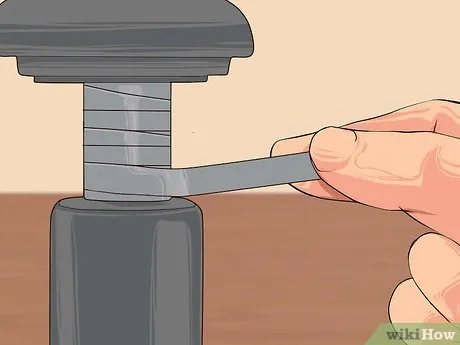
Wrap several layers of heavy duct tape around the cylinder at the desired height. This is the least reliable option and works only as a short-term stopgap until you get a proper clamp or sleeve.
Pro Tip: Mark your preferred seat height with a piece of masking tape on the cylinder before you apply any temporary fix, so you can return to the exact same position.
Replacing the Gas Lift Cylinder
When the internal seal has failed, no external clamp or sleeve restores the chair’s original function. Replacing the cylinder is the standard repair. Most office chairs use a cylinder with a 2-inch diameter, but stroke length—the distance the cylinder travels from lowest to highest seat—varies by model.
Tools You Need
- Adjustable wrench or pipe wrench
- Flathead screwdriver
- Rubber mallet
- WD-40 or penetrating oil
- Replacement gas lift cylinder
- Work gloves
Removal Steps
- Lay the chair on its side so the base is accessible.
- Spray the joint where the cylinder meets the base with penetrating oil and wait five minutes.
- Tap the base gently with a rubber mallet to loosen the taper fit. Most cylinders are held by friction, not screws.
- Pull the cylinder out of the base. If it resists, wiggle it while pulling; don’t pry with a screwdriver, which can crack the base.
- Turn the chair upright and remove the seat from the cylinder. Some seats release with a retaining clip; others require unscrewing four bolts under the seat.
- Pull the old cylinder out of the seat mechanism.
Installation Steps
- Insert the new cylinder into the seat mechanism until it clicks or seats fully.
- Reattach the seat to the chair base, aligning the cylinder with the base socket.
- Press or tap the base onto the cylinder until it’s fully seated.
- Return the chair to an upright position and test the height lever.
- Sit gently to confirm the cylinder locks at your chosen height.
Warning: Don’t attempt to disassemble the gas cylinder itself. It’s pressurized, and puncturing it can cause injury.
Matching a Replacement Cylinder to Your Chair
Not every cylinder fits every chair. Use this table to compare the measurements you need before ordering.
| Measurement | What to Check | Typical Range |
|---|---|---|
| Outer diameter | Cylinder shaft width | 2 inches (most office chairs) |
| Stroke length | Full extension minus collapsed height | 4 to 7 inches |
| Chair weight rating | User weight plus chair weight | 200 to 350 pounds |
| Mounting type | Seat plate clip or bolt pattern | Varies by manufacturer |
Measure your old cylinder with a tape measure or caliper before you order. If the chair’s label lists a cylinder part number, use that as your primary guide. Universal cylinders advertise broad compatibility, but “universal” doesn’t mean every chair—verify the stroke and diameter against your measurements.
When to Repair Versus Replace the Chair
A cylinder replacement usually costs between $15 and $40 plus shipping, and the job takes under an hour. If the chair is otherwise sound—intact base, good casters, comfortable foam, and a working tilt mechanism—a new cylinder is worth it.
Replace the whole chair instead when:
- The five-star base is cracked or a leg is broken.
- The seat foam is collapsed or the upholstery is torn.
- The tilt or recline mechanism is damaged.
- The chair is rated for a lower weight than you need and you keep breaking cylinders.
- The cost of a new cylinder approaches the price of a basic replacement chair.
A sinking cylinder alone isn’t a reason to discard a good chair.
Causes That Speed Up Cylinder Failure
Understanding what kills gas lifts helps you make the next one last longer.
| Cause | What Happens | How to Avoid It |
|---|---|---|
| Plopping down | Shock load damages the seal | Sit down gradually |
| Overweight use | Seal operates beyond rated pressure | Respect the chair’s weight limit |
| Cheap cylinder | Thin walls and low-grade O-rings | Choose a heavy-duty replacement |
| Dust and grit | Abrasion on the piston shaft | Keep the base area clean |
| Sideways pressure | Leaning or twisting puts uneven load | Sit centered in the chair |
If you share the chair with someone much heavier, the cylinder will wear faster regardless of how gently you sit.
Brands and Parts You Can Buy
Replacement cylinders are sold by office-furniture suppliers and hardware retailers. Look for listings that specify the stroke length, diameter, and weight capacity. Generic universal cylinders fit many standard chairs, but branded replacements sometimes match a specific mounting plate better.
When searching, use terms like “office chair gas lift cylinder,” “pneumatic chair cylinder,” and “chair gas spring replacement.” Avoid listings that don’t state the cylinder diameter or stroke, since those are the two measurements that determine fit.
Maintenance to Prevent Future Sinking
A few habits extend cylinder life. Sit down gently rather than dropping into the seat. Don’t use the chair as a step stool or lean heavily to one side for long periods. Keep the weight within the manufacturer’s rating. Every few months, check that the height lever still engages with a firm click; if it starts to feel loose, address it before the seal blows.
Clean the cylinder shaft occasionally with a dry cloth to remove dust. If you notice the chair beginning to sink slightly, apply a temporary clamp right away rather than continuing to use it, since repeated bottoming-out can damage the seat mechanism.
Related guides
- Best Under Sink Water Filters in 2026
- 10 Best Water Hammer Arrestors to Stop Loud Pipe Banging in 2026
Frequently Asked Questions
Why does my office chair keep sinking?
The gas lift cylinder inside the seat has lost pressure because its internal seal is worn or damaged. It can no longer hold the height you set, so the seat slowly lowers under your weight.
Can I fix a sinking chair without replacing parts?
Yes, temporarily. A PVC pipe sleeve, hose clamp, or duct-tape wrap around the cylinder can hold the seat at a fixed height, but these don’t repair the seal and the cylinder will continue to lose pressure.
How much does a replacement gas lift cylinder cost?
Typical prices range from $15 to $40, depending on stroke length, weight rating, and whether it’s a universal or model-specific part.
How long does it take to replace a chair cylinder?
Most replacements take 20 to 45 minutes with basic hand tools, assuming the old cylinder isn’t seized in the base.
Is a sinking office chair dangerous?
A sudden drop can cause a fall or minor injury, especially if the base is also cracked. Stop using the chair if it drops unexpectedly or if any structural part is damaged.
Do all office chairs use the same cylinder?
No. Most use a 2-inch diameter cylinder, but stroke length and mounting style vary. Measure your old cylinder or check the chair’s label before ordering.
Conclusion
Pick one repair method this week—tighten the lever, install a temporary sleeve, or order a replacement cylinder—so the chair stops sinking and you can work at the right height again.