
Measuring dirt bike handlebars correctly requires a metric tape measure to check five specific points: width, height, rise, sweep, and clamping diameter. These numbers match your riding posture to replacement bars. A single wrong measurement ruins control, while bent bars alter the readouts entirely.
Quick ways to measure dirt bike handlebars
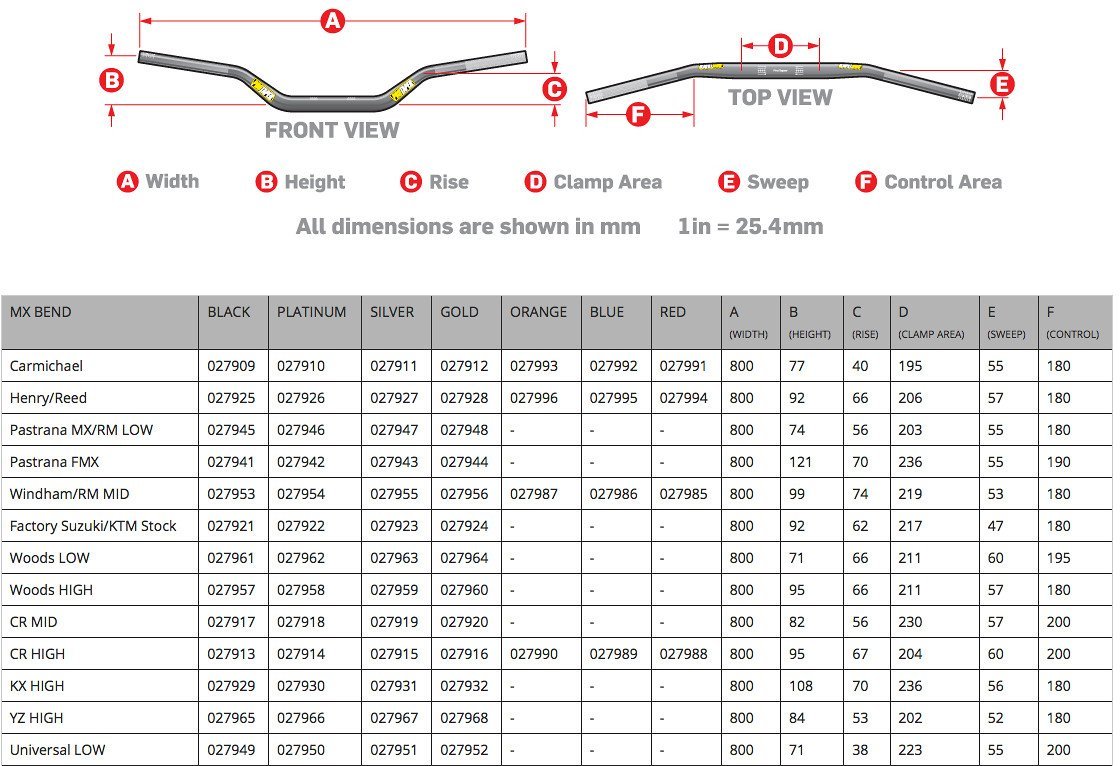
- Measure overall width tip-to-tip in a straight line, which ranges from 795 mm to 815 mm on standard adult bikes.
- Find total height by setting the bar flat and reading vertically to the highest tip point, usually 70 mm to 120 mm.
- Read rise by measuring straight up from the clamp base to where the metal starts leveling off.
- Check sweep by placing the bar face-down and measuring the gap from a wall to the grip ends.
- Measure clamping diameter across the center tube: standard bars are 22.2 mm (7/8 in), while fat bars are 28.6 mm (1-1/8 in).
Why handlebar dimensions dictate body position
Handlebar geometry changes how your weight transfers to the front tire. Width acts as a lever; wider bars give you more turning leverage in slow, technical rocks, but they pull your chest closer to the front fender during tight turns. Sweep bends the grip ends backward toward your hips. If a bar has excessive sweep, your wrists drop outward, which forces your elbows down and weakens your grip during hard braking.
Height and rise determine standing posture. When the rise is too low for your torso, you must hunch your back to reach the grips, causing lower back fatigue within twenty minutes of riding. Conversely, bars that sit too tall take weight off the front wheel, leading to front-end washing in flat turns. Bar flex also changes with diameter. Traditional 7/8-inch bars use a crossbar to stop bending, which transmits sharp engine vibration to your hands. Tapered 1-1/8-inch bars eliminate the crossbar, allowing engineered flex that dampens trail impact. Major components follow standard sizing guides like the Renthal handlebar dimensions chart, showing how 5 mm of sweep changes hand pressure. This sizing varies by model — check the label or underside stamp before buying.
When the answer is different
Handlebar numbers change when measuring mini bikes, bent metal, or aftermarket risers.
| Situation | What changes | What to do instead |
|---|---|---|
| Youth 65cc-85cc bikes | Width drops 50-80 mm | Measure between 730 mm and 770 mm |
| Crashed or bent bar | Height reads unevenly | Measure each side from center clamp |
| Barkbusters installed | Width reads too wide | Remove bar ends before measuring tip-to-tip |
| Bar risers fitted | Height increases 10-30 mm | Measure from triple clamp, not bar base |
| Cut-down woods bars | Width reduced 20-40 mm | Check control clamp space before buying |
| Fat bar on stock clamps | Clamp size mismatches | Check clamp adapter height increase |
How to do it properly
- Remove the handlebar from the bike’s mounting clamps using a 10 mm or 12 mm socket, then strip off both grips and the throttle tube.
- Lay the handlebar flat on a level workbench with the grip ends pointing upward toward the ceiling and the clamping zone resting firmly against the surface.
- Hook your tape measure onto the far left open tip and measure straight across to the right tip to record overall width in millimeters.
- Keep the bar flat, place a carpenter’s square on the table beside the bar end, and measure the vertical height from the table to the grip tip.
- Identify the rise by measuring straight up from the bottom surface of the center clamp area to the lowest point of the control tube bend.
- Push the center clamping area flush against a flat wall, then measure the straight horizontal distance from the wall to the back of the grip tip to find sweep.
- Wrap a dial caliper around the exact center of the bar to record clamping diameter as either 22.2 mm or 28.6 mm.
The mistakes that ruin it
- Measuring while bars remain clamped to the bike, which throws off height and sweep measurements due to fork angle tilt.
- Leaving rubber grips installed during measurement, which adds up to 10 mm of false width and alters your replacement choice.
- Guessing clamp diameter by eye, which leads to buying a 1-1/8-inch bar that won’t seat inside factory 7/8-inch triple clamp perches.
- Ignoring control clamping space on heavily cut bars, which leaves no room to mount your front brake master cylinder, kill switch, and clutch perch.
Frequently asked questions
Can you measure handlebars while still on the bike?
No, you’ll get inaccurate height and sweep numbers because the fork rake angle tilts the handlebars backward. If you must leave them mounted, you can measure total width from bar tip to bar tip, but true sweep requires a flat vertical surface like a wall or workbench.
What happens if you run the wrong handlebar sweep?
Your wrists sit at an unnatural angle, which leads to severe arm pump and palm blisters. If the sweep bends back too far, your elbows drop inward automatically, reducing your ability to push the front tire into corners. If it’s too flat, your wrists roll forward uncomfortably.
Is it safe to cut dirt bike handlebars narrower?
Yes, you can safely cut up to 20 mm off each end using a metal tubing cutter or hacksaw. If you cut beyond that limit, you’ll run out of straight tubing space to clamp your front brake perch, throttle housing, and kill switch. Always file inner edges smooth after cutting.
How do I know if my dirt bike uses 7/8 or 1-1/8 bars?
Measure the center tube thickness using a caliper or an open-end wrench. If a 7/8-inch wrench fits over the center clamping area, it’s 22.2 mm. If the center bulges much thicker than the 7/8-inch grip ends, you have a 1-1/8-inch (28.6 mm) fat bar requiring oversized clamps.
Does handlebar height include the triple clamp mounts?
No, standard manufacturer specs measure height strictly from the bottom plane of the handlebar tube to the top of the handlebar tips. If your bike has tall aftermarket bar risers installed beneath the bar, that extra lift must be measured separately using a straight rule from the triple clamp.
What is the trade-off of running taller handlebars?
Taller bars make standing up more comfortable for tall riders, but they reduce front wheel grip. If you choose extra tall bars, your chest stays higher, which stops you from loading weight over the front forks. That trade-off causes the front wheel to push wide in slick, rutted turns.
Final Thoughts
Once you’ve noted your measurements, compare them against the specifications of the new bars you’re eyeing. It’s worth checking the manufacturer’s website to ensure the bend matches your riding style. Don’t rush the installation; take your time aligning the controls, and you’ll find your bike feels brand new again.
Related guides