
Ever wondered how to accurately measure your curved monitor? It’s not as simple as grabbing a tape measure for a flat screen!
You might be surprised to learn there’s a specific way to get it right, especially if you’re planning a move, setting up a new desk, or just curious. This guide will walk you through the easy steps to measure your curved monitor correctly, ensuring you have the right dimensions every time.
Let’s get your measurements sorted!
Curved Monitor Basics
Measuring a curved monitor is simple. You measure diagonally across the screen. This measurement determines the monitor’s size.

Credit: www.youtube.com
Measuring Curvature Radius
Understanding your curved monitor’s curvature is key. It tells you how much it wraps around you. This measurement helps you appreciate its immersive quality. It also aids in setup and compatibility. Let’s explore how to find this specific measurement.
The 3-point Method
This method is simple. You need a straight edge. A long ruler works well. Place it across the screen. Touch the screen at three points. These points are the edges and the center. The distance between the ruler and the screen center is important. This distance helps estimate curvature.
Using A Flexible Ruler
A flexible ruler is ideal. It bends easily. Lay the ruler along the screen’s curve. Ensure it follows the arc perfectly. Measure the length of the curved ruler. This length directly represents the screen’s arc. It’s a straightforward way to measure. Many flexible rulers are available.
Calculating The Radius
You can calculate the radius. This requires some math. You need the screen’s width. You also need the screen’s height. The height is the distance from the ruler. This is in the 3-point method. Use a formula for this calculation. The formula uses these measurements. It gives you the curvature radius. This number is often an ‘R’ value.
Measuring Diagonal Size
Measuring your curved monitor’s diagonal size is crucial. It helps you understand its true dimensions. This ensures it fits your space. It also helps you compare it to other monitors.
Screen Versus Bezel
Understand the difference. The screen is the active display area. The bezel is the frame around the screen. Manufacturers measure the diagonal size of the screen. They do not include the bezel. This is a common point of confusion. Always measure the viewable screen area. This gives you the accurate diagonal measurement.
Measuring From Corner To Corner
Get your measuring tape. Place one end at the bottom corner. Stretch the tape to the opposite top corner. Measure the straight line. This is the diagonal measurement. Do this for the viewable screen area. Do not measure the curved outer edge. This gives you the monitor’s size. It is usually in inches. This number is important for many reasons.
Measuring Height And Width
Measuring curved monitor size differs. You measure the diagonal distance across the screen. This is the standard way for all monitors.
Tools For Measurement
Measuring a curved monitor requires a flexible tape measure. Gently follow the screen’s arc. This ensures an accurate diagonal measurement, just like a flat screen.
Credit: www.benq.com
Interpreting Your Measurements
Understanding your curved monitor’s measurements is key. You need to know what the numbers mean. This helps you compare them. It ensures you get the monitor you want.
Matching Specs To Reality
Check the monitor’s advertised size. This is usually diagonal. It’s measured in inches. Compare this to your physical measurement. Does it match up?
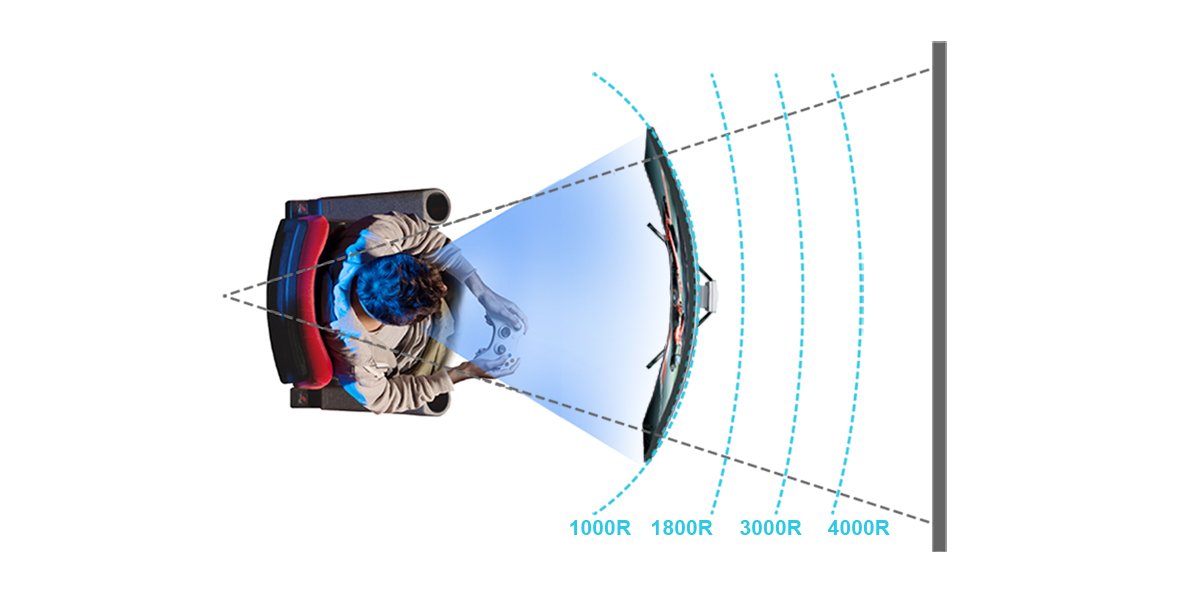
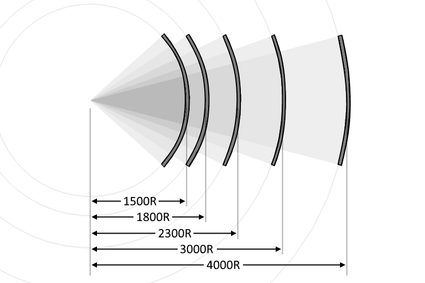
Manufacturer specs are important. They list the curvature. This is often a number like 1800R or 1500R. A smaller number means a tighter curve. A larger number means a gentler curve. Your measurement helps confirm this.
Curvature And Immersion
Curvature affects your experience. A tighter curve wraps around you more. This can boost immersion. It feels more engaging. Especially for gaming or movies.
A gentler curve is subtle. It can reduce eye strain. It feels more natural for work. Your measurement shows the curve’s intensity. This helps you decide if it fits your needs.
Common Measurement Pitfalls
Measuring curved monitors can be tricky. Don’t just measure straight across. Follow the curve for accurate size.
Credit: www.omnicalculator.com
Frequently Asked Questions
What Is A Curved Monitor’s Radius?
The radius shows how much a monitor curves. A smaller number means a tighter curve. It’s measured in millimeters.
How Do I Measure My Curved Monitor’s Size?
Measure diagonally screen width. Use a soft tape measure. Go from corner to corner.
Can I Measure A Curved Monitor Like A Flat One?
Yes, you can. The process is quite similar. Just be mindful of the curve.
What Tools Do I Need For Measurement?
A flexible tape measure is best. You might also use a ruler. Ensure it’s long enough.
Does Curve Affect Monitor Size Measurement?
The curve slightly changes the reading. Always measure the screen’s diagonal. Don’t measure the bezel.
How Do I Find My Monitor’s Specific Model?
Check the back of your monitor. A sticker usually has the model. You can also look in settings.
Why Is Knowing Monitor Size Important?
It helps with desk setup. It ensures proper viewing distance. It aids in buying accessories.
Conclusion
Measuring your curved monitor is simple. You need a tape measure. Measure across the screen. Do this from edge to edge. Use the curve’s arc. This gives you the diagonal size. This is important for fitting. It also helps with desk space.
Know your monitor’s true dimensions. Happy measuring!