
Choosing the right water pressure booster pump depends on whether you need to fix pressure for a single shower or supply the entire house. These units differ mainly in their power output, flow capacity, and noise levels. Some are designed for simple DIY installation, while others offer advanced constant-pressure technology for large homes.
As an Amazon Associate, we earn from qualifying purchases. This post contains affiliate links – if you buy through them, we may earn a commission at no extra cost to you.
Best overall: Aquastrong Whole House Booster, which provides consistent pressure through intelligent variable speed control and a durable stainless steel design that handles high temperatures. Quietest operation: DAB E.Sybox Mini 3, which uses advanced electronics and a compact, integrated design to keep noise levels down to 45 dB(A) for residential comfort. Best for garden irrigation: Aquastrong Shallow Well Pump, which features a rugged 1.6 HP motor and a dedicated pressure tank to maintain steady flow for lawns and sprinklers.
This guide is for homeowners looking to improve water performance without needing complex plumbing modifications.
How We Picked
To earn a spot, each product had to clearly state its maximum flow rate, operating pressure, and safety features like dry-running protection. We prioritized models that include integrated components, such as check valves or expansion tanks, to simplify the installation process.
1. Aquastrong Whole House Water Pressure Booster Pump 80 PSI

Best for: Homes needing steady pressure across multiple faucets.
The Aquastrong Whole House Booster uses inverter technology to monitor water demand and adjust its speed automatically. This means you get constant pressure at every tap, even when multiple people are using water at once. Because it’s built with a stainless steel impeller and aluminum housing, it’s designed to resist rust and last for a long time.
This pump is meant for whole-house systems, so it isn’t the right choice if you only need to boost pressure for a single small sink or a low-flow appliance. Its 55 dB(A) noise level is quiet enough for most utility rooms, but it may be noticeable if placed directly behind a bedroom wall.
Pros
- Intelligent variable speed motor.
- Handles water up to 175℉.
- Includes dry-running protection features.
Cons
- Not for tiny, isolated fixtures.
2. DAB E.Sybox Mini 3 Electronic Pressurisation System

Best for: Residences where pump noise must be minimal.
The DAB E.Sybox Mini 3 is a compact, all-in-one system that includes the pump, electronics, and an expansion tank. Its VFD technology allows it to run efficiently while keeping the noise level at an ultra-low 45 dB(A). You can install this unit vertically or horizontally, which is helpful if your utility space is tight or has limited air circulation.
This system is designed specifically for a single residence. It isn’t intended for heavy industrial use or large-scale commercial irrigation projects. While it’s easy to install, you must ensure your space can accommodate its specific dimensions and plumbing configuration.
If you need to adjust your water output, you can set the pressure anywhere between 15 and 80 psi. This flexibility allows you to calibrate the system for specific household needs, from standard drinking water supply to gardening tasks.
Pros
- Operates at very low noise.
- Includes all necessary components.
- Flexible horizontal or vertical installation.
- Adjustable pressure settings.
Cons
- Designed for single-home use only.
- Not suitable for large-scale commercial applications.
3. SEAFLO 33 Series 110V/115V AC Fresh Water Pump
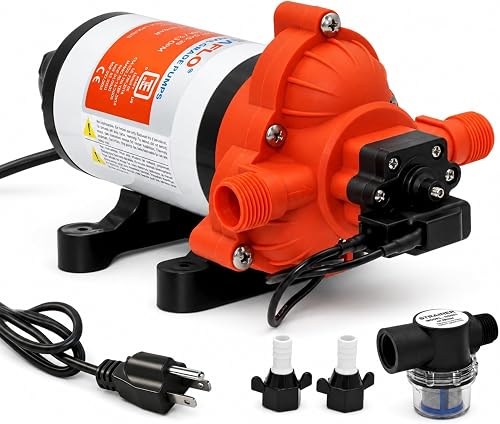
Best for: RVs, marine use, and small-scale water transfer.
The SEAFLO 33 Series is a self-priming pump built for portability and specific demand-based tasks. With a 3.3 GPM flow rate and a 45 PSI shut-off pressure, it handles fresh water supply effectively for caravans or boat systems. Its compact size and 1.0A max draw make it a practical choice for systems where power efficiency is a priority.
If your installation requires a lift from a tank located below the pump, this model handles a vertical distance of 6 feet. Always verify your plumbing matches the 1/2″-14 MNPT ports before starting.
This pump is a diaphragm-style unit, so it isn’t suitable for whole-house pressure boosting where high volume is required. It’s strictly meant for the light-duty applications mentioned in its specifications, such as RVs or small industrial setups. Using this pump in environments exceeding 140°F will damage the internal components.
Pros
- Efficient 1.0A power draw.
- Reliable 6 ft self-priming lift capability.
- Compact size for tight spaces.
Cons
- Limited to light-duty applications.
- Not designed for high-heat industrial liquids.
4. 1HP Whole House Water Pressure Booster Pump 90PSI 115V Automatic

Best for: Homeowners who want app-based control and monitoring.
The 1HP Variable Speed Booster features a permanent magnet motor that provides constant pressure by adjusting its speed to match your usage. A standout feature is the wireless app control, which lets you monitor performance and change settings from your phone within a 30-foot range. Its water-cooled technology keeps the motor quiet at 30 dB, as it avoids the need for a noisy external fan.
This pump requires a 110-120V power source. It isn’t suitable for off-grid systems that can’t provide the necessary stable electrical current. If you prefer a simple, analog setup without smart features, the app-based monitoring may feel unnecessary for your needs.
Pros
- Wireless app for monitoring.
- Very quiet water-cooled motor.
- Constant pressure output.
Cons
- Requires stable electrical supply.
5. SCALA1 3-45 Booster Pump

Best for residential groundwater and rainwater harvesting systems, the SCALA1 3-45 Booster provides essential safeguards for your home plumbing. It features automated dry-running protection, which immediately halts the pump if it detects a water shortage. This prevents the motor from burning out when supply lines run dry.
The unit also includes cycling protection. If your installation has minor leaks, the pump will stop starting frequently to compensate for that pressure loss. This saves the internal components from unnecessary wear.
You can also configure the max runtime protection. If the pump runs continuously beyond your desired duration, it shuts down automatically. This setting is vital for preventing flooding if a pipe sustains a major breakage while you’re away.
This pump is built specifically for residential pressure boosting and water intake. It isn’t intended for high-pressure industrial cleaning or heavy-duty irrigation systems that exceed its rated capacity. Always compare your peak flow requirements against the unit’s performance data before installation. If your system demand is higher than the pump’s output, you risk constant cycling or system failure.
6. Aquastrong 115V Shallow Well Garden Pump

Best for: Garden irrigation and lawn sprinkler systems.
The Aquastrong Shallow Well Pump is built for power, featuring a 1.6 HP motor that can draw water from up to 26 feet deep. It comes with a 5-gallon pressure tank, which helps the pump run less frequently and extends its service life. The included pressure gauge makes it easy to monitor your system at a glance.
This pump is quite powerful, making it overkill for simple indoor shower boosting. It’s designed for outdoor or utility use, such as lawns and cabins. If you’re choosing between this and a smaller unit, select this model if your lift exceeds 20 feet or your flow needs reach 1340 GPH.
Users often forget to prime the pump before the first startup. Failing to do this can lead to dry running, which triggers the temperature sensor to kill the motor. Always verify the pump is primed to avoid this automatic shutdown.
Pros
- Strong suction for wells.
- Includes 5-gallon pressure tank.
- Comes with hose adapters.
Cons
- Requires manual priming initially.
- Must be drained to prevent freezing in winter.
7. Smart Shower Booster Pump

Best for: Increasing pressure for specific bathroom fixtures.
The Smart Shower Booster Pump is a low-voltage, 24V unit designed specifically to improve local water pressure in showers or sinks. It’s very quiet, operating at 40 dB during normal use, and even quieter at a distance. Its smart adaptive adjustment mode ensures that you get a stable flow of water without wasting energy.
This pump isn’t intended for whole-house boosting, as it lacks the power to handle multiple outlets at once. It must be installed using hard pipes and can’t be used with flexible tubing. If you’re looking to fix the pressure for your entire home, this unit won’t provide the necessary flow.
Pros
- Safe 24V low-voltage operation.
- Extremely quiet performance.
- Energy-efficient smart modes.
Cons
- Not for whole-house use.
8. ECO-WORTHY 110V AC Fresh Transfer Diaphragm Water Pump On Demand
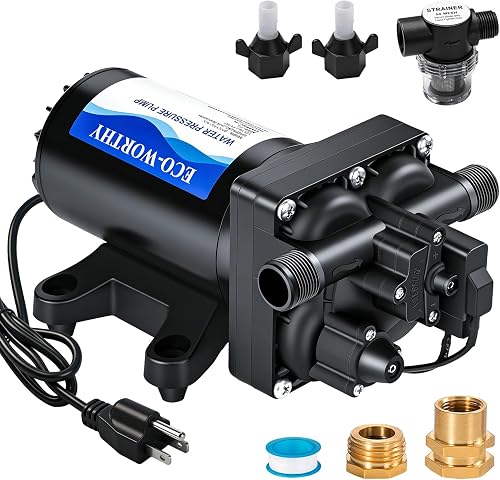
Best for: High-pressure cleaning and water transfer.
The ECO-WORTHY Transfer Pump is a high-pressure diaphragm pump capable of 5.5 GPM, making it useful for cleaning tasks or irrigation. Its pressure switch is set to 70 PSI, providing enough force to spray down boat decks or driveways. It also includes thermal overload protection, which automatically shuts the system down if it reaches 158℉.
This is a heavy-duty pump, not a subtle one for indoor use. It’s designed for tasks where water transfer and pressure are more important than silence. If your application requires a constant, low-pressure flow for sensitive appliances, this pump is likely too aggressive. Use it for jobs demanding sustained output, as it’s rated to run for more than one hour at a time.
If you struggle with inconsistent pressure, remember that the 70 PSI switch is adjustable. You can fine-tune this setting to match your specific irrigation or cleaning needs.
Pros
- High 5.5 GPM flow rate.
- Built-in thermal overload protection.
- Capable of 70 PSI output.
- Self-priming up to 9.8 vertical feet.
Cons
- Noisy during heavy-duty operation.
9. Hanchen 3/4 HP Shallow Well Pump with Pressure Tank

Best for: Integrated well water and home pressurization.
The Hanchen Shallow Well Pump serves as a dual-purpose system for well water transfer and home boosting. It uses both flow and pressure detection switches to ensure the pump starts and stops automatically when you open or close a tap. The pump head is made from SUS 304 stainless steel, which helps keep your water clean and prevents rust.
Use this unit for domestic tasks like irrigation, water heater boosting, or general home pressurization.
Check your household flow requirements before installation. If you’re managing a massive estate or a high-rise commercial building, the 3/4 HP motor capacity will likely fall short of your demand. In those cases, the system can’t maintain the necessary pressure, leading to frequent cycling and premature wear. Stick to residential setups to ensure the automatic switches function reliably.
Pros
- Stainless steel rust-resistant head.
- Dual-switch safety detection.
- Automatic start and stop.
Cons
- Not for large commercial buildings.
10. Quiet Whole House Booster

Best for: Compact installations in indoor living spaces.
The Quiet Whole House Booster is designed to be as unobtrusive as possible, measuring just 11 inches long. It provides enough pressure and flow to handle the demands of most home kitchens and bathrooms simultaneously. Its water-cooled motor keeps the noise level down to 45 dB, making it suitable for utility rooms that are close to living areas.
This unit is for municipal water and tanks, and it has specific limits on suction depth for wells. If you have a deep well, you should check the specs to see if it meets your needs. It’s best suited for homes that need a small, reliable boost without taking up much space.
Pros
- Very compact size.
- Quiet water-cooled motor.
- Efficient permanent magnet motor.
Cons
- Limited well-suction depth.
How to Choose in Sixty Seconds
Which pressure matters more: PSI or GPH?
PSI (pounds per square inch) matters more for the “feel” of your water, while GPH (gallons per hour) determines how much water flows at once. If your shower feels weak, you need a higher PSI to give you that powerful spray. If the water flow slows to a trickle when you run the kitchen sink and the shower together, you need a higher GPH.
Should I choose a variable speed or fixed speed pump?
Variable speed pumps are generally better for modern homes. They adjust their power based on how many taps are open, which saves energy and keeps the pressure steady. Fixed speed pumps are simpler, but they can cause pressure fluctuations when you turn on a second faucet. If you want a consistent experience in the shower even when someone else is using the sink, a variable speed pump is the better choice for your home’s water pressure management.
What must I confirm before I buy?
Before ordering, check the inlet and outlet size of your current pipes to ensure the pump will fit without complex adapters. You should also verify if your water source is a municipal supply, a tank, or a well, as some pumps have specific suction limits. Finally, look at the physical space you have available; some pumps are compact, while others require a dedicated, well-ventilated area. Always read the manual for the specific electrical requirements, as not all pumps operate on standard household power without proper circuit protection.
The Aquastrong Whole House Booster and the DAB E.Sybox Mini 3 are the most reliable choices for a standard home, offering the best balance of power and ease of use. If you need a specialized solution for a garden or a single shower, the Aquastrong Shallow Well Pump or the Smart Shower Booster Pump are better suited to those specific tasks. Once you have identified your primary water source and the number of fixtures you need to serve, check the physical dimensions of your chosen pump to ensure it fits your installation area properly.
Related guides
- 8 Best Automatic Transmission Pump Seals for Reliable Leaks Fix in 2026
- Top 10 Best Showerheads for Low Water Pressure in 2026
Frequently Asked Questions
What does a pump need to work properly?
A booster pump requires a steady power supply and a clear water flow path to function. Most residential pumps need a standard 115V or 120V outlet protected by a dedicated circuit breaker. Ensure a check valve is installed to prevent backflow and keep plumbing lines free of debris.
What maintenance does a pump need after installation?
Most modern booster pumps are designed to be low-maintenance, but you should check the connections for leaks periodically. The listing doesn’t mention a specific maintenance schedule for the pressure tank. In colder climates, you must ensure the pump is protected from freezing. If you notice the pump cycling on and off when no water is running, it usually indicates a small leak in your system that needs repair.
What usually goes wrong first?
Most issues stem from faulty pressure switches or sensors detecting water flow. Check the control panel for fault indicators, as many models include built-in diagnostics for blockages or dry running. If the pump fails to prime, ensure all inlet seals are tight and the intake screen is free of sediment.
Is the simplest pump on the list enough?
Smaller, low-voltage pumps are effective for local needs like a single shower or toilet but rarely suffice for an entire house. If you need to sustain pressure for multiple bathrooms and appliances simultaneously, you must install a robust whole-house system. Choosing an undersized pump will cause the motor to overwork.
Conclusion
Finding the right fit doesn’t have to be a headache. Once you’ve checked your home’s current flow rate, you’ll be ready to pick a model that makes your daily routine much more comfortable. Take a look at your main water line today, and you’ll find it’s easier than you’d think to get started.