
Choosing the right pipe insulation depends on whether you need to stop pipes from freezing in winter, prevent sweating in summer, or improve your HVAC system’s efficiency. You’re choosing between pre-slit foam tubes for simple jobs and flexible wraps for complex bends. The best pick depends on your specific pipe diameter and location.
As an Amazon Associate, we earn from qualifying purchases. This post contains affiliate links – if you buy through them, we may earn a commission at no extra cost to you.
Best overall: Duck Brand Foam Covers provide an easy, pre-slit solution for standard 1/2-inch to 3/4-inch pipes, offering reliable protection against both freezing and condensation with a simple self-sealing design.
Best for tight spaces: Redford Supply Pipe Insulation features high-strength adhesive tape that easily contours to extreme bends where rigid foam tubes would be too bulky or difficult to install.
Best for large projects: Foam King Pipe Insulation offers a 12-pack of 3-foot tubes, making it the most practical choice for covering long runs of exposed plumbing in basements or utility areas.
The rest of this guide is for homeowners looking for straightforward, effective ways to protect their indoor and outdoor plumbing systems from temperature fluctuations.
How We Picked
We compared 48 different Amazon listings to find options that provided clear technical specifications, such as R-values, temperature ranges, and compatible pipe diameters. To earn a spot, a product had to explicitly state its material composition and the specific type of installation it supports. We excluded items that lacked clear sizing information or failed to list essential safety ratings for flame resistance. Our selection focuses on products that provide honest trade-offs between ease of installation and long-term durability.
1. Duck Brand Foam Pipe Covers

Best for: Standard residential indoor plumbing and HVAC lines.
These foam covers are designed for quick application on 1/2-inch to 3/4-inch pipes. The pre-slit design means you don’t need to disconnect your pipes to install them, which saves significant time. Because they are 12 inches long, they’re manageable for tight spots, though you’ll need multiple packs for long pipe runs.
The self-sealing edges help keep the insulation secure once in place. This product is safe for temperatures up to 212°F, making it suitable for hot water lines. It isn’t intended for high-pressure industrial steam pipes where temperatures might exceed this limit.
Pros
- Pre-slit for easy installation
- Self-sealing edges included
- Made in the USA
Cons
- Only 6 feet total length
- Limited to specific diameters
2. K-FLEX USA 3/4″ x 6 ft. Elastomeric Pipe Insulation

Best for: Large-scale commercial or residential temperature regulation.
This elastomeric tubing provides a robust solution for maintaining temperature control in various systems. Its 0.25-inch thick construction offers durability against wear and tear in areas where pipes might be bumped or handled. The 6-foot length allows for fewer seams compared to shorter tubes.
The material is specifically designed for HVAC and plumbing applications. Because it’s a more rigid elastomeric material, it may be harder to bend around sharp corners than thin foam tape. If your piping layout features tight, complex turns, you should opt for flexible foam tape instead to ensure a complete seal.
Use this insulation when you need to prevent condensation or heat loss on straight, exposed pipe runs. Miscalculating the diameter of your pipes will prevent the seams from closing properly, which compromises the entire thermal barrier.
Pros
- Durable elastomeric material
- Suitable for HVAC systems
- Long 6-foot sections
Cons
- Requires careful measuring
- Less flexible than tape
3. Frost King Foil Backed Fiberglass Pipe Wrap

Best for: Hot water pipes needing heat loss reduction.
This foil-backed fiberglass wrap is 25 feet long, providing ample material for long pipe sections. The foil backing is specifically designed to cut down on wasteful heat loss, which can help keep your water heater from working harder than necessary. The integrated vapor barrier also helps prevent cold water pipes from sweating.
Because it’s made of fiberglass, you should handle it with care during installation. It isn’t a snap-on tube, so it requires you to wrap it carefully around the pipe to ensure full coverage.
Apply this wrap by overlapping the edges slightly as you wind it around the pipe. If you leave gaps in the fiberglass, you lose the thermal efficiency of the vapor barrier. If you’re wrapping tight elbows or complex joints, cut the material into shorter, manageable strips to maintain a consistent thickness. Failing to overlap the material properly is a common mistake that allows heat to escape through the seams.
Pros
- Generous 25-foot length
- Includes vapor barrier
- Reduces heat loss
Cons
- Requires manual wrapping
- Fiberglass handling precautions
4. QWORK Pipe Wrap Insulation

Best for: Small, irregular pipes or quick spot repairs.
This adhesive foam tape is highly adjustable because you can cut it to any length or shape with standard scissors. Its 1/8-inch thickness provides a low-profile layer of protection that fits where bulky tubes cannot. It’s waterproof, which helps prevent condensation on cold lines.
Because it relies on adhesive, you must ensure your pipes are clean and dry before applying the tape. If the pipe is wet or dusty, the tape may not adhere properly. Wipe the surface down with a dry cloth first; if the pipe is sweating, wait for it to reach room temperature.
The 33-foot roll offers enough material to cover multiple joints or elbows. If you’re wrapping a long, straight run, overlap the edges by at least half an inch to maintain a consistent thermal seal.
Pros
- Extremely flexible application
- Easy to trim
- Waterproof foam material
Cons
- Requires clean, dry surfaces
- Thin profile
5. HVAC Copper Pipe Cover

Best for: Outdoor air conditioning line protection.
This 72-inch cover features a five-layer design, including waterproof 600D fabric and aluminum foil, to protect against harsh outdoor weather. The adjustable buckles allow for a snug fit on pipe bundles between 2.9 and 3.1 inches in diameter. It’s a great choice if you need to protect outdoor copper pipes from UV rays and freezing.
If your pipe bundle measures less than 2.9 inches, you must tighten the four high-density buckles manually to ensure the sleeve doesn’t slip. Users often make the mistake of leaving the cover loose, which allows moisture to penetrate the insulation and reduces thermal efficiency. Always check that the fabric is pulled taut to maintain the integrity of the system year-round.
The tool-free installation is a major benefit for seasonal use. It isn’t meant for permanent burial or submerged environments, as it relies on straps rather than a permanent seal.
Pros
- Weather-resistant 5-layer design
- Adjustable buckle system
- Reusable and removable
Cons
- Bulky for indoor use
- Not for submerged pipes
6. Pipe Insulation Foam Tube

Best for: Versatile indoor and outdoor use.
This foam tubing is fire-resistant and self-extinguishing, meeting safety needs for various environments. It’s highly flexible and works well for both plumbing and specialized uses like covering metal bars or guitar stands. The material is rated for temperatures from -40°F to 176°F.
The manufacturer suggests wetting the pipe with lubricant and water to make sliding the foam on easier. This is a helpful tip, as tight-fitting foam can be difficult to move into place otherwise. If you skip the lubricant, you risk tearing the foam during installation.
Measure your pipe diameter carefully. This tube has a 3/4-inch inner diameter and a 1-31/64-inch outer diameter. If your pipe is thicker than 3/4 inch, this won’t fit. Use this for industrial insulation, air-conditioning lines, or as a protective anti-collision buffer. Its low thermal conductivity makes it effective for both heat and cold resistance.
Pros
- Wide temperature range
- Fire-resistant material
- Very flexible
Cons
- May require lubricant
- Not self-adhesive
7. CARGEN 1/2″ ID Foam Pipe Insulation Fits 1/2″ OD Copper

Best for: Copper and PEX water pipes.
These tubes are made from high-quality nitrile rubber, which provides good elasticity and Class B flame retardancy. The closed-cell structure is designed to offer better thermal insulation than open-cell foams. Since there’s no pre-cut slit, you can slide these over pipes during initial installation or cut them yourself to fit existing lines.
The packaging is non-folding, which helps avoid the annoying creases that can compromise the insulation’s effectiveness. This is a solid choice if you prefer to create your own seams for a tighter fit. If you’re installing on pipes already in place, you must cut the foam manually to wrap the line.
Confirm your pipe’s inner diameter before purchasing to ensure a proper fit. The material handles extreme conditions, maintaining performance from -58°F to 230°F. Use this for both freeze protection and shielding against sharp edges. You’ll receive 6 feet of tubing in each package.
Pros
- High-quality nitrile rubber
- No pre-cut creases
- Wide temperature range
Cons
- No pre-slit design
- Requires manual cutting
8. Pipe Insulation Foam Tube

Best for: Outdoor spigots and winter sprinkler systems.
This kit comes with 12 pieces of foam tube, joint tape, and zip ties. The aluminum foil exterior provides a layer of protection against oil and water, making it well-suited for outdoor use. The included zip ties ensure the foam stays put even during heavy wind or rain.
Because each tube is only 1.3 feet long, it’s best for short runs or individual valves rather than long, continuous pipes. You’ll need to use the provided tape to seal the seams properly.
If your pipe diameter is exactly 0.8 inches, standard residential size, or smaller, this foam will fit snugly. If your pipe exceeds 0.8 inches, the adhesive won’t close correctly, leaving gaps that allow freezing air to reach the metal. Always measure your pipe diameter before ordering to ensure the insulation can seal completely.
Pros
- Includes tape and ties
- Foil-covered for durability
- Good for small valves
Cons
- Short 1.3-foot sections
- Requires assembly
9. Redford Supply Co. 2 inch x 14 ft Pipe Insulation
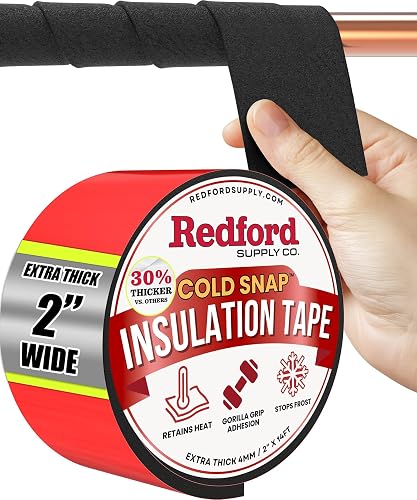
Best for: Extreme weather and high-stress bends.
This tape is designed for heavy-duty use, with a tensile strength of 110 lbs/inch that allows it to stretch up to 7x without snapping. It contours to extreme bends and difficult spots where bulky foam tubes fail to fit. You gain a waterproof barrier that resists frost, humidity, corrosion, and UV rays for up to 25 years.
If your pipes have complex layouts or tight corners, this wrap provides the necessary flexibility. However, the adhesive is engineered for permanent, long-term protection. Don’t use this product if you anticipate frequent maintenance or pipe access, as the “gorilla strength” bond isn’t designed for easy removal.
Reserve this tape for outdoor lines or HVAC systems facing harsh, shifting temperatures, as standard foam tubes are better suited for simple, straight runs.
Pros
- 110 lbs/inch tensile strength
- Contours to extreme bends
- 25-year lifespan
Cons
- Permanent adhesive bond
- Overkill for simple, straight runs
10. Foam King Pipe Insulation

Best for: Protecting large plumbing networks in one go.
This bulk collection of 3-foot tubes provides enough material for most residential projects. Because the foam is pre-slit, installation is straightforward on copper, iron, or PVC pipes. If your pipes are located in unheated crawlspaces or areas prone to freezing, apply these covers immediately to prevent burst pipes and emergency plumbing repairs.
The insulation is rated for temperatures between -90°F and 180°F. While an R-value of 2.2 is sufficient for standard indoor plumbing, it isn’t a cure-all for extreme climates. If you live in a region where pipes regularly freeze despite basic insulation, you may need to supplement this foam with heat tape or additional wrapping. Always check your pipe diameter before purchasing, as manufacturing variances can cause slight size fluctuations.
Pros
- Bulk quantity for large projects
- Pre-slit for speed
- Wide temperature range
Cons
- Moderate R-value
- Not for extreme cold
- Sizes vary due to manufacturing
How to Choose in Sixty Seconds
Which pipe insulation material is best for me?
Foam tubes are the most common choice for straight, exposed pipes in basements or garages because they’re easy to snap on and offer immediate thermal protection. If you have pipes that wind around corners or are located in tight, awkward spaces, adhesive foam tape is the better option because it can be cut and wrapped to fit any shape. For outdoor pipes, look for materials with a protective foil or waterproof fabric layer, as these resist UV damage and moisture better than standard indoor foam.
Do I need to worry about the R-value?
The R-value measures how well the insulation resists heat flow; a higher number means better insulation. For most indoor residential plumbing, an R-value around 2.0 to 3.5 is sufficient to prevent sweating and minor heat loss. If you’re trying to prevent pipes from freezing in very cold climates, you should look for the highest R-value available or consider adding an extra layer of insulation. You can find detailed information on energy efficiency standards from the U.S. Department of Energy to help guide your decision based on your local climate.
How do I ensure the right fit for my pipes?
Always measure the outside diameter of your pipes before ordering, as insulation is sold based on the pipe size it fits. If your pipe is the standard residential size, a tube meant for 1-inch pipe will be too loose and won’t provide the necessary thermal seal. If you’re unsure, it’s better to buy a slightly smaller piece of foam and use a bit of extra adhesive tape to secure it than to have a gap. Confirm the inner diameter of the product matches your pipe’s outer diameter exactly to ensure the most effective protection.
Related guides
- 10 Best Giro Mountain Bike Helmets for Trail Protection in 2026
- 8 Best Garage Shop Floor Parking Mats for Spill Protection in 2026
- 10 Best Baby Bibs Burp Cloths Sets for Daily Mess Protection in 2026
Frequently Asked Questions
Does pipe insulation prevent pipes from bursting in extreme cold?
Pipe insulation slows heat loss to help prevent freezing during short cold spells. It cannot prevent freezing if ambient temperatures remain below freezing for a prolonged period. You may need additional heat sources for pipes in unheated crawl spaces.
Can I install pipe insulation over existing, leaking pipes?
Never install insulation over a leaking pipe, as it traps moisture against the surface. Trapped moisture leads to rapid corrosion and mold growth, which damages the pipe material. Always repair leaks and ensure the surface is dry before applying insulation.
What is the difference between open-cell and closed-cell foam?
Closed-cell foam features sealed bubbles that prevent moisture and air from passing through. This structure provides superior thermal protection and prevents condensation on cold water pipes. It remains the most reliable choice for high-humidity areas or outdoor applications.
Is the simplest insulation option enough for my needs?
Simple foam tubes are sufficient for most indoor applications like hot water lines or preventing minor sweating. These products handle standard residential temperature ranges and install without professional tools. Reserve heavy-duty options for extreme outdoor temperatures or direct sunlight.
Conclusion
The Duck Brand Foam Covers remain our top pick for general indoor use due to their ease of installation, while the Redford Supply Pipe Insulation is the go-to for difficult, non-standard pipe layouts. Before you start, double-check your pipe measurements and ensure all surfaces are clean and dry. Taking these few minutes to prep will ensure your insulation stays secure for years to come.