
The allure of a beautiful, functional kitchen often leads homeowners to explore various cabinetry options. IKEA, a global giant in affordable home furnishings, presents a compelling choice for many due to its accessible pricing and modern designs. However, a common question arises when considering their kitchen systems: Are IKEA kitchen cabinets solid wood? This inquiry delves into the materials used, the construction methods, and ultimately, the long-term value and durability of IKEA cabinetry. Understanding the composition of your kitchen cabinets is crucial for making an informed decision that aligns with your aesthetic preferences, budget, and expectations for longevity.
Key Takeaways
- IKEA kitchen cabinets are not exclusively solid wood. They utilize a combination of materials, primarily particleboard or fiberboard for the cabinet boxes, with veneer or laminate finishes to mimic the look of solid wood.
- Doors and drawer fronts often offer more solid wood or wood veneer options, depending on the specific IKEA series (e.g., HEMNES, AXSTAD).
- The durability and longevity of IKEA cabinets depend heavily on the chosen series, the specific materials used, and proper installation and care.
- While not solid wood throughout, IKEA cabinets offer a cost-effective solution with a wide range of styles and customization possibilities.
- Understanding the material composition is key to managing expectations regarding wear, maintenance, and the overall “solid wood” perception.
Understanding Ikea Kitchen Cabinet Construction
When people ask if IKEA kitchen cabinets are solid wood, they are often thinking about traditional, high-end cabinetry where the entire cabinet box and often the doors are made from solid timber. IKEA’s approach, driven by cost-effectiveness and modern manufacturing techniques, differs significantly.
Their kitchen systems, like the popular SEKTION system, are designed for mass production and affordability.
Cabinet Boxes: The Foundation
The core of most IKEA kitchen cabinets, the cabinet boxes themselves, are typically constructed from particleboard or medium-density fiberboard (MDF). These engineered wood products are made by compressing wood particles or fibers with resin and heat.
- Particleboard: This is made from wood chips and sawdust, offering a stable and cost-effective base. It’s generally less dense and can be more susceptible to moisture damage than MDF.
- MDF: Composed of finer wood fibers, MDF is denser and smoother than particleboard, providing a better surface for finishes and paint. It offers good stability but can also swell if exposed to significant moisture.
These engineered wood materials are chosen for their uniformity, stability, and lower cost compared to solid wood. They provide a sturdy base for shelving and drawers and are less prone to warping than solid wood, especially in environments with fluctuating humidity.
Exterior Finishes: The Aesthetic Appeal
While the core is particleboard or MDF, the exterior surfaces are finished to provide both protection and the desired aesthetic. IKEA offers a variety of finishes, including:
- Laminate: This is a synthetic material applied to the surface of the particleboard or MDF. It’s durable, easy to clean, and available in a vast array of colors and patterns, including those that convincingly mimic wood grain. Laminate is a popular choice for its resilience and low maintenance.
- Wood Veneer: This involves applying a thin layer of real wood over the engineered core. Veneers offer a more authentic wood look and feel than laminate. IKEA uses veneers on some of its higher-end cabinet door styles and drawer fronts, providing a genuine wood aesthetic without the full cost of solid wood construction. The grain pattern is real wood, but the underlying structure is still engineered.
- Painted Finishes: Some IKEA doors and drawer fronts are painted, often over an MDF base. This provides a smooth, uniform color finish.
Pro Tip: When evaluating IKEA cabinets, pay close attention to the specific product description for the doors and drawer fronts, as these are often where the more premium materials like wood veneer are used, differentiating them from the cabinet boxes.
Doors And Drawer Fronts: Where Wood Matters Most
The most visible part of any kitchen cabinet system is the doors and drawer fronts. This is where IKEA offers the most variation in terms of material.
- Laminate Doors: These are common across many IKEA series and offer a wide range of styles and finishes, from high-gloss white to wood-effect patterns. They are known for their durability and ease of cleaning.
- Veneered Doors: Series like AXSTAD feature doors with a wood veneer over particleboard. This provides a genuine wood grain appearance and feel. The veneer is a thin slice of real wood, offering a more natural look than printed laminates.
- Solid Wood Doors: IKEA does offer some door styles made from solid wood, often combined with MDF panels. The HEMNES series, for example, features doors made of solid pine, a more budget-friendly solid wood. While the doors might be solid wood, the cabinet boxes themselves will still be particleboard or MDF. This hybrid approach allows IKEA to offer the look and feel of solid wood in key areas while managing costs.
It’s important to distinguish between “solid wood” doors and doors with “wood veneer” or “solid wood frames with MDF panels. ” True solid wood doors are made entirely from planks of wood, which can be prone to expansion and contraction with humidity changes.
IKEA’s use of engineered cores with solid wood elements is a practical compromise.
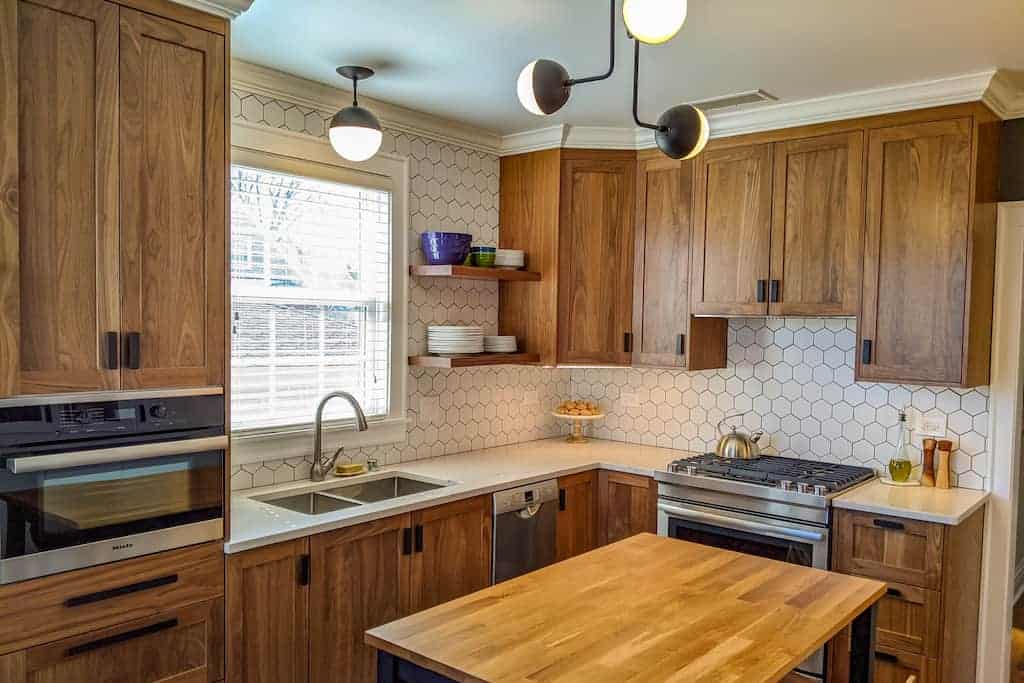
Credit: thecabinetface.com
Durability And Longevity: What To Expect
The question of whether IKEA kitchen cabinets are “solid wood” often ties into concerns about their durability and long-term value. While they may not be constructed entirely from solid timber, IKEA cabinets can be remarkably durable and long-lasting when chosen wisely and cared for properly.
Factors Influencing Durability
- Material Choice: As discussed, the specific materials used in the cabinet boxes, doors, and drawer fronts significantly impact durability. Laminate and high-quality veneers tend to be very resilient. Particleboard, while cost-effective, can be more susceptible to damage from moisture or heavy impacts compared to MDF or solid wood.
- Installation: Proper installation is paramount. IKEA cabinets are designed to be sturdy, but correct assembly and secure mounting to the wall are critical for their longevity and safety. Shoddy installation can lead to sagging shelves, misaligned doors, and structural issues over time. This is an area where professional installation can pay dividends.
- Usage and Maintenance: Like any cabinetry, IKEA kitchens require appropriate care. Avoiding excessive moisture, using gentle cleaning products, and not overloading shelves will help maintain their condition. The resilience of laminate finishes makes them particularly forgiving for everyday use.
- Series Specifics: Different IKEA kitchen series are built with different materials and to varying quality standards. Higher-end series often incorporate more robust materials or finishes, leading to greater longevity. For example, doors with a real wood veneer or solid wood components will generally wear differently and potentially last longer than basic laminate options.
Comparing Durability To Solid Wood Cabinets
Traditional solid wood cabinets, especially those made from hardwoods like oak, maple, or cherry, are often perceived as the benchmark for durability. They can last for decades, and solid wood can often be repaired or refinished. However, they come at a significantly higher price point.
IKEA cabinets, particularly those with laminate or veneer finishes on particleboard or MDF boxes, offer a different value proposition. They are designed to provide a functional and aesthetically pleasing kitchen for many years, often 10-15 years or more with good care, at a fraction of the cost of custom or high-end solid wood cabinetry.
In my experience, homeowners who manage their expectations and choose IKEA cabinets for their intended lifespan find them to be excellent value. They might not be heirloom pieces that can be passed down through generations without refurbishment, but they provide a stylish and practical kitchen solution that holds up well to daily use.
Long-term Refurbishment Possibilities
While particleboard and MDF cores are not as easily refinished as solid wood, IKEA doors and drawer fronts can often be replaced. If a specific door style becomes worn or you desire a change, IKEA offers a wide selection of replacement fronts.
This modularity is a significant advantage, allowing for updates and repairs without replacing the entire cabinet system. For doors with solid wood or veneer, minor scratches or dents might be repairable, similar to how one would address such issues on solid wood furniture, though the underlying core material limits extensive refinishing.
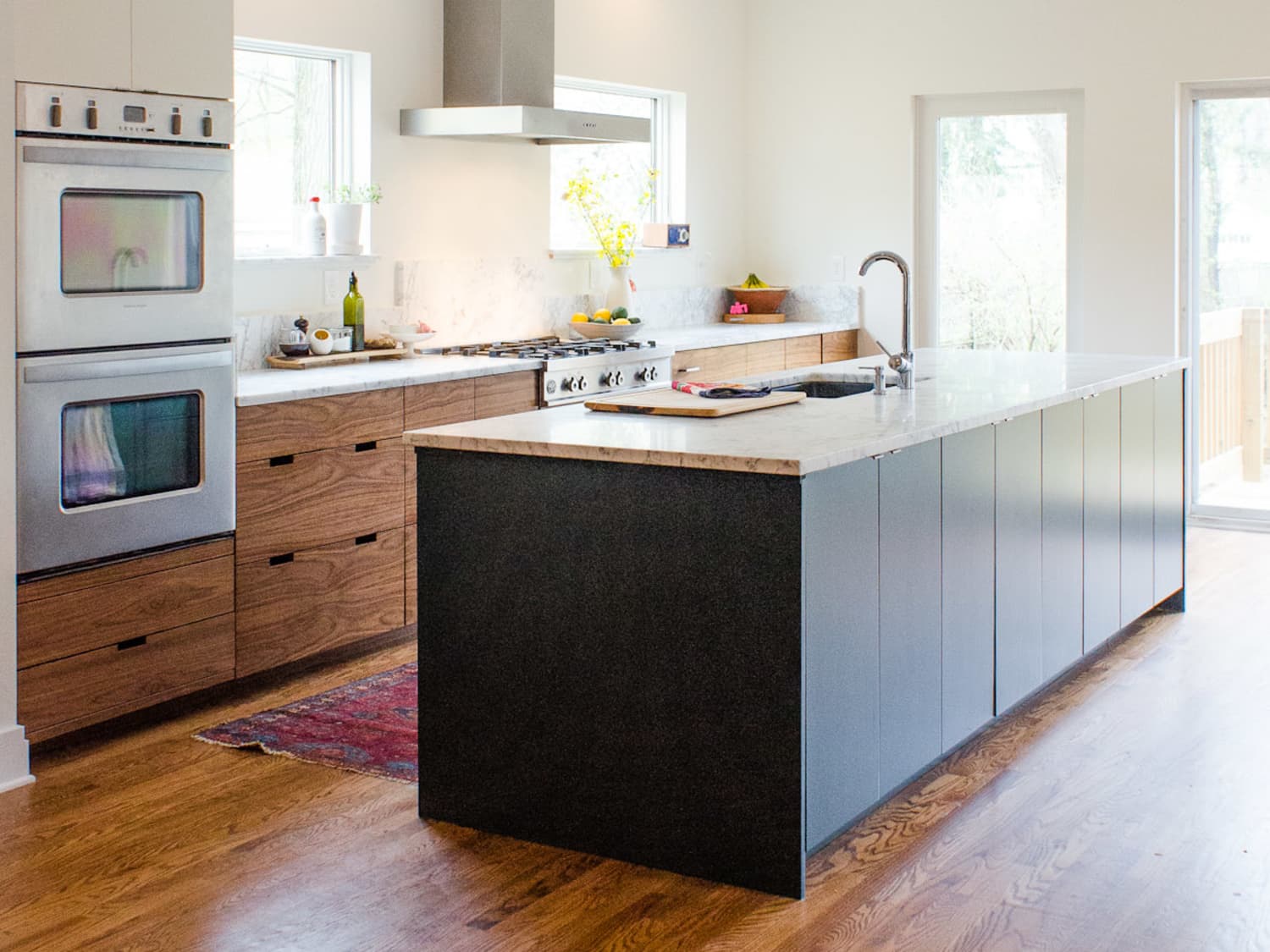
Credit: www.apartmenttherapy.com
Ikea Kitchen Series: Material Breakdown
IKEA offers several kitchen series, each with distinct material compositions and aesthetic styles. Understanding these differences is key to determining which option best suits your needs and expectations regarding material quality. The SEKTION modular system is the current framework, but the door and drawer fronts vary significantly.
Popular Ikea Kitchen Door Styles And Their Materials
- AXSTAD (Matte White/Dark Gray): These doors feature a wood veneer over particleboard and fiberboard, with a painted finish. This provides a real wood grain look with a smooth, matte surface. It’s a popular choice for those seeking a modern look with a touch of natural texture.
- VEDDINGE (White/Gray/Blue): This series typically uses painted MDF. MDF provides a smooth surface ideal for painting, offering a clean, modern look. It’s durable and resistant to warping, making it a practical choice for everyday use.
- FLÄRDFULL (White/Black): These are laminate-covered particleboard doors. They offer a sleek, high-gloss finish that is very easy to clean and highly resistant to moisture and stains. The laminate provides a durable, protective layer.
- EKESTAD (Dark Brown/White): This series features doors with a solid wood frame and a fiberboard panel. The wood used is typically oak or birch, providing a robust feel and a classic look. The fiberboard panel is often painted or veneered.
- HEMNES (White/Light Gray Stained): Known for its more traditional style, HEMNES doors are made from solid pine. Pine is a softer wood, which means it can be more prone to dents and scratches than hardwoods, but it offers genuine solid wood construction at an accessible price point. The finish is often stained or painted.
- SONGMYRAN (White): This is an example of a more budget-friendly option, often featuring a foil (laminate) finish over particleboard. It’s designed for affordability and ease of maintenance.
It’s crucial to check the specific product details on IKEA’s website or in-store, as material compositions can sometimes vary slightly or be updated.
The Sektion System Vs. Door Fronts
It’s important to differentiate between the SEKTION cabinet system (the boxes, drawers, and internal hardware) and the various door and drawer front styles available. The SEKTION boxes are consistently made from particleboard or MDF with a laminate or foil finish. The variation in perceived “woodiness” or material quality primarily comes from the choice of doors and drawer fronts.
Example: You could have a SEKTION cabinet box with AXSTAD (veneered) doors for a more premium feel, or the same SEKTION box with VEDDINGE (painted MDF) doors for a different aesthetic and price point.
When “real Wood” Is An Option
For those prioritizing “real wood” elements, IKEA offers choices:
- Solid Wood Doors: HEMNES is the prime example, offering doors made primarily from solid pine.
- Wood Veneer Doors: AXSTAD provides the look and feel of real wood grain through veneer application.
- Solid Wood Frames: EKESTAD uses solid wood for the frame of its doors, integrating a different material for the panel.
These options allow consumers to incorporate more natural materials into their IKEA kitchen without the significant cost associated with fully custom solid wood cabinetry.
Cost-effectiveness And Value Proposition
One of the primary drivers behind IKEA’s popularity is its affordability. IKEA kitchen cabinets offer a significantly lower price point compared to custom cabinetry or even many semi-custom brands. This cost-effectiveness is achieved through several strategies, including the use of engineered wood products, efficient manufacturing processes, and a flat-pack delivery model that reduces shipping costs.
The Value Equation: Material Vs. Price
When considering whether IKEA cabinets are “solid wood,” it’s essential to weigh this against their price. True solid wood cabinets, especially those custom-built by local craftspeople, can cost several times more than a comparable IKEA kitchen.
- High-End Solid Wood Cabinets: Can range from $500 to $1,200+ per linear foot, often exceeding $20,000-$30,000 for a medium-sized kitchen.
- IKEA Kitchens: A complete IKEA kitchen, depending on size and chosen door style, can often be installed for under $10,000, sometimes significantly less for smaller spaces or simpler designs.
The value proposition of IKEA lies in providing a stylish, functional, and reasonably durable kitchen solution at an accessible price. While they may compromise on the “all solid wood” aspect, they deliver on aesthetics and practicality for a broad range of budgets.
Understanding “engineered Wood” Benefits
While not solid wood, engineered wood products like particleboard and MDF offer distinct advantages that contribute to IKEA’s value proposition:
- Stability: They are less prone to warping, cracking, or expanding/contracting with changes in humidity compared to solid wood. This is particularly beneficial in kitchens, which often experience fluctuations in moisture and temperature.
- Uniformity: Engineered woods have a consistent density and texture, eliminating the knots and imperfections found in natural wood that can affect structural integrity or aesthetic appeal.
- Cost: The manufacturing process for particleboard and MDF is generally less expensive than milling lumber into solid planks.
- Surface for Finishes: Their smooth, uniform surfaces are ideal for applying durable laminates, veneers, and paints, creating a consistent and attractive finish.
The Trade-off: Longevity And Refinishing
The main trade-off with engineered wood is its limited refinishing potential compared to solid wood. While veneers and painted MDF can be touched up or sometimes repainted, particleboard and laminate surfaces are generally not designed for extensive sanding and refinishing. This means that while IKEA cabinets can last many years, they may not offer the same potential for multi-generational longevity or complete aesthetic overhaul through refinishing as solid wood alternatives.
However, IKEA’s modular design and the availability of replacement parts mitigate this to some extent. If a door becomes too worn or damaged, it can often be replaced individually.
Alternatives And Considerations
When exploring kitchen cabinetry, understanding the landscape beyond IKEA is beneficial. Several alternatives offer different material compositions, price points, and quality levels.
Semi-custom And Custom Cabinetry
- Semi-Custom Cabinets: Brands like KraftMaid, Merillat, or Schrock offer a middle ground. They provide a wider range of standard sizes and styles than IKEA, with more options for customization. These often feature plywood boxes (a more durable alternative to particleboard) and a variety of door materials, including solid wood, veneers, and laminates. Prices are typically higher than IKEA, often ranging from $400-$800 per linear foot.
- Custom Cabinetry: This is the highest tier, offering bespoke designs, unique materials, and precise sizing. Custom cabinets are almost always constructed from high-quality plywood or solid wood, with extensive options for wood species, finishes, and hardware. Prices can start at $700 per linear foot and easily exceed $1,200, making them a significant investment.
Other Retailers And Brands
- Big Box Stores (Home Depot, Lowe’s): These retailers offer a range of cabinet brands, from builder-grade options (often particleboard boxes with laminate or vinyl doors) to more premium semi-custom lines. Material quality and durability can vary widely, so careful examination of specifications is necessary.
- Online Cabinet Retailers: Numerous online companies offer cabinetry, often with competitive pricing. It’s essential to research their material specifications, return policies, and customer reviews thoroughly.
Material Comparison Table
To illustrate the differences, consider this comparison:
| Feature | IKEA Cabinets (Typical) | Semi-Custom Cabinets (Typical) | Custom Cabinets (Typical) |
|---|---|---|---|
| **Cabinet Box** | Particleboard or MDF with laminate/foil | Plywood (often 1/2″ or 3/4″ thickness) | High-quality plywood or solid wood |
| **Door Materials** | Laminate, Painted MDF, Wood Veneer, Solid Wood (Pine) | Solid Wood, Wood Veneer, Laminate, MDF | Solid Wood (various species), MDF, Veneer |
| **Durability** | Good to Very Good (depends on series and care) | Very Good to Excellent | Excellent |
| **Refinishing** | Limited (especially on particleboard/laminate) | Moderate (plywood boxes, some door types) | Excellent (solid wood, high-quality plywood) |
| **Cost per LF** | $100 – $400 | $400 – $800 | $700 – $1,200+ |
| **Customization** | Limited (SEKTION system is modular) | Moderate (standard sizes, finishes, some modifications) | Extensive (fully bespoke) |
Factors To Consider When Choosing
When deciding on kitchen cabinets, beyond the “solid wood” question, consider:
- Budget: This is often the primary constraint. IKEA excels in providing budget-friendly options.
- Desired Aesthetic: IKEA offers a wide range of modern and transitional styles. Custom cabinetry allows for virtually any look.
- Expected Lifespan: Are you looking for a solution for 5-10 years, or do you want cabinets that could last 20+ years and potentially be refinished?
- Moisture Exposure: If your kitchen is prone to high humidity or potential water splashes, materials like laminate and plywood boxes offer better resistance than particleboard or some solid woods.
- DIY vs. Professional Installation: IKEA cabinets are designed for self-assembly, though professional installation is recommended for optimal results. Semi-custom and custom cabinets often include professional installation.
Installation And Maintenance For Longevity
Even if IKEA cabinets aren’t entirely solid wood, proper installation and diligent maintenance are crucial for maximizing their lifespan and ensuring they function beautifully for years. This is where the user’s effort plays a significant role in the cabinet’s longevity, regardless of the underlying materials.
The Importance Of Professional Installation
While IKEA cabinets are designed for DIY assembly, the installation process requires precision and strength.
- Wall Mounting: Cabinets must be securely anchored to wall studs. Inadequate anchoring can lead to sagging, door misalignment, or even cabinets detaching from the wall, which is a significant safety hazard.
- Leveling and Squaring: Ensuring cabinets are perfectly level and square is essential for doors and drawers to operate smoothly and align correctly.
- Plumbing and Electrical Considerations: Integrating sinks and cooktops requires careful planning and execution around the cabinet structure.
A professional installer brings the experience and tools to ensure the cabinets are mounted correctly, maximizing their structural integrity and aesthetic appeal. This investment can prevent costly repairs or premature replacement due to installation errors.
Routine Care And Cleaning
Maintaining the finish and structure of IKEA cabinets involves simple, consistent practices:
- Wipe Spills Immediately: Especially important for laminate and painted finishes. Allowing liquids to sit can lead to swelling or damage to the substrate, particularly with particleboard.
- Use Mild Cleaning Agents: Avoid abrasive cleaners, scouring pads, or harsh chemicals that can damage the finish. A soft cloth with mild soap and water is usually sufficient for most cleaning needs. For tougher grime on laminate, a non-abrasive cleaner specifically designed for laminate surfaces can be used.
- Avoid Excessive Moisture: While engineered wood is somewhat resistant, prolonged exposure to high humidity or standing water can cause swelling and delamination. Ensure good ventilation in the kitchen.
- Clean Hardware: Regularly wipe down handles and hinges to prevent buildup and maintain their finish.
Addressing Wear And Tear
Over time, even well-maintained cabinets can show signs of wear.
- Scratches on Laminate/Veneer: Minor scratches on laminate can sometimes be difficult to repair invisibly. For wood veneers, touch-up markers or kits designed for furniture can sometimes conceal small scratches.
- Dents in Solid Wood Doors: For series like HEMNES (solid pine), minor dents can be gently steamed out or filled with wood filler and touched up.
- Loose Hinges or Drawer Slides: IKEA hardware is generally robust, but hinges and slides may require occasional adjustment or tightening. Replacement parts are readily available.
Example: If a painted MDF door (like VEDDINGE) gets a deep scratch, it might be possible to repaint it, although matching the original factory finish perfectly can be challenging. A veneered door (like AXSTAD) might show the underlying particleboard if the veneer is deeply scratched, requiring a more specialized repair.
By understanding the materials and committing to proper installation and routine care, IKEA kitchen cabinets can provide a beautiful and functional space for many years, offering excellent value for the investment.
Frequently Asked Questions
What Are Ikea Kitchen Cabinet Boxes Made Of?
IKEA kitchen cabinet boxes, primarily from the SEKTION system, are typically constructed from particleboard or medium-density fiberboard (MDF). These are engineered wood products designed for stability and cost-effectiveness. They are usually finished with a laminate or foil on the exterior surfaces.
Are Ikea Cabinet Doors Solid Wood?
Some IKEA cabinet doors are made from solid wood, such as the pine used in the HEMNES series. However, many