
A soft brush, a damp cloth, and a gentle dish soap solution easily remove dust and restore the shine of indoor wicker chairs. Most pieces only require a light wipe-down once every few months to stay in top shape. This method works best for natural rattan and synthetic resin wicker alike, provided you don’t soak the material. Always check your specific chair’s care label if it includes cushions or specialized finishes.
Supplies to clean indoor wicker chairs

You don’t need harsh chemicals to maintain your furniture, but having the right tools makes the job much faster. Before you begin, gather these items to ensure you can reach every crevice without damaging the weave.
A soft-bristled brush, such as a clean paintbrush or a soft toothbrush, works perfectly for tight spots. Use a vacuum cleaner with a soft brush attachment to avoid scratching the surface of the wicker.
Mix mild, phosphate-free dish soap with warm water in a small plastic bucket. Microfiber cloths are excellent for wiping away dust without leaving lint behind. Keep a spray bottle nearby for misting the chair if you prefer a lighter touch, and place an old towel under the piece to catch drips and protect your floors.
If your furniture is made of high-quality finished rattan, substitute a specialized wood cleaner for the soap. Never use bleach or heavy solvent-based cleaners, as these strip the natural oils and cause the fibers to become brittle. If the wicker feels dry or snaps when you apply light pressure, the material has lost its structural integrity and can’t be repaired by cleaning or conditioning.
Most people make the mistake of over-saturating the weave during cleaning. If you see water pooling in the crevices, you have used too much moisture. Excess water causes the wicker to swell and eventually sag as it dries.
If you live in a humid climate, use a fan to circulate air around the furniture for at least four hours after cleaning. This prevents mold growth in the hidden gaps where moisture tends to linger. If the piece remains damp after six hours, move it to a sunnier location to ensure the fibers fully contract.
Steps to refresh your chairs
Follow these steps to keep your furniture looking new without causing water damage or structural strain.
- Vacuum the entire chair thoroughly using the brush attachment, focusing on the crevices where dust and crumbs collect.
- Mix one tablespoon of mild dish soap into one gallon of warm water until you see light suds.
- Dip your microfiber cloth into the solution and wring it out until it’s just damp, not dripping wet.
- Wipe the wicker surface gently, moving in the direction of the weave to avoid snagging any loose fibers.
- Use a soft toothbrush dipped in the soapy water to scrub stubborn dirt or grime from hard-to-reach corners.
- Rinse your cloth in clean water and wipe the chair again to remove any soap residue.
- Dry the chair immediately with a clean, dry cloth to prevent moisture from sitting in the weave.
- Place the chair in a well-ventilated room to air dry completely for at least 24 hours before use.
Tip: If your chair feels loose or brittle, don’t scrub it hard; the material might be aging and needs extra care. Careful: Never leave the chair in direct sunlight while it’s wet, as this can cause the fibers to warp or crack.
Cleaning time and effort levels
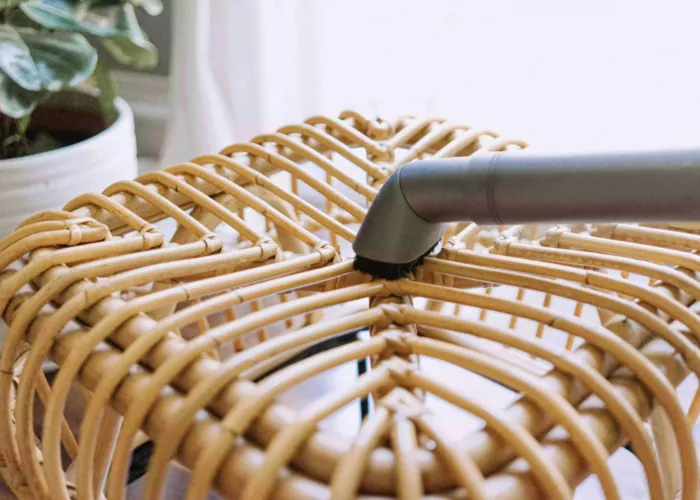
Maintenance requirements change based on how much dirt has built up over time. Starting with a light dusting prevents the need for deep cleaning later.
| Situation | Effort Level | Estimated Time | What to Watch |
|---|---|---|---|
| Weekly Dusting | Very Low | 5 Minutes | Loose debris |
| Monthly Wipe | Low | 15 Minutes | Soap residue |
| Deep Cleaning | Moderate | 45 Minutes | Excess moisture |
It’s always safer to start with a dry dusting and add moisture only if the dirt doesn’t come off, rather than overshooting with water on the first try.
A microfiber cloth picks up loose grit without scratching the surface during that five-minute weekly pass. Skip this step and you drag those particles across the finish every time you wipe.
Soap residue from the monthly clean often hides in seams and corners where it dries into a dull film. Run a barely damp cloth along those edges after your main wipe to catch it before it sets.
The forty-five-minute deep clean usually means someone waited too long between sessions. If you find yourself scrubbing hard enough to feel friction under your palm, you have already passed the safe threshold.
Stop immediately and switch back to a gentler approach.
Recognizing a successful clean
A properly cleaned chair should look uniform in color and feel smooth to the touch. If you see white, chalky spots, you likely left too much soap behind. This residue acts like a magnet, attracting more dust and grime within days.
If the wicker feels rough or looks dull, it’s likely too dry. This often happens when chairs are placed within three feet of heaters or air vents. To test for moisture balance, run a clean microfiber cloth over the surface; if it snags, the fibers are parched and need a light conditioning treatment.
Prevent these issues by ensuring the chair is fully dry before putting cushions back on. A well-maintained chair shouldn’t have any sagging or loose strands. If you notice these, the material is stressed from heavy use.
If a strand snaps under light pressure, the wicker has lost its structural integrity. At this stage, stop cleaning and apply a wood-safe sealant to prevent further degradation. Regular light cleaning is the best way to keep the fibers flexible and prevent the brittle texture that leads to snapping.
Rules for lasting maintenance
The main rule for wicker care is to avoid high-pressure water, which forces moisture into the core of the fibers and encourages mold. Once you finish cleaning, store the chairs in an area with good air circulation to allow the natural fibers to breathe.
If you have a set of chairs, clean them all at once so the wear and color remain consistent across the group. If the chairs require more than a simple wipe-down, such as major structural repair or refinishing, contact a professional furniture restorer. Attempting to glue or re-weave complex wicker sections yourself can often result in a permanent loss of the chair’s original design and stability.
If you notice a loose strand, secure it immediately with a small dab of clear, waterproof wood glue before it unravels further. Waiting until the weave pulls away from the frame often makes the damage irreversible. Never use heavy oil-based polishes, as these attract dust and eventually rot the organic fibers.
Other ways to do it

Using a vacuum only
If the chair is only dusty, a vacuum with a soft brush attachment is often enough. This keeps the material dry and takes only a few minutes. It’s the safest way to maintain your furniture if you have pets or kids who track in a lot of loose dirt.
Steam cleaning
Some people use a garment steamer to loosen dirt from very tight weaves. Use the lowest setting and keep the nozzle at least six inches away from the wicker. This helps if you have sticky spills, but it’s risky if you don’t dry the chair immediately afterward.
Compressed air
For intricate or very old wicker, use a can of compressed air to blow out dust from the deepest crevices. This prevents you from having to scrub delicate areas that might snap under pressure. It’s fast and clean, but it doesn’t remove stuck-on grime or stains.
Related guides
- How to Tighten Dining Room Chairs: A Step-by-Step Fix
- 10 Best Kids Indoor Climbers and Play Structures for Your Home in 2026
- Best Weather Resistant Patio Chairs for Lasting Comfort and Style in 2026
Frequently asked questions
Can I use vinegar to clean my wicker chairs?
Yes, you can use a mixture of one part white vinegar to four parts water to clean the chairs. Vinegar is excellent for cutting through mild grime and disinfecting the surface without harsh chemicals. Always test a small, hidden area first to ensure the vinegar doesn’t discolor the finish or the natural stain of the rattan.
How long should I let the chair dry?
You should allow the chair to air dry for at least 24 hours in a room with good airflow. If the climate is very humid, it may take up to 48 hours for the moisture to leave the center of the weave. Never sit on the chair while it’s damp, as the fibers are soft and will stretch out of shape permanently.
Is it safe to use a hose to clean them?
No, you should never use a hose on indoor wicker chairs because the high pressure and volume of water will ruin the finish. Excessive water causes the fibers to swell, expand, and eventually crack or grow mold once they dry. Stick to a damp cloth or a spray bottle for the best results.
How often should I deep clean the chairs?
How often you should deep clean your chairs depends on use, so consult your owner’s manual for guidance. If you notice a buildup of dust that a vacuum can’t remove, that’s your sign to perform a deeper, damp cleaning. Regular dusting helps you avoid the need for frequent deep cleaning sessions.
What happens if I get the wicker too wet?
If the wicker becomes too wet, the fibers will absorb the water, which causes them to lose their strength and sag. Over time, this trapped moisture can lead to mold or mildew growth that’s difficult to remove from the tight weave. If you accidentally soak the chair, blot it with dry towels and use a fan to speed up the drying process.
How do I remove mold from wicker?
If you see mold, consult a professional furniture restorer, as bleach can permanently damage natural wicker fibers. Wear gloves and work in a well-ventilated area, then wipe the spot with a clean, damp cloth to remove the bleach. If the mold has penetrated deep into the fibers, the chair may need to be discarded for health reasons.
Conclusion
Regular dusting and prompt spot cleaning will keep your indoor wicker chairs looking beautiful for years. By avoiding excess moisture and using gentle, non-abrasive tools, you protect the natural fibers and ensure the structural integrity of your furniture remains intact. Consistent, light care is always better than aggressive deep cleaning.