
Cleaning pool lounge chairs prevents staining and sunscreen buildup, a task most people finish in twenty to forty minutes using about one gallon of water per chair. Start by rinsing loose debris off with a hose, scrub with mild dish soap and a soft brush, rinse again, and let the chairs dry fully in the sun before use.
What you need
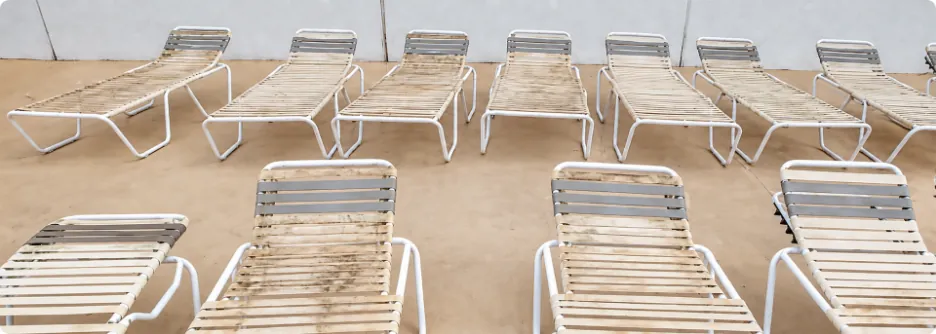
Gather everything before you start so you don’t have to stop halfway through with wet chairs and dry hands. You’ll need a garden hose with a spray nozzle, a bucket, mild dish soap, a soft-bristled brush or sponge, clean microfiber cloths, and a place to prop the chairs up so air reaches both sides.
If your chairs have removable cushions, take them off first and clean them separately. For white plastic frames that have turned grey, a small amount of baking soda works as a gentle scrub, but test it on a hidden spot first.
| Item | How much | Why it’s needed | A substitute |
|---|---|---|---|
| Garden hose | one | rinses dirt and soap off | none — don’t swap this |
| Bucket | one gallon | mixes the soap solution | large bowl or basin |
| Mild dish soap | two tablespoons | cuts sunscreen and body oils | none — don’t swap this |
| Soft-bristled brush | one | scrubs without scratching | clean sponge |
| Microfiber cloths | two or three | wipes and dries surfaces | old cotton T-shirts |
| Baking soda | one tablespoon | lifts stains on white plastic | none — don’t swap this |
Before you start
Move the chairs onto the lawn or a paved area away from the pool so dirty water doesn’t drain into the pool. Take off any cushions and shake out leaves, sand, and dead insects. Check the underside of each chair for wasp nests or sharp debris before you set it down.
If a chair has a manufacturer’s care tag, read it first. Some coated fabrics need a specific cleaner, and using the wrong one can void the warranty. The one preparation most people skip is testing the soap on a hidden corner. Do that now and wait five minutes to make sure the color doesn’t change.
If a frame is rusted through or a cushion is torn at the seam, stop and replace the part instead of cleaning it. Water will make the damage worse. If you see bubbling paint on metal, use a wire brush to remove the oxidation before applying any moisture. If the metal underneath is pitted, the structural integrity is compromised and the chair should be discarded.
For plastic furniture, check for hairline cracks near the joints. If you can fit a fingernail into a crack, the plastic has become brittle from UV exposure. In this case, stop cleaning and replace the item to avoid a sudden collapse under weight.
How to clean pool lounge chairs
- Rinse the chair from top to bottom with the hose, holding the nozzle about six inches from the surface so you blast loose sand and leaves off without forcing dirt into the weave.
- Fill the bucket with one gallon of warm water and two tablespoons of mild dish soap, then swirl it with your hand until the soap dissolves.
- Dip the soft brush into the soapy water and scrub the frame in small circles, spending about thirty seconds on each armrest and leg where sunscreen collects.
- Scrub the fabric or strap weave with the same soapy water, working one section at a time and rinsing the brush in the bucket every minute or two.
- Rinse every surface thoroughly with clean water until no suds remain, since leftover soap attracts dirt once it dries.
- Wipe the frame dry with a microfiber cloth, then stand the chair upright or prop it on its side so both sides get air.
- Clean the cushions separately by pressing soapy water into the fabric, rinsing with the hose, and pressing out excess water with a dry towel.
- Leave everything to dry in full sun for two to four hours, flipping the cushions once halfway through so both sides dry evenly.
- Put the cushions back only when they feel completely dry to the touch, since damp fabric traps mildew underneath.
How to know it worked
The chair should look evenly coloured with no streaks. The fabric should feel soft rather than stiff or soapy. Run your hand over the frame. If it still feels slick, soap residue remains and you need to rinse again.
Test the tightest weave on the seat pan, where water pools longest. A dry white cloth dragged across that spot will pick up any leftover surfactant as a faint grey smear. Rinsing stops only when that cloth stays clean.
The cushions should dry within about four hours in direct sun. If they still feel damp after that, stand them on edge and give them more time. Foam cores hold water much longer than the outer fabric suggests. Press your thumb hard into the center of the cushion. Any coolness or squish means moisture is trapped deep inside.
Success means no visible sunscreen stains, no white soap film where water pools, and no musty smell once dry. If you see dark spots returning within a day or two, that’s usually mildew and the chair needs another round.
Never judge whether a chair is clean by smell alone. The residues that irritate skin give no warning at all.
If something goes wrong
| What happened | Why | What to do |
|---|---|---|
| Soap film left behind | too little rinsing | rinse again with plain water |
| Colour faded on fabric | harsh cleaner used | stop and use only mild soap |
| Cushion smells musty | dried too slowly | dry in full sun, flip often |
| Frame looks scratched | stiff brush or scouring pad | switch to a soft sponge |
| Stains came back | sunscreen residue not removed | scrub with baking soda paste |
| Water pooled under chair | dried on flat ground | prop the chair up for airflow |
A hose nozzle set to mist doesn’t push soap out of woven fabric. Use the jet setting instead. Keep the nozzle six inches away so you don’t force water deep into the foam padding.
Test any new cleaner on a hidden flap near the zipper first. Wait ten minutes and check if the dye transfers to your finger when you rub it. If it does, that bottle will ruin the whole seat.
Musty cushions usually mean the inner foam stayed wet after the cover felt dry outside. Stand them vertically against a wall rather than laying them flat. This lets gravity pull moisture down and out through the bottom seam.
Sunscreen stains resist regular soap because the oils bond to synthetic threads. Baking soda works here by absorbing the oil before you wipe it away. Apply the paste thick and leave it for five minutes before scrubbing.
How often to clean pool lounge chairs

Clean the chairs once every two to four weeks during swimming season, and give them one thorough cleaning before you store them for winter. The interval moves with how often the pool is used and whether trees hang over the deck, since leaves and bird droppings add dirt between cleanings.
If your deck sits under pine trees or oaks, drop your cleaning cycle to every ten days. The acidic sap and tannins in falling debris etch into plastic and powder-coated metal finishes within weeks, causing permanent pitting that no amount of scrubbing can reverse.
If the chairs sit uncovered all year, wipe them down monthly instead of waiting for visible stains. Sunscreen and body oils build up fastest on the arms and headrest, so those spots may need attention even when the rest of the chair still looks fine.
Rinse off sunscreen residue after heavy use days rather than waiting for the full schedule. Dried oils act like a magnet for airborne dust, turning a simple wipe-down into a labor-intensive scrub.
Check the manufacturer’s care tag for any limit on how often to wash coated fabric. Overwashing can wear the protective UV coating off, leaving the material brittle and prone to cracking under direct sun. If the fabric feels tacky after a rinse, you have already stripped the finish and must apply a specialized protectant spray immediately.
Related guides
- How to Tighten Dining Room Chairs: A Step-by-Step Fix
- 10 Best Water Test Kits for Accurate Home and Pool Analysis in 2026
- 7 Best Inflatable Top Ring Swimming Pools for Your Backyard in 2026
Frequently asked questions
Can I use bleach on white plastic pool chairs?
No. Bleach can break down the plastic and fade coloured straps, so stick to mild dish soap and water. If stains persist, use a baking soda paste on a hidden spot first.
How long does it take for cushions to dry?
About two to four hours in full sun, assuming warm weather and low humidity. Flip them once halfway through so both sides dry evenly.
Is it safe to clean chairs while they’re still by the pool?
No. Move them onto the lawn or deck first so dirty water and soap don’t drain into the pool and affect the water chemistry.
What happens if I leave soap on the chair?
It dries into a sticky film that attracts more dirt and can irritate skin. Rinse until no suds remain before you let the chair dry.
Does it matter what kind of soap I use?
Yes. Use mild dish soap only — harsh cleaners, bleach, or abrasive powders can scratch frames and damage fabric coatings.
How often should I clean them in winter?
Once before storage, then not again until spring unless they’re kept outdoors uncovered. Covered chairs need less frequent cleaning.
Can I pressure wash the frames?
No. High pressure can crack plastic, tear strap weave, and force water into cushion foam. Use a hose and a soft brush instead.
Conclusion
Once they’re dry, you’ll want to slide them under a cover or into the shed if rain’s expected. Keeping them out of the weather means they won’t get grimy as fast. You’ll spend less time scrubbing next summer and more time relaxing by the water.