
Washing a plastic Adirondack chair takes about 20 minutes per seat using warm water, dish soap, and a soft brush. The whole method for how to clean plastic adirondack chairs relies on mild detergent and elbow grease instead of harsh chemicals that damage the surface. It’s an easy job that’s inexpensive using basic supplies you probably already own. You’ll need access to a garden hose before starting. If your chairs have deep cracks or structural breaks, this washing method won’t fix them.
What you need to wash plastic Adirondack chairs
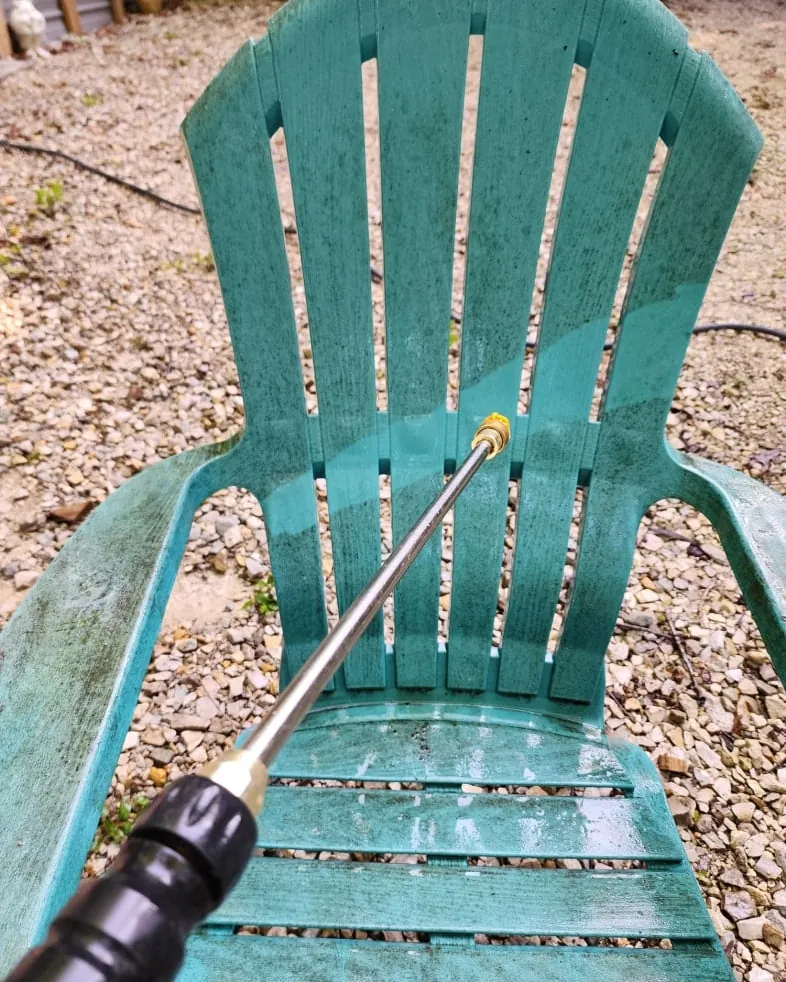
Gather these items before you drag the chairs out onto the driveway. Having everything ready keeps the work moving without trips back inside the house.
| Item | How much | Why it’s needed | A substitute |
|---|---|---|---|
| Dish soap | 2 tablespoons per gallon | Lifts dirt without stripping color | Mild laundry detergent |
| Soft bristle brush | 1 medium size | Scrubs grime without scratching plastic | Yellow kitchen sponge |
| Garden hose | Standard spray nozzle | Rinses away soap and loosened dirt | Two large buckets of water |
| White vinegar | 1 cup per gallon | Dissolves hard water spots and mildew | none — don’t swap this |
| Microfiber cloth | 2 or 3 cloths | Dries surfaces without leaving lint | Old cotton t-shirt |
| Baking soda | Half cup total | Removes stubborn stains gently | none — don’t swap this |
Getting your plastic Adirondack chairs ready
Move the chairs to a flat, shaded spot like a driveway or patio before wetting them. Direct sun dries the soap too fast and leaves streaks across the plastic surface.
- Take off any removable cushions, cup holders, or folding hardware so water reaches every crevice.
- Brush away dry leaves, cobwebs, and loose dirt with a dry broom first.
- Rinse the entire chair with plain water from the hose to loosen surface dust.
- Check the manufacturer tag or manual for the exact plastic type, since some recycled materials react poorly to acidic cleaners.
Skipping the dry sweep is where things go wrong. Wet dirt turns into mud that grinds into the plastic grain when you scrub, leaving dull scratch marks that cost you a smooth finish. If the plastic feels brittle, shows deep stress fractures, or has peeling paint, stop here. Structural repairs require specific plastic adhesives meant for outdoor furniture, which is a job for the manufacturer’s support team rather than a standard wash.
Steps to wash plastic Adirondack chairs
-
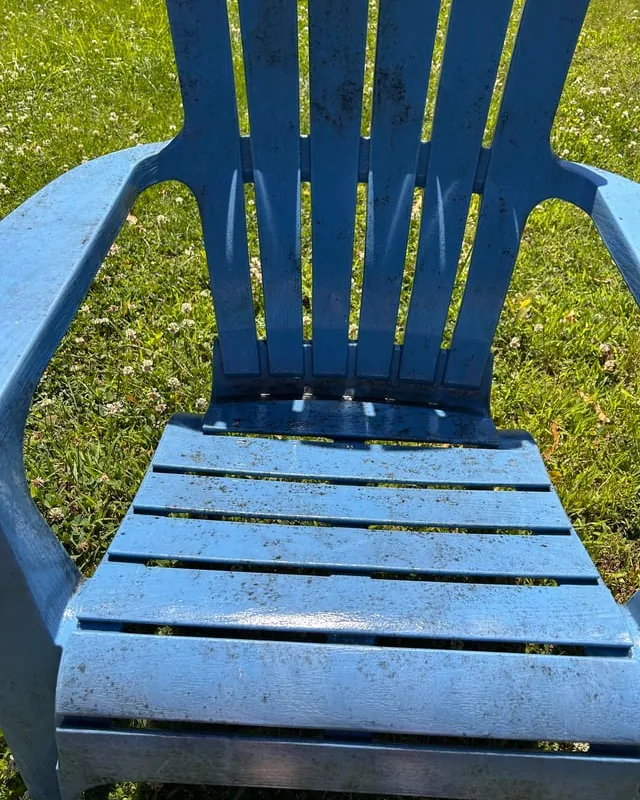
Fill a bucket with 1 gallon of warm tap water, aiming for roughly 90°F to 100°F. Add exactly 2 tablespoons of liquid dish soap. Stir until bubbles form evenly. Cold water won’t dissolve grease well, and boiling water can warp thin plastic panels.
-
Dip your soft bristle brush into the soapy water until the bristles are fully saturated. Start scrubbing at the top of the backrest, working downward in small circles. This pushes dirty water toward the ground instead of over areas you’ve already washed.
-
Spend extra time on the armrests where skin oils and sunscreen build up heavily. Scrub each armrest for about 30 seconds using firm but even pressure. You’ll know it’s working when the suds turn gray or brown as they lift the trapped oils.
-
Mix 1 cup of white vinegar into a separate spray bottle filled with 1 quart of cool water. Spray this directly onto any white chalky spots or mildew patches. Let it sit for exactly 5 minutes before wiping; leaving it longer won’t clean better and might dull certain finishes.
-
Sprinkle baking soda directly onto stubborn stains like bird droppings or tree sap. Use about 1 tablespoon per stain, pressing it gently into the spot. Wait 10 minutes so the powder absorbs the residue, then scrub lightly with a damp sponge.
-
Rinse the entire chair thoroughly with your garden hose set to a medium spray pattern. Start from the highest point and work down to the legs. Keep rinsing until the water runs completely clear and no slippery soap residue remains on the surface.
-
Wipe the chair down with a dry microfiber cloth immediately after rinsing. Don’t let it air dry in the sun, because mineral deposits in tap water leave cloudy spots. Pay close attention to the joints where water pools and drips slowly.
-
Flip the chair upside down for 2 minutes to drain any water trapped inside hollow armrests or leg tubes. Trapped moisture breeds mold underneath the seat where you can’t see it. Set it upright again once the dripping stops completely.
-
Inspect the surface while it’s still slightly damp. If you notice missed spots, apply a tiny drop of dish soap directly to the area and rub with your thumb. Rinse that single spot again with the hose right away.
-
Leave the chair in a shaded, breezy area for 30 minutes before putting cushions back on. The plastic should feel completely dry and smooth to the touch. If your chairs are made of high-density polyethylene (HDPE), like those sold by Polywood, they resist moisture better and dry faster than cheaper hollow plastics.
Signs your plastic Adirondack chairs are clean
A properly washed chair looks uniformly bright with no dark smudges hiding in the textured grain. Run your hand flat across the armrest. It should feel completely smooth and dry, never sticky or slick. Stickiness means soap residue is still trapped in the microscopic grooves of the plastic.
Check the crevices where the back slats meet the seat pan. These tight corners trap pollen and dirt all season long. If you see dark lines packed into the seams, the brush didn’t reach deep enough. Go back with a smaller tool, like an old toothbrush dipped in your soapy mix, and work the seam out.
Water behavior tells you a lot about the surface condition. Splash a few drops onto the seat. On a truly clean plastic chair, the water beads up and rolls off quickly. If it spreads out into flat, greasy puddles, there’s still oil or sunscreen left behind. That requires another round with dish soap focused just on the seating area.
For white or light-colored chairs, step back about three feet in natural daylight. The color should look even across the whole frame. Patchy dull areas usually mean hard water minerals dried on the surface. Spray those patches with your vinegar mix, wait 3 minutes, and wipe them again.
When cleaning plastic Adirondack chairs goes wrong
| What happened | Why | What to do |
|---|---|---|
| Surface feels rough and scratched | Used stiff wire brush | Switch to soft sponge immediately |
| White cloudy spots appeared | Hard water dried on plastic | Wipe with diluted white vinegar |
| Color looks faded unevenly | Bleach stripped the pigment | Stop using bleach, accept fade |
| Soap won’t rinse off completely | Water was too cold | Refill bucket with warmer water |
| Black spots returned next day | Mildew roots stayed inside pores | Apply vinegar, scrub deeper |
| Chair wobbles after washing | Water pooled inside hollow legs | Flip upside down to drain fully |
How often to wash plastic Adirondack chairs
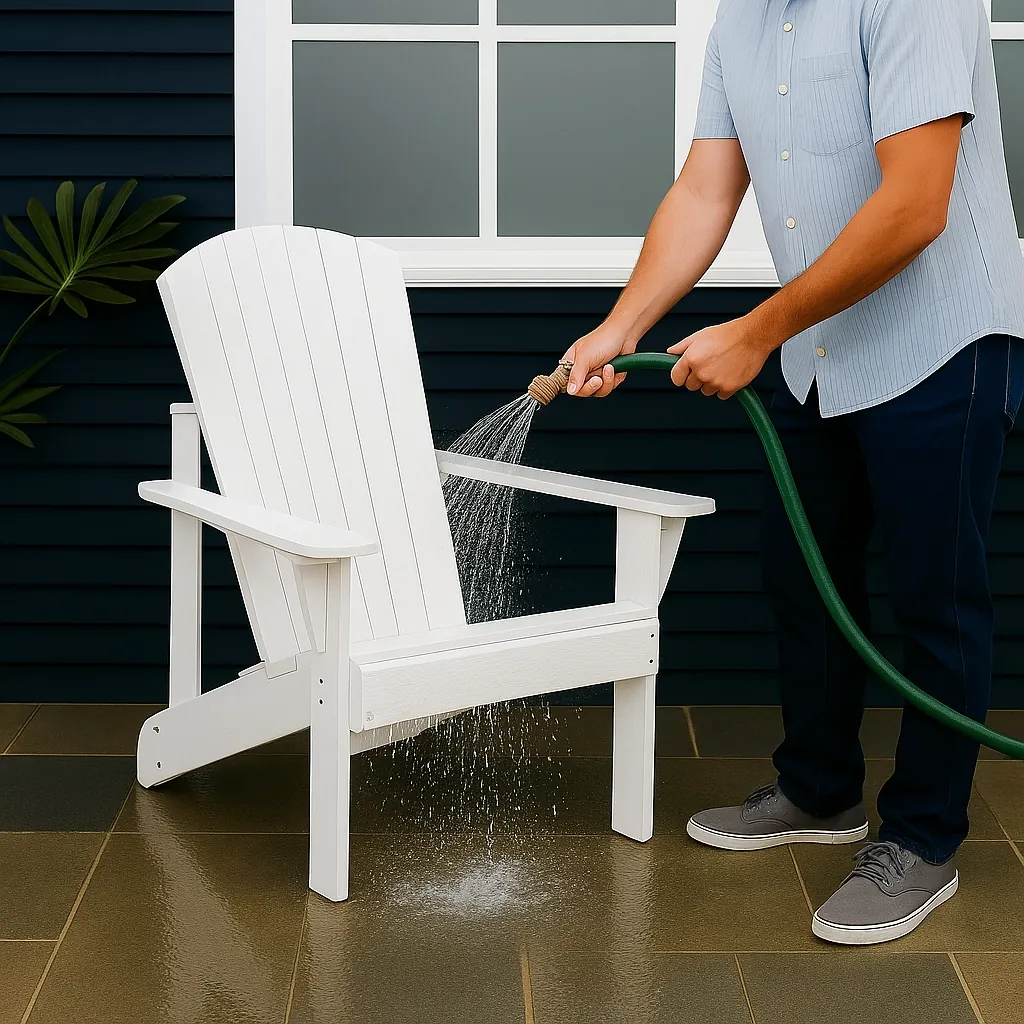
Wash your chairs every 4 to 6 weeks during the months they stay outside. That interval assumes normal backyard use where people sit daily and weather exposes the frames to dust. Leaving them unwashed for a full summer lets pollen bake into the plastic, which takes twice the effort to remove later.
Two main things change this schedule. First is your local environment. If your chairs sit under pine trees or near a busy road, wash them every 3 weeks. Tree sap and exhaust grime build up much faster than regular dust, and sap hardens into a permanent glaze if left past a month.
Second is how often the chairs get used. Patio sets that only come out for weekend guests can stretch to an 8-week gap between washes. But if kids eat snacks in them daily, food spills demand immediate spot cleaning to avoid attracting ants.
Don’t rely on heavy rain to do the job for you. Rainwater carries dirt and pollen, often leaving the chairs dirtier than before the storm passed through. Always check the seat texture yourself. If it grips your finger slightly instead of sliding smoothly, it’s time to grab the bucket regardless of the calendar date.
Related guides
Frequently asked questions
Can I use a pressure washer on plastic Adirondack chairs?
No, you shouldn’t use a pressure washer on plastic outdoor furniture. High-pressure streams easily gouge soft plastic and force water deep into hollow sections where it causes hidden mold. Stick to a standard garden hose with a spray nozzle. If you must use a power washer, set it below 1,500 PSI and keep the tip 2 feet away, though a hose is always safer.
Why did my white plastic chairs turn yellow?
Sunlight causes ultraviolet degradation that permanently yellows cheap plastic resins over time. Washing won’t reverse chemical changes inside the material itself. You can lighten surface stains using a paste of baking soda and water left for 15 minutes. For severe yellowing, specialty UV-restoring sprays exist, but prevention with patio covers works best.
How long does it take to wash one plastic chair?
A standard wash takes about 15 to 20 minutes per chair from start to finish. That assumes the chair only has normal dust and light pollen buildup. Heavily stained seats with baked-on bird droppings or tree sap will add another 10 minutes of soaking and targeted scrubbing to the process.
Is it safe to use bleach on resin patio chairs?
Bleach is too harsh for most plastic outdoor furniture and strips the protective outer layer. It accelerates fading and makes the surface brittle over repeated uses. Dish soap handles everyday dirt perfectly. For mildew, white vinegar is a much safer alternative that kills spores without degrading the plastic polymers beneath them.
What happens if I don’t rinse the soap off completely?
Leftover soap attracts more dirt the moment the chair dries. It creates a sticky film that grabs pollen and dust faster than a bare surface would. You’ll notice the chair looking dingy within days instead of weeks. Always rinse until the water runs totally clear and the plastic feels squeaky, not slippery.
Does vinegar damage the plastic over time?
Diluted white vinegar is completely safe for plastic chairs when mixed with water. Using 1 cup per gallon won’t etch or weaken HDPE or resin materials. Never pour full-strength vinegar directly onto hot plastic sitting in direct sunlight, as the concentrated acid combined with heat can occasionally dull very cheap, thin finishes.
Do I need special cleaner for HDPE lumber chairs?
You don’t need expensive branded cleaners for HDPE lumber furniture. Warm water and standard dish soap work exactly as well as specialty products costing ten times more. The dense plastic doesn’t absorb stains deeply, so gentle surface cleaning is all it requires to look brand new again.
Conclusion
Plastic Adirondack chairs hold up well outdoors because they don’t rot or splinter like wood. Keeping them clean takes very little money and only a few minutes of actual scrubbing. Stick to soft brushes and mild soap, skip the harsh chemicals, and they’ll stay bright and comfortable for years.