
You can clean upholstery fabric chairs by vacuuming the surface, spot-testing a mild detergent solution, and gently blotting the fabric with a clean cloth until the stain lifts. This process usually takes about 30 to 60 minutes, depending on the chair size and the severity of the marks. For most home owners, this is an effective way to refresh furniture without needing professional services. Always check the manufacturer’s care tag first to ensure you choose the correct cleaning code for your specific material.
Essential Tools for Cleaning
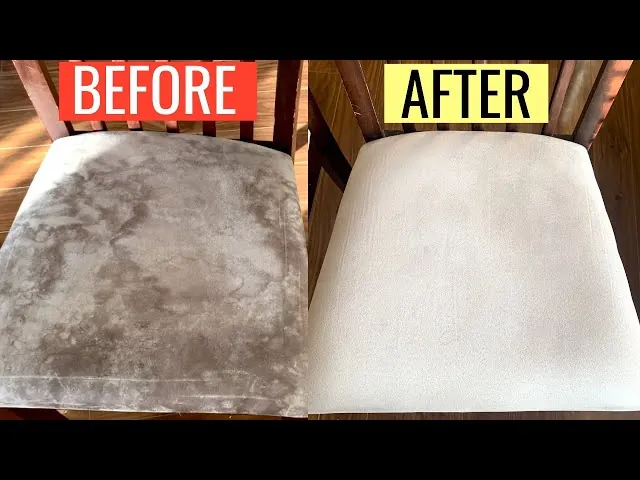
To start this task, gather the following items to ensure you have everything within reach. Using the right tools prevents damage to delicate fibers and ensures you don’t spread dirt deeper into the cushion.
- A vacuum cleaner with a soft upholstery brush attachment to remove loose dust and crumbs.
- Two clean, white microfiber cloths to prevent color transfer onto your fabric.
- A mild dish soap or a dedicated upholstery shampoo for safe cleaning.
- A small bucket for mixing your cleaning solution.
- A spray bottle filled with distilled water for rinsing the area.
- A soft-bristled brush to gently agitate stubborn spots.
- A dry towel for absorbing excess moisture after you finish.
Colored cloths are a common mistake that costs people their cushions. Dyes bleed when they meet even mild soap. White microfiber is the only safe choice.
Tap water leaves mineral deposits behind as it dries. Those deposits show up as dull rings on dark fabrics. Distilled water from the grocery aisle avoids this entirely.
The bristles on your brush must bend easily under light thumb pressure. Stiff nylon bristles fray velvet and crush linen weaves permanently.
You can substitute dish soap with a specialized upholstery cleaner, but never use harsh bleach or ammonia-based products. If you’re unsure about a product, check the label or consult the United States Environmental Protection Agency guidelines on choosing safer cleaning agents for your home. If a chair requires professional dry cleaning, the tag will explicitly state “S” or “X,” and attempting to use water-based solutions on these pieces will cause permanent fabric shrinkage or water rings.
A “W” tag means water-based cleaners are safe. An “S” tag requires solvent-based formulas only. Mixing those two approaches ruins the fabric instantly.
Steps to Clean Fabric Upholstery Chairs
- Vacuum the entire chair thoroughly, paying close attention to the crevices where crumbs and dust collect. Use the soft brush attachment to avoid snagging the fabric.
- Identify the cleaning code on the tag under the seat. If the code is “W,” you can use water; if it is “S,” use only a solvent-based cleaner; if it is “X,” you must vacuum only.
- Mix one teaspoon of mild dish soap into two cups of cool, distilled water in your bucket. Stir gently until you see light suds forming on the top of the water.
- Test your solution on a hidden area, like the back or the underside of the seat, to ensure the color doesn’t bleed. Wait ten minutes for it to dry completely before you proceed.
- Dip your microfiber cloth into the sudsy water, wringing it out until it’s barely damp. Never soak the fabric, as excess water can cause mold growth in the inner foam.
- Blot the stain gently from the outside toward the center to prevent the spot from spreading. Don’t scrub hard, as this can wear down the fabric fibers over time.
- Rinse the area by blotting with a fresh cloth dampened only with distilled water. Repeat this until all soap residue is removed from the fabric.
- Pat the area dry with a clean, dry towel and let the chair air dry away from direct sunlight.
Careful: Don’t let the fabric stay wet for more than a few hours, as this can create a musty smell. Tip: Use a fan to circulate air around the chair to speed up the drying process. If the fabric feels stiff after drying, gently brush it with a soft brush to restore the texture.
Situation and Cleaning Effort
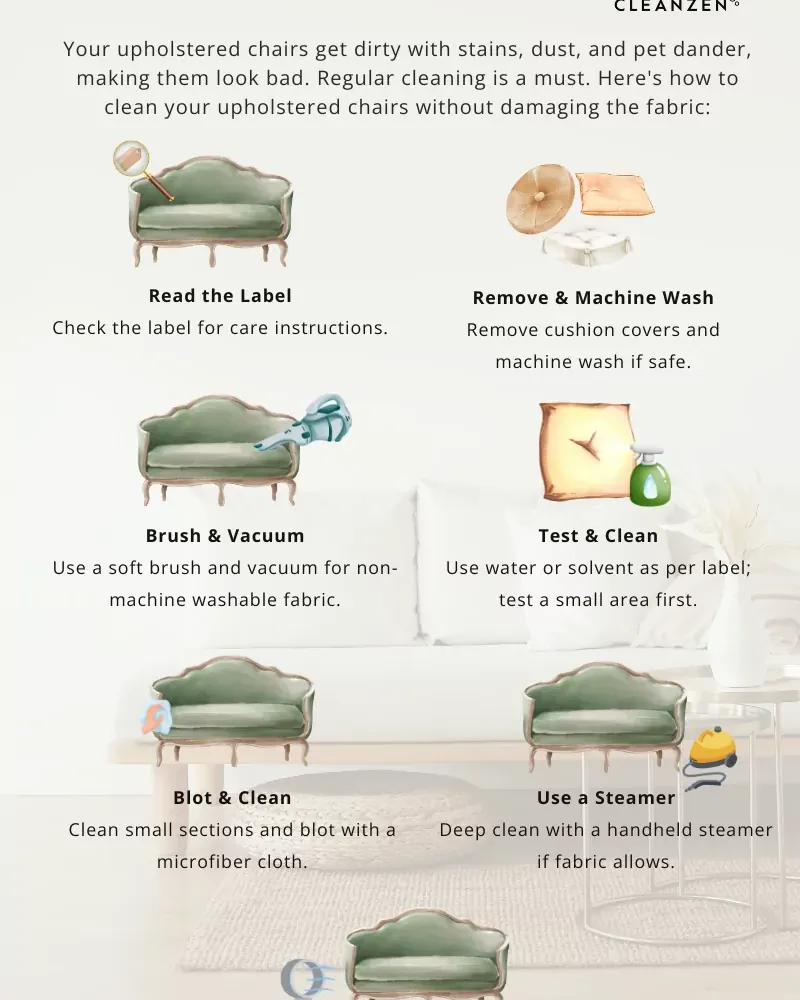
Cleaning your furniture requires varying amounts of time and effort depending on the fabric type and the age of the stains. Starting with a small amount of liquid is always safer, as you can add more if needed, but you can’t easily remove excess moisture once it sinks into the padding.
| Situation | Time Needed | What is Different | Watch For |
|---|---|---|---|
| Fresh spills | 15 minutes | Immediate action | Spreading the liquid |
| Light dust | 20 minutes | Dry vacuuming only | Fiber snagging |
| Old stains | 60+ minutes | Deep agitation | Color fading |
| Delicate silk | 45 minutes | No water allowed | Water spots |
If a spill is oil-based, such as salad dressing or butter, skip the water entirely. Water will only push the oil deeper into the fibers and create a permanent ring. Instead, apply a small amount of cornstarch or baking soda to absorb the grease for thirty minutes before vacuuming.
If you’re unsure of your fabric’s durability, perform a spot test on the back corner of the piece. If the color transfers to your white cloth or the texture feels brittle after drying, the fabric isn’t colorfast. In this case, stop immediately and contact a professional cleaner.
Never scrub aggressively in a circular motion. This friction frays the fibers and creates a permanent “bald” spot that looks worse than the original stain. Always blot from the outside of the stain toward the center to prevent the liquid from expanding.
It’s much easier to perform a second, slightly stronger pass than to repair damage caused by using too much cleaner or water on the first attempt.
Determining a Successful Clean
A properly cleaned chair will look uniform in color, feel soft to the touch, and show no visible water rings or soap residue. If you notice a dark ring forming around the cleaned area, this usually means you used too much water, which pushed dirt to the edge of the damp spot. You can often fix this by lightly misting the entire cushion surface and blotting evenly.
To prevent future issues, avoid using excessive soap, as leftover residue acts like a magnet for new dirt. If the fabric feels crunchy or stiff, you likely left soap behind. Repeat the rinsing step with clean, distilled water until the fabric feels soft again.
Recognize the difference between a stain and a shadow. If the discoloration remains after the fabric is bone-dry, the issue is a permanent dye transfer or fiber damage rather than moisture. Taking your time to blot rather than scrub is the best way to maintain the integrity of your upholstery over many years of use.
Rules and Maintenance Standards
Follow the cleaning codes established by the manufacturer, which are the industry standard for textile care. Code W means water-based cleaners only, while code S requires solvent-based products. Using water on an S-coded fabric leaves permanent rings that no amount of scrubbing will remove.
After cleaning, ensure the room has good airflow to dry the chair completely within four to six hours. Point a box fan directly at the cushion rather than relying on ceiling circulation alone. Trapped moisture inside dense foam breeds mold that ruins the padding from the inside out.
If you notice any deep odors or heavy soiling that doesn’t lift after two attempts, contact a professional upholstery service to avoid damaging the internal frame or padding.
Once the chair is dry, you can use a fabric protector spray to help repel future spills and stains. Only apply these sprays in a well-ventilated area and follow the manufacturer’s instructions for the correct distance from the fabric. Hold the nozzle eight inches away to prevent saturating one spot.
Depending on the amount of daily use, a light vacuuming every two weeks will keep the fabric looking fresh and reduce the need for deep cleaning. Use the brush attachment to lift embedded dust without fraying the weave.
Different Ways to Clean
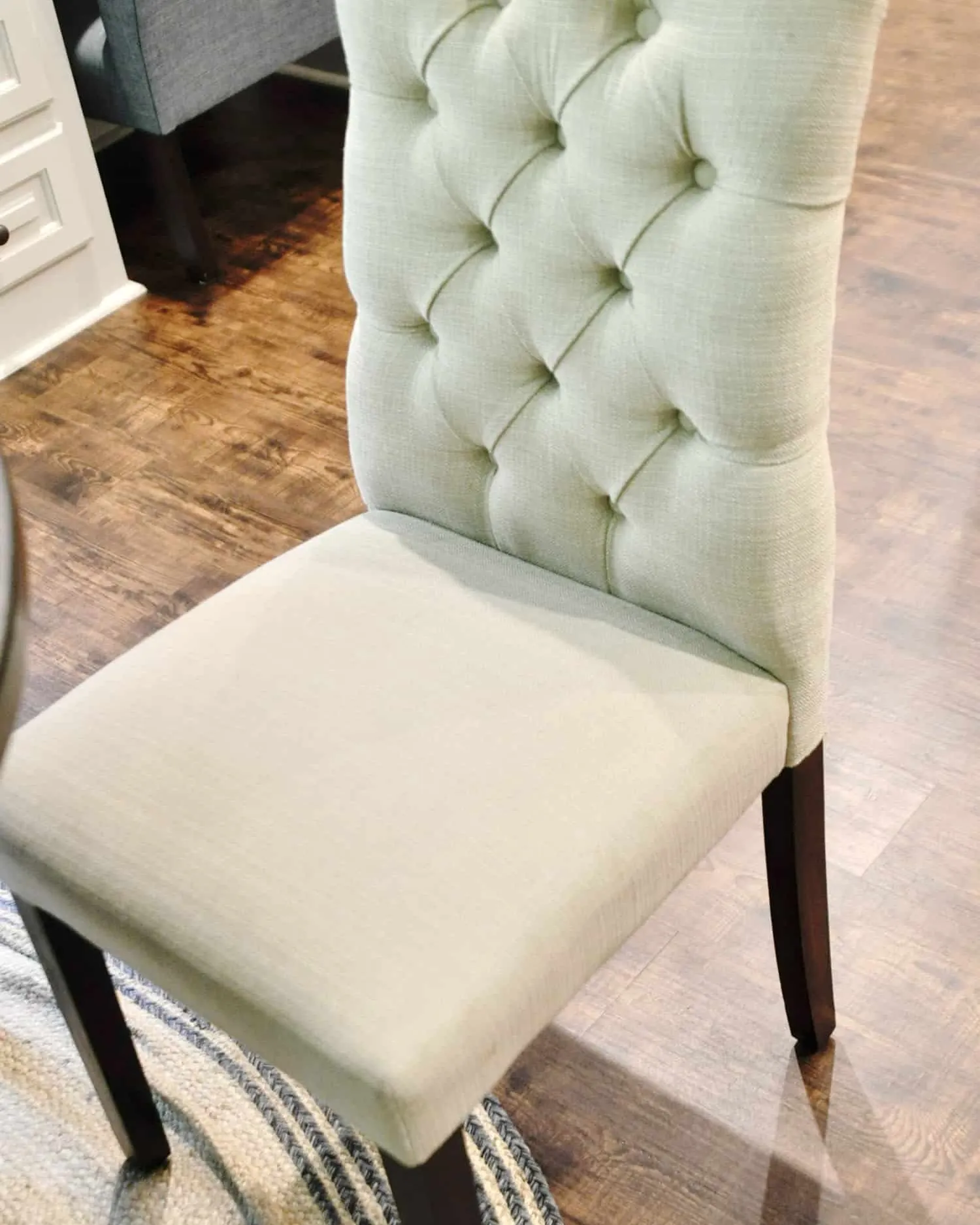
Steam Cleaning
Using a hand-held upholstery steamer can lift deep-seated dirt that vacuuming can’t reach. This method uses heat to loosen grime, making it effective for high-traffic chairs. However, it isn’t suitable for delicate fabrics like velvet or silk, which can be damaged by high heat and moisture.
Foam Cleaning
Foam cleaners are designed to stay on the surface of the fabric, minimizing the amount of water that penetrates the foam padding. This is a great choice for chairs where you’re worried about inner cushion saturation. You simply apply the foam, let it sit for the recommended time, and wipe away the dirt-filled foam.
Professional Extraction
Professional cleaners use high-powered extraction machines that pull dirt and moisture out of the fabric and padding. This is the best route for antique pieces or expensive designer furniture where you don’t want to risk a DIY mistake. It’s the most expensive option but provides the most thorough results for heavily soiled items.
Related guides
Frequently asked questions
How long does it take for a chair to dry?
Most fabric chairs take between four to six hours to dry completely when kept in a well-ventilated room. You can speed up this time by placing a fan nearby to circulate air, but avoid using a heater or hair dryer, as excessive heat can shrink certain synthetic fibers.
Is it safe to use vinegar on fabric?
Yes, a mixture of one part white vinegar to ten parts water is safe for most durable fabrics, but you must test it in a hidden spot first. Vinegar is excellent for neutralizing odors, but it shouldn’t be used on silk or delicate natural fibers.
Why do water spots appear after cleaning?
Water spots appear when dirt is pushed toward the edges of a damp area and stays there as the water evaporates. You can usually remove these by lightly misting the entire cushion with clean water and blotting evenly to ensure the drying process is uniform across the fabric surface.
Can I use a regular carpet cleaner?
No, you shouldn’t use a regular carpet cleaner because the formulas are often too harsh for delicate upholstery fabrics. Carpet machines also use too much water, which can lead to mold or mildew inside your chair’s padding if it doesn’t dry quickly enough.
How often should I clean my chairs?
You should vacuum your chairs regularly to prevent dust build-up and perform a deep clean based on usage; consult your owner’s manual for specific guidance. If you have pets or children, you might need to spot-clean spills as they happen to keep the fabric in good condition.
Conclusion
Once your furniture is completely dry, you’ll notice a significant difference in the room’s appearance. It’s a good idea to keep a lint roller nearby for quick maintenance between deep cleans. You’ll find that staying on top of small spills helps your favorite seat stay looking brand new for years.