
As an Amazon Associate, we earn from qualifying purchases. This post contains affiliate links – if you buy through them, we may earn a commission at no extra cost to you.
Choosing the right sump pump depends on your basement’s needs and how much water you expect to handle during a storm. These models differ mainly by their pumping capacity, build materials, and whether they include backup systems for power outages. Some excel at moving high volumes quickly, while others focus on durability for long-term reliability.
Best overall: WAYNE CDU980E offers a balance of high capacity and durable construction, backed by a five-year warranty for long-term protection. Most durable: Zoeller M53 Mighty-mate is built with a heavy-duty cast iron housing, making it a reliable choice for those who prioritize long-term, rugged operation. Best for power loss: Wayne Preassembled Combo provides a secondary battery-operated pump to keep your basement dry even when your electricity goes out during heavy weather.
The rest of this guide is for homeowners looking for reliable water management solutions for their basements and crawl spaces.
How We Picked
We compared 48 different sump pump listings to find the most dependable options currently available. To earn a spot, a product had to clearly list its pumping capacity in gallons per hour, its construction materials, and its specific switch type. We prioritized units that include warranties or clear testing data from the manufacturer. Any product that lacked essential technical specifications or clear installation requirements was excluded from our final selection.
1. WAYNE CDU980E 3/4 HP Submersible Sump Pump

Best for: Homeowners needing a powerful, reliable primary pump.
The WAYNE CDU980E features a 3/4 HP motor capable of moving 5,490 gallons per hour. Its cast iron and stainless steel build is designed to handle tough conditions in narrow sump pits. The integrated vertical float switch ensures automatic operation without taking up excessive space.
The top suction design is a key feature here, as it helps prevent airlocks and reduces the risk of clogging. This means you don’t need to worry about drilling a weep hole during your installation. This model isn’t suited for outdoor drainage or wide-area dewatering; it’s strictly intended for indoor sump pits.
-
Pros:
- High 5,490 GPH capacity.
- Durable cast iron components.
- Compact vertical float switch.
-
Cons:
- Indoor use only.
- Requires specific pit diameter.
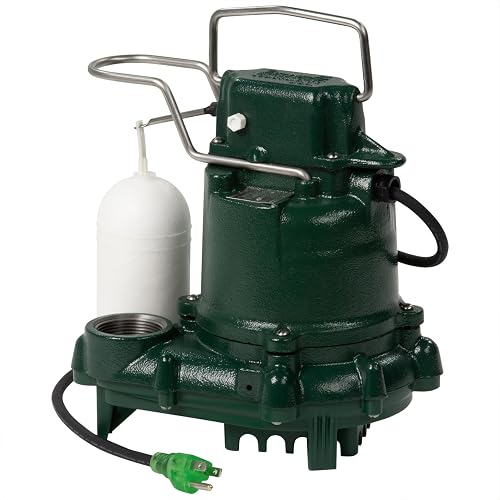
2. Zoeller M53 Mighty-mate Submersible Sump Pump
Best for: Buyers who prioritize heavy-duty, long-lasting construction.
This pump is well-known for its robust design, featuring cast iron in the switch case, motor, and pump housing. It uses an automatic float-activated switch for simple, reliable operation. The non-clogging vortex impeller is designed to handle common debris without stopping the pump.
Because of its heavy cast iron construction, this unit is quite sturdy for continuous operation. However, it uses a plastic base, which is a trade-off for those expecting a purely metal design. If you need to move water quickly during a major flood, look for a 1 HP model instead. This 1/3 HP pump is built for standard residential drainage, not high-volume emergency removal.
Rely on this unit when you need a pump that resists corrosion and physical impact over long periods. If your sump pit frequently collects large debris that would jam a standard blade, the vortex design is your best defense. Avoid this model if your primary goal is rapid water evacuation during a catastrophic basement flood.
-
Pros:
- Durable cast iron housing.
- Non-clogging vortex impeller design.
- Automatic float switch operation.
-
Cons:
- Plastic base construction.
- Limited pumping capacity.
3. Wayne 1 HP Heavy Duty Submerisble Cast Iron and Stainless

Best for: Basements prone to heavy, rapid water accumulation.
This 1 HP pump is built for high-performance water removal, handling up to 6,100 gallons per hour. Its stainless steel motor housing and cast iron volute provide durability against corrosion. The unit has been tested to run over 1 million cycles, suggesting it can handle years of heavy storms.
The top suction design keeps the pump clear of debris, and it installs in about 15 minutes without needing a weep hole. Because of its size and power, it requires a sump basin that’s at least 11 inches in diameter. It isn’t designed for outdoor use or for smaller, shallow pits where the 9-inch “on” level might be too high.
-
Pros:
- Very high pumping capacity.
- Tested for 1 million cycles.
- Corrosion-resistant stainless steel.
-
Cons:
- Indoor use only.
- Needs 11-inch diameter basin.
4. Liberty Pumps 237 1/3 HP Submersible Sump Pump

Best for: Residential groundwater and basement drainage needs.
The Liberty Pumps 237 uses a 1/3 HP motor and features a deep-finned powder-coated aluminum housing for better heat dissipation. It includes a vertical magnetic float switch for reliable, automatic cycling. The vortex-style impeller helps reduce clogging while maintaining steady flow.
If your sump pit is narrow, the vertical magnetic switch is a major advantage. Unlike tethered floats that require extra room to swing, this switch operates within a tight footprint. You should choose this model for standard 1-1/2 inch discharge lines.
The motor is thermally protected to extend its operational life. It’s designed to handle 3/8-inch solids, which is useful for preventing jams in typical basement pits.
If you face frequent, heavy-duty flood control or high-lift applications, this 1/3 HP motor will likely struggle. In those cases, you need a pump with higher horsepower to prevent burnout. Rely on this unit for routine crawl space or basement drainage. Avoid it if you need to move large volumes of water against significant vertical head pressure.
- Pros: Vertical magnetic float switch. Handles 3/8-inch solids. Thermally protected motor.
- Cons: Moderate motor power. Aluminum housing construction.
5. Superior Pump 92551 1/2 HP Cast Iron Pedestal Pump

Best for: Those who prefer a pedestal-style pump design.
This 1/2 HP pedestal pump moves up to 3,600 gallons per hour and can handle liquids up to 180 degrees Fahrenheit. It features a solid steel drive shaft and a metal switch arm for added strength. The pump is fully factory-tested and carries cULus and CSA certifications.
The pedestal design keeps the motor above the water line, allowing for easier maintenance access. Because the motor sits outside the water, it isn’t submersible like the other options on this list. It isn’t suitable for sealed sump pits or applications where the pump must be completely submerged.
-
Pros:
- Handles high-temperature liquids.
- Adjustable automatic switch.
- Easy-access pedestal design.
-
Cons:
- Not a submersible model.
- Requires open basin.
6. Wayne Preassembled Primary & Battery Backup Sump Pump Combo System

Best for: Homeowners worried about power outages during storms.
This system combines a primary 1/2 HP pump with a battery backup to ensure protection during blackouts. It’s preassembled for a quick 15-minute drop-in installation in 16-inch or larger basins. The system is tested to 1 million cycles for long-term durability.
The backup unit can move up to 10,000 gallons on a single battery charge, though you must purchase the 75 AH battery separately. This is an indoor-only system that provides reliable operation when the grid fails. It isn’t for users who want a simple, single-pump setup, as the combined system is larger and requires more space.
-
Pros:
- Includes battery backup system.
- Fast, preassembled installation.
- Proven 1 million cycle life.
-
Cons:
- Battery not included.
- Large footprint requirement.
7. Little Giant 1/3 HP Cast Iron Submersible Sump Pump

Best for: Users who want a reliable cast iron submersible pump.
This 1/3 HP pump is housed in an epoxy-coated cast iron casing for durability. It features a non-clog vortex impeller and a built-in diaphragm switch for automatic operation. The motor is thermally protected and designed for continuous duty.
The diaphragm switch is pressure-activated and non-adjustable, which simplifies the setup but limits customization. The pump turns on automatically at 7 to 10 inches of water and shuts off at 1 to 4 inches. If your sump pit requires specific or deeper trigger depths, this fixed range won’t suffice.
This pump is specifically for sump systems and isn’t recommended for emergency dewatering or general utility work. Using it for these tasks risks motor strain, as it’s calibrated for consistent, long-term sump maintenance rather than high-volume emergency clearing. It isn’t the best choice if you need to adjust your pump’s “on” and “off” levels.
-
Pros:
- Epoxy-coated cast iron housing.
- Continuous duty motor.
- Reliable diaphragm switch.
-
Cons:
- Non-adjustable switch levels.
- Limited to sump use.
8. Superior Pump 91250 1800GPH Thermoplastic Submersible Utility Pump with 10-Foot

Best for: General utility water removal tasks.
This 1/4 HP utility pump moves up to 1,800 gallons per hour and can lift water up to 25 feet. It’s built with tough thermoplastic and includes a removable suction screen to handle 1/8-inch solids. The unit comes with an adapter to fit a standard garden hose.
The thermoplastic build makes the pump lightweight and easy to move between tasks. Because it’s a utility pump rather than a primary sump pump, it isn’t designed to be installed permanently in a sump pit. It should be manually operated and unplugged once the water is removed.
If you need to clear standing water from a basement floor or a pool cover, this model is ideal. However, if your application requires automated water removal based on rising water levels, you’ll need a pump with an integrated float switch. Using this manual model in a permanent pit risks motor burnout if the pump runs dry after the water is gone. Always monitor the pump during operation to ensure it’s shut off immediately once the water level drops below the suction screen.
9. WAYNE WaterBUG Submersible Water Pump

Best for: Cleaning up shallow water in tight spaces.
The WaterBUG uses Multi-Flo technology to allow for both top and side discharge options. Use the top discharge for confined areas like window wells or buckets. Choose the side discharge when clearing flat, open surfaces such as flooded basements or standing yard water. It removes water down to 1/16 of an inch, leaving surfaces virtually dry.
The pump connects to any standard garden hose using non-corrodible plastic outlets. A multi-ring suction strainer catches debris, which keeps the intake clear and prevents blockages.
This unit is built for specific clean-up tasks rather than permanent basement drainage. You must unplug the pump the moment the water is gone. Because it lacks an automatic shut-off, running the unit dry can cause damage. If you’re pumping a space where you can’t monitor the water level constantly, avoid this model.
-
Pros:
- Removes water down to 1/16″.
- Portable and easy to use.
- Dual discharge options.
-
Cons:
- No automatic shut-off.
- Not for permanent installation.
10. JACKEL 1/2 HP Pre-Plumbed Sump Pump System

Best for: Anyone wanting a complete, simple installation.
This system comes pre-plumbed with a powerful pump, a 22-gallon structural foam basin, and a cover. It includes a vertical switch and a check valve, so all the major components are ready to go. The clear-view inspection plate allows for easy monitoring of the system.
The use of Schedule 80 PVC pipe and a sturdy basin helps ensure a long-lasting, code-compliant installation. Because it’s a complete kit, it’s much larger than a standalone pump and requires significant space. It isn’t for homeowners who already have a functional sump basin or who only need to replace the pump itself.
-
Pros:
- All-in-one pre-plumbed system.
- Includes check valve and basin.
- Easy to monitor inspection plate.
-
Cons:
- Very large footprint.
How to Choose in Sixty Seconds
Which pumping capacity do I need?
You need enough capacity to handle the worst storm your area typically sees. A pump that’s too small will run constantly during heavy rain, which wears out the motor, while a pump that’s too large may cycle on and off too frequently. Check your local Underwriters Laboratories safety standards to ensure your chosen pump meets the build quality required for your region. Most basements benefit from a 1/3 HP or 1/2 HP pump, but high-water areas often require the 3/4 HP or 1 HP models to keep up with rapid inflow.
Does the switch type really matter?
Yes, the switch is often the first part to fail on a sump pump. Vertical float switches are designed for narrow pits because they move straight up and down, avoiding the sides of the basin. Diaphragm switches are compact but often cannot be adjusted for different water levels. Always choose a switch style that fits your basin size.
Should I get a pre-plumbed system?
A pre-plumbed system like the JACKEL Pre-Plumbed System is excellent if you’re installing a new sump pit from scratch. It saves you from buying individual parts like check valves and basins, ensuring everything fits together perfectly. However, if you’re simply replacing an existing pump, a standalone submersible unit is much faster and easier to install. Only buy a full system if you’re doing a new build or if your current basin is damaged, as upgrading the pump alone is usually enough for most homeowners.
Related guides
- 10 Best Bike Tire Pump Picks for Reliable Inflation in 2026
- 8 Best Automatic Transmission Pump Seals for Reliable Leaks Fix in 2026
- 10 Best U Bolt Bike Locks for Reliable Daily Security in 2026
Frequently Asked Questions
What happens if my sump pump gets clogged?
If your pump clogs, it may stop moving water and cause basement flooding. Most pumps like the WAYNE CDU980E use vortex-style impellers to move solids through the system. You should inspect your basin periodically to remove debris, silt, or gravel that could block the impeller.
Do I need to maintain the pump after installation?
Yes, a sump pump is a mechanical device that requires occasional testing to remain reliable. You should pour a bucket of water into the basin every few months to ensure the float switch triggers the motor. Always check the discharge pipe and check valve for proper function.
Which pump is easiest to install for a beginner?
The Wayne Preassembled Combo and JACKEL Pre-Plumbed System are easiest for beginners because they come with pre-connected plumbing. These “drop-in” solutions eliminate the need for cutting pipes or gluing fittings. If you are replacing only a pump, ensure your unit matches your existing 1-1/2 inch discharge pipe.
Is the simplest pump on the list enough for me?
A basic pump like the Superior Pump 91250 is usually enough for temporary or light-duty water removal, but it isn’t built for permanent sump duty. For a primary sump pump, you should choose a model with an automatic switch and a durable housing, such as the Little Giant. Always match the pump’s intended use to your specific basement drainage requirements.
Closing
For most homeowners, the WAYNE CDU980E provides the best balance of reliable pumping power and durable construction for daily basement protection. If your area frequently experiences power outages during storms, the Wayne Preassembled Combo is the superior choice, as it adds the necessary backup security to keep your home dry.
Before you purchase, double-check the dimensions of your existing sump basin. While many pumps fit standard basins, specific models like the WAYNE 1 HP Heavy Duty require a diameter of at least 11 inches, while the Preassembled Combo requires 16 inches or larger. Failing to check your pit size is a common mistake that forces a return and delays your protection during a storm. If you have a narrow pit, prioritize pumps with integrated vertical switches, such as the CDU980E, to ensure a proper fit. Taking a moment to measure your pit now will prevent installation headaches and ensure your equipment runs correctly.