
To hang bike helmets on wall surfaces safely, use one wall anchor, a screw, and a wide utility hook installed 60 inches from the floor in about 10 minutes. This basic screw-in setup suits anyone with standard drywall who wants gear up off the floor quickly.
Tools to hang your bike helmets
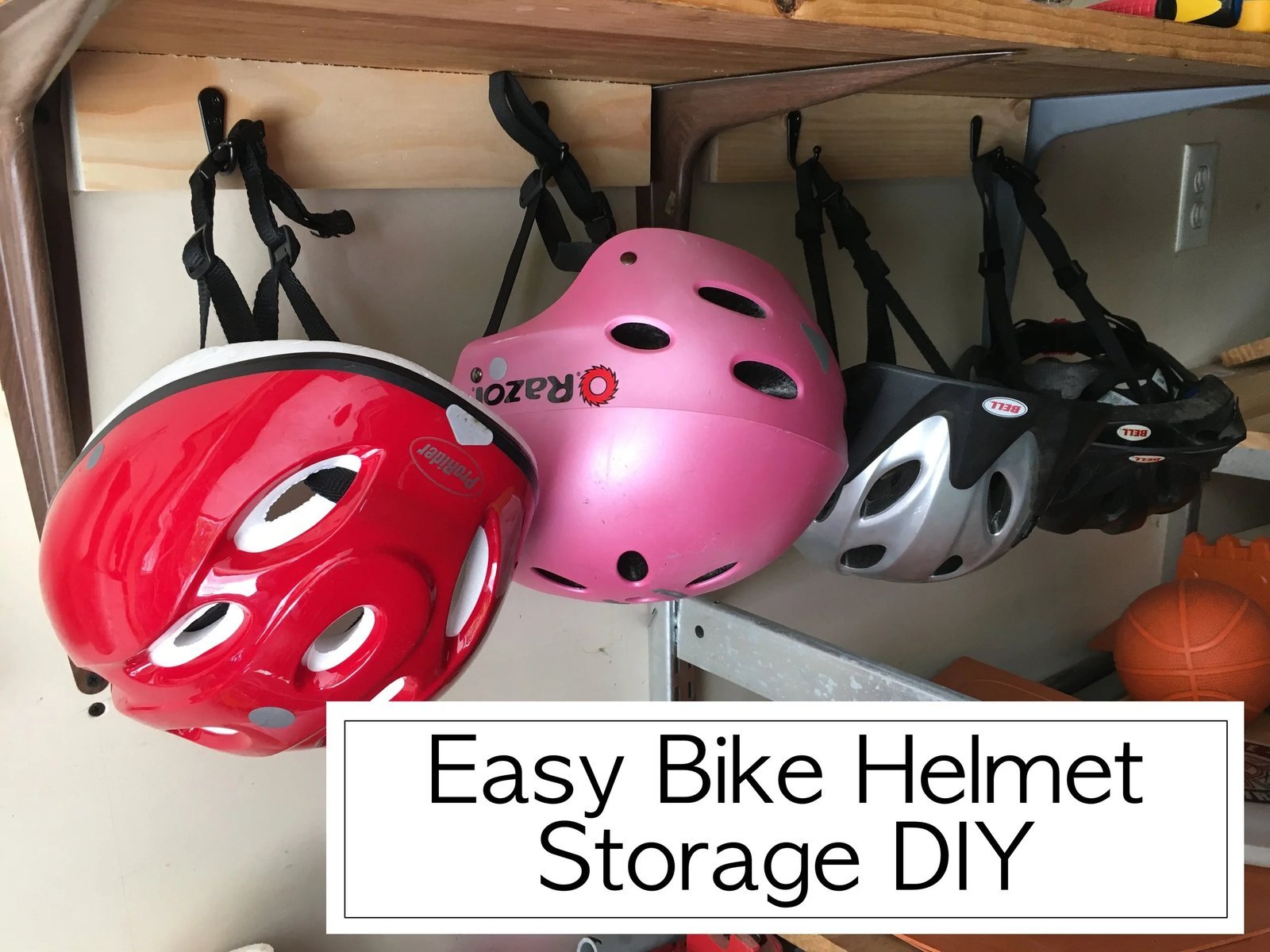
- A curved utility hook with at least a 2-inch wide contact plate; narrow wire hooks will crush helmet foam over time.
- One plastic wall anchor rated for at least 10 pounds (standard helmets weigh under two pounds, but you’ll pull on it daily).
- One 1.5-inch steel wood or drywall screw matching your wall anchor.
- A cordless drill with a 3/16-inch drill bit (or the exact bit diameter printed on your anchor package).
- A standard Phillips screwdriver.
- A pencil and a small bubble level.
A wooden coat peg works well as a direct substitute, but thin wire nails don’t work because they pull free under regular downward force.
Step-by-step
- Select your location on an interior wall away from direct sunlight, heating vents, and high-traffic doors.
- Hold your hook against the wall at 60 inches high, mark the screw holes with a pencil, and check that the marks stay straight using your bubble level.
- Drill a clean hole through the drywall at your pencil mark using a 3/16-inch drill bit, stopping as soon as the bit punches into the hollow wall cavity.
- Push the plastic wall anchor into the drilled opening until the rim sits completely flush with your painted surface.
Careful: If your anchor bends or spins loosely in the hole, pull it out immediately and switch to a larger toggle bolt; a loose anchor will rip out the drywall after a few weeks of daily use.
- Place the hook over the anchor, insert the 1.5-inch screw through the mounting hole, and drive it straight with your screwdriver until snug.
Tip: Tighten the screw by hand rather than with a power drill so you don’t crack the plastic anchor or strip the threads inside the wall.
- Hang the helmet by placing its rear adjustment harness or a dedicated top vent directly over the hook’s padded curve.
Careful: Never suspend the helmet by its nylon chin straps, because hanging weight stretches thin adjustment webbing over long periods.
Matching the Wall Material
Drywall is common, but masonry and wood studs change how much hardware you must buy and how long drilling takes.
| Wall Type | Time & Cost Impact | Mounting Difference | What to Watch |
|---|---|---|---|
| Standard Drywall | 10 minutes; lowest hardware cost | Uses plastic expansion anchors | Anchor slipping inside brittle gypsum |
| Wood Stud | 5 minutes; zero anchor cost | Screws go straight into lumber | Missing the center of the stud |
| Brick or Masonry | 20 minutes; requires masonry bits | Uses lead or nylon masonry plugs | Dust blowout and uneven hole depth |
It’s safer to start with light hand-tightening on your mount and test it gently than to overtighten and crack your wall surface on the first try.
How to tell you did it right
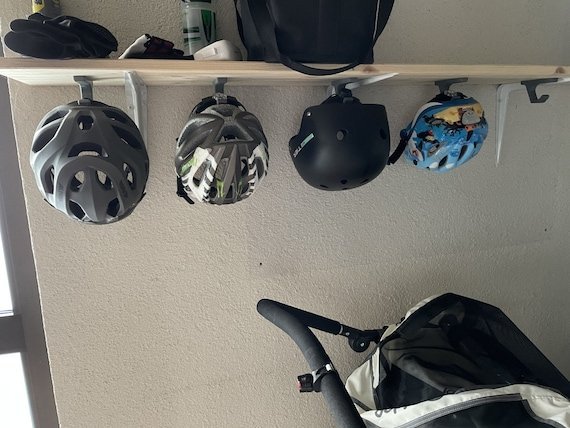
A proper installation holds the helmet firmly without wobbling, leaving the shell flat against or slightly off the wall. A poor installation sags forward, pulls the anchor out of the drywall, or concentrates pressure onto a tiny point on the helmet liner.
The biggest quality problem with wall storage is localized foam crushing. Expanded polystyrene (EPS) foam deforms under concentrated pressure points because the material is engineered to absorb impact by collapsing. A wide hook or padded dowel spreads the weight across several square inches, which stops permanent denting. You can also prevent damage by leaving the helmet unbuckled so air circulates through every vent.
Safe Storage Standards
The Consumer Product Safety Commission bicycle safety standard establishes structural impact rules for helmets, and keeping that protection intact means storing the unit away from heat, solvents, and direct UV light.
Sweep up drywall dust immediately after drilling so pets don’t breathe it in. Wipe the wall plate clean, and re-check the screw tightness regularly to make sure repeated helmet removal hasn’t loosened the anchor inside the wall. If you decide to hang heavy gear like an electric bicycle battery alongside your helmet, hire a licensed contractor to install proper structural blocking.
Other Mounting Methods
Adhesive Utility Hooks
This requires no tools and works well in rental apartments, but holding power depends entirely on smooth paint. Clean the wall with isopropyl alcohol, let the strip cure for one hour, and keep total hanging weight under three pounds to prevent wall peeling.
Plywood Slatwall Panels
This setup takes about two hours and needs a circular saw, but it lets you rearrange multiple helmets and packs along horizontal channels. It costs more in timber, yet it spreads heavy loads across several wall studs simultaneously.
Individual Wooden Dowels
Cut a 1-inch thick wooden dowel to four inches long and screw it into a stud at an upward 15-degree angle. This gives a clean display look, though cutting dowels cleanly requires a basic handsaw and sandpaper.
Frequently asked questions
Can you hang a bike helmet by its straps?
No, hanging a helmet by its straps causes the thin nylon webbing to stretch and loosen over time. Stretched webbing ruins your custom strap fit, meaning the helmet can slip backward off your forehead during an unexpected crash on the road.
Is it safe to hang helmets in a hot garage?
No, extreme garage heat damages the EPS impact foam and weakens the glues that bond the hard outer shell. Store your helmet inside a climate-controlled room instead to maintain full structural integrity.
How much weight can a basic drywall anchor hold?
A standard plastic expansion anchor in drywall is typically rated for 5 to 10 pounds of pull-out force, depending on the anchor type and wall condition. Since standard cycling helmets weigh under two pounds, a single anchor provides more than enough support for daily gear storage.
What happens if the hook is too narrow?
A narrow metal hook will slowly crush the internal EPS foam core under the helmet’s own resting weight. Once this protective foam dents or compresses, it can’t absorb crash impacts properly at that specific contact spot.
How do you choose between an anchor and a stud?
If a stud sits where you want your gear, drive a wood screw directly into it; if you must place gear between wall studs, use a hollow-wall anchor instead. Wood studs provide greater pullout strength, but anchors suit light helmets well.
Who is this wall mounting method not for?
This method isn’t for riders who use heavy full-face downhill or motorcycle helmets. Those heavier shells require deep steel brackets driven directly into structural wall studs, not hollow drywall anchors. This varies by model — check the label for your helmet’s exact empty weight.
Final Thoughts
Once your gear is neatly displayed, you won’t have to trip over messy piles in the hallway anymore. It’s a great way to keep your entryway tidy and your equipment ready for your next ride. You’ll find that grabbing your helmet on the way out is much easier when it’s always right there.
Related guides