
To use a knee scooter, lock both hand brakes, rest your injured leg’s shin flat on the center of the padded cushion, grip the handlebars with both hands, release the brakes, and push gently off the floor using your good foot while keeping your hips square.
The key factor is proper height alignment. If your knee rest sits too high or too low, your pelvis tilts sideways with every push, which strains your lower back and risks tipping the scooter over.
Check all quick-release clamps before mounting. Loose adjustment pins cause handlebars or seats to drop suddenly while moving, which leads to immediate falls.
How to ride your knee scooter safely
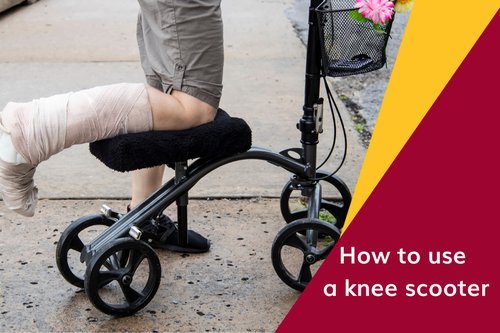
- Adjust the knee platform height so that your injured leg rests at a clean 90-degree angle at the knee while your good foot stands completely flat on the floor. Tighten the adjustment knob fully.
- Set the handlebar height so your hands rest naturally on the grips with elbows slightly bent at about 15 degrees, keeping your chest upright without slouching.
- Lock both parking brakes before touching the scooter by squeezing the brake levers and clicking down the locking pins on the handles.
- Place your injured leg on the pad with your knee near the front edge and your shin centered directly down the middle cushion.
Tip: If your kneecap carries surgical incisions, position the leg slightly back so direct pressure stays on the upper shin instead of sensitive scar tissue.
- Release the parking locks with a quick lever squeeze, face straight forward, and take a 12-to-18-inch push step forward with your good foot.
Tip: Keep your pushing foot close to the scooter body; kicking wide pushes the frame sideways and ruins your balance.
- Squeeze the hand brakes smoothly to slow down well before every turn, reducing your rolling speed to an easy walk.
- Stop completely before turning if you’re moving through tight doorways or across room thresholds.
Small wheels tip easily on uneven surfaces, so stop and walk the scooter manually if you encounter bumps or thick transitions.
How long it takes
Getting comfortable on a knee scooter takes only a short time once the frame matches your body measurements.
| Situation | How long | What changes it | What to watch for |
|---|---|---|---|
| First indoor setup | 10 to 15 minutes | Hex keys vs quick-release knobs | Handlebar wobble after tightening |
| Learning basic stride | 5 to 10 minutes | Core strength and balance | Kicking the rear wheel with your heel |
If riding feels unstable after 30 minutes of practice, re-check your pad height, as a difference of just 1 inch ruins balance.
How to tell when it’s done
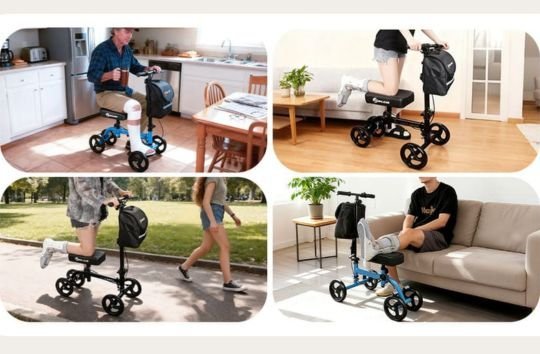
You know your scooter is fitted correctly when you can stand at rest with both hands resting lightly on the grips without leaning your upper body weight onto the steering column. Your pelvis must stay level across both hips, with no dipping toward the good side. When coasting straight, the scooter should track forward without pulling left or right. If the steering pulls, or if your lower back aches after five minutes of rolling, the knee platform sits at the wrong height. Check your body in a full mirror: your spine should be straight, not tilted.
Mistakes that ruin it
- Putting your weight on the handlebars: Leaning heavily on the front turns the scooter forward into an endo-tip whenever the front wheels meet a rug or small bump; keep all body weight centered over the padded knee rest instead.
- Coasting fast downhill: Knee scooter brakes are designed for walking speeds and won’t stop high momentum safely; walk the scooter down ramps with both brakes feathered or find an elevator.
- Taking sharp turns at speed: A tight turn radius shifts your center of gravity outside the four wheels and flips the frame; slow down to a crawl before rotating the handlebars.
- Ignoring floor mats: Small throw rugs bunch up in front of four-inch caster wheels and lock them instantly; clear rugs from your daily walking paths before bringing the scooter home.
Frequently asked questions
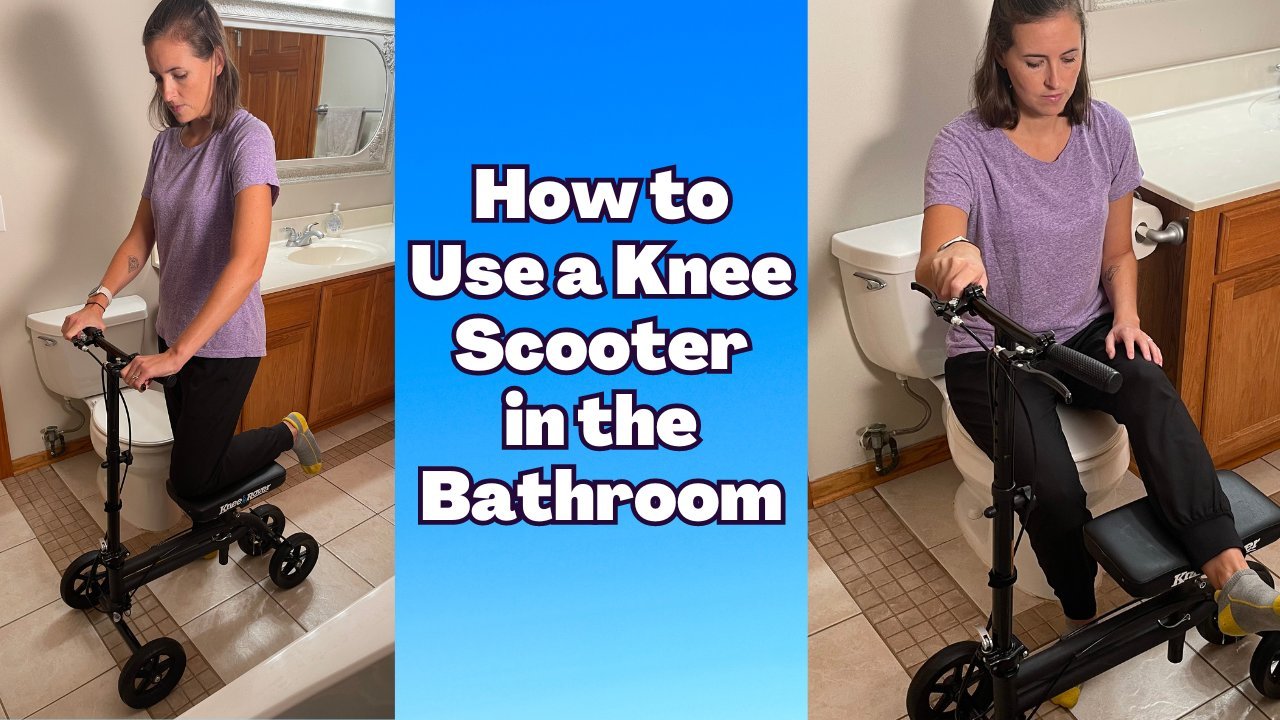
Can you use a knee scooter on carpet?
Yes, on low-pile carpets, but it takes about twice the pushing effort compared to hard flooring. Deep shag rugs will catch the small front wheels and stop the scooter suddenly. If your home has thick carpets, remove throw rugs and push with shorter, firmer strides to maintain forward momentum.
Who is this device not meant for?
A knee scooter isn’t for people with injuries at or above the knee, including femur fractures, knee replacements, or hip issues. It’s also unsuitable for those with severe balance problems or weak upper body stability. In those situations, a standard wheelchair or walker provides much safer mobility.
How do you adjust the brakes if they feel loose?
Turn the barrel adjuster located where the brake cable enters the hand lever counter-clockwise by two or three turns, then test the lever grip. If the brake pads still don’t clamp the rear wheels tightly, loosen the cable anchor bolt at the rear axle, pull the cable tighter with pliers, and re-tighten the bolt.
Is a knee scooter better than crutches?
A knee scooter offers hands-free resting and requires far less upper-body energy than crutches, making it easier to carry light items in an attached basket. However, the trade-off is maneuverability; crutches handle stairs and narrow spaces that a rolling scooter can’t navigate. If you have stairs, keep crutches nearby.
What happens if the scooter height is too low?
A platform set too low forces your pushing leg to bend deeply on every stride, causing fast fatigue in your good quad and hip. This bad posture tilts your spine and strains your lower back. Raise the pad until your standing hip remains completely level with your resting knee.
Can you take a knee scooter down stairs?
No, you must never ride a knee scooter on stairs or escalators. Doing so leads to severe falls and re-injury. To tackle stairs, lock the scooter, hold the handrail with one hand while hopping on your good foot, or fold the scooter and carry it with help.
Final Thoughts
Practice moving across a flat, clear surface until you feel steady and confident in your balance. Once you’re comfortable gliding, you’ll find it’s much easier to navigate your home or run quick errands. Don’t rush the process, and you’ll be back on your feet before you know it.
Related guides