
Jump-starting the 12-volt battery or push-starting the engine are the two ways for how to start a scooter without kickstart when the electric starter button fails.
The transmission decides your method immediately. Automatic twist-and-go scooters use a centrifugal belt clutch (CVT), which can’t lock the rear wheel to the engine at low rolling speeds. Trying to push-start a CVT scooter is a mistake that will only tire your legs.
If your scooter has a CVT, use jump cables or a fresh battery; if it has a manual foot or hand shifter, you can push-start it. This guide isn’t for fully electric mopeds, which have no combustion engine or starter solenoid to crank.
Starting a scooter with jumper cables or a push
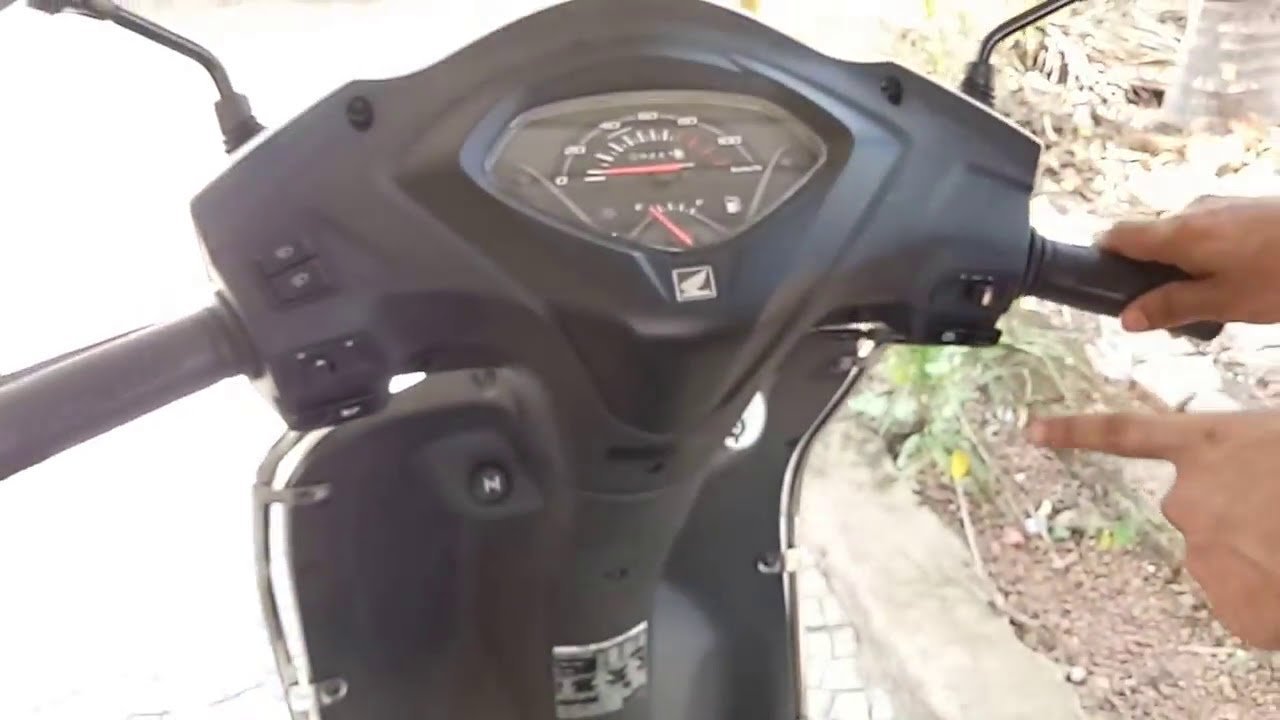
- Turn your ignition key to “Run” and make sure the red engine cut-off rocker switch sits in the “On” position.
- Access the battery compartment, usually found beneath the footboard mat or under the flip-up seat bucket.
- Clip the red clamp from a portable 12V starter pack directly to your scooter battery’s positive (+) terminal, then clip the black clamp to a bare, unpainted metal bolt on the frame. Tip: Never jump a small scooter from a running car engine, as the automobile alternator can damage your scooter’s voltage regulator.
- Squeeze the left brake lever hard while pressing the starter button for no more than 3 continuous seconds.
- For manual-transmission models without a jumper pack, pull the clutch lever in, shift into second gear, push the scooter forward to a brisk jogging pace, release the clutch abruptly, and give the throttle a quarter-turn. Tip: Pull the clutch back in the exact split-second the engine catches so the bike doesn’t leap out from your hands.
How long it takes
Starting the bike takes under ten minutes depending on the method and tools you have on hand.
| Situation | How long | What changes it | What to watch for |
|---|---|---|---|
| Jump pack on a 50cc–150cc scooter | 2 to 3 minutes | Battery box screw location | Loose alligator clamp teeth |
| Bump-starting a manual vintage scooter | 30 to 60 seconds | Pavement grip and running speed | Rear tire sliding without turning engine |
| Charging with a smart tender | 4 to 8 hours | Battery amp-hour rating and discharge depth | Flashing fault light on the charger unit |
If your attempts take longer than ten minutes without any engine coughing, stop trying so you don’t burn out the starter motor windings.
How to tell when it’s done
You know the job worked when the engine settles into a steady, rhythmic idle without dying when you let go of the throttle. The headlight should shine bright rather than flicker. A clear mechanical test is checking terminal voltage with a standard multimeter across the battery posts. If you’re unsure how to interpret these readings, consult a professional technician. If the scooter cuts off the second you disconnect the jump leads, your charging system is faulty.
Mistakes that ruin it
- Pushing an automatic scooter: The centrifugal clutch stays open below roughly 2,000 RPM, so the rear wheel spins freely without turning the crankshaft. Use a jump box or battery charger instead.
- Cranking the starter endlessly: Holding the start button down for ten or twenty seconds overheats the starter motor and melts internal wire insulation. Crank in short bursts of three seconds, then wait twenty seconds between attempts.
- Forgetting the safety switches: A scooter won’t crank if the side stand is down or the brake lever switch is sticky. Put the side stand up and squeeze the brake lever until the rear brake light turns on before pressing the starter.
Frequently asked questions
Can you push-start an automatic scooter?
No. An automatic scooter uses a CVT system with flyweights that only engage when the engine spins fast. Rolling the scooter down a hill turns the rear wheel, but it won’t spin the dead engine.
Is it safe to jump-start a scooter from a car?
Yes, but only if the car’s engine stays turned completely off. A car battery carries twelve volts just like a scooter, but a running car’s charging system puts out high amperage that can fry thin scooter wiring.
Why does my scooter make a clicking sound when starting?
A rapid clicking sound means the starter solenoid is engaging, but your battery lacks the power to turn the starter motor. It’s a clear symptom of a flat battery that needs a jump or recharge.
How long should I ride after a jump start?
Ride continuously for at least 20 to 30 minutes at normal road speeds. Idling in the driveway won’t spin the stator fast enough to put significant charge back into a flat battery.
What happens if the kill switch is set to off?
The engine simply won’t spark, and on most models, the electric starter motor won’t turn over at all. Always confirm the red handlebar rocker switch sits in the “Run” position before troubleshooting deeper.
Final Thoughts
If these methods don’t get your engine running, you likely have a faulty starter relay or a completely dead battery that won’t hold a charge. It’s worth checking your spark plug and fuel lines next. Don’t let a minor mechanical hiccup keep you off the road; you’ll be riding again soon.
Related guides