
Is your butcher block table looking a little tired? Maybe it’s scratched, stained, or just lost its shine.
Don’t worry, you don’t need to buy a new one! Refinishing a butcher block table is easier than you might think, and the results can be amazing. Imagine a beautiful, like-new surface ready for your next family meal or project.
This guide will walk you through every step, from preparing your table to applying the perfect finish. Get ready to transform your worn-out table into a centerpiece you’ll be proud of.
Choosing Your Butcher Block
Refinishing your butcher block table is easy. Proper preparation makes a big difference. Choose the right finish for a beautiful, lasting surface.

Credit: entriways.com
Gathering Your Tools
Gathering your tools is the first step. You will need sandpaper, a good cleaner, and wood finish. Having everything ready makes the job easier.
Surface Preparation
Surface preparation is key. It makes your table look great. A smooth surface welcomes new finishes. Take your time here. This step is very important.
Cleaning The Existing Finish
First, clean your table. Remove all dirt. Wipe away grease. Use a mild soap. A damp cloth works well. Let it dry completely. This removes surface grime.
Removing Old Finishes
Scrape off old finish. A putty knife is useful. For stubborn finishes, use a stripper. Follow product directions carefully. Wear gloves and eye protection. Ventilate the area well. This gets rid of old layers.
Sanding For Smoothness
Now, sand the wood. Start with coarse sandpaper. This removes roughness. Move to finer grits. Aim for a smooth feel. Sand with the wood grain. Dust off the wood often. Smoothness is the goal.
Addressing Imperfections
Look for dents and scratches. Fill small holes with wood filler. Choose a matching color. Let the filler dry hard. Sand it smooth again. Fix any damage now. A perfect surface awaits.
Credit: www.tylerbrownwoodworking.com
Applying The New Finish
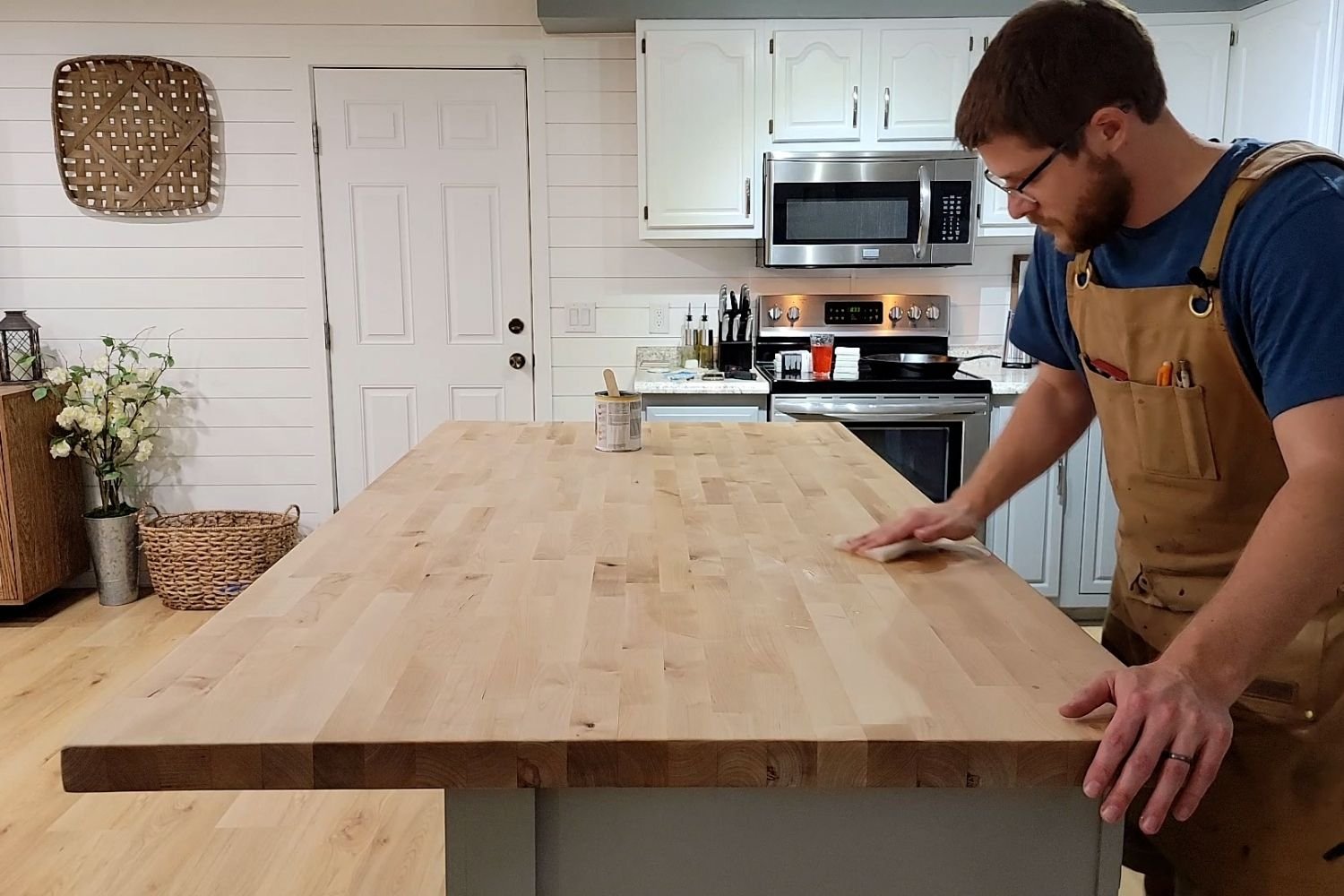
Apply your chosen finish carefully. Let each coat dry completely. This protects your butcher block table.
The moment of truth arrives. You’ve prepped your butcher block. Now, you apply the new finish. This step protects your table. It also makes it beautiful. Choose wisely. Apply carefully. Your table will look great.Choosing The Right Finish
Select a food-safe finish. Mineral oil is a good choice. Beeswax is another option. These are safe for kitchens. They also protect the wood. Consider the look you want. Some finishes add a sheen. Others keep a natural look. Read product labels carefully. Ensure it is suitable for butcher block.First Coat Application
Apply the first coat. Use a clean, lint-free cloth. Work with the wood grain. Apply a thin, even layer. Do not let it pool. Wipe away any excess. Let it dry completely. This is very important. Patience pays off here.Sanding Between Coats
Lightly sand after drying. Use fine-grit sandpaper. This is 220-grit or higher. Sanding removes imperfections. It creates a smooth surface. Dust off all the grit. A tack cloth works well. Prepare for the next coat. Smoothness is the goal.Subsequent Coats
Apply more thin coats. Follow the same process. Apply, let dry, then sand. Most projects need two coats. Some may need three. Check the product instructions. They will guide you. Your table will be ready. Enjoy your refreshed surface.Curing And Maintenance
Proper curing ensures your refinished butcher block lasts. Apply a food-safe finish. Let it cure fully between coats. This protects your beautiful new surface.
Your freshly refinished butcher block table needs care. Proper curing and regular maintenance keep it beautiful. This protects your investment. It ensures lasting durability.Allowing Proper Curing Time
Let the finish fully cure. This is very important. Check the product instructions. Most finishes need several days. Avoid heavy use during this time. Protect it from moisture. This allows the finish to harden completely.Daily Care Tips
Wipe spills immediately. Use a soft, damp cloth. Dry the surface thoroughly. Avoid abrasive cleaners. They can scratch the finish. Use a mild soap solution. Rinse well. Dry completely. This prevents water spots.Long-term Protection
Reapply protective oil. Do this every few months. This keeps the wood hydrated. It prevents drying and cracking. Use a food-safe mineral oil. Apply it evenly. Wipe off excess oil. This maintains the finish’s integrity.Repairing Minor Damage
Small scratches happen. Lightly sand the damaged area. Use fine-grit sandpaper. Feather the edges of the scratch. Reapply the finish. Match the original color. Let it dry completely. This restores the surface.Troubleshooting Common Issues
Refinishing a butcher block table is rewarding. Sometimes, things don’t go as planned. This section helps you fix common problems. Don’t let small issues stop your project. We have solutions for you.
Uneven Staining
Did your stain look patchy? This is a frequent issue. Wood absorbs stain differently. Some areas might be drier. Others might be more porous. Apply stain in thin coats. Wipe off excess stain promptly. Use a clean cloth. Work with the wood grain. A second coat can even things out. Sand lightly between coats. This helps achieve a uniform color.
Sanding Marks
Visible sanding lines can ruin the look. You may have used too coarse sandpaper. Or you didn’t sand enough with finer grits. Always start with a coarser grit. Move to progressively finer grits. Sand in the direction of the wood grain. Ensure all previous grit marks are gone. Check the surface carefully. Feel it with your hand. Smoothness is key. A final sanding with 220-grit sandpaper is good.
Finish Blobs Or Drips
These happen when the finish is too thick. Or you applied it too quickly. Use a good quality brush. Apply thin, even coats. Avoid overloading the brush. Brush out any drips immediately. A clean brush helps here. Let each coat dry completely. Inspect the surface before the next coat. Lightly sand with fine-grit paper. This removes imperfections.
Water Stains
Water spots can appear on the finish. This means the finish is not waterproof. Or it has worn away. You might need to reapply the finish. Choose a durable, waterproof topcoat. Polyurethane is a good option. Apply multiple layers for protection. Ensure all surfaces are covered. Pay attention to edges. This prevents water damage. Proper maintenance is also crucial. Wipe up spills quickly.
Frequently Asked Questions
How To Prepare Butcher Block For Refinishing?
Clean the surface thoroughly. Remove all old finishes. Sand down to bare wood.
What Sandpaper Grit Should I Use?
Start with coarse grit sandpaper. Move to finer grits. Aim for a smooth finish.
What Type Of Finish Is Best?
Food-safe finishes are ideal. Mineral oil or beeswax work well. Consider your table’s use.
How Many Coats Of Finish Are Needed?
Apply multiple thin coats. Allow drying time between coats. This builds a strong layer.
Can I Refinish A Damaged Table?
Minor damage is fixable. Fill deep gouges with wood filler. Sand smooth after drying.
How Long Does Refinishing Take?
It depends on the process. Sanding and drying take time. Plan for a few days.
How To Maintain A Refinished Table?
Wipe up spills immediately. Reapply oil or wax as needed. Protect it from heat.