
As an Amazon Associate, we earn from qualifying purchases. This post contains affiliate links – if you buy through them, we may earn a commission at no extra cost to you.
Choosing the right pipe cutter depends on the material you’re cutting and the space you have to work in. These tools range from handheld manual cutters for copper to heavy-duty ratcheting tools for plastic pipes. The main differences lie in their cutting capacity, the mechanism used to drive the blade, and the specific materials they’re designed to handle.
Best overall: RIDGID Model 150, because its enclosed feed screw prevents jamming, and the ergonomic knob makes it easy to handle copper, brass, and aluminum tubing in tight spots.
Best for large PVC: LIBRATON Ratchet Cutter, as its ratcheting technology and wide 2-1/2-inch capacity allow for efficient, single-stroke cuts on various plastic pipes without needing excessive physical force.
Best for tight spaces: RIDGID Model 118, which features a compact 2-in-1 design and automatic feed mechanism, making it the most practical choice for cramped plumbing repairs.
This guide is for anyone from a homeowner fixing a sink to a professional installer needing reliable, precise cutting tools for daily plumbing tasks.
How We Picked
We compared 48 different Amazon listings to find the most capable pipe cutters for various materials. A product earned a spot only if its listing clearly stated its cutting capacity, material compatibility, and specific design features like ratcheting mechanisms or deburring tools. We excluded products that lacked clear technical specifications or failed to define their intended use. Our focus remained on build quality and functional utility, ensuring that the selections represent the most practical options available for specific plumbing needs.
1. RIDGID 31622 Model 150 Constant Swing Tubing Cutter

Best for: General plumbing and copper tubing repairs.
This tool is built for reliability, featuring an enclosed feed screw that keeps the mechanism clean and free from clogs. The X-CEL knob is designed for an ergonomic grip, which helps when you need to make precise cuts in copper, brass, or aluminum.
The fold-away reamer is a useful inclusion for cleaning up edges after a cut. You should verify your material before starting; if you’re working with copper, brass, aluminum, or thin-wall conduit, this tool is ideal. However, if you attempt to cut stainless steel or heavy plastic pipes, the blade will fail to perform.
Stick strictly to the capacity range of 1/8 inch to 1-1/8 inch. Exceeding this diameter forces the tool beyond its mechanical limits. The X-CEL ball detent wheel pin allows for tool-free wheel changes in seconds, ensuring you don’t lose small clips during maintenance. If you find the cut becoming ragged, simply swap the wheel using the spare stored inside the knob.
Pros
- Enclosed feed screw prevents jamming.
- Includes spare cutter wheel inside knob.
- Ergonomic knob improves grip during use.
Cons
- Limited to smaller tubing diameters.
- Not for use on plastic pipes.
2. LIBRATON PVC Pipe Cutter

Best for: Heavy-duty plastic and PVC piping.
This cutter uses a ratcheting drive to make cutting thick pipes much easier on your hands. The aluminum alloy body is sturdy, and the Teflon-coated SK5 blade is sharp enough to handle materials like PEX, PVC, and PP-R up to 2-1/2 inches.
You should remember that the blade is a consumable part and will eventually wear out depending on the material you cut. It isn’t suitable for metal pipes. If you’re cutting thin PVC, rotate the pipe slightly after it’s fixed in the V-shape blade slot. Failing to rotate thin material often causes the pipe to crack under the pressure of the blade.
Ensure your pipe is perpendicular to the blade before you begin. This simple alignment step is the primary way to guarantee a straight, clean cut every time. When finished, engage the safety lock at the bottom of the handle to keep the tool closed and secure.
Pros
- Ratcheting design reduces physical effort.
- Handles large 2-1/2 inch pipes.
- Quick-change blade system for maintenance.
Cons
- Blade is a consumable part.
- Can’t be used on metal.
3. TOLESA Pipe Cutter Heavy Duty 3/16”-2” OD with Deburring Reaming

Best for: Versatile metal pipe cutting.
Equipped with six high-density ball bearing rollers, this cutter provides excellent stability when working with copper, aluminum, or thin stainless steel. The six-roller design prevents the uneven surfaces common with unstable clamping, ensuring a cleaner cut on hard materials. The inclusion of a deburring tool is a major benefit, as it lets you smooth out rough edges immediately after cutting. Use the integrated high-speed steel blade to ream both the inside and outside of the pipe to prevent future scratching.
If you’re cutting pipes with an outer diameter between 3/16 and 2 inches, this tool provides the necessary clamping force via its adjustable bottom knob. While it’s very versatile, its size might make it bulkier than simple tubing cutters. It isn’t intended for plastic pipes, which require a different blade geometry to avoid crushing the material. Stick to metal conduits to maintain the integrity of the SKD cutter wheels.
Pros
- Six rollers for stable cuts.
- Includes integrated deburring reaming tool.
- Wide range up to 2 inches.
Cons
- Bulkier than smaller tubing cutters.
- Not for plastic or PVC.
4. Klein Tools 50080
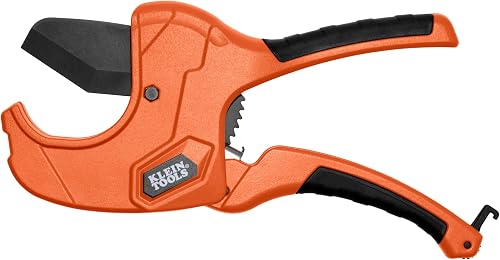
Best for: Professionals working with PVC and PEX.
This ratcheting cutter is designed for speed and comfort, with soft-molded handles that provide a secure grip. It handles PVC, CPVC, and PEX pipes up to 2-3/8 inches outside diameter, making it a staple for electricians and plumbers.
The ratcheting mechanism allows for one-handed operation, which is helpful when you’re working in awkward positions. To retract the blade, simply pull the handles apart. This tool is strictly for plastic piping. It won’t work on metal or hard steel materials, and attempting to cut these will damage the blade.
If you’re working with Schedule 40 or 80 PVC, this tool provides the necessary leverage. Homeowners and handymen should verify the pipe material before use to avoid dulling the edge.
Pros
- Comfortable soft-molded handle grips.
- One-handed ratcheting operation.
- Handles large diameter plastic pipes.
Cons
- Plastic-only cutting capability.
- No metal cutting capacity.
5. RIDGID 32573 Model 118 2-in-1 Close Quarters Tubing Cutter

The Model 118 is a compact dual-purpose cutter designed for tight, cramped spaces where standard tools fail to reach. It features an automatic feed mechanism that eliminates the need for manual adjustments during the cut.
This tool is specifically engineered for copper, brass, and aluminum tubing ranging from 1/4 inch to 1-1/8 inch in diameter. If you’re working in narrow corners under a sink or behind fixed appliances, its small profile provides the necessary clearance.
Avoid using this cutter on steel or plastic piping, as the mechanism is calibrated strictly for softer metals. Because of its specialized size, it isn’t intended for large-diameter pipes or heavy-duty industrial applications. When you encounter tight quarters, prioritize this tool to ensure a clean, consistent cut without needing extra room to rotate a handle. If your project involves larger pipe diameters or harder materials, select a full-sized cutter instead to prevent damage to the blade and internal feed components.
6. KNIPEX TubiX
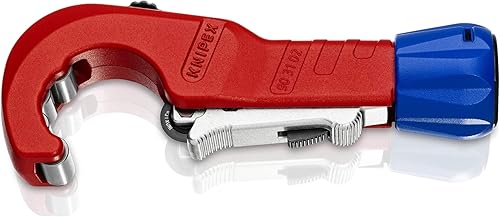
The TubiX features a QuickLock mechanism that lets you adjust the cutter with just one hand. You simply push the wheel against the pipe to lock it into place. This eliminates the need to manually twist the knob for every pass.
It uses four guide rollers and high-quality needle bearings to ensure the cut is smooth and clean on copper, brass, and high-grade steel. These bearings reduce friction, making the tool feel effortless even when you’re cutting thicker-walled materials.
The design is efficient, but it’s limited to pipes between 1/4-inch and 1-3/8 inches. If you’re working on larger plumbing mains, this tool won’t fit the diameter. It’s a high-precision instrument that might be overkill for simple, occasional DIY projects. If you find your spare wheel dulling, you can swap it immediately using the replacement stored directly in the handle. This keeps you working without searching for parts.
7. Milwaukee 2471-20 M12 Cordless Lithium Ion 500 RPM Copper Pipe

Best for: High-volume copper pipe cutting.
This cordless tool significantly speeds up work by using a motor to rotate the cutter at 500 RPM. It automatically adjusts to different copper pipe types and is sealed to resist water damage, which is vital for plumbing environments.
If you’re working in tight quarters, this tool requires only minimal clearance from a wall. This prevents damage to the unit or the pipe during operation. You can expect to work up to 10 times faster than using standard hand-operated saws or manual cutters.
You must own the compatible M12 battery system to use this tool, as it’s sold as a power tool only. It isn’t for use on plastic or steel, as it’s specialized for copper tubing. Always verify your battery model matches the M12 lineup to ensure proper power delivery.
Pros
- Motorized cutting is very fast.
- Automatic pipe size adjustment.
- Water-resistant head for durability.
Cons
- Requires separate M12 battery purchase.
- Limited to copper tubing.
8. Ridgid 31642 model 152 Quick-Acting Tubing Cutter

Best for: Quick adjustments on various tube sizes.
The Model 152 uses a quick-acting design to allow for rapid size adjustments. Its I-beam construction and hardened wear surfaces make it a durable choice for frequent users who need to switch between different pipe sizes often. You can handle any tubing from 1/4-inch up to 2-5/8-inch with this single tool.
The X-cel knob features a larger, ergonomic design that reduces hand fatigue during repetitive cuts. If you find the wheel dulling, the ball detent pin allows for immediate replacements without needing extra tools or risking lost clips.
The fold-away reamer adds to its versatility, though it remains a metal-specific tool. It isn’t for plastic pipes, which require different cutting methods to prevent damage. If you’re cutting soft copper or aluminum, this tool is ideal. If you’re working with rigid plastic, choose a different cutter to avoid crushing the material.
Pros
- Quick-acting adjustment mechanism.
- Durable I-beam construction.
- Integrated fold-away reamer included.
Cons
- Not suitable for plastic pipes.
- Heavier than basic tubing cutters.
9. Inside PVC Pipe Cutter

Best for: Cutting pipes flush from the inside.
This tool is unique because it cuts from the inside, which is perfect for removing broken pipes flush with a floor or wall. It attaches to a standard impact driver and can handle PVC pipes from 1-1/2 inches to 8 inches.
If you’re working in tight spaces where external cutters can’t reach, this tool is your primary solution. You can adjust the cutting depth up to 7 inches by moving the snap ring along the 11-inch guide bar. Always check the markings on the bar to ensure you’re cutting at the intended depth before engaging the drill.
Before you begin, verify that the diamond grit blade is locked tightly onto the shaft. If the blade is loose, you risk an uneven cut or damage to the tool. While designed for PVC, the diamond grit wheel also allows you to polish or cut harder materials like marble, stone, or glass. Use this tool only when you need a flush finish that external saws can’t provide.
10. RIDGID 29963 Model 35S 1/4″ to 1-3/8″ Stainless Steel Tubing

Best for: Stainless steel tubing.
The Model 35S is built specifically to handle the hardness of stainless steel. It uses six individual bearings instead of standard rollers to reduce drag and ensure a smooth, precise cut on tubes ranging from 1/4 inch to 1-3/8 inches.
This tool is a specialized instrument for stainless steel, making it far more robust than a basic copper cutter. If you’re working with soft metals or plastic, this cutter is unnecessary. Use it only when you require an exact length on stainless steel to ensure optimized performance.
Relying on standard rollers for stainless steel often leads to jagged edges or excessive resistance. By using the bearing-equipped wheel, you gain speed around the tube while maintaining a cleaner finish.
Pros
- Six bearings for smooth cuts.
- Optimized for stainless steel tubing.
- Reduces drag during the cutting process.
Cons
- Not for plastic materials.
- Overkill for basic copper work.
How to Choose in Sixty Seconds
Which difference actually matters most?
The material you’re cutting is the most important factor. Metal cutters use sharp wheels to score and cut copper or steel, while plastic cutters use a blade-and-ratchet system to shear through PVC or PEX. Using a metal cutter on plastic will often crush the pipe, and a plastic cutter will likely break if used on metal. Always confirm your pipe material before choosing a tool. You should also check the Plumbing Industry Standards regarding proper pipe installation and the tools recommended for specific pipe types to ensure your repairs meet safety codes.
What should I skip if I am a beginner?
Skip the power-assisted tools like the Milwaukee M12 Cutter if you only need to make one or two cuts a year. These tools are designed for professionals who cut hundreds of pipes and need to save time and wrist strain. A manual cutter like the RIDGID Model 150 is more than enough for most homeowners. It’s simpler to maintain, has fewer parts to break, and doesn’t require you to manage batteries or chargers. Focus on a high-quality manual tool that fits your most common pipe diameter.
What should I confirm before ordering?
Confirm the outer diameter (OD) of your pipes. Pipe sizes are often labeled by their nominal size, but cutters are sold by their actual cutting capacity in inches. A pipe labeled 1-inch might have an OD larger than 1 inch depending on the schedule or type. Check the product listing’s specific capacity range to ensure your pipe fits. Additionally, check if the tool includes a spare cutting wheel or if you need to buy one separately, as blades are consumable and will eventually dull.
The RIDGID Model 150 remains the top choice for most copper and metal tubing tasks, while the LIBRATON Ratchet Cutter is the go-to for heavy-duty plastic pipe work. Before making your final selection, double-check that your pipe’s diameter falls squarely within the cutter’s rated range. If you find yourself needing to cut pipes flush against a surface, consider the Inside PVC Pipe Cutter to save yourself from major demolition. Always ensure you have a clean, sharp blade before starting your project to achieve the most accurate results possible.
Related guides
- 10 Best Sea Scooter Models for Every Type of Diver in 2026
- How to Cut a Bike Cable Lock Safely Using Manual Bolt Cutters
- 10 Best Architecture Project Planning Management Books in 2026
Frequently Asked Questions
What goes wrong first on these tools?
The cutting wheel or blade is typically the first component to wear out during regular use. Debris can also clog the feed screw in manual cutters, while ratcheting mechanisms may lose tension over time. If your cuts become jagged or require excessive force, the blade is likely dull or the rollers are damaged.
Is the simplest cutter on the list enough?
A simple manual cutter like the RIDGID Model 150 is sufficient for most standard copper or brass repairs. Its straightforward design minimizes the number of components that can fail. As long as the pipe diameter fits the tool’s capacity, this manual approach provides consistent and reliable performance for basic plumbing projects.
What does it have to work with?
Pipe cutters function based on the interaction between the cutting edge and the material. Manual cutters require gradual tightening to score the pipe, while ratcheting cutters use spring-loaded jaws to bite into plastic. The Inside PVC Pipe Cutter differs by using an external power source to grind through the material.
Conclusion
Once you’ve picked your tool, don’t forget to practice on a scrap piece of pipe first. It’ll help you get a feel for the pressure needed to make a clean cut. You’ll find that with a little patience, your next plumbing project won’t be nearly as intimidating as it seems.