
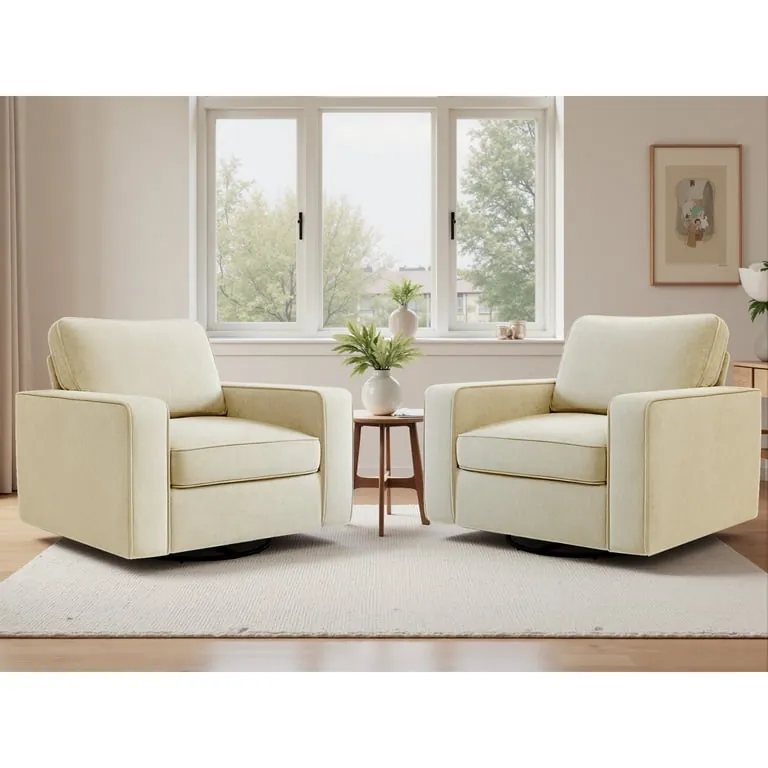
Two accent chairs work best facing each other or at right angles with a side table between them. Leave 30 inches of clear floor space around each chair and a 3-to-5-foot gap for easy conversation. Choose chairs sharing a color, wood tone, or leg style to ensure they look like a cohesive pair.
What you need for two accent chairs
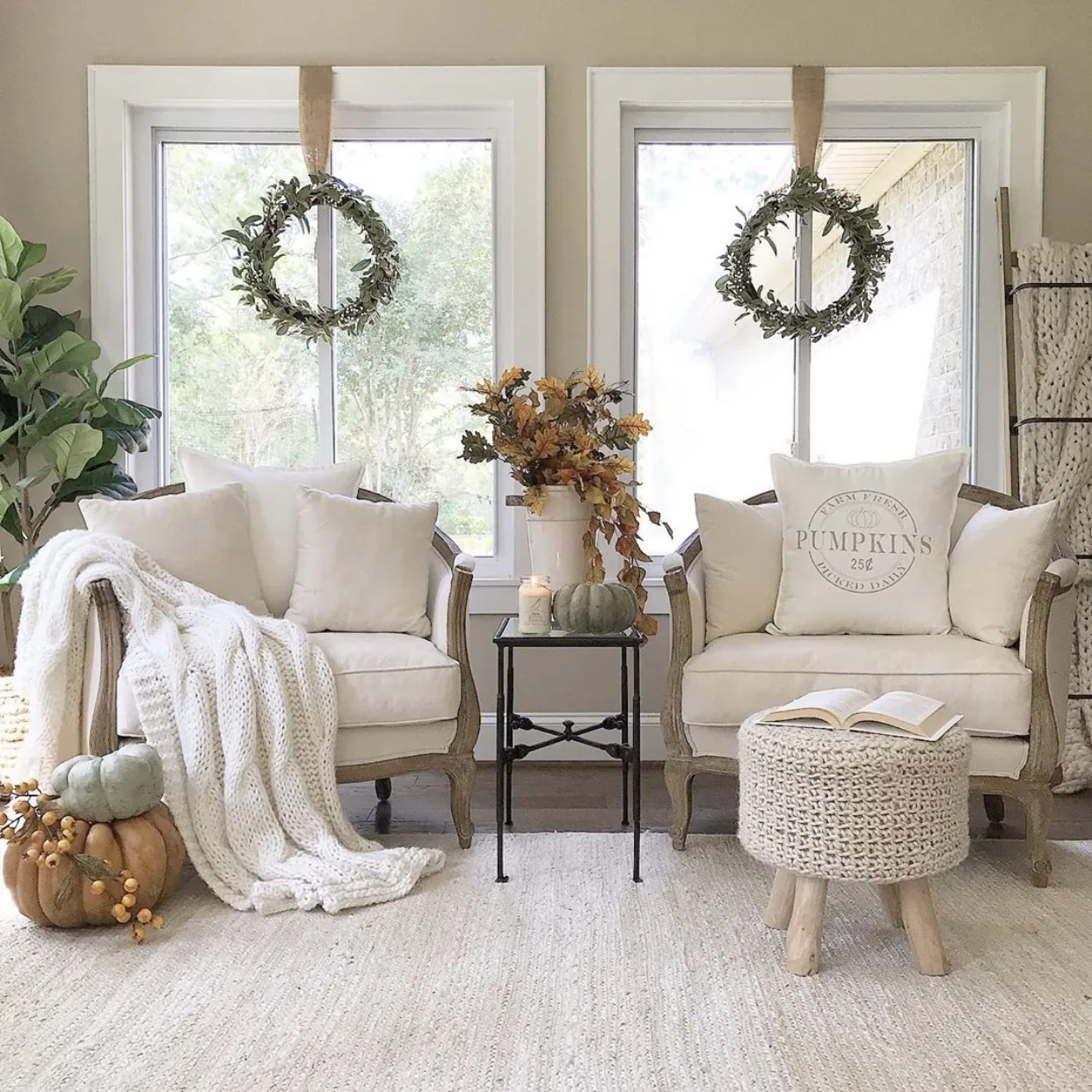
You need two chairs, a surface between them, and a rug to ground the group. The chairs should be the same model, or at least the same scale. One oversized armchair next to one slim chair looks off-balance.
Pick a small side table or a stool that fits between them without blocking the walkway. Leave eighteen inches of clearance between each chair arm and the table edge. A rug large enough for the front legs of both chairs keeps the arrangement from looking like it’s floating.
Add a throw pillow or a blanket to each chair so they read as a set. Measure your floor space with tape before you buy anything. You need at least six by eight feet to make this work.
- Two matching or matching-scale accent chairs
- One side table or stool between them
- One area rug big enough for both chair front legs
- Two throw pillows or blankets
- Tape measure
- Floor space of at least 6 by 8 feet
If you can’t find identical chairs, buy one and match the second by seat height and leg finish rather than by fabric. Different upholstery can work if the frames echo each other. Seat heights within half an inch of each other keep sightlines level.
Don’t substitute a coffee table for the surface between the chairs. It blocks the path and makes the pair feel like a waiting room. If a step needs a drill or wall anchors, hand it to someone who installs furniture for a living.
How to place two accent chairs
- Measure the room and mark a 6-by-8-foot zone where the chairs will live, leaving at least 30 inches of walk space behind each one.
- Place the chairs facing each other or at a right angle, with 3 to 5 feet between them so people can talk without shouting.
- Set the side table or stool between the chairs, within arm’s reach of both seats.
- Center the rug under both chairs so at least the front legs sit on it, and check that the rug doesn’t curl at the edges.
- Add one pillow or throw to each chair, using the same color or pattern on both.
- Stand back and walk around the arrangement; if you bump a chair leg, move it another six inches out.
Tip: If the chairs swivel, turn them slightly inward toward each other instead of leaving them parallel to the wall. Careful: Don’t push either chair against the wall just to open the middle of the room; the pair loses its purpose when no one can sit facing the other.
If your room is smaller than 6 by 8 feet, use one chair and a floor cushion instead — forcing two full-size chairs into a tight space makes the room harder to use, not more inviting.
How the layout changes by room
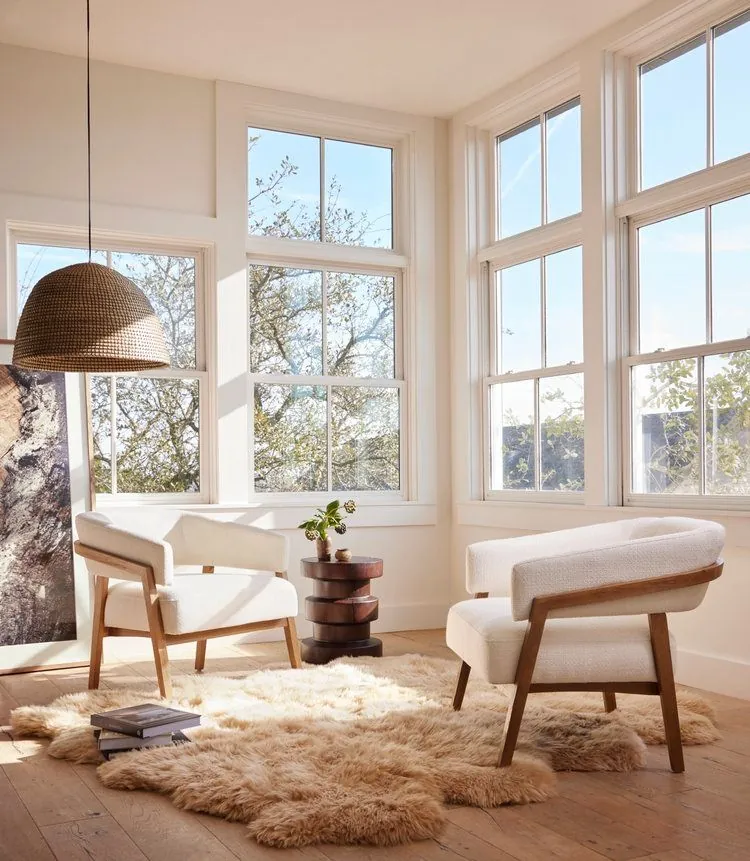
The same two chairs behave differently depending on where they go, shifting the entire energy of your home.
| Room | Time and cost | What changes | Watch for |
|---|---|---|---|
| Living room | 20 minutes, low cost | Chairs face the sofa or each other | Traffic path behind the chairs |
| Bedroom | 15 minutes, low cost | Chairs sit at the foot of the bed or in a corner | Door swing and drawer clearance |
| Reading nook | 10 minutes, low cost | Chairs angle toward a lamp or window | Light falls on the page, not the eyes |
| Entryway | 10 minutes, low cost | One chair only, or two small chairs against a wall | Door still opens all the way |
In a living room, if your traffic path behind the chairs is less than 30 inches, you’ll feel trapped. Move the chairs forward to prioritize flow over symmetry. In the bedroom, prioritize drawer clearance; if a chair blocks a dresser, you’ll stop using the drawer within a week.
For reading nooks, test the light at the exact time you plan to read. If the lamp reflects off the page, shift the chair angle by five degrees. In entryways, ensure the door opens fully before the chair touches the wall. A door hitting a chair back will eventually damage the drywall.
Start with one chair and add the second only after living with the first for three days. It’s easier to add a chair than to remove one from a cramped space.
How to tell the pair looks right
A good result feels intentional: the chairs sit at the same height, face each other or the room’s focus, and leave a clear path behind them. A poor result looks like an afterthought—one chair shoved in a corner, legs at different heights, or a rug too small to hold either front leg.
The most common quality problem is scale mismatch. One chair visually heavier than the other makes the pair compete instead of cooperate. To fix this, look at the armrests. If one chair has thick, rolled arms and the other has slim, tapered ones, the room will feel lopsided.
Prevent this by choosing chairs with the same seat height and similar leg thickness. Repeat one detail—the same wood tone, nailhead trim, or pillow fabric—on both. If your chairs are mismatched in style, ground them with a rug large enough that all four front legs rest firmly on the surface. If the rug is too small, the pair will look like they’re drifting apart.
Rules and care for accent chairs
There’s no universal rule for how many chairs a room can hold. The National Fire Protection Association publishes guidance on keeping exits and escape routes clear, so never block a doorway or hallway with furniture. Leave at least thirty-six inches of walking space between any accent chair and the nearest wall or obstruction.
Vacuum the chairs weekly using an upholstery attachment to prevent grit from grinding into fibers. Maintain at least thirty-six inches of walking space along any primary path through the room.
Wipe spills right away. Rotate the cushions every few months so they wear evenly. Check manufacturer tags before cleaning, as solvent-based cleaners can permanently stain water-safe fabrics. Velvet and chenille fabrics need brushing in one direction to keep their pile from matting down permanently.
The arrangement lasts as long as you like it. Refresh pillows or throws when the look feels tired, and move the chairs whenever traffic patterns change.
The arrangement chair needs reupholstering or lasts as long as frame repair, take it to a you like it. Professional rather than attempting structural work yourself. Refresh the pillows or throw DIY repairs often fail because accent when the look feels chair frames use specialized joinery that tired. Move the chairs whenever the room requires specific clamps and adhes’s traffic pattern changesives not found in standard hardware stores..
If a chair needs reupholstering or frame repair, take it to an upholsterer rather than attempting structural work yourself. Gluing a loose spindle back into its socket without clamping it properly usually splits the wood further. A professional will steam the joint open and reset it cleanly.
Other ways to arrange two chairs
One chair plus a floor cushion
Use one full chair and a large floor cushion beside it when the room is tight. You save floor space and keep a second seat, but the cushion is less comfortable for long visits.
Two chairs plus a loveseat
Add a small loveseat opposite the chairs when the room is large enough for a full conversation group. It costs more and takes longer to place, but it seats four people instead of two.
Chairs at opposite ends of the room
Put one chair at each end of a long room when you want two separate reading spots. The chairs no longer form a pair, and the room loses one conversation area.
Frequently asked questions
How far apart should two accent chairs be?
Three to five feet apart, assuming the chairs are standard armchair width and the room has normal traffic flow. Measure from the closest arm of one chair to the closest arm of the other.
How much space do you need behind each chair?
At least 30 inches, assuming someone needs to walk past a seated person. In a tight room, 24 inches is the absolute minimum before the path feels blocked.
Can two accent chairs go in a bedroom?
Yes, assuming the bedroom has at least 6 by 8 feet of usable floor space and the door can still open fully. Place them at the foot of the bed or in a corner by a window.
Is it okay if the two chairs don’t match?
Yes, assuming they share the same seat height and one repeating detail like wood tone or pillow fabric. Totally different chairs look like a mistake, not a choice.
How long does it take to set up two accent chairs?
Ten to thirty minutes, assuming the chairs are already assembled and you only need to place them, measure the gap, and add a rug and pillows.
What happens if the rug is too small?
The chairs look like they’re floating, assuming all four legs of each chair sit off the rug. Use a rug large enough for at least the front legs of both chairs.
What is the most common mistake with two accent chairs?
Pushing both chairs against the wall, assuming you want a conversation area. Chairs against the wall can’t face each other, so the pair never gets used.
Conclusion
Two chairs, one table, a rug, and a few minutes of measuring turn an empty corner into a place people actually sit. Start with the space you have, keep the walkway clear, and let the chairs face each other — the rest is just pillows.