
You can clean most upholstered dining chairs at home with a vacuum, a mild soap solution, and a clean cloth. How to clean upholstered dining chairs depends on the fabric code printed on the chair’s care tag: W means water-based cleaners are safe, S means solvent only, WS means either, and X means vacuum only. Start by checking that tag before you wet anything.
What this takes
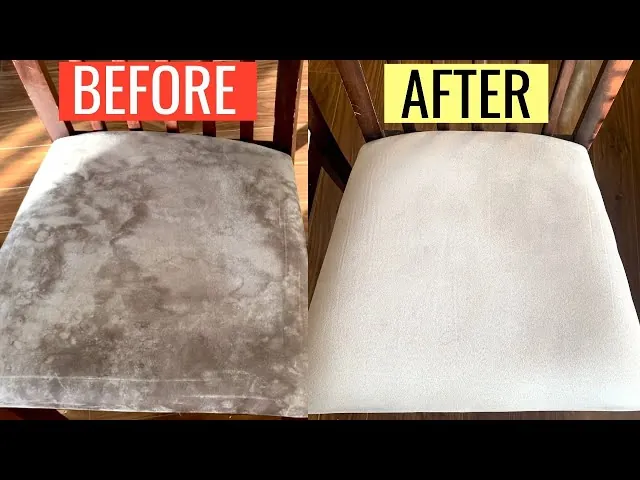
Plan on about 30 to 45 minutes per chair, plus drying time. Most of that time is waiting for the fabric to dry, not scrubbing.
The cost is low. Dish soap, white vinegar, baking soda, and a few microfiber cloths usually cover it.
The difficulty is easy to medium. Delicate fabrics such as silk or vintage velvet need care because water can leave rings or shrink the weave.
If your tag shows an S code, skip water entirely and use a solvent-based cleaner instead. Using water on an S-coded chair leaves permanent tide lines you can’t wash out later.
The one thing you must have before starting is the chair’s care tag or manufacturer’s cleaning code. It tells you whether water is safe on that fabric.
What you need for cleaning upholstered dining chairs
| Item | How much | Why it’s needed | A substitute |
|---|---|---|---|
| Vacuum with upholstery brush | one | pulls dust and crumbs from the weave | none — don’t swap this |
| Microfiber cloths | two to four | blots moisture without leaving lint | clean white cotton cloth |
| Mild dish soap | one teaspoon | lifts grease and food stains | mild laundry detergent or upholstery cleaner |
| White distilled vinegar | one tablespoon | cuts odour and mild stains | diluted lemon juice or enzymatic odor remover |
| Baking soda | two tablespoons | absorbs odour and freshens fabric | cornstarch or commercial dry carpet deodorizer |
| Two spray bottles | two | one for soap mix, one for rinse water | clean spray bottles you already own |
| Soft-bristled brush | one | works cleaner into the weave gently | clean toothbrush |
Before you clean upholstered dining chairs
Take the chairs outside or move them to a well-ventilated area so fumes and moisture don’t linger indoors. Remove loose cushions and set them aside.
Vacuum every surface, including seams, button tufting, and the underside of the seat. This lifts crumbs and dust before any liquid touches the fabric. Use a brush attachment on low suction so you don’t pull threads from delicate weaves like linen or silk.
Test your cleaning mix on a hidden spot — the back underside or the rear leg area. Wait ten minutes to check for colour bleeding or shrinking. If the fabric changes colour or feels stiff after the test, stop and call a professional upholstery cleaner.
The one preparation people skip is the spot test. Skipping it’s what causes permanent water rings and discolouration. People often mistake a darkened wet patch during testing for dye loss when it’s just water tension. Let that patch dry completely under a fan before making your final call.
If your chair has a care tag marked X, don’t use any liquid at all. Vacuum only, or hire a professional. Tags marked S require solvent-based cleaners rather than water, which will leave a visible ring on those specific fabrics.
How to clean upholstered dining chairs

- Mix one teaspoon of mild dish soap with two cups of warm water in a spray bottle. Shake gently until the soap dissolves, then mist the hidden test spot again to confirm the mix is safe before treating the whole chair.
- Lightly spray the soapy mix on one section of the chair — never soak the fabric. Damp is enough; wet padding takes days to dry and can mildew underneath.
- Blot the section with a microfiber cloth, pressing straight down and lifting. Don’t rub or scrub, which pushes stains deeper and frays the weave.
- For stubborn spots, dip a soft-bristled brush in the mix and work in gentle circles for about thirty seconds, then blot immediately with a dry cloth.
- Fill a second spray bottle with plain cool water and mist the same section to rinse out soap residue. Soap left behind attracts dirt and makes the chair look dull faster.
- Blot the rinsed section with a dry microfiber cloth, pressing firmly to pull out as much moisture as possible.
- Move to the next section and repeat steps two through six until the whole chair is done, including armrests and the back.
- Let the chair air dry completely before anyone sits on it — usually four to eight hours, depending on humidity and airflow. Point a fan at it to speed drying.
- Once dry, vacuum lightly once more to lift any flattened fibres and restore the fabric’s texture.
How to know cleaning upholstered dining chairs worked
The fabric should look evenly refreshed with no dark water rings or soap streaks. Run your hand across the seat. It should feel dry, not tacky or stiff, which means the soap rinsed out fully.
Press a white paper towel firmly into the cushion for ten seconds. If it picks up any color or moisture, residue is still trapped in the fibers. Wipe that spot again with plain water and a barely damp cloth.
Smell isn’t a safety check, so don’t rely on scent to judge whether the chair is clean or dry. If a stain is lighter but still visible after the chair dries completely, repeat the spot treatment on that area only.
If the fabric smells sour or feels damp after eight hours, it isn’t dry inside. Increase airflow with a fan and wait longer before use. Dining chairs sit close to body heat and spilled liquids, so padding traps moisture faster than sofa cushions.
A second round is needed when the original spot reappears as the fabric dries. This happens when the stain sat deep in the padding and wicks upward as moisture evaporates. Stop scrubbing wider circles once you see this. Apply a small amount of cleaner directly to the center of the returning mark instead.
If something goes wrong when cleaning upholstered dining chairs
| What happened | Why | What to do |
|---|---|---|
| Water ring left behind | fabric dried unevenly | re-treat the whole panel, not just the spot |
| Colour faded or bled | wrong cleaner for the fabric | stop and call a professional cleaner |
| Fabric feels stiff | soap residue remains | rinse again with plain water and blot |
| Odour lingers | moisture trapped in padding | run a fan and let it dry fully |
| Stain came back after drying | stain wicked up from padding | treat the spot again once fully dry |
| Fabric shrank or puckered | water on a dry-clean-only fabric | stop immediately and contact a pro |
A water ring forms when you clean one spot and leave the rest of the panel untouched. As the damp area dries, dissolved soil migrates outward and deposits at the edge, leaving a visible line. Always feather your cleaning outward until you hit a seam. Seams act as natural borders that hide any slight difference in texture.
Stiffness usually means you used too much detergent. People assume more soap lifts more dirt. It actually bonds to the fibers and dries into a hard crust. Use only a few drops of cleaner per cup of water. Rinse by dabbing with a cloth dampened in plain water. Keep switching to a fresh section of the cloth until no suds transfer over.
When a stain returns days later, liquid has pulled deep soil up from the foam beneath. Don’t soak the chair to chase it. Press a dry towel firmly over the spot and place a heavy book on top overnight. The weight forces the wicking moisture out into the towel instead of the air.
If the fabric splits, the colour runs, or you see mould under the upholstery, stop and call a professional upholstery cleaner or furniture restorer. Don’t keep treating it yourself.
How often to clean upholstered dining chairs
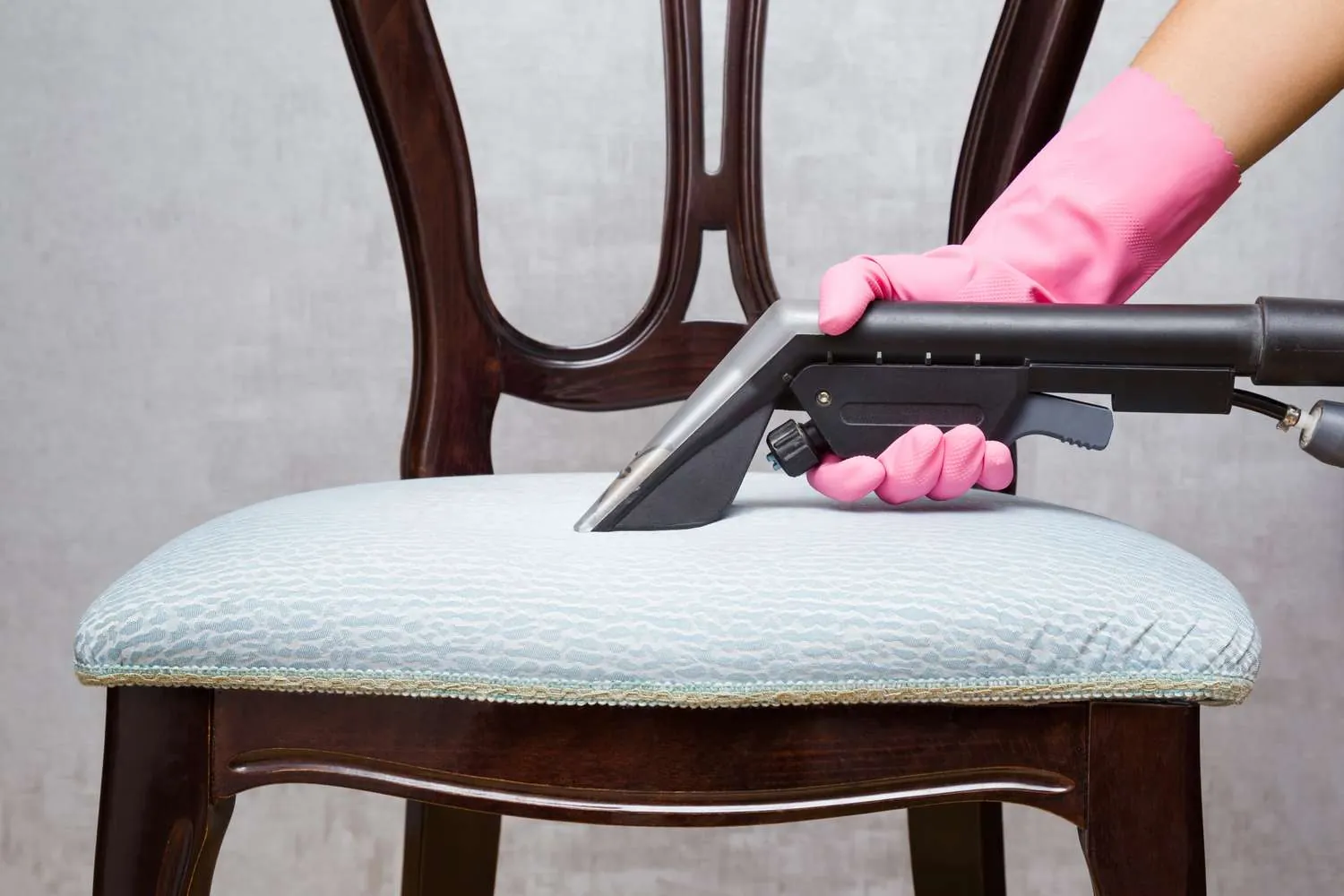
Vacuum the chairs once a week to keep dust and crumbs from grinding into the weave. Do a full wet clean every three to six months under normal home use.
Chairs used daily by children or pets may need a full clean every two to three months. Chairs in a formal dining room used only for guests can go a year between deep cleans.
The two things that move this interval most are how often the chairs are sat in and whether anyone eats messy or oily foods on them. Spills should be blotted immediately rather than waiting for the regular schedule.
Check the care tag for the manufacturer’s own guidance, since some fabrics have specific cleaning intervals printed there. A “W” code means water-based cleaners are safe. An “S” code requires solvent only, so skip the wet clean entirely.
Rubbing a spill pushes it through the face fabric into the foam cushion underneath. Once liquid reaches the padding, surface cleaning won’t remove the stain or the smell.
Press a dry white cloth straight down instead. Hold it there until no more moisture transfers. This keeps the mess confined to the top layer where your vacuum or cleaner can actually reach it.
Related guides
Frequently asked questions
Can I use a steam cleaner on upholstered dining chairs?
Only if the care tag shows W or WS. Steam adds heat and moisture that can shrink or water-mark fabrics marked S or X. Check the tag first, or contact the manufacturer.
Why does my chair smell sour after cleaning?
Moisture is trapped in the padding and hasn’t dried. Run a fan pointed at the chair for several more hours, and don’t sit on it until it feels completely dry.
How long does it take upholstered dining chairs to dry?
About four to eight hours, assuming normal room temperature and decent airflow. Humid rooms or thick padding can take longer, so use a fan and check before use.
Is it safe to use vinegar on upholstered dining chairs?
Yes, on fabrics marked W or WS, when mixed at one tablespoon per cup of water. Never use vinegar on fabrics marked S or X, and always spot-test first.
What happens if I scrub the fabric instead of blotting?
Scrubbing pushes the stain deeper into the weave and can fray or pill the fibres. Blot with straight-down pressure instead, then lift the cloth straight up.
Does it matter which dish soap I use?
Use a mild dish soap without bleach or strong degreasers, about one teaspoon per two cups of water. Harsh detergents can strip colour or leave residue that attracts dirt.
Conclusion
Don’t rush the drying step — a chair that feels dry on top can still hold moisture in the padding underneath, and that trapped damp is what causes odours and mildew days later.