
The best way to protect floors from chairs is to stop the chair’s legs or casters from touching the finished surface directly, using floor protectors, chair mats, or area rugs chosen for the specific flooring type underneath.
Key Takeaways
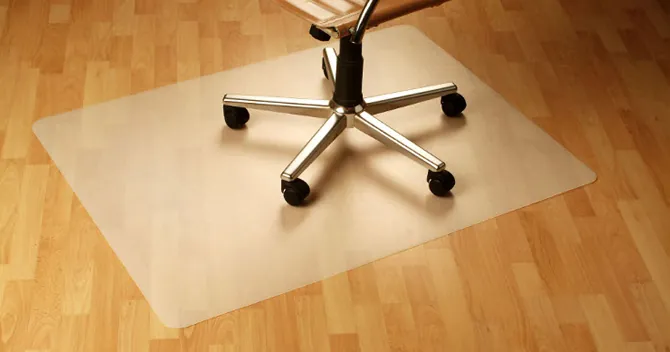
- Match your floor protector to your flooring: hard floors need felt pads or hard plastic mats, while carpet needs high-pile chair mats.
- Clean felt pads weekly and replace them when they compress, tear, or collect grit.
- Lock or remove casters on rolling office chairs before placing them on hardwood, laminate, or vinyl.
- Use a chair mat with a lip or gripper backing so it doesn’t slide across the floor.
- Lift chairs when you move them instead of sliding, even with protectors installed.
How Chair Damage Happens
Chairs damage floors in three main ways: scratching, denting, and staining. Every time a chair leg drags across hardwood, laminate, luxury vinyl, or tile, microscopic grit trapped under the leg acts like sandpaper and leaves fine scratches. Heavy stationary chairs concentrate weight on four small points, which can compress wood fibers or crack tile grout over time.
Rolling office chairs grind casters into the finish repeatedly in the same track, wearing down polyurethane on hardwood or the wear layer on laminate. Spills from drinks or chair lubricants can seep under unprotected legs and stain porous surfaces. The first line of defense is always interrupting that contact between chair and floor.
Chair Floor Protectors by Type
Felt pads are the most common choice for hardwood, laminate, and engineered wood. They glue or screw onto chair legs and create a soft buffer that slides quietly. Plastic glides work well on carpet because they let legs move without snagging fibers, but they can scratch hard floors if grit gets underneath.
Rubber caps and cups grip the leg and resist sliding, which helps on tile and vinyl, though they can trap moisture against wood if left in place for years. Nail-on glides last longest on dining chairs that stay in one spot, while self-adhesive pads are easier to replace but wear out faster.
Felt pads
Best for: hardwood, laminate, engineered wood, luxury vinyl
Pros: quiet, inexpensive, easy to replace
Cons: compress over time, collect grit, need regular replacement
Plastic glides
Best for: low-pile carpet, area rugs
Pros: durable, lets chairs roll smoothly
Cons: can scratch hard floors, noisy on tile
Rubber caps and cups
Best for: tile, vinyl, stone
Pros: non-slip, protects against dents
Cons: can trap moisture, may stain light wood
Nail-on glides
Best for: dining chairs, stationary seating
Pros: long-lasting, secure fit
Cons: harder to install, can damage leg if removed
Chair Mats for Rolling Office Chairs
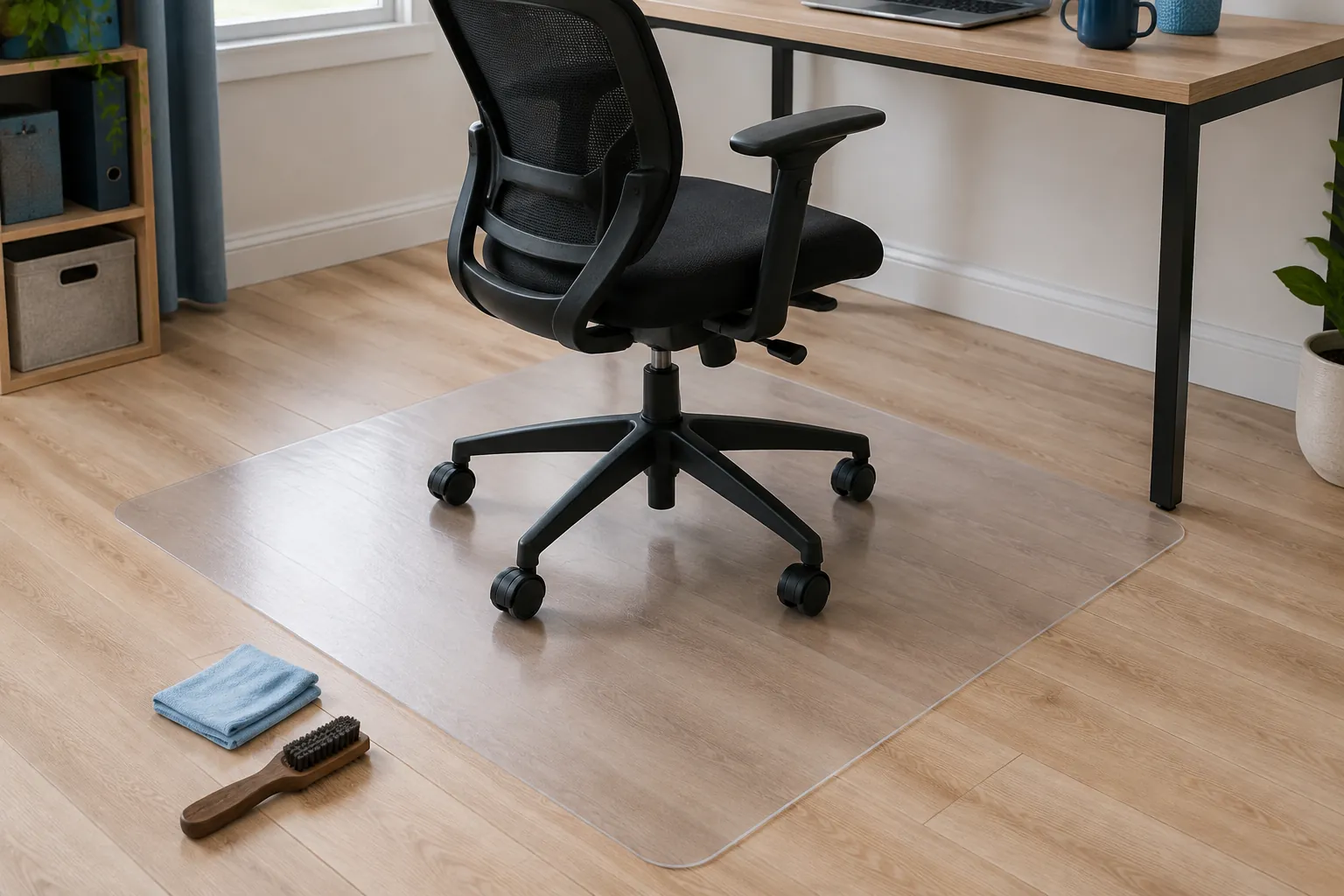
A chair mat is often the single most effective protection for an office chair with casters. It creates a smooth, hard surface that spreads the chair’s weight and keeps wheels from chewing into the floor. For hard floors, choose a clear or tinted hard plastic mat with a smooth bottom that won’t grip or scratch the finish.
For carpet, choose a mat with small gripper cleats on the underside so it stays put, and make sure the mat thickness matches your pile height—low-pile carpet needs a thinner mat, while high-pile or plush carpet requires a heavier-duty mat with longer cleats.
Look for a mat with a lip that extends under the desk so the chair never rolls off the edge onto unprotected flooring. Some mats are marketed as “glass chair mats” for hard floors; tempered glass is scratch-resistant and doesn’t crack under normal office use, but it’s heavier and more expensive than plastic. Avoid using a hard-floor mat on carpet or a carpet mat on hardwood, because the wrong backing will either slide or dig in.
Area Rugs and Runners as Floor Protection
An area rug under a dining table or seating group protects the floor underneath while adding comfort. For chair protection, choose a flat-weave or low-pile rug so chair legs don’t sink in and become hard to move. A rug pad underneath keeps the rug from shifting when someone pushes back from the table.
Natural fiber rugs such as wool or cotton wear well under chairs, but jute and sisal can be rough on finished floors if the pad slips. In high-traffic dining areas, a dark-colored rug hides scuff marks better than a light one.
Protecting Different Flooring Types
Hardwood floors are the most vulnerable to chair damage because scratches show clearly and dents can be permanent. Use felt pads on every chair leg, avoid rolling chairs entirely if possible, and keep indoor humidity stable so the wood doesn’t expand and contract around nail-on glides.
Laminate flooring has a thin wear layer that can’t be sanded out once it’s scratched. Felt pads are essential, and rolling office chairs should always sit on a hard-plastic or glass chair mat rather than directly on the laminate.
Luxury vinyl plank and tile are more resistant than wood, but the seams between planks can catch chair legs, and heavy chairs can still dent the material. Rubber caps work well here, but check that they don’t leave dark marks on light-colored vinyl.
Ceramic and porcelain tile resist scratches, but grout lines can crack under concentrated chair weight, and unglazed tile can stain. Use rubber or felt protectors and wipe up spills immediately.
Carpet is damaged less by scratching and more by compression and snagging. Plastic chair mats with gripper backs prevent casters from crushing the pile in one track, and dining chairs benefit from plastic glides that let them slide without pulling fibers.
Installation and Maintenance Steps
- Turn the chair upside down or lay it on its side so you can reach the legs.
- Wipe each leg clean with a damp cloth and let it dry completely.
- Measure the leg diameter or width so you buy the correct pad size.
- Press self-adhesive felt pads firmly onto the bottom of each leg, or screw on nail-on glides with a screwdriver.
- For rolling chairs, unroll the chair mat and position it so the desk lip rests under the desk edge.
- Test the chair by rolling or sliding it gently; adjust any pad that has shifted.
- Inspect pads monthly for dirt, compression, or tearing.
- Remove and replace felt pads every three to six months, or sooner if they look flat.
- Sweep or vacuum under chair mats weekly so grit doesn’t accumulate underneath.
Pro Tip: Keep a spare set of felt pads in a drawer so you can replace a worn pad the same day you notice it, rather than letting the bare leg touch the floor for weeks.
What to Avoid
Don’t use felt pads on carpet; they will snag fibers and make the chair harder to move. Don’t use rubber protectors on unfinished or light-colored hardwood if they contain dyes or oils that can migrate into the wood. Never slide a chair across any finished floor to “test” a protector—lift it instead.
Avoid chair mats with raised edges that create a tripping hazard in hallways or kitchens. Don’t rely on a single large area rug without a pad, because the rug can bunch up and expose the floor exactly where the chair sits most often.
Warning: Some adhesive felt pads leave a sticky residue when they fail. Test one pad on an inconspicuous leg first, especially on finished wood or laminate.
Cost Comparison of Floor Protection Options
| Option | Typical Cost Range | Best For | Lifespan Range |
|---|---|---|---|
| Self-adhesive felt pads | $6 – $18 per pack | Hardwood, laminate, vinyl dining chairs | 3 – 6 months |
| Nail-on felt glides | $12 – $25 per set | Dining chairs, stationary seating | 1 – 3 years |
| Plastic chair mat (hard floor) | $40 – $110 | Office chairs on hardwood, laminate, vinyl | 2 – 5 years |
| Plastic chair mat (carpet) | $50 – $140 | Office chairs on low- or high-pile carpet | 2 – 5 years |
| Tempered glass chair mat | $120 – $250 | Hard floors, long-term office use | 5 – 10 years |
| Area rug with pad | $80 – $300 | Dining rooms, seating groups | 5 – 10 years |
Troubleshooting Common Problems
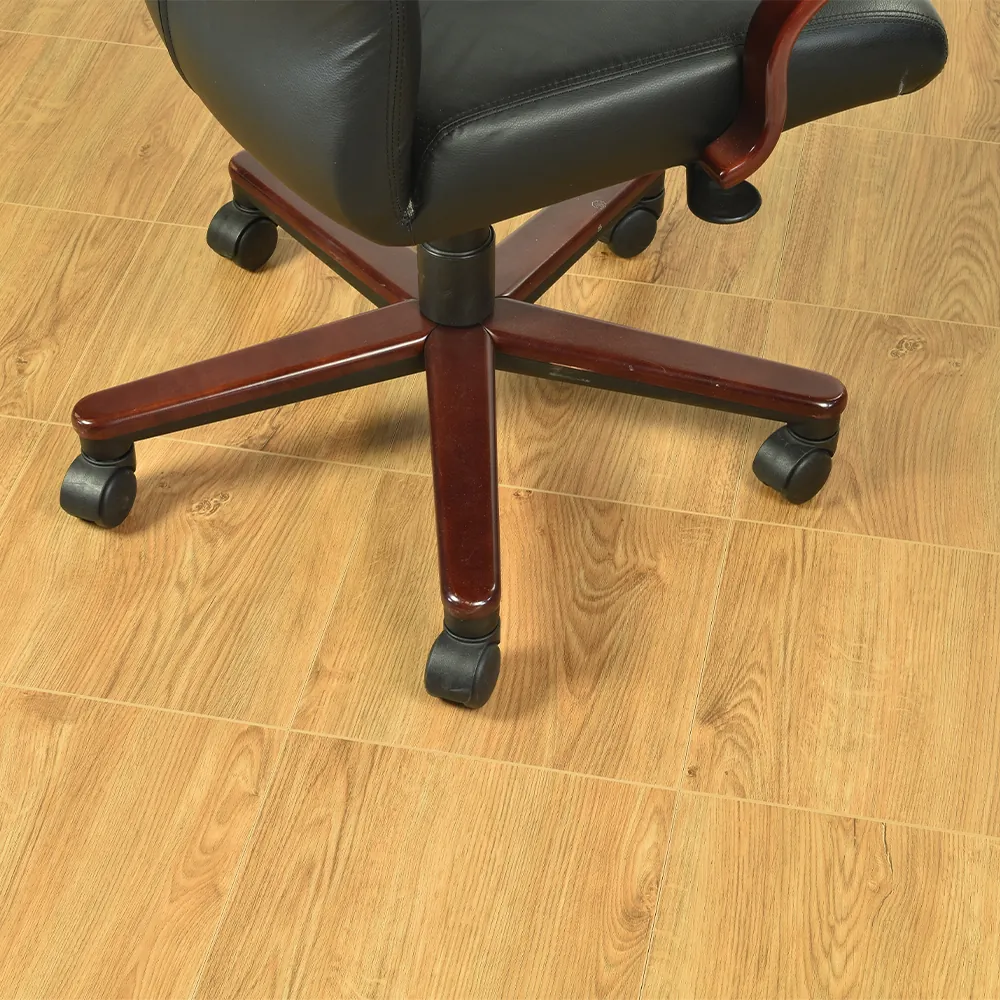
Chair pads that keep falling off usually mean the leg wasn’t cleaned before application, or the pad is the wrong size. Remove the old pad, clean the leg with rubbing alcohol, and install a new pad that fits snugly. Chair mats that curl at the corners can be weighted down overnight with books, or replaced with a mat that has a lip to anchor it under the desk.
If you notice scratches appearing despite protectors, check for grit embedded in the felt—vacuum the pads or replace them. Squeaking chairs often mean a plastic glide has dried out; a drop of silicone lubricant on the metal stem can quiet it without damaging the floor.
Pro Tip: Label the date on the back of new felt pads with a marker so you know when they were installed and can replace them on schedule.
Related guides
Frequently Asked Questions
Can I use felt pads on carpet?
No. Felt pads snag carpet fibers and make chairs harder to move; use plastic glides or a chair mat designed for carpet instead.
How often should I replace chair floor protectors?
Replace self-adhesive felt pads every three to six months, and nail-on glides every one to three years, depending on how often the chair is moved.
Will a chair mat scratch my hardwood floor?
A hard-floor chair mat with a smooth bottom shouldn’t scratch hardwood, but grit trapped under the mat can, so sweep or vacuum underneath it weekly.
Do I need a chair mat on laminate flooring?
Yes, if you use a rolling office chair. Laminate’s wear layer scratches easily, so always place a hard-plastic or glass mat under casters.
Can rubber chair caps stain wood?
They can if they trap moisture or contain dyes. Use felt pads on hardwood and reserve rubber caps for tile or vinyl.
What size chair mat do I need for my desk?
Choose a mat large enough that the chair stays on it when pushed back from the desk, ideally with a lip that extends under the desk edge.
Conclusion
The next step is to walk through each room, note the flooring type and chair type, then buy the matching protectors or mats and install them before any new scratches appear.