
Choosing the right pipe repair tape depends on whether you need a quick, temporary fix for a leaking joint or a structural wrap to harden around a crack. The main difference between these products is how they bond: some fuse to themselves, while others use resin that hardens like steel.
As an Amazon Associate, we earn from qualifying purchases. This post contains affiliate links – if you buy through them, we may earn a commission at no extra cost to you.
Best overall: XFasten Self Fusing Silicone offers a strong, heat-resistant seal for various materials, making it a versatile choice for homeowners who want one reliable solution for multiple emergency repair needs. Best for structural repairs: J-B Weld FiberWeld creates a permanent, steel-like bond around pipes, which is ideal if you need to reinforce a damaged section rather than just stopping a small, temporary leak. Best for simple sealing: Flex Tape Rubberized provides an immediate, waterproof barrier that works on wet surfaces, making it the most straightforward pick for those who need a fast, no-fuss patch.
How We Picked
1. XFasten Self Fusing Silicone Tape Waterproof

Best for: Emergency plumbing and electrical cable repairs.
This tape is designed to fuse to itself, creating an airtight seal without sticky adhesives. Because it withstands high heat, it’s a smart choice for automotive or plumbing areas where temperatures might fluctuate. It remains flexible in cold weather, allowing you to wrap it around tight corners or small pipes that are hard to reach.
Since it doesn’t melt up to 260°C, it’s useful for demanding environments, but it isn’t a structural support for large pipe sections. If your pipe has a major structural break, this tape will stop the leak but won’t replace the missing pipe segment.
Pros
- Withstands heat up to 260°C
- Flexible in extreme cold
- High tensile strength
Cons
- Not a structural replacement
- Requires careful overlapping
2. J-B Weld FiberWeld 2” Pipe Repair Cast 2×60 Inch

Best for: Reinforcing pipes with structural cracks.
This fiberglass wrap uses a water-activated resin to harden into a rigid, steel-like shell. It’s effective for permanent repairs where you need the seal to withstand significant pressure. Once applied, the material cures in 15 minutes, allowing you to restore water flow almost immediately.
Apply this wrap only to rigid plumbing. Because it creates a hard, inflexible cast, it’s unsuitable for flexible hoses or lines subject to regular vibration. If you apply it to a hose that flexes, the cast will eventually crack or shear away from the surface.
Before you begin, verify the permanence of your fix. This is a one-time use product that creates a non-removable bond. If you anticipate needing to access the pipe fitting or joint again for future maintenance, choose a different repair method. You can’t undo this application once the resin sets.
Pros
- Hardens like steel
- Simple water-activated application
- Permanent bond strength
Cons
- Permanent, non-removable repair
- Not for flexible hoses
3. Flex Tape Strong Rubberized Waterproof Tape

Best for: Quick, temporary waterproof seals on wet surfaces.
Flex Tape is a thick, rubberized barrier that excels at patching holes or cracks instantly. Its main advantage is that it can be applied while a pipe is still wet, which saves you the trouble of drying out a leaky area before fixing it. It conforms well to irregular shapes, making it easy to seal gaps that aren’t perfectly round.
This tape is a surface sealer and doesn’t harden like a resin wrap, so it may not hold under extremely high-pressure scenarios. It’s intended for patching and sealing, not for replacing the integrity of a damaged metal pipe.
Pros
- Works on wet surfaces
- Conforms to irregular shapes
- Instantly seals moisture
Cons
- Not for high-pressure pipes
- Surface sealer only
4. ADHES Butyl Tape Waterproof Tape

Best for: Sealing seams on gutters and outdoor equipment.
This tape features a heavy-duty aluminum foil backing that provides a durable, weather-resistant barrier. It’s particularly good for outdoor applications where sun exposure is a concern, as the aluminum layer helps protect the adhesive from UV damage. You simply press it onto a clean surface, and it creates a strong, vapor-preventing seal.
Because it’s quite thick and rigid, it isn’t the best choice for wrapping around very small-diameter pipes or tight, complex fittings. It’s better suited for flat or slightly curved seams where you need a long-lasting, weather-tight finish.
Pros
- UV-resistant aluminum backing
- Strong, thick butyl adhesive
- Easy to apply
Cons
- Too stiff for tight bends
- Best for flat surfaces
5. WELD-ON 16312 Pipe Repair Wrap

Best for: Temporary professional-grade pipe leak stops.
This wrap bonds to itself in under one minute, even when applied to wet, dirty, or oily surfaces. It provides a reliable seal for pressurized pipes until you can install a permanent replacement. Because it leaves no residue, you can remove it cleanly when the time comes for a long-term fix.
Use this tape for immediate relief, but distinguish between leak types to ensure safety. It handles up to 450 PSI for a 1/8-inch pinhole, but that capacity drops to 100 PSI for a 1-inch crack. If your leak is too large or the pressure is too high, the wrap will fail to hold.
Never treat this product as a permanent solution. Relying on it indefinitely for critical infrastructure risks a sudden rupture as the temporary seal degrades. If you’re managing pressurized hoses, prioritize a full replacement immediately after applying the wrap.
Pros
- Bonds to oily surfaces
- Residue-free removal
- Stops leaks in seconds
Cons
- Temporary fix only
- Lower pressure limit for cracks
6. Christy’s Slick-Wrap Pipe and Hose Repair Kit

Best for: All-in-one kits for complex pipe breaks.
This kit includes both the fiberglass wrap and epoxy putty, giving you everything needed to patch and reinforce a break at once. The epoxy allows you to fill a crack or hole first, creating a smooth base for the fiberglass wrap to cover. It’s capable of curing underwater, which is vital for emergency plumbing situations.
If you need to seal a leak in plastic, copper, metal, cast, galvanized, fiberglass, ductile, or poly pipe, this system creates a rigid epoxy cast over the host material. Because this shell is rigid, it’s best for stationary pipes and not for flexible hoses that need to bend.
You must apply 8 wraps over the break to reach the rated pressure capacity of 300 PSI. If you use fewer than 8 wraps, the repair may fail under high pressure. After the final cure, you can sand and paint the tape for a finished look.
Pros
- Includes epoxy putty
- Cures while underwater
- Creates rigid shell
Cons
- Not for flexible hoses
- Requires 8 wraps for full pressure rating
7. Romeda 1 Inch x 10 FT Black Self-Fusing Silicone

Best for: Long-term insulation and leak repair.
This tape is built for durability, with the listing suggesting it can safely last for over 10 years in the right conditions. It’s a heavy-duty silicone option that provides excellent insulation, making it a dual-purpose tool for both plumbing and electrical work. It’s simple to wind around a pipe, and it fuses to create a solid, waterproof layer.
When applying, remove the liner and wind the tape directly onto the contact surface. A single layer provides sufficient insulation for most electrical needs. If you’re repairing a leaking pipe, ensure the surface is clean to allow the silicone to fuse properly.
While it handles water pressure well, it’s primarily meant for domestic water pipes. It may not be the right choice for high-pressure industrial lines or pipes carrying harsh chemicals. If the ambient temperature stays near 180 ℃, you can rely on its thermal stability for a decade. If temperatures exceed 250 ℃, the material will fail to maintain its protective seal.
Pros
- Long-lasting material
- Excellent electrical insulation
- Easy to wind
Cons
- Domestic use only
- Limited pressure resistance
8. Bond It Rescue Tape Self-Fusing Silicone Repair Tape 1

Best for: Demanding outdoor maintenance tasks.
This silicone tape is engineered to resist a wide range of harsh elements, including fuels, oils, and salt water. It’s a go-to for marine or workshop environments where the tape might be exposed to chemicals that would degrade standard adhesive tapes. It bonds only to itself, so you won’t have to deal with messy residue when it’s time to remove it.
The tape requires stretching as you apply it to ensure it fuses correctly, which takes a little practice to get right. It isn’t an adhesive tape, so it won’t stick to your fingers, but it also won’t stay in place until you have finished the first wrap.
Pros
- Resists fuels and oils
- No sticky residue
- Wide temperature range
Cons
- Requires stretching technique
- Not an adhesive tape
9. Flex Tape Strong Rubberized Waterproof Tape
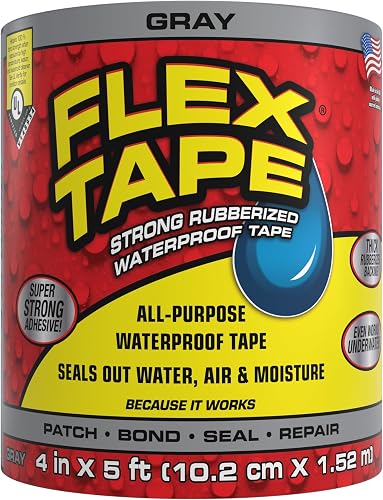
Best for: General-purpose household patching.
This is the standard version of the rubberized tape, offering the same waterproof and UV-resistant properties as the clear version. It’s highly versatile, sticking to a vast range of materials like wood, metal, and plastic. It’s an environmentally friendly option that helps you avoid replacing entire sections of pipe or gutters when a simple patch will suffice.
The tape is quite aggressive, so you must be careful when positioning it, as it’s difficult to peel back once it touches the surface. If you’re working in tight corners, cut the tape to size before removing the backing to prevent it from sticking to itself. It’s meant to be a thick, rubberized barrier, which might look bulky on small, visible pipes.
Apply this tape when you need an immediate seal against water, air, or moisture. Because it functions effectively while wet or dry, and even underwater, it’s the correct choice for emergency leak repairs during storms. If the surface is extremely hot or cold, the tape remains effective due to its wide temperature tolerance. Avoid using it where a thin, invisible finish is required.
Pros
- Very strong adhesion
- UV resistant
- Versatile material use
Cons
- Hard to reposition
- Can look bulky
10. Fiberglass Aluminum Foil Tape
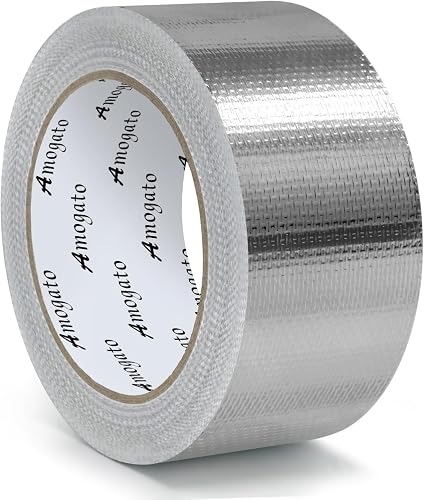
Best for: High-heat exhaust and HVAC repairs.
This tape combines fiberglass mesh with aluminum foil to handle extreme heat that would melt standard adhesives. It remains stable up to 500°F, making it the primary choice for automotive mufflers, exhaust pipes, and industrial HVAC duct sealing. The embedded fiberglass mesh provides the tensile strength needed to resist tearing, even when applied to vibrating engine components.
If you’re repairing a crack or sealing a seam, the 2-inch width allows for a secure overlap. Apply it only to dry, clean surfaces; the adhesive is engineered for heat-shielding, not for stopping active water leaks or pressurized plumbing. If the surface is wet, the tape will fail to bond, leading to a loss of the seal under thermal stress.
Pros
- Withstands temperatures up to 500°F
- Fiberglass reinforcement prevents tearing
- Easy to tear by hand for quick application
Cons
- Not designed for water leaks
- Rigid foil can be difficult to smooth over tight, compound curves
How to Choose in Sixty Seconds
Which type of tape is best for high-pressure leaks?
Choose a self-fusing silicone or a fiberglass resin wrap for pressurized pipes. Silicone tapes like XFasten or Bond It provide a tight, waterproof seal that resists water pressure by fusing into a solid layer. If the leak is more severe, a fiberglass wrap like Christy’s Slick-Wrap or J-B Weld FiberWeld is better because these products harden into a rigid cast that can support the pressure of the pipe. Always verify the maximum PSI rating on the product packaging to ensure it matches the pressure of your specific plumbing system.
Can I use these tapes on any pipe material?
Most of these tapes are compatible with common materials like PVC, copper, and galvanized steel, but you should check the manufacturer’s instructions for your specific tape. When sealing pipes, ensure the surface is as clean as possible before applying the tape to allow for the best bond.
Should I choose an adhesive tape or a self-fusing tape?
Choose an adhesive tape like Flex Tape if you need an immediate, easy-to-use patch for a leak or a hole, especially if you’re working in a tight or wet area. Choose a self-fusing tape like Bond It or Romeda if you want a cleaner, more permanent bond that doesn’t rely on glue. Adhesive tapes are often used for quick applications, while self-fusing tapes create a more professional, residue-free finish that works better for long-term repairs. The listing doesn’t mention which tape is best for beginners.
Related guides
- How to Fix Cracked Bike Tire Problems: Repair or Replace Guide
- How to Fix a Leaky Bike Tire: Step-by-Step Repair Guide
- 9 Best Manual Transmission Output Shaft Seals for Leak Repair in 2026
Frequently Asked Questions
Do these tapes work on pipes that are currently leaking?
Yes, many tapes are designed for active leaks, though effectiveness depends on pressure and tape type. Self-fusing silicone tapes work for low-pressure leaks, while rubberized tapes can be applied over wet surfaces. For major leaks, shut off the water supply to ensure the tape bonds properly before pressure builds.
What is the most common mistake when applying repair tape?
The most common mistake is failing to clean the surface of the pipe before applying the tape. Dirt, oil, and moisture can prevent the adhesive or the self-fusing layers from bonding correctly to the pipe surface. Take a moment to wipe the area with a dry cloth or a degreaser if the listing mentions it. Additionally, failing to overlap the tape correctly when wrapping can create gaps, which allows water to escape.
Is the simplest tape on the list enough for a permanent fix?
No, most repair tapes are intended as temporary solutions until you can replace the damaged pipe. While some products like J-B Weld FiberWeld create a rigid cast, they reinforce the problem rather than restore internal integrity. Use these tapes for immediate emergencies, then replace the pipe segment to avoid future failures.
What happens if I use the wrong tape for the temperature?
Using a tape not rated for your pipe’s temperature can cause melting, cracking, or loss of adhesion. Always check the temperature range in the product data to ensure the tape can handle your specific conditions. Using the wrong tape for extreme heat or cold will likely result in failure.
Closing
For most household needs, XFasten Self Fusing Silicone is the best overall choice due to its high heat resistance and ability to seal a variety of surfaces. If you have a larger structural crack that needs a more rigid fix, J-B Weld FiberWeld is the reliable second pick for its ability to harden like steel.
Before you start, turn off the water supply to the pipe you’re repairing to ensure the tape has the best chance to form a solid, long-lasting seal. If you’re dealing with a pressurized line, remember that some options, like WELD-ON, are strictly temporary solutions. Always check if your repair requires a permanent fix or just a short-term patch. If the leak is active or the surface is oily, choose a wrap that bonds to itself or cures underwater to ensure the adhesive holds.