
Dirt bike spokes should be torqued to between 45 and 50 inch-pounds (5.1 to 5.6 Newton-meters) for standard adult motocross bikes. The ideal tension for dirt bike spokes depends primarily on your wheel size and bike displacement. Smaller youth bikes with 12-inch or 14-inch rims require less tension, often between 25 and 30 inch-pounds.
How tight your spokes should be
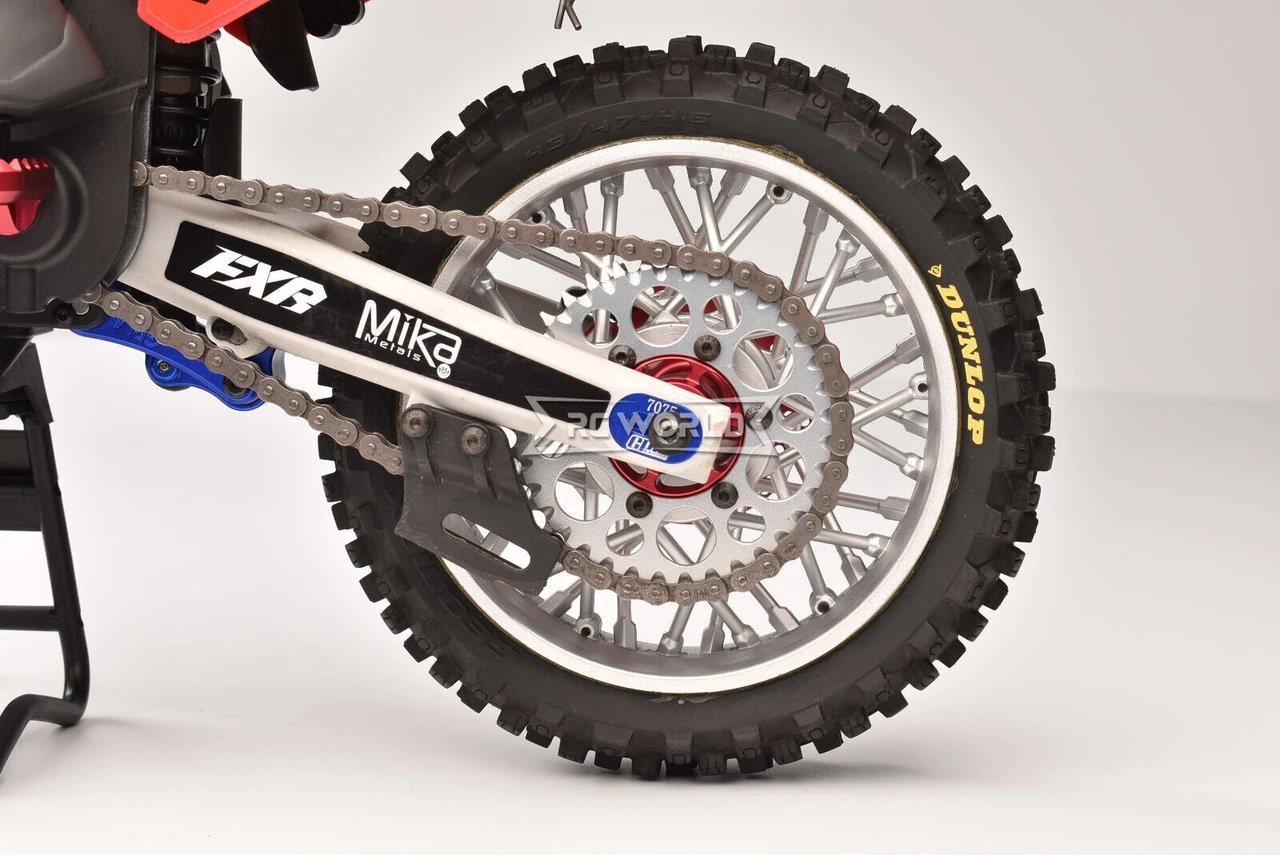
- Check standard full-size rims (18 to 21 inches) to roughly 45 to 50 inch-pounds of torque.
- Set mini and youth dirt bikes (under 85cc) between 25 and 30 inch-pounds instead.
- Tap each spoke lightly with a small metal wrench; a tuned spoke emits a clear, high-pitched ping.
- Inspect wheel tension every 2 to 3 ride days on track or trail to catch loose nipples early.
- Turn loose nipples only one-quarter turn at a time to keep the rim round and true.
- Stop tightening immediately and see a wheel mechanic if the rim has a visible bend or flat spot.
Why wheel tension matters
Wire-spoke wheels work under continuous tension rather than compression. Dirt bike rims don’t sit on rigid steel pillars. Instead, the wheel hub hangs from the upper spokes while the bottom spokes bear landing forces by momentarily flexing. When you land off a jump, the bottom spokes compress slightly, transferring the impact energy across the entire aluminum rim hoop and up to the top spokes.
Tension must stay balanced across all 32 or 36 spokes. If a few spokes become loose, neighboring spokes must absorb double their intended load during high-speed whoops or rocky landings. This uneven load leads directly to metal fatigue, snapped spoke heads at the hub flange, and ovalized rim shapes. Over-tightening causes equal damage by stretching spoke threads beyond their yield strength or cracking the aluminum rim around the nipple hole. Official service guidelines from manufacturers like Yamaha Motorsports explain that keeping proper spoke torque protects both the wheel hub and the rim structure from catastrophic failure under heavy impacts.
When the answer is different
The factory torque range applies specifically to clean, standard adult rims under normal trail conditions.
| Situation | What changes | What to do instead |
|---|---|---|
| Brand-new wheel assembly | Spokes seat and stretch rapidly | Retighten after first 30 minutes |
| Heavy mud or sand riding | Dirt adds rotational stress | Check torque before every ride |
| Mini bike 50cc to 65cc | Smaller rim and thinner wire | Torque to 25 to 30 in-lb |
| Aftermarket heavy-duty spokes | Thicker gauge wire used | Check manufacturer card for spec |
| Seized or rusted nipple | Friction creates false torque reading | Apply penetrating oil; don’t force |
| Supermoto street conversion | Higher grip increases cornering loads | Set to high limit of spec |
How to do it properly
- Wash your wheels thoroughly with soap and water to remove all grit from the spoke nipples before you begin.
- Place the dirt bike on a center stand so both wheels spin completely clear of the garage floor.
- Tap every spoke with an 8-millimeter open-end wrench, listening for a clear ringing sound rather than a dull thud.
- If a spoke sounds dull, tighten it; if it rings clearly, leave it alone.
- Set your dedicated spoke torque wrench to 48 inch-pounds for a standard full-size motocross wheel.
- Begin at the rim lock or valve stem as your visual starting marker on the wheel rim.
- Tighten the first spoke one-quarter turn, skip the next two spokes, and tighten the fourth spoke.
- Continue this three-spoke skip pattern around the rim for three complete revolutions until you touch every spoke.
The mistakes that ruin it
- Tightening every spoke consecutively around the circle, which pulls the rim out of round and ruins wheel alignment.
- Forcing a corroded nipple until it strips, which requires cutting the spoke and buying a full replacement kit.
- Over-tightening loose spokes to eliminate rim wobble, which cracks the aluminum rim around the spoke nipple holes.
- Using standard pliers or adjustable wrenches, which rounds the soft brass nipples and leaves them impossible to adjust.
Frequently asked questions
Can you tighten dirt bike spokes without a torque wrench?
Yes, you can use the sound method if you don’t own a spoke torque wrench. Tap each spoke lightly with a small steel wrench. A properly tightened spoke rings with a clear, high-pitched note, while a loose spoke makes a flat, dead clunk. Tighten loose spokes slowly until they match.
What happens if your dirt bike spokes are too loose?
Loose spokes cause the rim to flex excessively, bend out of true, and eventually crack under heavy impacts. The loose spokes also put extreme shearing force on adjacent spokes, causing spoke heads to snap off at the hub. In severe cases, the loose nipples punch through the rim tape, puncturing the tube.
How often should you tighten spokes on a dirt bike?
Check spoke tension after every 2 to 3 rides on an adult dirt bike. On a brand-new bike or freshly laced wheel, check the spokes after every single 20-minute riding session for the first three outings. New spokes stretch and seat into the hub quickly during initial operation.
Is it safe to ride with one broken spoke?
No, it’s not safe to ride aggressively with a broken spoke on the track or trail. That missing spoke transfers extreme structural stress to its neighbors, which can quickly trigger multiple spoke failures at speed. You can limp the bike back to your truck slowly, but replace the broken spoke before riding again.
Why do dirt bike spokes keep coming loose?
Spokes loosen because rough terrain flexes the rim, allowing the threaded nipples to back out under vibration. New wheels also loosen naturally as the spoke heads seat deeper into the soft aluminum hub flanges. If one specific spoke loosens repeatedly, its threads are stripped or the rim has bent.
Does a spoke torque wrench work on seized nipples?
No, a torque wrench can’t accurately measure tension on a seized spoke nipple. The wrench will click immediately due to rust friction in the threads, even if the spoke is completely loose. You must free corroded threads with penetrating fluid or replace the seized assembly before attempting to set torque.
Final Thoughts
Checking your wheels before every ride is a great habit to build. If you notice a dull thud instead of a clear ring when you tap them with a wrench, it’s time to make adjustments. You’ll keep your rims straight and your bike feeling solid if you stay consistent with this simple maintenance.
Related guides