
To load an ebike on a bike rack, start by taking off the battery to cut 8 to 12 pounds, lifting the rear wheel first into the inside tray, and ratcheting the frame clamp down to 10 foot-pounds of pressure. This setup takes under five minutes. It suits solo riders who own hitch-mounted platform racks with heavy-duty weight ratings.
Essential gear for loading your ebike
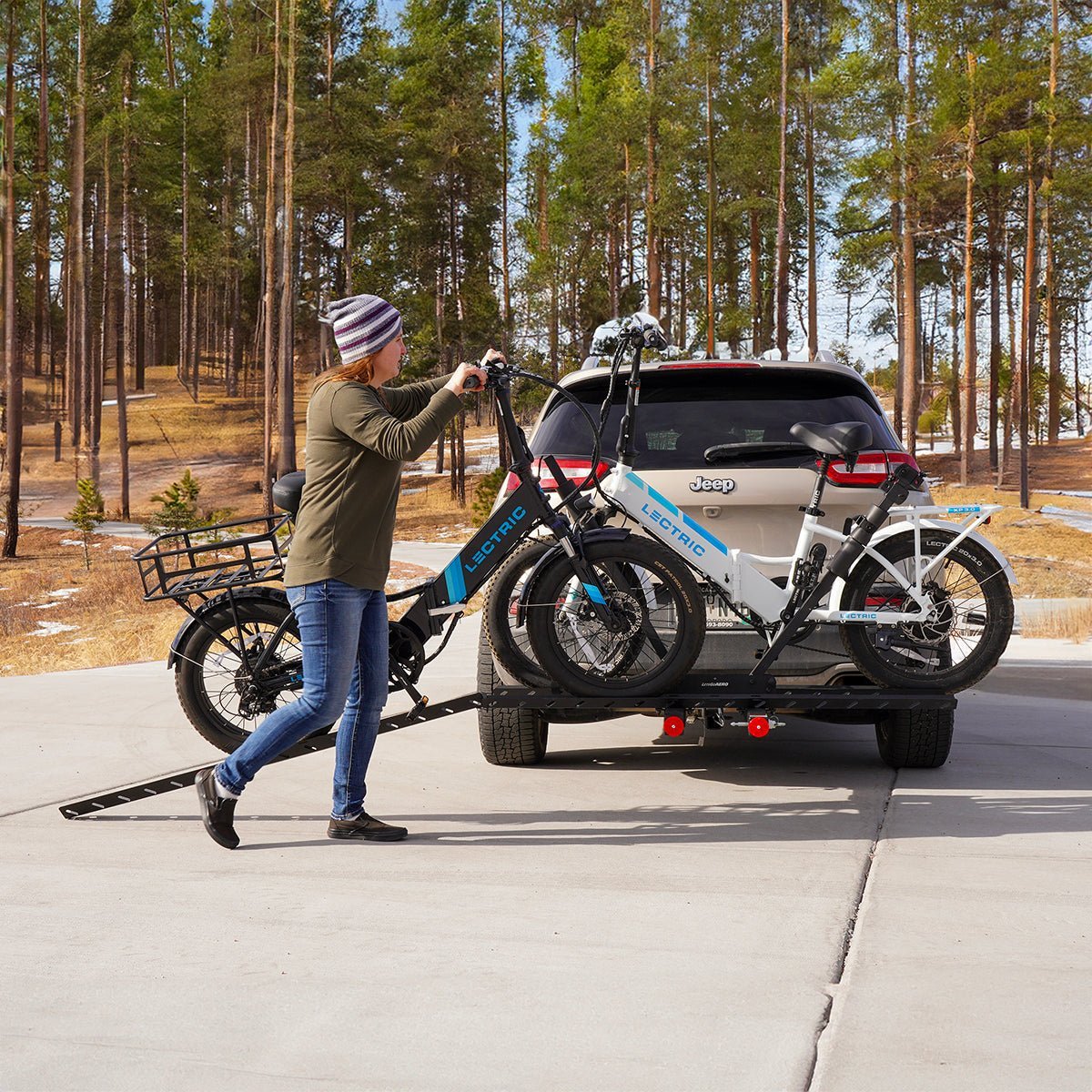
- A Class III or Class IV hitch rack rated for at least 60 pounds per bike tray (never use hanging trunk racks).
- The bike battery key to unlock and drop the power pack before lifting.
- Two heavy-duty wheel straps rated for tires up to 4 inches wide.
- A top-tube crossbar adapter if your ebike has a step-through frame without a flat top bar.
- A padded frame clamp or ratchet arm with soft rubber lining to protect the down tube.
- An optional ramp accessory designed for your specific rack brand to roll the wheels up.
A dedicated loading ramp works as a substitute for manual deadlifting, but a standard wooden plank doesn’t because it slips off the tray edge.
Step-by-step
- Take the battery out of your frame using the key, and put it inside your car trunk so the bike drops 10 pounds instantly.
- Roll the bike directly behind the rack, pointing the drivetrain gears outward away from the vehicle bumper.
- Lift the front wheel onto the rack tray first while holding the handlebar with two hands, keeping your knees bent.
Careful: Don’t lift the whole bike at once from the center of the frame; lifting both wheels together strains your back and risks dropping 50 pounds onto your car’s paint.
- Push the bike forward so the front wheel nests deep into the front wheel hoop.
- Lift the rear wheel by gripping the seat stay or rear rack, then swing it up into the rear wheel tray.
- Slide the frame clamp down over the top tube or down tube, tightening the knob until the rubber pad compresses firmly against the frame.
Tip: If your bike has full fenders, clamp the frame or lower down tube instead of ratcheting an arm over the plastic fender, which will crack under highway pressure.
- Thread the wheel straps through the center of both wheel rims between the spokes, pulling them tight until the tire squishes down about half an inch.
- Shake the bike by the crank arm to confirm the car moves with the bike and nothing wobbles.
If the rack wobbles inside your hitch receiver, tighten an anti-rattle hitch bolt with a wrench; if you can’t tighten it yourself, ask an auto shop mechanic to torque it correctly.
Matching the rack to your setup
Different vehicles and bike styles change the lifting effort, time, and physical clearance needed during loading.
| Setup Scenario | Loading Time & Gear Needs | What Is Different | What to Watch For |
|---|---|---|---|
| Standard hardtail on SUV | 3 minutes; rack only | Lowest tray height on Class III hitch | Rear window wiper clearance |
| Step-through frame | 5 minutes; adapter bar needed | Requires false crossbar between post and stem | Adapter bar latch security |
| Dual-battery cargo ebike | 8 minutes; ramp required | Extra long wheelbase exceeds short trays | Tail swing and total rack tongue weight |
| Fat tire ebike (4-inch tires) | 4 minutes; extra-wide wheel cradles | Standard plastic wheel straps won’t reach | Rim contact against shallow tire trays |
It’s safer to start small and add more rack tension gradually than to crank straps past their limit on the first try.
How to tell you did it right
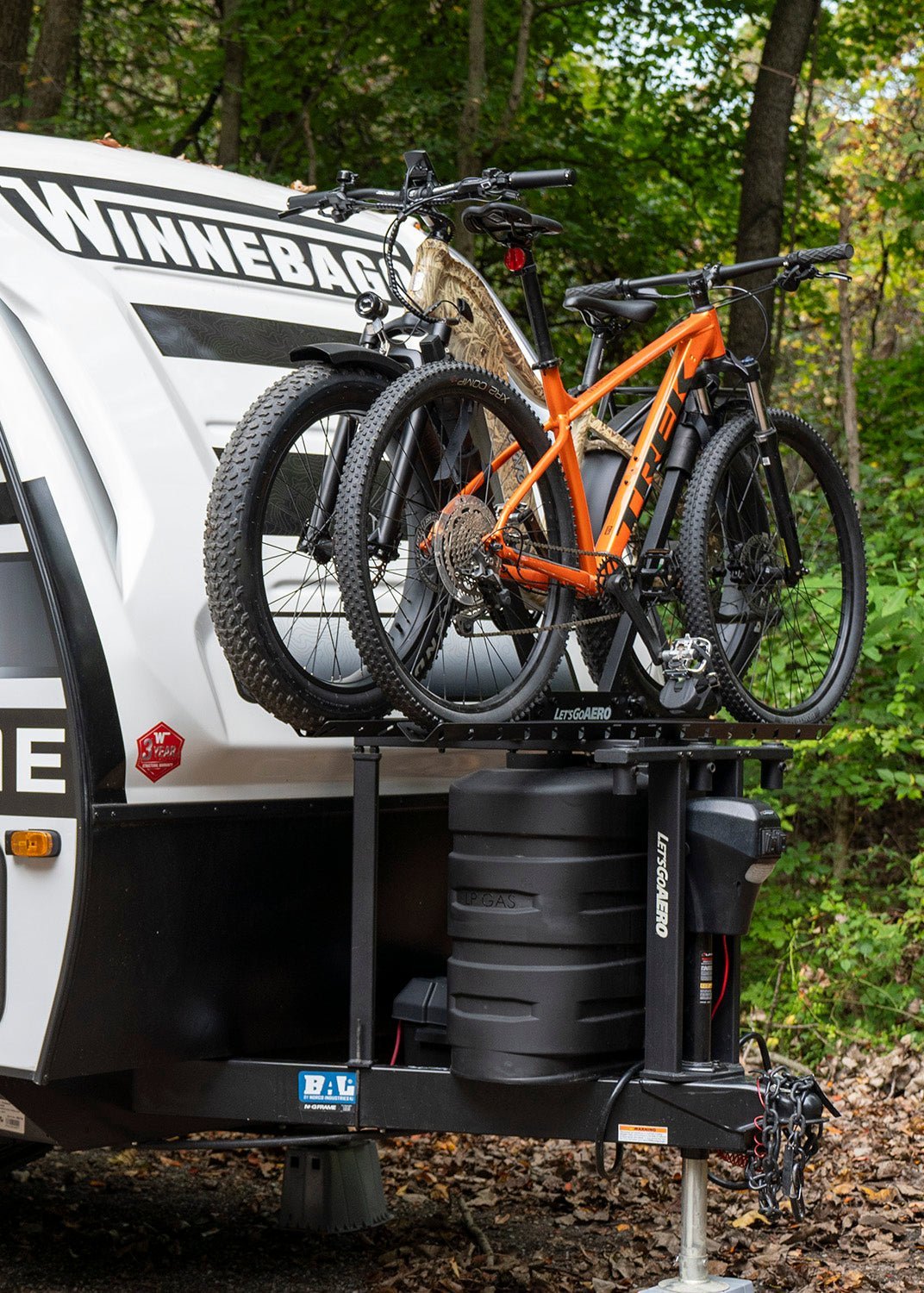
A secure load shows the ebike sitting perfectly vertical with its tires pressed deep into the wheel trays. Both wheels must be strapped firmly, and the frame clamp shouldn’t slide when pulled by hand. A poor load tilts away from the vehicle, or lets the handlebars bump the rear glass. Ebikes often loosen on trips because road vibrations shake free any clamp that was tightened against a soft foam protector instead of a solid rubber pad. This problem ruins gear: a loose clamp will rub through the paint down to bare metal within 20 miles. Prevent this damage by securing the clamp directly against bare metal tubes, locking the ratchets, and pulling the bike sideways to test for movement before driving.
Tongue weight limits and post-drive storage
Car manufacturers set strict tongue limits that govern total rack weight. Follow the tow hitch limits published by the Society of Automotive Engineers under standard J684 to make sure your total rack and bike weight stays below 10 percent of your vehicle’s tongue rating. After your trip, take the bike off, wipe the road grit from the tray tracks, and lock the hitch pin cover. Batteries must stay indoors at room temperature because hot car trunks damage battery cells over time. Check rack bolt tightness every 500 miles. If your vehicle hitch shows structural rust or loose mounting bolts, stop using it immediately and have a certified mechanic inspect the frame.
Alternative ways to load
Using a roll-on ramp
You attach a metal ramp to the edge of the tray and walk the ebike up using its walk-assist motor button. This cut lifting strain down to zero, though carrying the ramp takes up trunk space and adds two minutes to the job.
Two-person assisted lift
One person holds the front fork and handlebar while the other lifts the rear rack to hoist the ebike straight into the trays together. It costs nothing extra, cuts lifting effort in half, but requires an extra pair of hands every time you travel.
Inside-vehicle cabin transport
You remove both wheels and slide the frame into the back of an SUV or van with the seats folded down. This protects the motor from rain and costs no rack money, but it steals interior cargo space and leaves grease on your car carpet.
Frequently asked questions
Can I leave the battery on the bike while driving?
No, you should always take the battery off before loading. Removing the pack lightens the load by roughly 10 pounds, which makes lifting easier and prevents highway vibrations from cracking the sensitive plastic battery mounting brackets.
Is it safe to load an ebike on a trunk-mounted strap rack?
No, trunk-mounted strap racks can’t support the weight of an electric bike. Ebikes will bend the rack arms, snap the nylon straps, and dent your vehicle trunk lid under highway driving forces.
Why do my handlebars hit the rear window of my car?
Your rack tray sits too close to the bumper. If your bars hit the glass, loosen the bike stem to turn the handlebars sideways, or install an approved hitch extension to push the rack trays farther back from the rear hatch.
What happens if my ebike tires are too wide for the rack trays?
Wide tires will sit on top of the tray edges instead of dropping down into the cradle slots. The bike will tip sideways during turns unless you install manufacturer-approved fat-tire adapter kits with longer ratchet straps.
Can I use the ebike walk mode to get it onto the rack?
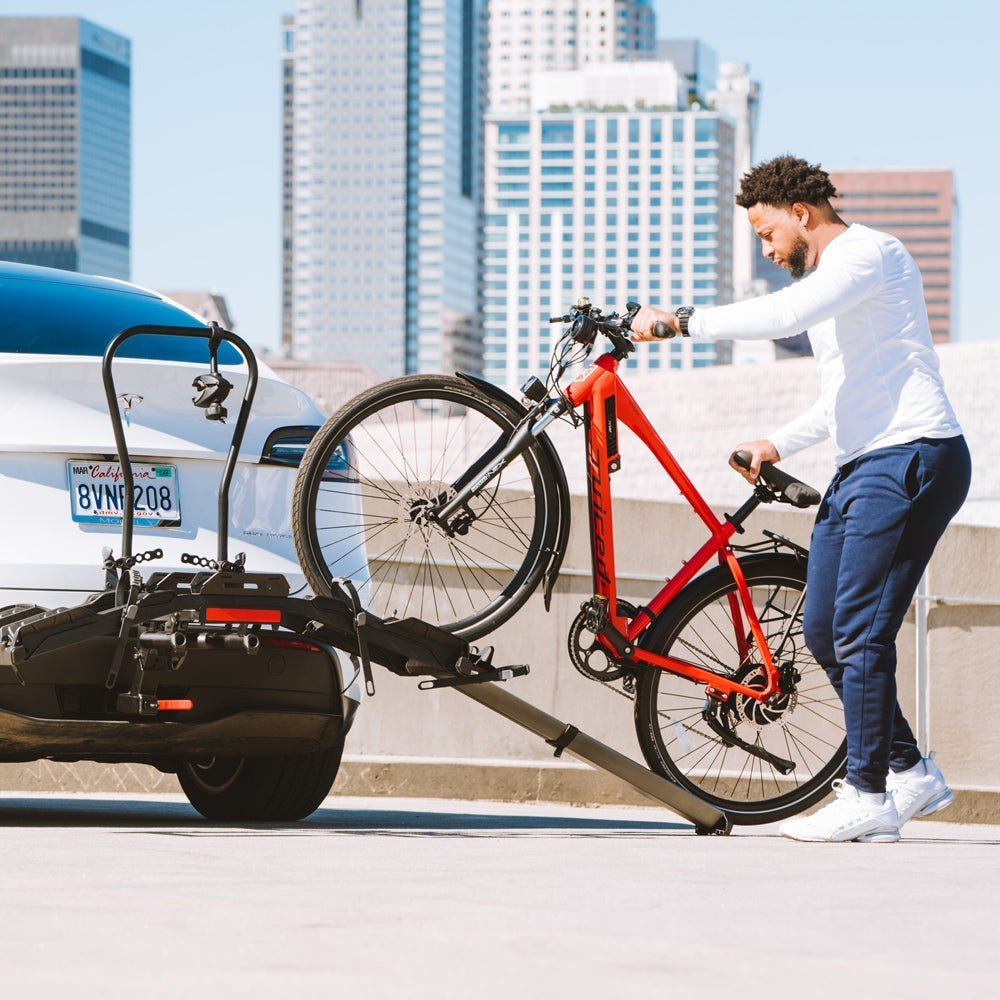
Yes, you can use walk mode if you have an attached loading ramp. Walk mode moves the motor at about 2 miles per hour, allowing the bike to climb the ramp under its own power while you guide the handlebars.
How tight should the wheel straps be?
The wheel straps should be tight enough to compress the tire rubber against the tray bottom by roughly half an inch. You should see the tire sidewall bulge slightly around the strap, leaving zero room for the rim to bounce.
Final Thoughts
Once your bike is secure, double-check that the rack’s locks are engaged before you drive away. It’s a good idea to practice this process a few times in your driveway so you aren’t rushed at the trailhead. You’ll feel much more confident once it becomes a quick, smooth part of your routine.
Related guides