
The subtle appearance of a hairline crack on your wall might seem insignificant at first, a mere cosmetic flaw. However, these seemingly minor fissures can be the early warning signs of deeper structural issues within your home, ranging from simple settling to more serious problems like foundation movement or water damage.
Ignoring these cracks is akin to ignoring a small leak in your roof, it might not cause immediate disaster, but it can lead to significant and costly repairs down the line. Understanding the various causes behind wall cracks is the first crucial step in determining the appropriate fix, ensuring the longevity and safety of your property.
This comprehensive guide will equip you with the knowledge to identify different types of wall cracks, understand their underlying causes, and implement effective solutions. From cosmetic touch-ups to more involved structural repairs, we’ll cover the spectrum of possibilities, empowering you to tackle these common household issues with confidence and expertise.
Key Takeaways
- Settling is common: Most homes experience minor cracks due to natural settling of the foundation and building materials, especially in the first few years.
- Moisture is a major culprit: Water damage, plumbing leaks, and high humidity can cause materials to expand and contract, leading to cracks.
- Structural issues require professional attention: Large, widening, or diagonal cracks, especially those accompanied by other signs like sticking doors or windows, often indicate serious foundation problems.
- Material matters: The type of wall material (drywall, plaster, brick, concrete) influences the types of cracks that form and the best repair methods.
- Prevention is key: Proper drainage, regular maintenance, and controlling indoor humidity can help prevent many common types of wall cracks.
- DIY vs. Professional: Simple hairline cracks can often be repaired by homeowners, but significant or recurring cracks necessitate consultation with a structural engineer or qualified contractor.

Credit: www.swartplastering.com.au
Understanding Different Types Of Wall Cracks
Not all cracks are created equal. Their appearance, location, and pattern can provide valuable clues about their origin. Differentiating between them is essential for diagnosing the problem accurately and choosing the right repair strategy.
Hairline Cracks
These are the most common and usually the least concerning. They are very thin, often less than 1/16th of an inch wide, and typically appear as fine lines on the surface of the wall. They can be horizontal, vertical, or diagonal.
Stair-step Cracks
These cracks follow the mortar joints in brick or block walls, resembling a staircase. They are often wider than hairline cracks and can indicate movement in the foundation or walls.
Diagonal Cracks
Diagonal cracks, particularly those that run from the corner of a window or door frame upwards or downwards, are often a sign of foundation settlement or structural stress. They can indicate that one part of the foundation is sinking or shifting more than another.
Vertical Cracks
Vertical cracks can have various causes. Small, thin vertical cracks might be due to drying and shrinkage of materials like new drywall or plaster. However, wider or longer vertical cracks could indicate stress within the wall structure or issues with the foundation.
Horizontal Cracks
Horizontal cracks are generally more serious. In concrete walls, they can signal hydrostatic pressure from outside soil or water. In masonry walls, they can indicate bowing or outward pressure, often due to soil expansion or inadequate structural support.
Cracks Around Doors And Windows
These are often caused by settlement, framing issues, or expansion/contraction of building materials due to temperature and humidity changes. If the crack is significant or widening, it could point to a more serious structural problem.

Credit: www.crackedslab.com
Common Causes Of Wall Cracks
The reasons behind wall cracks are diverse, ranging from natural environmental factors to construction defects and maintenance issues. Identifying the root cause is paramount for effective and lasting repairs.
Natural Settling
All buildings settle over time. As a house ages, the soil beneath its foundation compacts, and building materials naturally expand and contract with temperature and humidity fluctuations. This gradual shifting can put stress on walls, leading to minor cracks, particularly in the first 5-10 years of a home’s life. These are typically hairline or small diagonal cracks that are often cosmetic.
Moisture And Water Damage
Water is a significant enemy of building structures.
- Plumbing Leaks: Hidden leaks within walls can saturate drywall or plaster, causing it to weaken and crack. They can also lead to mold growth.
- Roof Leaks: Water seeping from a compromised roof can travel down wall cavities, causing similar damage.
- Poor Drainage: If rainwater or groundwater is not directed away from the foundation, it can saturate the soil, increasing hydrostatic pressure against basement walls and potentially causing them to crack or bow.
- High Humidity: In areas prone to high humidity, materials like drywall can absorb moisture, expand, and then shrink as they dry, leading to surface cracks.
Expansion And Contraction Of Materials
Building materials are dynamic. Wood framing, drywall, plaster, and even concrete expand when warm and moist, and contract when cool and dry. This constant movement, especially in homes with significant temperature swings, can create stress at joints and seams, resulting in hairline cracks.
Soil Movement And Foundation Issues
The ground beneath your home is not static.
- Expansive Soils: Some soil types, like clay, swell significantly when wet and shrink when dry. This constant expansion and contraction exerts immense pressure on the foundation, which can translate into cracks in the walls.
- Erosion: Soil erosion around the foundation, often due to poor drainage, can lead to voids and instability, causing the foundation to shift and crack.
- Frost Heave: In colder climates, water in the soil can freeze and expand, pushing the foundation upwards. When it thaws, the foundation settles unevenly, leading to cracks.
- Foundation Settlement: If one part of the foundation settles more than another, it creates uneven stress on the entire structure, manifesting as diagonal or stair-step cracks.
Structural Overload Or Deficiencies
Sometimes, walls crack because they are subjected to forces they weren’t designed to withstand.
- Improperly Supported Beams: If a structural beam is not adequately supported, the load can transfer to the walls in a way that causes stress and cracking.
- Renovations: Unauthorized or poorly executed renovations that remove load-bearing walls or make significant structural changes can compromise the building’s integrity.
- Weight of Additions: Adding upper floors or heavy roof structures without reinforcing the foundation and lower walls can lead to structural overload.
Poor Construction Or Material Quality
Even with the best intentions, construction flaws can lead to cracks.
- Inadequate Curing of Concrete: If concrete is not allowed to cure properly, it can be weaker and more prone to cracking.
- Poorly Installed Drywall: Gaps between drywall sheets that are too large, or insufficient mudding and taping, can result in visible cracks along seams.
- Lack of Expansion Joints: In large concrete structures or masonry walls, the absence of expansion joints can lead to cracking as the material naturally expands and contracts.
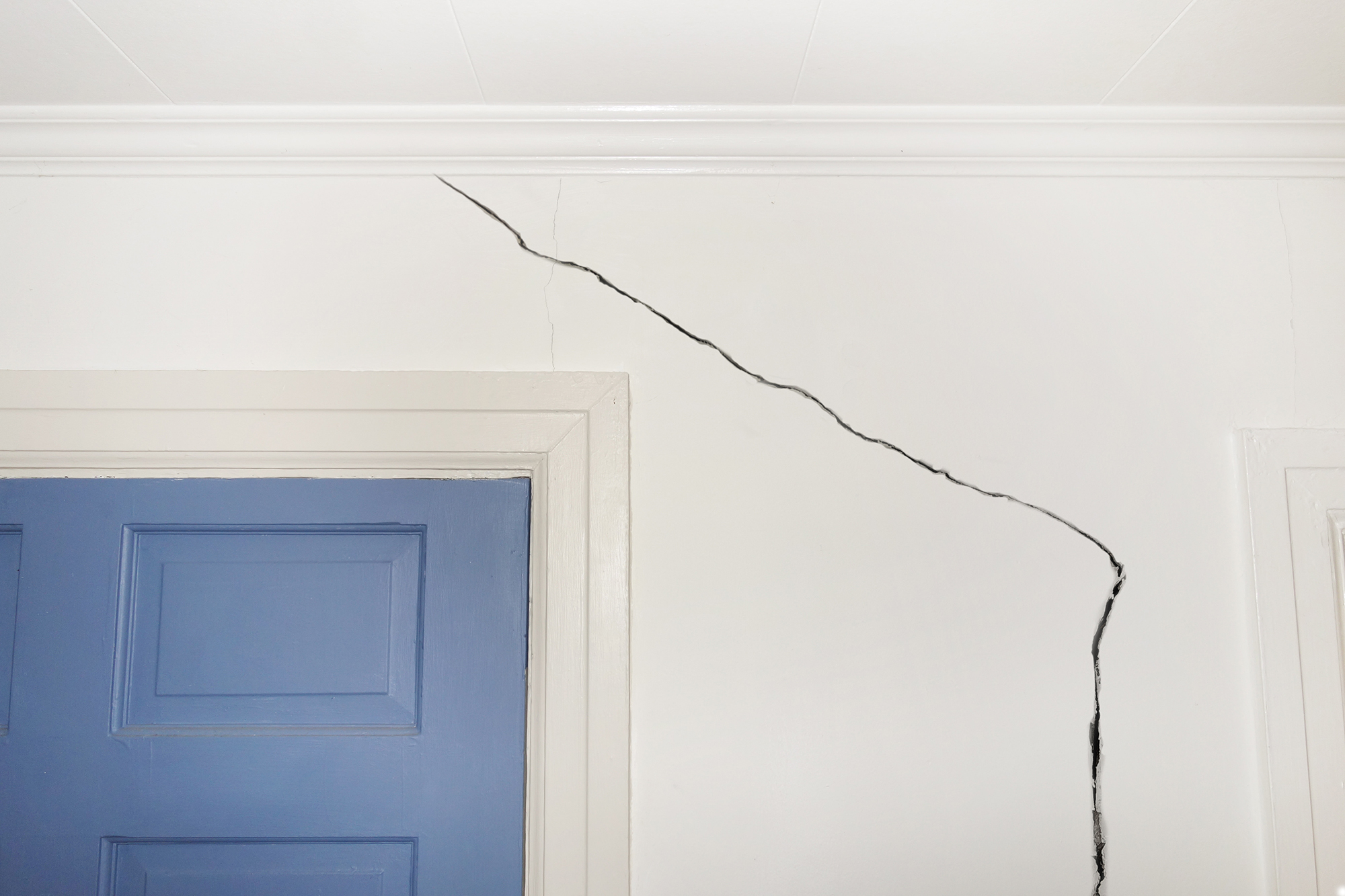
Credit: www.homesandgardens.com
Diagnosing The Severity Of Wall Cracks
The most critical step in addressing wall cracks is accurately assessing their severity. This will guide whether a simple DIY repair is sufficient or if professional intervention is necessary.
Pro Tip: Observe And Measure
Before attempting any repair, take the time to carefully observe the crack.
- Width: Is it a hairline crack or is it wide enough to insert a coin?
- Length: How long is the crack?
- Pattern: Does it follow a pattern (stair-step, diagonal)?
- Location: Is it near a window, door, or in a load-bearing area?
- Progression: Is it widening over time? Use a pencil to mark the ends of the crack and date it, and then measure its width periodically.
Signs Of Serious Structural Issues
Certain indicators suggest that a crack is more than just a cosmetic annoyance and points to a significant structural problem:
- Cracks wider than 1/4 inch.
- Cracks that are actively widening or growing.
- Diagonal cracks that are long and prominent.
- Stair-step cracks in masonry that are also widening.
- Cracks accompanied by sticking doors or windows.
- Cracks that run horizontally across a wall, especially basement walls.
- Visible bowing or bulging of walls.
- Water intrusion or dampness associated with the crack.
- Cracks appearing simultaneously in multiple locations.
If you observe any of these signs, it is highly recommended to consult a structural engineer or a reputable foundation repair specialist. They can perform a thorough assessment and provide expert recommendations.
Repairing Different Types Of Wall Cracks
The method of repair depends entirely on the type and cause of the crack.
Cosmetic Hairline Cracks (diy Friendly)
For minor, non-structural hairline cracks, a simple DIY approach is usually effective.
Materials Needed:
- Spackling paste or joint compound
- Putty knife or drywall knife
- Fine-grit sandpaper (120-220 grit)
- Damp cloth
- Primer
- Paint matching your wall color
Steps:
- Clean the Crack: Wipe the area around the crack with a damp cloth to remove dust and debris.
- Apply Spackle/Compound: Using a putty knife, press a small amount of spackling paste or joint compound firmly into the crack, ensuring it’s filled completely. Smooth the excess material flush with the wall surface.
- Let it Dry: Allow the compound to dry completely according to the manufacturer’s instructions.
- Sand Smooth: Once dry, gently sand the repaired area with fine-grit sandpaper until it’s perfectly smooth and level with the surrounding wall.
- Clean Again: Wipe away any sanding dust with a damp cloth.
- Prime and Paint: Apply a coat of primer over the repaired area, followed by two coats of your wall paint to match the existing finish.
Larger Cracks In Drywall Or Plaster (diy Or Professional)
For cracks that are slightly larger but still not indicative of structural issues, more robust filling methods are needed.
For Drywall:
- For cracks up to 1/4 inch: You can often use a mesh tape or paper tape embedded in joint compound.
- Widen the crack slightly with a utility knife to create a V-groove for better adhesion.
- Apply a thin layer of joint compound over the crack.
- Embed the mesh or paper tape into the wet compound, pressing firmly.
- Apply another thin layer of joint compound over the tape, feathering the edges.
- Allow to dry, then apply subsequent thin coats, sanding lightly between coats, until the repair is smooth and level.
- Prime and paint.
For Plaster:
Plaster repairs can be more delicate.
- Carefully remove any loose plaster around the crack.
- Use a plaster patching compound specifically designed for plaster repairs.
- Apply the compound in thin layers, allowing each to dry before applying the next, feathering the edges to blend with the existing plaster.
- Once dry and smooth, prime and paint.
Stair-step And Diagonal Cracks In Masonry (professional)
These cracks in brick or block walls usually indicate movement and require a more specialized approach.
- Repointing Mortar: If the crack is in the mortar joints, a mason can carefully remove the old, deteriorated mortar and replace it with new mortar (repointing). This is effective if the movement has largely stopped.
- Stitching or Reinforcing: For wider or more active cracks, metal “stitches” or reinforcing bars can be embedded into the masonry across the crack to provide structural reinforcement and prevent further widening.
- Foundation Repair: If the cracks are due to foundation settlement, the underlying foundation issue must be addressed first. This might involve underpinning the foundation with piers or other stabilization methods.
Horizontal Cracks In Concrete Or Masonry (professional)
Horizontal cracks are often a sign of significant pressure.
- Carbon Fiber Straps: For bowing basement walls, carbon fiber reinforcement straps can be epoxied to the wall, providing immense tensile strength to prevent further bowing and hold the wall in place.
- Wall Anchors: Steel wall anchors can be installed to tie the bowing wall back to more stable soil or the foundation footing.
- External Excavation and Waterproofing: In some cases, excavating the exterior of the foundation, repairing the crack, and applying a waterproofing membrane might be necessary, especially if water infiltration is contributing to the problem.
Cracks Due To Plumbing Leaks (professional)
If you suspect a plumbing leak is causing wall cracks:
- Identify the Leak: A plumber will need to locate the source of the leak, which may involve cutting into the wall.
- Repair Plumbing: The damaged pipe or fitting must be repaired or replaced.
- Dry the Area: Thoroughly drying the affected wall cavity is crucial to prevent mold and further damage. This might require specialized drying equipment.
- Repair Wall Damage: Once dry, the damaged drywall or plaster can be repaired using the methods described above.
Preventing Future Wall Cracks
While it’s impossible to prevent all cracks, especially those related to natural settling, several preventative measures can significantly reduce the likelihood of future issues.
Maintain Proper Drainage
- Gutters and Downspouts: Ensure your gutters are clean and functioning, and that downspouts direct water at least 5-10 feet away from your foundation.
- Grading: The ground around your home should slope away from the foundation. If it slopes towards the house, consider adding soil to create a positive grade.
- Sump Pump: If you have a basement, ensure your sump pump is operational and discharges water far from the house.
Control Indoor Humidity
- Ventilation: Use exhaust fans in bathrooms and kitchens to vent moisture outside.
- Dehumidifier: In humid climates or basements, a dehumidifier can help maintain optimal humidity levels (typically 30-50%).
- Fix Leaks: Promptly address any leaks from sinks, toilets, or appliances.
Monitor And Maintain Your Foundation
- Regular Inspections: Periodically inspect your foundation for any signs of damage, such as cracks or crumbling concrete.
- Address Soil Issues: Be mindful of large trees or shrubs planted too close to the foundation, as their roots can interfere with the soil and foundation. Avoid over-watering areas near the foundation, especially if you have clay soil.
Ensure Proper Ventilation In Attics And Crawl Spaces
Adequate ventilation helps regulate temperature and moisture levels, reducing stress on the building’s structure.
When To Call A Professional
While many minor cracks can be handled with a DIY approach, certain situations demand the expertise of a professional.
Call a Professional If:
- You notice any of the signs of serious structural issues mentioned earlier (wide, actively growing, diagonal, horizontal cracks, sticking doors/windows).
- You are unsure about the cause or severity of the crack.
- The crack is in a load-bearing wall or a critical structural area.
- You suspect foundation problems like settlement or bowing.
- The crack is associated with water intrusion or dampness.
- Previous DIY repairs have failed or the crack has reappeared.
- You are dealing with cracks in brickwork, concrete foundations, or retaining walls.
Types of Professionals to Consider:
- Structural Engineer: For diagnosing complex structural issues and providing unbiased engineering reports.
- Foundation Repair Specialist: For issues related to foundation settlement, bowing walls, or sinking foundations.
- Qualified Mason: For repairs involving brick, block, or stone walls.
- General Contractor: For overseeing larger repair projects that may involve multiple trades.
- Plumber: If water damage or leaks are suspected.
Case Study: The Settling Ranch Home
A homeowner in a suburban area noticed a series of diagonal cracks appearing above their living room windows and doors, roughly two years after purchasing a 15-year-old ranch-style home. Initially, they assumed it was just cosmetic settling and attempted to fill the cracks with spackle. However, over the next six months, the cracks reappeared, and they also noticed that one of the exterior doors had started to stick. Concerned, they contacted a local structural engineering firm.
The engineer conducted a thorough inspection, noting the pattern and width of the cracks, and observed the sticking door. They performed soil tests around the foundation and found that the soil composition in one corner of the house was predominantly clay, which had experienced significant shrinkage due to a prolonged dry spell. This uneven soil shrinkage had caused that corner of the foundation to settle slightly more than the rest of the house, leading to the diagonal cracks and door binding.
The engineer recommended a solution involving helical piers to be installed beneath the settled corner of the foundation to provide stable support. They also advised on improving exterior drainage to prevent future soil moisture fluctuations. After the foundation was stabilized, the homeowner then hired a contractor to repair the drywall cracks using tape and joint compound, followed by priming and painting. The sticking door was also adjusted. This case highlights how seemingly minor cracks, when accompanied by other symptoms, can indicate underlying structural issues requiring professional assessment and repair.
Repair Costs: A General Overview
The cost of repairing wall cracks can vary dramatically based on the cause, severity, and the methods required.
| Crack Type / Cause | Typical Repair Method(s) | Estimated Cost Range (DIY vs. Professional) | Notes |
|---|---|---|---|
| **Cosmetic Hairline Cracks** | Spackling, sanding, painting | **DIY:** $10 – $50 (materials) | Simple, low cost; requires basic DIY skills. |
| **Larger Drywall/Plaster Cracks** | Joint compound, tape, sanding, priming, painting | **DIY:** $30 – $100 (materials) **Professional:** $150 – $500+ | Depends on size and number of cracks; professional cost increases with complexity. |
| **Minor Masonry Cracks (Repointing)** | Mortar removal and replacement (repointing) | **Professional:** $500 – $2,000+ (depending on extent) | Requires a skilled mason; cost depends on linear footage and mortar type. |
| **Stair-Step/Diagonal Masonry Cracks** | Stitching, reinforcement, foundation repair (if needed) | **Professional:** $1,000 – $10,000+ | Often linked to foundation issues; can be very costly. Foundation repair is the primary driver of cost. |
| **Bowing/Horizontal Concrete Walls** | Carbon fiber straps, wall anchors, excavation, waterproofing | **Professional:** $2,000 – $15,000+ | Significant structural repair; cost depends heavily on the extent of bowing and the chosen solution. |
| **Cracks from Plumbing Leaks** | Leak repair, drying, wall repair, painting | **Professional:** $300 – $2,000+ (plumber + repairer) | Cost includes plumber’s diagnosis/repair and subsequent wall remediation. |
| **Foundation Settlement** | Underpinning (piers), slab jacking, mudjacking | **Professional:** $5,000 – $20,000+ | The most expensive type of repair, highly dependent on the foundation type and degree of settlement. |
*Note: These are general estimates and can vary significantly based on geographic location, contractor rates, and the specific complexity of the repair. Always obtain multiple quotes from reputable professionals.*
Frequently Asked Questions
What Is The Difference Between A Structural Crack And A Cosmetic Crack?
Structural cracks typically indicate a problem with the foundation, framing, or load-bearing elements of the house. They are often wider (more than 1/4 inch), longer, diagonal, stair-stepped in masonry, or actively growing. They may be accompanied by other symptoms like sticking doors/windows or visible bowing of walls. Cosmetic cracks, on the other hand, are usually hairline or very thin, non-progressive, and often caused by the natural settling or expansion/contraction of building materials. They do not compromise the structural integrity of the home.
How Often Should I Inspect My Walls For Cracks?
It’s a good practice to conduct a visual inspection of your walls at least twice a year, perhaps during spring and fall when seasonal changes can sometimes exacerbate existing issues or reveal new ones. Pay close attention after significant weather events, such as heavy rains, droughts, or extreme temperature fluctuations. Early detection is key to preventing minor issues from becoming major problems.
Can Cracks In My Basement Walls Indicate A Serious Problem?
Yes, cracks in basement walls can often indicate a serious problem, especially if they are horizontal, wider than 1/4 inch, or show signs of bowing or water intrusion. Horizontal cracks in concrete basement walls are frequently caused by hydrostatic pressure from saturated soil outside the foundation, or by soil expansion. Diagonal or stair-step cracks in block basements can also signify foundation settlement or lateral pressure. It is highly recommended to have these types of cracks assessed by a qualified foundation repair specialist or structural engineer to determine the cause and appropriate solution.
Is It Safe To Live In A House With Wall Cracks?
For minor,