
Finding the best bmx bike tires for your riding style is the difference between feeling confident on a ramp or slipping on a turn. These tires vary significantly in their rubber compounds, tread patterns, and sidewall construction, which directly affects how they handle speed and impact. A tire designed for smooth skateparks will behave differently than one built for rugged street navigation. Every pick below is judged on what it’s strong at, what it gives up, and what living with it would ask of them.
As an Amazon Associate, we earn from qualifying purchases. This post contains affiliate links – if you buy through them, we may earn a commission at no extra cost to you.
1. Maxxis Grifter

Best for: Freestyle riders needing a lightweight, high-volume tire.
The Maxxis Grifter uses a dual compound rubber design that balances rolling resistance with grip. Its lightweight casing is built for freestyle, and the added EXO material in the sidewalls helps protect against cuts and abrasion. This tire is focused on agility, making it a common choice for riders who perform tricks where weight matters.
Strengths:
- Lightweight design for easier maneuvers
- Dual compound improves grip and speed
- EXO sidewall adds cut resistance
- Manufacturer provides a one-year warranty
Trade-offs:
- Sidewall protection isn’t puncture-proof
- Specialized compound wears faster on concrete
You’ll need to keep an eye on the tire pressure to maintain that balance between speed and grip. the listing doesn’t mention maintenance schedules
| Best for | Why |
|---|---|
| Park riders | High-volume casing aids jumps |
| Street riders | EXO material resists abrasion |
| Weight-conscious | Lightweight construction improves agility |
2. Maxxis DTH

Best for: Street riders looking for a grooved slick design.
The Maxxis DTH, or “Drop the Hammer,” features a grooved slick pattern that works well for street, dirt jumping, and pump tracks. It uses a single rubber compound and includes the same EXO cut-resistant sidewall material found in the Grifter. This tire is built for versatility across different urban terrains.
Strengths:
- Grooved slick design for speed
- EXO sidewall for durability
- Reliable on pump tracks
- One-year manufacturer warranty
Trade-offs:
- Single compound lacks specialized grip
- Slick tread may struggle in mud
Living with the DTH is simple because the slick tread pattern is quiet and fast on smooth surfaces. It’s a straightforward option for riders who want a consistent feel across street and park environments.
| Best for | Why |
|---|---|
| Street commuters | Fast-rolling slick tread pattern |
| Pump track users | Designed for smooth, hard surfaces |
| Versatile riders | Handles street and dirt jumps |
3. Michelin Pilot Freestyle BMX & Skatepark Tires 20”x2.10 & 2.30

Best for: Serious riders performing big tricks in skateparks.
The Michelin Pilot Freestyle utilizes a Magi-X rubber compound for grip and durability. It features a 55 TPI casing and a wire bead construction, which helps the tire maintain its shape under high pressure. This tire is designed for riders who need precision and stability during aggressive skatepark sessions.
Strengths:
- Magi-X compound increases grip
- Wire bead ensures stable mounting
- Handles high tire pressures well
- Slick tread minimizes rolling resistance
Trade-offs:
- Wire bead makes installation harder
- Not ideal for loose dirt
Because this tire is built to handle high pressure, you should ensure your rim is compatible with those levels. It isn’t for the casual neighborhood rider, as it’s optimized for the demands of skatepark tricks. You’ll appreciate the consistency of the slick tread during quick acceleration.
| Best for | Why |
|---|---|
| Skatepark pros | High-pressure handling for tricks |
| Aggressive riders | Magi-X compound provides grip |
| Precision seekers | Slick tread offers fast acceleration |
4. Kenda K-Rad BMX Tire
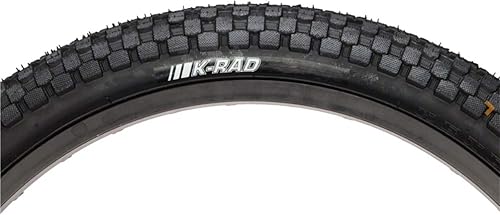
Best for: Riders needing all-terrain traction in urban environments.
The Kenda K-Rad features a micro-knurled checkerboard pattern that provides grip for both street and park riding. It’s built with a 65 TPI wire bead for sidewall support and uses a Standard Rubber Compound for longevity. The inclusion of reflective sidewalls is a practical touch for low-light conditions.
Strengths:
- Micro-knurled knobs improve traction
- Reflective sidewalls boost safety
- 65 TPI wire bead construction
- Durable rubber for aggressive styles
Trade-offs:
- Knurled pattern creates more noise
- Heavier than pure slick tires
You’ll find that the rounded profile makes turning feel predictable on hard surfaces.
| Best for | Why |
|---|---|
| Urban riders | Reflective sidewalls increase safety |
| Park beginners | Micro-knurled knobs aid traction |
| Daily commuters | Durable compound lasts longer |
5. Eastern Bikes Throttle 20 inch BMX Tires Available

Best for: Riders who prefer a wider tire profile.
The Eastern Bikes Throttle comes in several widths, including 2.2, 2.3, and 2.4 inches. It uses a smooth, all-around tread pattern that’s meant for both park and street. The brand emphasizes their long history of customer service to support their product quality.
Strengths:
- Available in multiple wide widths
- Smooth tread suits diverse riding
- Includes tire lever tools
- Backed by long-term support
Trade-offs:
- No specialized compound mentioned
- Wide profile may add weight
Living with these is easy because they include the tools needed for changing them. You’ll have to choose the width that fits your frame clearance, which is the main consideration here. It’s a reliable, no-nonsense choice for someone who wants a simple, proven tire.
| Best for | Why |
|---|---|
| Stability seekers | Wide 2.4-inch profile options |
| DIY mechanics | Tire levers included in pack |
| General park riders | Smooth tread pattern is versatile |
6. Schwinn Knobby Bike Tire with Kevlar (Black

Best for: Neighborhood riders wanting a classic knobby grip.
The Schwinn Knobby uses a symmetrical centerline tread with low-profile knobs for a mix of speed and traction. It features a puncture guard layer under the tread and a durable steel bead construction. This tire is designed for a specific PSI range of 30 to 40.
Strengths:
- Puncture guard helps prevent flats
- Symmetrical tread for balanced grip
- Durable steel bead construction
- Classic knobby design for dirt
Trade-offs:
- Limited PSI range for speed
- Not suitable for high-pressure tricks
You’ll need to keep your tire pressure within the recommended 30 to 40 PSI range to avoid performance issues. It isn’t for the rider looking to perform high-impact tricks, as it’s geared toward neighborhood and bike park cruising.
| Best for | Why |
|---|---|
| Casual cruisers | Puncture guard prevents common flats |
| Dirt path riders | Knobby tread provides traction |
| Neighborhood use | Balanced speed and grip profile |
Side by Side
The following table compares the key features of these bmx tires to help you identify the best fit for your specific riding needs.
How to Judge One of These
Tread Pattern and Terrain
The tread pattern dictates how the tire interacts with the ground. Slick tires are fast on pavement and skatepark surfaces but lack grip on loose dirt. Conversely, knobby tires provide better traction in dirt but can feel sluggish on smooth ground. Before ordering, check the type of surface you ride most often. You can confirm this by looking at your local park or the paths you frequent; if they’re smooth concrete, choose a slick or semi-slick tire.
Casing and Durability
The casing, often measured in TPI (threads per inch), affects the tire’s weight and flexibility. A higher TPI usually means a more supple ride, while wire beads offer structural stability but are harder to fold. Always check if the tire features reinforced sidewalls like EXO for abrasion protection. To verify your needs, check if your current tires show frequent sidewall scuffs or cuts from grinding or hitting obstacles during your sessions.
Compound and Grip
Rubber compounds determine how much grip the tire provides versus how long it lasts. Soft compounds offer excellent grip for tricks but wear out faster, while harder compounds are more durable for street riding. Reliable manufacturers often specify if they use a single or dual compound. You can confirm the right choice for you by assessing your riding frequency; if you ride daily, a longer-lasting compound is essential for maintaining consistent performance without frequent replacements.
Safety Standards
For riders who frequent public areas, checking for safety features like reflective sidewalls is beneficial. While bmx tires don’t have a single universal certification, the Consumer Product Safety Commission provides general guidance on bicycle safety equipment and parts. Ensuring your tires meet your specific needs for visibility and puncture resistance will improve your overall experience. Always match the tire width to your bike’s frame and fork clearance before finalizing your purchase.
Closing
The Maxxis Grifter stands out as the most balanced pick for the majority of freestyle riders, while the Schwinn Knobby serves those needing extra traction on dirt paths. Before you decide, double-check your bike frame’s clearance to ensure the width you choose will fit properly without rubbing.
Related guides
- How to Change a BMX Bike Tire: A Step-by-Step Repair Guide
- 7 Best Summer Fat Bike Tires for Speed and Trail Grip in 2026
- 10 Best Winter Fat Bike Tires for Floatation and Raw Grip in 2026
Frequently Asked Questions
Will these tires fit my 20-inch BMX bike?
Most tires listed here are designed for standard 20-inch BMX wheels. You should verify your rim diameter and ensure your frame and fork have enough clearance for the specific tire width you’re choosing. A wider tire, for example, is bulkier than a narrower tire and may not fit on every frame. Always check your current tire’s sidewall for the ETRTO size to ensure a perfect match.
How do I know if I need a wire bead or a folding tire?
Wire bead tires are generally more rigid and durable, making them a common choice for aggressive riding and park use. Folding tires are lighter and easier to transport, which is helpful if you travel to different skateparks. If you prioritize weight savings and ease of installation, look for folding options. Otherwise, the structural stability of a wire bead is usually preferred for high-impact riding.
What is the advantage of a dual compound tire?
A dual compound tire integrates distinct rubber compositions into a single tread design. Typically, a harder rubber is used in the center for speed and longevity, while a softer rubber is used on the sides for better grip during turns. This combination allows the tire to perform well in multiple riding conditions. It’s a great choice if you want a tire that balances fast rolling with reliable traction.
How often should I replace my BMX tires?
You should replace your tires when the tread pattern becomes noticeably worn or if you see signs of casing damage like cuts or bulging. If you ride frequently on abrasive surfaces like concrete, the rubber may show signs of wear more quickly than on dirt. Regularly check your sidewalls for signs of abrasion, especially if you perform grinds. A tire with worn-out tread will lose grip and increase your risk of slipping.
Can I use these tires for commuting on the street?
Yes, many of these tires are suitable for street use, especially those with slick or micro-knurled tread patterns. Tires like the Maxxis DTH are specifically designed to be fast and quiet on pavement. If you commute, look for tires with added puncture protection to reduce the risk of flats from road debris. Ensure the tire pressure is set correctly for your weight and road conditions for the best experience.
Final Thoughts
Choosing the right rubber shouldn’t feel like a chore, so trust your instincts when you hit the pavement. Once you’ve settled on a set that matches your local terrain, head out and put them to the test. You’ll quickly see how a fresh pair of tires transforms your ride’s entire personality.