
Choosing the best 24 inch mountain bike tires means looking at how you ride and what terrain you face most often. Whether you need puncture resistance for city streets or aggressive grip for loose dirt, the right rubber makes a big difference. This guide helps you navigate the options based on construction, intended use, and durability.
As an Amazon Associate, we earn from qualifying purchases. This post contains affiliate links – if you buy through them, we may earn a commission at no extra cost to you.
Head to Head on What Matters
Terrain and Traction
Maxxis Minion DHR II and DHF focus on cornering and braking traction, using a dual compound design. The Continental Kryptotal Rear is built specifically for mixed terrain and enduro-style riding. Conversely, the Schwinn Replacement Tire and Mohegia Mountain Tire use blocky, wide knobs to handle loose or rocky ground.
Durability and Puncture Resistance
Bell Flat Defense uses a specific layer for extra strength compared to standard tires. The Schwinn Replacement Tire includes a puncture guard layer under the tread. Maxxis models like the Rekon and Minion DHR II utilize EXO sidewall protection to prevent cuts.
E-Bike Compatibility
Many tires listed here carry an E25 rating, meaning they’re designed for light-duty e-bikes with assistance up to 16.1 MPH. This includes the Maxxis Minion series, the Maxxis Rekon, and the Continental Kryptotal Rear. The Bell Traction does not list an E25 rating.
What the Numbers Mean for You
When looking at tire specs, the PSI range is a key number for your ride quality. A wider range, like the 35 to 65 PSI found on the Schwinn Replacement Tire, gives you more flexibility to adjust for comfort or speed. Lower pressure usually provides better grip on loose trails, while higher pressure reduces rolling resistance on hard surfaces. Always stay within the manufacturer’s recommended range to avoid tire failure or rim damage. Proper inflation is the most critical factor for safety and performance, as noted by the CPSC bicycle safety guidelines. Remember that higher volume tires, like the 2.30-inch options, also offer a smoother ride over bumps.
1. Maxxis Minion DHR II

Best for: Aggressive cornering and braking performance. This tire features side knobs borrowed from the Minion DHF to provide extra support when leaning into turns. The dual compound rubber balances speed and grip, while the EXO sidewall adds abrasion resistance. It’s an E25-rated tire, making it a solid choice for light-duty e-bike riders.
Pros
- EXO sidewall protection
- Dual compound rubber
- E25 e-bike rated
Cons
- Tread design prioritizes grip over speed
2. Maxxis Minion DHF
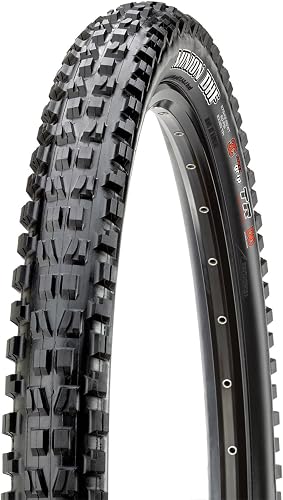
Best for: Technical trail riding. The Minion DHF is a classic design that balances speed with cornering control. It uses the same dual compound technology as the DHR II for a reliable feel on the trail. Like its counterpart, it’s E25 rated for light-duty electric assistance.
Pros
- Versatile tread pattern
- Dual compound construction
- E25 e-bike rated
Cons
- Not optimized for paved surfaces
3. Maxxis Rekon
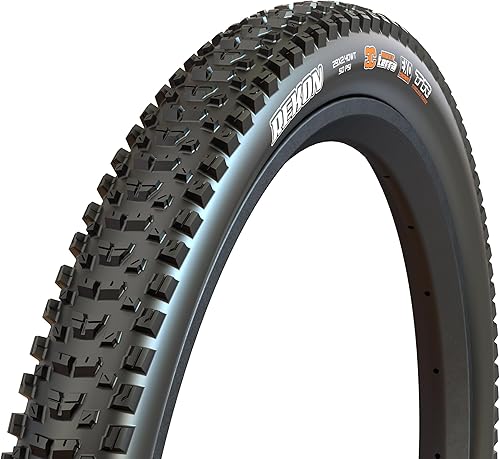
Best for: General purpose trail riding. The Rekon is designed to be a “Goldilocks” tire, hitting a balance between rolling speed and cornering control. It includes the EXO sidewall protection and the dual compound tread for reliable trail use. It’s also E25 rated for light e-bikes.
Pros
- Balanced speed and grip
- EXO sidewall protection
- E25 e-bike rated
Cons
- Less aggressive than dedicated mud tires
4. BELL Traction Mountain Tire 24″ Black Kevlar

Best for: Kevlar-reinforced strength. This tire uses a Kevlar layer to provide extra puncture resistance and strength. It features a carbon steel bead that allows for folding during storage. The tall, knobby tread is designed to handle everything from smooth trails to technical single tracks. The listing doesn’t mention tubeless compatibility.
Pros
- Kevlar reinforcement
- Foldable carbon steel bead
- Tall, knobby tread
Cons
- Not for tubeless use
5. Schwinn Replacement Bike Tire

Best for: Reliable puncture protection. This tire features a dedicated puncture guard layer under the tread to help prevent flats. It fits internal rim widths from 19mm to 29mm and has a recommended PSI range of 35 to 65. The blocky knobs are intended for loose or rocky terrain.
Pros
- Puncture guard layer
- Fits a range of rim widths
- Durable steel bead
Cons
- Heavier construction
6. Bell Flat Defense Mountain Bike Tire

Best for: Maximum flat protection. The Flat Defense technology provides 25% more strength than a standard tire. It features a tall, knobby tread pattern for control and a foldable carbon steel bead for easy storage. It’s built to stand the test of time on various trail types. The listing doesn’t mention tubeless compatibility.
Pros
- Enhanced flat protection
- Foldable design
- Optimized tread pattern
Cons
- No specific tubeless rating
7. Sunlite Smoke MTB Tire

Best for: Muddy conditions. The Sunlite Smoke is a durable tire built specifically for mud. It features tall, aggressive lateral knobs to help clear debris and maintain traction. It’s a straightforward, specialized tool for wet or loose conditions.
Pros
- Aggressive mud-clearing tread
- Tall lateral knobs
- Durable construction
Cons
- Limited to specific muddy terrain
8. MOHEGIA Mountain Bike Tires

Best for: Steel bead durability. These tires come in a two-pack and feature a foldable carbon steel bead. The tread design includes ramped center knobs to reduce dirt adhesion while providing control. They’re rated for a wide PSI range of 30 to 80.
Pros
- Sold in a two-pack
- Ramped center tread
- Wide PSI range
Cons
- Not for professional downhill use
9. YUNSCM 2-PCS 24″ Mountain Bike Tires 24×2.30/56-507 Compatible with Mountain

Best for: High-volume off-road riding. These tires offer a high-volume 2.30-inch profile for off-road comfort. They use a superior butyl rubber formula and feature a block-shaped tread pattern for good traction on cross-country trails. They’re foldable for easy storage. Note that the warranty explicitly excludes extreme off-road riding and racing.
Pros
- High-volume 2.30-inch width
- Butyl rubber formula
- Foldable design
Cons
- Warranty excludes extreme use
10. Continental Kryptotal Rear Tire

Best for: Mixed terrain specialists. This tire is optimized specifically for the rear wheel to balance braking traction and rolling resistance. It features a robust trail casing and an endurance compound designed for longevity. It’s fully E25 e-bike rated and features reinforced puncture protection.
Pros
- Rear-wheel specific design
- Robust trail casing
- E25 e-bike rated
Cons
- Heavy for casual commuting
The Maxxis Minion DHR II is the top choice for performance, while the Bell Flat Defense is the safest bet for a rider who wants to avoid flats above all else. For a next step, check your current rim width to ensure the tire size you choose will fit properly.
Related guides
Frequently Asked Questions
Is a bigger number always better for traction?
Not necessarily. While tires with a broader profile offer more surface contact, an aggressive tread pattern like the one on the Sunlite Smoke is often more important for specific terrain like mud. A wider tire can also increase rolling resistance on flat, hard surfaces.
What does an E25 rating mean?
An E25 rating indicates that the tire is tested and deemed suitable for light-duty e-bikes that provide pedal assistance up to 16.1 MPH. It ensures the tire structure can handle the extra torque and weight associated with electric drive systems without wearing out prematurely.
How do I compare different PSI ranges?
Compare PSI ranges based on your typical riding surface. If you ride on pavement or hardpack, a tire with a higher maximum PSI, like the Bell Flat Defense at 65 PSI, will be more efficient. For rocky or loose trails, a tire that performs well at lower pressure is usually better.
What is the advantage of a folding bead?
A folding bead, often made of Kevlar or carbon steel, allows you to store the tire in a smaller space. It doesn’t affect the actual performance on the trail, but it makes the tire easier to carry as a spare during long adventures or to store in a workshop.
Final Thoughts
Once you’ve picked your new rubber, don’t forget to check your tire pressure before your next ride. Getting the air levels just right will make your bike feel brand new on the trail. You’ll be surprised at how much smoother your journey becomes when everything is set up perfectly for your favorite path.