
Choosing the right hose bib timer depends on your specific garden needs and how much you want to manage through your phone. You can choose between battery-operated units for basic schedules or smart Wi-Fi systems that adjust to local weather patterns. The main differences lie in zone control, connection types, and build materials.
As an Amazon Associate, we earn from qualifying purchases. This post contains affiliate links – if you buy through them, we may earn a commission at no extra cost to you.
Best overall: Orbit Programmable Digital Timer offers reliable scheduling with a simple LCD screen, making it a dependable choice for homeowners who want straightforward, automatic irrigation without complex setups. Best for simple needs: Orbit Mechanical Timer provides an easy, battery-free way to manage water flow for those who prefer a classic, manual dial and durable, non-electronic operation. Best for smart control: GoveeLife WiFi Sprinkler Timer excels with its long-range gateway and weather-adaptive technology, ideal for users who want complete app-based management of multiple yard zones.
This guide is for anyone looking to automate their garden watering while keeping their landscape healthy and efficient.
How We Picked
We compared 48 different Amazon listings to find hose bib timers that offer clear specifications and reliable features. To be included, each product had to provide documented details on its power source, installation requirements, and specific programming capabilities. We removed any items that lacked clear manufacturer information regarding warranty coverage or material quality. Our focus remained on how these products perform in typical residential garden environments based on the manufacturer’s provided data.
1. Orbit Programmable Digital Hose Watering Timer

Best for: Homeowners seeking reliable, straightforward automatic watering.
The Orbit Programmable Digital Timer is designed to turn any standard outdoor faucet into an automatic system. Its clear LCD screen makes setting up irrigation schedules simple and fast. The built-in rain delay feature allows you to pause your watering program during wet weather, which helps prevent overwatering your lawn or garden.
This unit is powered by batteries, which means you don’t need to worry about wiring it into your home’s electrical system. It’s a solid choice for those who want a set-it-and-forget-it solution for their daily plant care. However, this timer isn’t ideal for users who require remote access or smart home connectivity through a smartphone app.
Pros
- Simple digital programming interface
- Useful built-in rain delay
- Includes six-year limited warranty
Cons
- No smart app connectivity
- Requires battery power
2. Orbit B-hyve XD 1-Port Smart Hose Watering Timer

Best for: Gardeners wanting precise, weather-based water management.
The Orbit B-hyve XD uses local weather data to adjust your watering schedule automatically. You can control this device through Wi-Fi or Bluetooth, giving you the convenience of managing your garden from anywhere. It’s designed to respect local watering restrictions by adjusting to drought conditions.
The device will then throttle output to stay compliant without manual resets. If you experience a sudden heatwave, the system pulls live weather data to increase hydration levels before your plants show signs of stress.
This timer features an IPX-5 waterproof rating, making it suitable for outdoor use throughout the summer. It handles low-pressure water streams from any angle without failing. When paired with a Wi-Fi hub, it meets EPA WaterSense standards for efficiency. This product isn’t the right fit for someone who prefers a purely mechanical interface or who doesn’t want to manage settings via a smartphone.
Pros
- Weather-based automatic adjustments
- Convenient remote control options
- IPX-5 waterproof certification
Cons
- Requires hub for full features
- Setup relies on app connectivity
3. Melnor AquaTimer™ 4-Zone Programmable Digital Timer

Best for: Users managing multiple separate garden areas.
The Melnor AquaTimer 4-Zone allows you to set independent schedules for four different valves. You can choose to water as often as every hour or as little as once a week for each zone. This flexibility makes it great for mixed gardens where different plants have different moisture requirements.
The manual override option is helpful if you need to quickly wash your car or spray off a deck without disturbing your programmed settings. Use this feature whenever you need immediate faucet access. If you find yourself needing to bypass the schedule frequently, ensure you have fresh batteries on hand, as the unit requires two AA batteries to maintain its settings.
This timer isn’t recommended for those looking for smart home integration or voice-controlled features. It focuses strictly on direct, zone-based programming. If you prioritize long-term reliability over connectivity, the seven-year limited warranty provides significant protection for your investment.
Pros
- Four independent watering zones
- Flexible scheduling options
- Seven-year limited warranty
Cons
- Batteries not included
- Lacks smart connectivity
4. RAINPOINT Metal Pipe Timer

Best for: Those prioritizing rugged, long-lasting physical construction.
The RAINPOINT Metal Pipe Timer is built with 100% metal piping and a ball valve, designed to withstand higher pressures than typical plastic models. It can handle up to 116 PSI, which helps minimize flow loss during operation. The brass inlet is designed to resist high tensile force, making it a durable addition to your outdoor setup.
The timer offers versatile settings, including rain delay and manual modes that can run for up to 8 hours. This unit is a strong candidate if you are concerned about sun damage or plastic parts cracking.
Pros
- Durable all-metal pipe construction
- High pressure tolerance
- Easy manual mode access
Cons
- Heavier than plastic alternatives
- No smart features included
5. Orbit Mechanical Water Timer

Best for: Users who want a simple, battery-free experience.
The Orbit Mechanical Timer is a clockwork-based device that requires no batteries or electronics. You simply turn the oversized dial to set your desired watering time, and the internal mechanism handles the shutoff. It’s very easy to use, even if your hands are wet or you’re wearing gardening gloves.
This device is perfect for someone who wants to avoid the hassle of changing batteries or navigating software menus. It provides a straightforward way to manage irrigation without any risk of digital failure. Because it’s purely mechanical, it doesn’t offer complex scheduling or smart features, making it unsuitable for those who need to automate watering over multiple days or times.
Pros
- No batteries required
- Simple, intuitive dial control
- Six-year limited warranty
Cons
- No multi-day scheduling
- Lacks smart features
6. Meross WiFi Water Timer

Best for: Smart home enthusiasts needing voice integration.
The Meross WiFi Water Timer provides a robust smart experience with brass construction for both the inlet and outlet. It uses hyper-local weather data to skip watering during rain or freezing conditions. You can monitor your water consumption through the app and receive alerts if there are any issues with your watering schedule.
This timer integrates well with Alexa and Google Assistant, allowing for voice-controlled garden management. It’s a great choice for tech-savvy gardeners who want to track their usage and automate their yard from anywhere.
Note that it requires a hub to function. If you own an MSH400 hub, ensure your firmware is at least v4.5.35 to maintain HomeKit support. If you use an MSH450 hub, you must update to v9.1.17 or newer, though this model won’t support HomeKit. If you already own a compatible hub, the timer-only version is available.
The power compartment is tightly sealed for weatherproofing. Use a screwdriver to gently pry it open from both sides, and verify the battery polarity before closing. This device requires a 2.4GHz network to connect.
Pros
- Weather-based automatic rain skip
- Voice control integration
- Tracks water usage data
Cons
- Requires external hub
- Tightly sealed power compartment
7. Orbit Programmable Digital Hose Watering Timer

Best for: Gardeners managing two separate zones.
The Orbit 2-Outlet Digital Timer allows you to manage two different watering areas from a single faucet connection. Like other digital models from this brand, it features a simple LCD screen that makes programming your schedules straightforward. It’s a reliable way to maintain healthy landscapes while managing water use efficiently.
If you live in a region with frequent storms, activate the rain delay feature to pause your schedule manually. This prevents overwatering and keeps your soil from becoming waterlogged during wet spells.
The unit is battery-powered and water-resistant, built for outdoor durability. The rain delay feature is a helpful inclusion for those living in areas with unpredictable weather. This timer isn’t designed for users who need more than two zones or who prefer smartphone-based remote management. If your garden requires complex zones or wireless control, look for a smart system instead.
Pros
- Dual-outlet design for flexibility
- Simple digital display controls
- Includes six-year limited warranty
Cons
- Restricted to a pair of independent watering areas.
- No app connectivity
8. Rachio Smart Hose Timer (Valve Only)
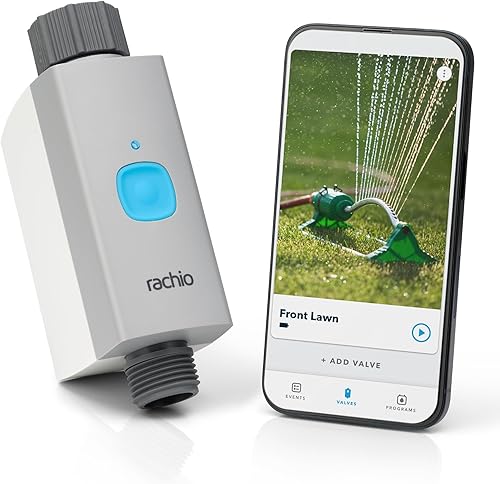
Best for: Users already within the Rachio ecosystem.
The Rachio Smart Hose Timer offers full control through the Rachio app, allowing you to automate your yard with ease. It includes flow monitoring and low-battery alerts to keep you informed about your system’s status. The device supports rain skips, which helps save water by pausing schedules when rain is in the forecast.
Installation is quick, and the unit is designed for simple faucet attachment. It’s a strong option for those who want to build a larger smart watering network, as one hub can support up to 8 valves. If you already rely on Alexa, Google Home, or IFTTT, you can integrate this device directly into your existing smart home routines.
However, check your hardware needs before purchasing. The valve is sold individually, and you must acquire the WiFi hub separately to enable remote connectivity. If you don’t want to use an app for your garden management, this system won’t function as intended. You should also avoid this unit if you require a standalone timer that operates without a wireless connection.
Pros
- Full app-based control
- Smart rain skip features
- Supports multiple valve setups
Cons
- Requires app for programming
- Hub sold separately
9. Insoma Water Timer with Brass Inlet

Best for: Gardeners needing moderate multi-zone control.
The Insoma 3-Zone Timer provides three independent outlets, allowing you to customize different plans for your lawn, garden, or greenhouse. It features a large screen that displays all your watering information, making it easy to check your settings at a glance. The device is IPX5 waterproof and built with anti-UV materials for outdoor longevity.
This timer also includes a child lock mode to prevent accidental changes to your settings. It’s a versatile choice for those who need to water multiple types of plants differently. One limitation is that the outlets can’t run simultaneously, so they will operate one after the other according to your start times.
If you use a rain barrel or other gravity-fed systems, this timer won’t work. It requires a water pressure range between 7.25 psi and 116 psi to function. Always check your pressure before installation to avoid system failure. If the battery level drops too low, the device will shut off automatically to protect your settings.
Pros
- Three independent watering zones
- Large, easy-to-read display
- Includes child lock feature
Cons
- Outlets can’t run simultaneously
- Requires batteries
- Not for low-pressure systems
10. GoveeLife H5901 Smart WiFi Sprinkler Timer with Gateway

Best for: Large yards needing long-range smart connectivity.
The GoveeLife WiFi Sprinkler Timer is designed for extensive coverage, with a gateway connection that reaches up to 1640 feet. It supports up to 64 devices, making it perfect for managing large, complex garden layouts. The timer uses real-time internet data to adapt its watering schedule based on temperature, light, and humidity.
The unit is built with dual brass inlets and an IP67 waterproof rating, ensuring it survives harsh weather conditions. It also provides detailed charts in the app so you can track your water consumption. This system is ideal for users who want a highly intelligent, connected garden, but it requires a 2.4GHz Wi-Fi connection for the gateway.
Pros
- Very long-range wireless connectivity
- Advanced weather-adaptive watering
- Durable brass and IP67 construction
Cons
- Requires 2.4GHz Wi-Fi
- Initial setup involves firmware updates
How to Choose in Sixty Seconds
Which type of timer is best for my garden?
Choose based on your need for convenience versus simplicity. If you want to automate your garden while away or ensure you save water, a digital or smart timer is best. Smart timers, like those from GoveeLife or Meross, use weather data to skip watering during rain, which helps prevent overwatering. If you prefer a hands-off, low-maintenance approach, a mechanical timer like the Orbit Mechanical Timer is ideal. It doesn’t require batteries or software, making it the most reliable choice for a basic, set-it-and-forget-it setup that you can adjust manually in seconds.
Does water pressure affect which timer I should buy?
Yes, water pressure is a critical factor for consistent performance. Most digital and smart timers, including those from GoveeLife or Insoma, require a minimum pressure to operate their internal valves correctly, often around 7 PSI. If you’re using a gravity-fed system like a rain barrel, these electronic timers may not trigger properly. Always check the manufacturer’s pressure requirements before purchasing. For very high-pressure systems, look for durable models like the RAINPOINT Metal Pipe Timer, which is engineered to handle higher PSI without risking leaks or cracks in the housing.
What should I confirm before ordering?
First, verify the number of zones you need to manage. If you have a lawn and a separate flower bed, a multi-zone timer like the Melnor AquaTimer 4-Zone or Insoma 3-Zone Timer will save you from buying multiple units. Second, check your Wi-Fi capabilities if you’re opting for a smart device. Most smart timers require a 2.4GHz network and may need a specific gateway to function. Finally, consider the environment. If your faucet is in direct, intense sunlight, a model with UV-stabilized materials or metal construction will last much longer than standard plastic timers.
Related guides
- Top 10 Best Handheld Showerheads with Extra Long Hose in 2026
- 10 Best Baby Bibs Burp Cloths Sets for Daily Mess Protection in 2026
- 10 Best Gardening Knee Pads and Kneeling Cushions for Comfort in 2026
Frequently Asked Questions
How do I prevent leaks at the faucet connection?
Prevent leaks by ensuring the timer’s inlet is firmly attached to the faucet with the internal washer seated correctly. Many models, like the GoveeLife WiFi Sprinkler Timer, feature robust brass inlets for a secure fit. Always hand-tighten the connection to avoid stripping the threads.
What is the most common reason these timers fail?
The most common cause of failure in battery-operated timers is moisture entering the battery compartment. Humidity or rain can corrode the contacts, leading to power issues. To prevent this, look for models that explicitly mention IP-rated waterproof designs, such as the Insoma multi-outlet timer or the Meross WiFi Water Timer, which feature sealed battery covers.
Will these timers work with low-pressure water sources?
Most digital and smart hose timers require a minimum water pressure to open the internal valve. If your water source is a gravity-fed tank, the timer may fail to operate. Confirm the manufacturer’s minimum PSI requirement, such as the 7.25 PSI needed for the Insoma and GoveeLife timers.
Is a smart timer really better than a simple digital one?
A smart timer is best if you want to automatically skip irrigation during rainy or cold weather. Models like the Orbit B-hyve XD use local weather reports to adjust schedules, unlike basic digital timers. However, a basic timer is sufficient if you prefer a simple, non-app-based irrigation schedule.
Conclusion
Once you’ve picked the perfect model, take a moment to check your outdoor faucet for any leaks before you screw the unit on. It’s a simple upgrade that’ll keep your plants happy and healthy all summer long. You won’t regret letting technology handle the watering while you enjoy your garden.